

TL;DR:
- Engaging children with outdoor play requires intentional planning, including space assessment, safety measures, and age-appropriate supervision. Natural materials and open-ended environments foster long-lasting curiosity and meaningful outdoor experiences. Proper preparation, boundaries, and fostering independence help children build resilience while safely exploring the natural world.
Getting children outside and genuinely engaged with nature is one of the most rewarding things you can do as a parent. But preparing for outdoor play takes more thought than simply opening the back door. Between choosing the right surfaces, dressing children for the weather, and knowing how much freedom to give at each age, there is a lot to consider. This guide cuts through the noise and gives you a clear, practical path to creating outdoor play that is safe, creative, and genuinely meaningful for your children.
Table of Contents
- Key takeaways
- Preparing for outdoor play: assessing your space
- Getting children ready for outdoor play
- Building a nature-connected play environment
- Seasonal challenges and how to handle them
- My perspective on safety and freedom outdoors
- Explore Thezoofamily for outdoor play inspiration
- FAQ
Key takeaways
| Point | Details |
|---|---|
| Assess your space first | Define zones for active play, quiet exploration, and supervision before adding any equipment. |
| Match independence to age | Children aged 5 to 6 suit supervised play; those aged 8 to 10 can manage greater outdoor autonomy. |
| Surface choices matter | Rubber tiles absorb impacts far better than grass under play equipment, reducing injury risk. |
| Sun safety is non-negotiable | Apply SPF 30 broad-spectrum sunscreen 15 to 30 minutes before going outside and reapply every two hours. |
| Nature-led play lasts longer | Open-ended environments using logs, stones, and plants keep children engaged better than rigid play sets. |
Preparing for outdoor play: assessing your space
Before you buy a single piece of outdoor play equipment, walk your garden or yard with fresh eyes. Think of the space in three distinct zones: one for active, physical play; one for quieter nature observation; and one where you can supervise comfortably without hovering at every moment.
Fencing is the first practical consideration. A properly secured boundary lets younger children play with a degree of independence that would otherwise be impossible. If your garden is open, children naturally gravitate towards roads, neighbouring properties, or other hazards. A secure perimeter changes that dynamic entirely.
Ground surfaces deserve serious thought. Rubber tiles absorb impacts far better than grass under climbing frames or swings. Grass wears thin quickly and becomes slippery when wet, offering very little cushioning if a child falls. Wet-pour rubber surfaces are worth considering for permanent installations, while rubber interlocking tiles suit smaller budgets and temporary setups.
Here is a quick comparison to help you decide:
| Surface type | Impact absorption | Cost | Maintenance |
|---|---|---|---|
| Grass | Low | Low | High (reseeds easily) |
| Rubber interlocking tiles | High | Medium | Low |
| Wet-pour rubber | Very high | High | Very low |
| Bark chippings | Medium | Low | Medium (replenish annually) |
Once your layout is clear, gather what you need before the first play session. Essentials include sun hats, UV-protective clothing, Wellington boots for wet conditions, and waterproof layers for colder months. Having these ready in advance means getting kids ready for outdoor activities takes minutes, not a fraught ten-minute search through coat cupboards.
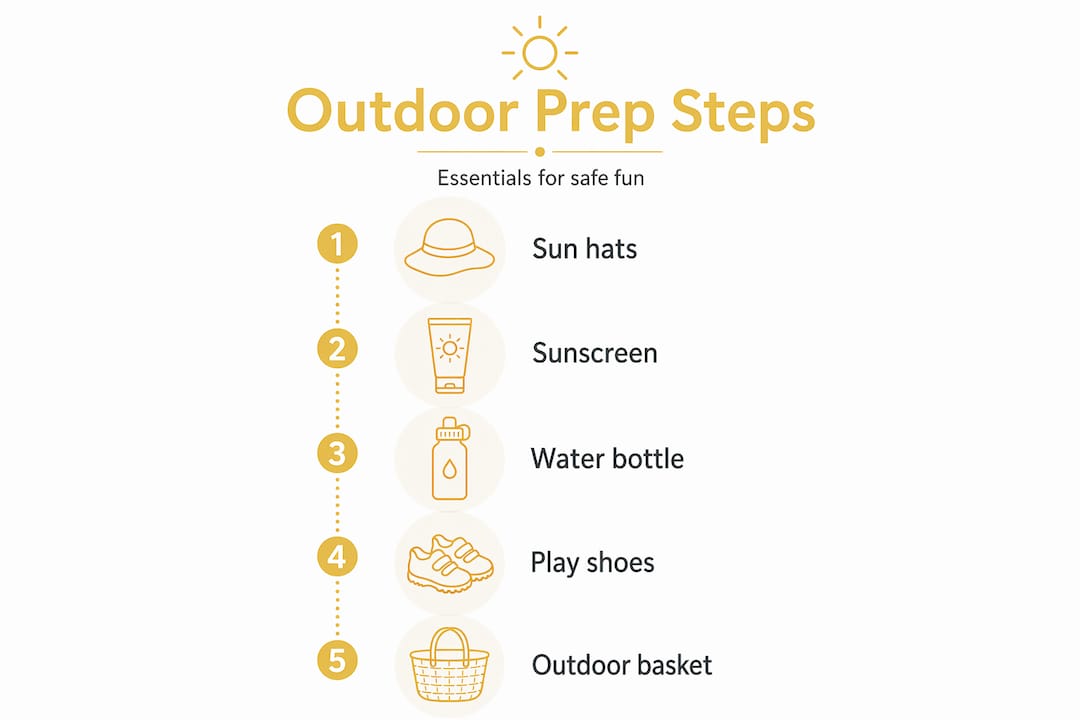
Pro Tip: Label a dedicated hook or basket near the back door with each child’s outdoor essentials. When everything has a home, the transition from inside to outside becomes effortless.
Getting children ready for outdoor play
Practical preparation of the space is only half the picture. You also need to prepare your children, which means teaching age-appropriate safety habits before they ever set foot outside.
Start with independence. Children aged 5 to 6 are ready for light supervised outdoor play, while those aged 8 to 10 can safely manage familiar outdoor areas with less direct oversight. Knowing this helps you calibrate how much freedom to extend, rather than either over-supervising or stepping back too soon.
Introduce a short list of simple safe-play rules that your children can actually remember:
- Wait for your turn on climbing equipment and swings.
- Walk near hard surfaces; run on grass.
- Tell an adult before going through the garden gate.
- Stay where you can see the house.
- Come inside if you feel too hot, too cold, or unwell.
Fewer rules, clearly stated, stick far better than a long list of do-nots. Revisit them at the start of each season rather than only when something goes wrong.
Dressing children correctly is one of the most underestimated outdoor play tips. For sunny days, apply SPF 30 sunscreen at least 15 to 30 minutes before going outside and reapply every two hours. Stick-format sunscreens are far easier to reapply on wriggling children mid-play than lotions. Lightweight UV-protective shirts reduce the need for constant reapplication on shoulders and arms.
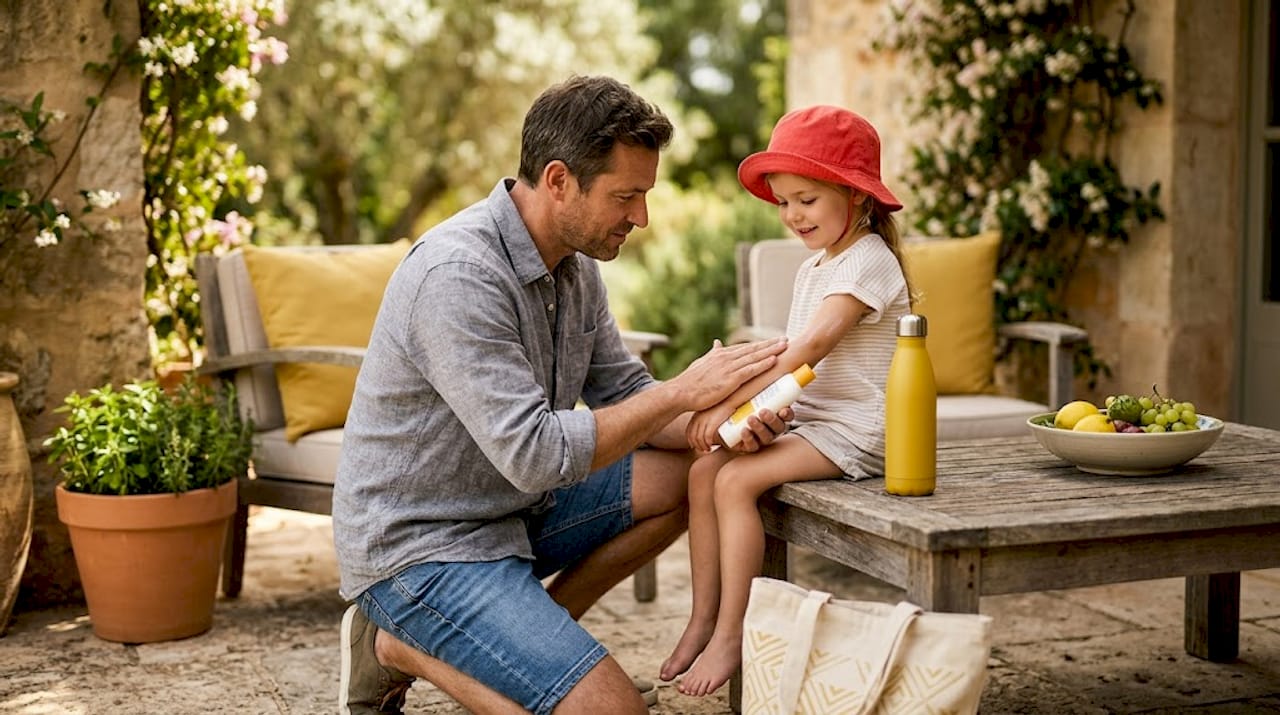
Clothing choices also affect safety in ways parents do not always anticipate. Remove helmets before playground equipment use and avoid clothing with drawstrings or scarves, which can catch on frames and create a strangulation risk. Helmets belong on bikes and scooters, not climbing frames.
Supervision is not about watching every move. It is about being close enough to intervene quickly while allowing children the space to problem-solve. Engaged adults who avoid phone distractions dramatically reduce playground injuries. Sitting nearby, present and aware, is the balance that works.
Pro Tip: For children who are hesitant outdoors, go out with them for the first ten minutes and then gradually withdraw. Your initial presence lowers their threshold for engagement.
Building a nature-connected play environment
Once the basics are in place, the real pleasure begins: designing a space that sparks curiosity and keeps children returning day after day. The best practice for outdoor play environments is to lean on natural materials rather than prescriptive equipment.
Simple nature-based play, such as reading on a blanket, observing insects, or arranging stones, builds both emotional and cognitive skills in ways that structured toys cannot replicate. The key is providing materials that children can use in multiple ways. Consider adding:
- A log pile for climbing, balancing, and insect discovery
- A digging patch with old spades and containers
- A mud kitchen made from reclaimed wood and old pots
- A collection of flat stones for stacking, painting, or imaginative play
- Hardy plants children can touch, smell, and care for
Open-ended nature-based play spaces encourage sustained engagement better than repetitive structured play sets. A child who has exhausted what a fixed climbing frame can offer will return to the mud kitchen and stone collection every single day.
Involving children in the design process makes a meaningful difference. Ask them what they want to explore, let them choose where the digging patch goes, or give them a small area to call their own. Ownership builds investment, and investment builds time spent outdoors.
For inspiration on how to structure this kind of space, Thezoofamily has a great collection of natural playground ideas that combine creative thinking with genuinely nature-friendly approaches. You can also find outdoor play area ideas specifically designed to build children’s connection with the natural world.
Seasonal challenges and how to handle them
The weather in Britain makes outdoor play a year-round negotiation. Preparing for each season specifically, rather than applying the same approach throughout the year, makes a significant difference to how often children actually get outside.
Summer considerations:
- Schedule outdoor play in the morning or after 4pm to avoid peak UV hours (11am to 3pm)
- Provide water bottles and a shaded rest area as a matter of course
- Recheck sunscreen application after water play or sweating
Winter considerations:
- Layer clothing using the base, mid, and outer system: moisture-wicking base, insulating mid-layer, and a waterproof outer shell
- Avoid outdoor play below -15°C, as exposed skin can freeze within minutes at this threshold
- Schedule indoor warm-up breaks every 45 to 60 minutes in very cold weather
Equipment maintenance is a seasonal task that parents often overlook until something breaks. Wooden playsets are particularly vulnerable. Apply a protective sealant within 90 days of installation to prevent rot and splinters, then check annually before the summer season begins. Inspect bolts, check for sharp edges, and test the stability of any anchoring before letting children loose.
“Outdoor play is a fundamental developmental requirement, not simply a break from screens.” Playing outside: why it matters
Two barriers come up repeatedly when parents talk about outdoor play. The first is motivation: children used to screens may initially resist going outside. The solution is to go with them, give them a specific task (finding five different leaves, spotting a bird), and then step back gradually. The second barrier is supervision fatigue. If you feel as though outdoor play requires you to be constantly on alert, revisiting your space design and fencing situation will almost certainly give you back significant mental energy.
Pro Tip: Keep a weather-proof activity box near the door containing chalk, a magnifying glass, a small notebook, and a set of kids’ binoculars. Children who have ready access to tools for exploration go outside more often and stay out longer.
My perspective on safety and freedom outdoors
I have seen parents set up genuinely beautiful outdoor spaces, only to spend the entire time calling children back from the mud kitchen, redirecting them from the log pile, or wincing every time someone climbs too high. I understand the instinct. But over-supervision actively undermines the resilience and problem-solving that outdoor play is meant to develop.
In my experience, the parents who get the best outcomes are those who do the work up front. They assess the space, fix the real hazards, set clear boundaries, and then genuinely step back. They understand that safety is about managing risk, not removing every trace of it. A child who has never navigated a wobbly log or resolved a disagreement over the digging patch is not a safer child. They are a less prepared one.
What I have come to believe is that nature-led play builds something that no structured activity can manufacture: a genuine, lasting curiosity about the world. Children who spend unstructured time outdoors do not just develop physically. They learn to notice things, to be patient, to create something from nothing. That kind of engagement with the natural world is exactly what Thezoofamily is designed to support.
Trust your preparation. Then trust your children.
— ALAIN
Explore Thezoofamily for outdoor play inspiration
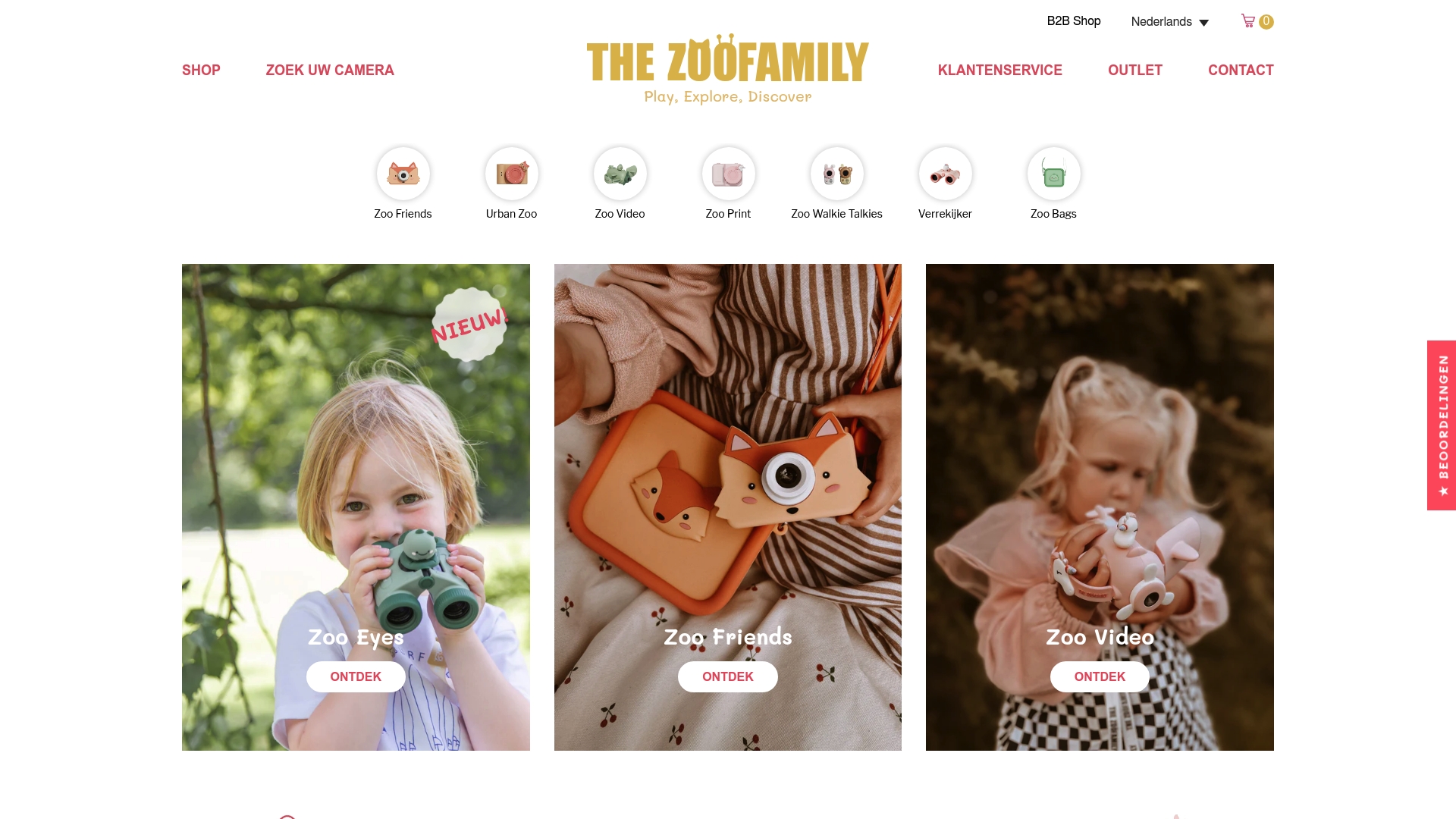
If you are looking for ideas to take your outdoor setup further, Thezoofamily is a brilliant starting point. Whether you want DIY backyard play ideas that are both safer and more nature-connected, or you are curious about tools that help children explore the natural world with real focus and excitement, the site brings together resources that match exactly what this guide has covered.
Thezoofamily’s cameras, binoculars, and walkie-talkies are designed with animal references that spark children’s interest in nature from the moment they pick them up. And for every camera sold, the brand plants one tree. Shopping here genuinely contributes to the natural world your children are learning to love. Browse the full range at Thezoofamily and find the tools that will make your outdoor play sessions feel like proper adventures.
FAQ
How do I start preparing for outdoor play safely?
Begin by assessing your outdoor space for hazards, securing boundaries, and choosing an appropriate ground surface under any play equipment. Gather season-appropriate clothing and introduce a short set of clear safety rules before the first session.
What age can children play outside with less supervision?
Children aged 5 to 6 benefit from light supervised outdoor play, while those aged 8 to 10 can manage greater independence in familiar, secure outdoor spaces. Always assess your specific environment and your child’s maturity alongside these general guidelines.
What is the best outdoor play equipment for encouraging nature connection?
Open-ended natural materials such as log piles, digging patches, and stone collections encourage more sustained engagement than fixed play sets. Thezoofamily’s binoculars and cameras also give children practical tools for exploring and observing nature with genuine curiosity.
How should I protect my child from the sun during outdoor play?
Apply broad-spectrum SPF 30 sunscreen 15 to 30 minutes before going outside and reapply every two hours. Stick formats are easier to use on active children. Schedule play outside of peak UV hours (11am to 3pm) during summer months.
How can I encourage reluctant children to play outside more?
Go outside with them initially, offer a specific exploratory task such as finding insects or collecting leaves, and provide tools like magnifying glasses or binoculars to direct their curiosity. Once engaged, children typically extend their own outdoor time naturally.