

TL;DR:
- Finding a suitable kid’s photo contest involves ensuring safety, age-appropriate content, and a focus on creativity over prizes. The best competitions prioritize authenticity, thematic storytelling, and clear judging criteria, with many banning AI images to maintain integrity. Participating in these contests helps children develop observation skills, confidence, and an appreciation for the natural world beyond winning trophies.
Finding a photo contest that genuinely fits your child, one that is safe, age-appropriate, and actually sparks creativity rather than just chasing a trophy, takes more effort than most parents expect. Photo contests for kids have expanded significantly in recent years, with everything from local scholarship competitions to international wildlife challenges now open to young photographers. This guide profiles ten of the best options available in 2026, explains exactly what to look for before you enter, and gives you practical advice to help your child get the most from the experience.
Table of Contents
- Key takeaways
- What makes a good photo contest for kids
- Top 10 photo contests for kids in 2026
- Comparing the top contests at a glance
- Practical advice for helping your child enter safely and creatively
- My honest take on what photo contests actually give children
- Start your child’s photography journey with Thezoofamily
- FAQ
Key takeaways
| Point | Details |
|---|---|
| Check age limits and consent rules | Many contests require parental consent forms and restrict entries from children under 13 without adult account management. |
| Authenticity beats perfection | Judges in youth contests prioritise genuine storytelling over technical skill, so encourage real moments over posed shots. |
| Prizes vary widely | Some contests offer college scholarships, others offer nature experience camps or community recognition. |
| AI images are banned | Most reputable contests disqualify AI-generated or heavily edited images, so keep your child’s original files. |
| Use contests as learning tools | The biggest gain from entering is confidence and creative growth, not whether your child wins. |
What makes a good photo contest for kids
Before you commit your child’s time and your own energy to any kids photography competition, it pays to know what separates a strong contest from a mediocre one.
Age range and parental consent. A well-run contest specifies exact age brackets and explains how submissions work for younger entrants. Parents must manage accounts on behalf of children under 13 to comply with privacy laws, so any contest that lets young children sign up independently should raise a flag.
Privacy and photo rights. Read the small print on image usage. Many contests require signed parental release forms granting organisers rights to use images for promotional purposes. Know what you are agreeing to before you submit.
Theme and creative focus. The best youth photo contests invite children to tell a story, not just point and click. Themes around nature, community, and cultural identity tend to produce the most memorable work and the most meaningful experience.
Judging and fairness. Look for contests that explain their judging criteria clearly. Contests that use peer-led juries or publish their scoring rubrics are worth prioritising.
Prize structure. Prizes matter, but they do not have to be cash. Scholarships, nature camp invitations, and community exhibitions often offer far more lasting value than a gift voucher.
Pro Tip: Before entering any competition, download a copy of the contest rules as a PDF and read the image ownership clause first. This single step will save you considerable frustration later.
Top 10 photo contests for kids in 2026
1. Illinois Cream of the Crop Photography Contest
Open to Illinois residents aged 8 to 18, this contest is run by the state treasurer’s office and focuses on agriculture and rural life. What sets it apart is the prize structure. Since 2013, around 900 students have participated across 1,600 photographs, with top prizes including college scholarship contributions. For families interested in rural heritage and outdoor photography, this is one of the most financially rewarding children’s photo contests available.
2. Smithsonian National Portrait Gallery teen competition
This Washington-based competition invites teenagers to submit self-portraits or portraits of people in their community. What distinguishes it is the judging philosophy. Effective judging prioritises storytelling and authenticity over technical perfection, with some rounds using peer-led juries that genuinely reflect how young people see the world. Winning entries are exhibited in one of America’s most iconic galleries.
3. ConservationMag Photography Awards (youth category)
If your child is passionate about wildlife and the natural world, this is worth bookmarking immediately. The contest has strict authenticity rules. Generative AI use is prohibited, and organisers may request original files to verify submissions. This is a good thing. It pushes children to engage genuinely with their environment rather than rely on digital shortcuts.
4. Australian Photography ocean-themed youth competition (2026)
This annual competition invites young photographers to document ocean and coastal environments. Youth photography contests like this explicitly aim to build environmental awareness and cultural exchange while encouraging children to spend time outdoors. The ocean theme gives children real creative licence, from rock pools to surf to seabirds, and entries are judged on emotional impact as much as composition.
5. UNESCO and vivo Capture the Future
Technically aimed at young people aged 18 to 35, this international initiative is worth knowing about for older teenagers. Prizes include smartphones and invitations to storytelling training camps, with submissions focusing on biosphere reserves and environmental heritage. For a 17 or 18-year-old with genuine photography ambitions, this offers international visibility.
6. Nature photography scavenger challenges (community-level)
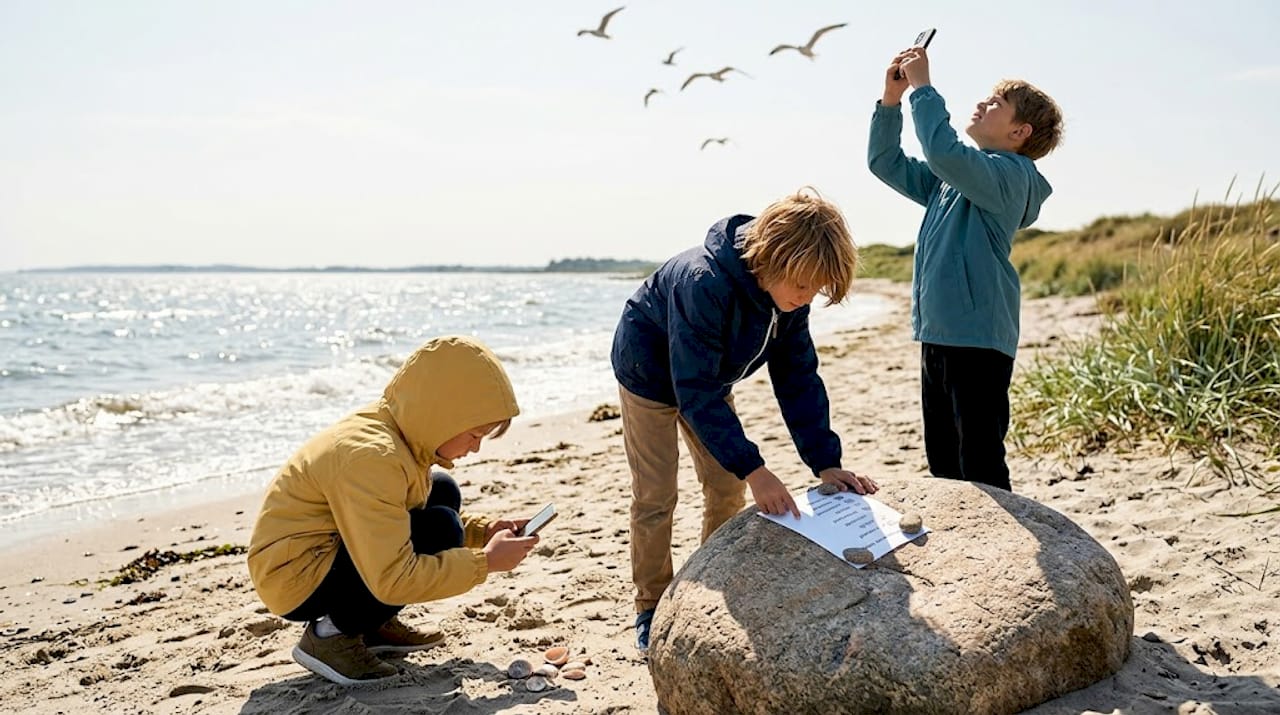
Not every photo contest for young photographers needs to be national or international. Community-run photography scavenger hunts organised through schools, nature centres, and family organisations are often the most accessible entry point for younger children. They build confidence in a low-pressure setting and introduce the idea of photographing with intention.
7. Wildlife photographer of the year (young category)
Run by the Natural History Museum in London, this is arguably the most prestigious youth photo contest on the planet. Categories are divided by age group, with entries open to under-10s through to under-17s. The judging is rigorous and the competition is stiff, but even a shortlist placement is something a child can carry with them for years.
8. Peek-a-boo Magazine photography competition
Peek-a-boo is a Belgian children’s lifestyle magazine that runs regular photography competitions for children focused on family life and everyday moments. The themes are deliberately open, giving children freedom to interpret the brief in their own way. This is a particularly good starting point for children aged 6 to 12 who are new to photo challenges for kids.
9. Family photo challenges at Thezoofamily
Thezoofamily runs its own nature-themed photo challenges designed specifically for children who want to connect with the natural world through their camera. With themes built around animals and outdoor exploration, these challenges sit perfectly alongside Thezoofamily’s broader mission of connecting children with nature. They are friendly, family-led, and a brilliant first competition experience for young children.
10. Arizona Highways Annual Photo Contest
Arizona Highways runs a photographic competition with a strong landscape and nature focus. While the primary contest is open to all ages, the publication regularly features youth submissions and offers parental consent provisions for younger entrants. Many contests require signed parental release forms for image use, and Arizona Highways is transparent about these terms.
Comparing the top contests at a glance
| Contest | Age range | Theme | Prize type | AI images allowed? |
|---|---|---|---|---|
| Illinois Cream of the Crop | 8 to 18 | Agriculture and rural life | College scholarships | No |
| Smithsonian Portrait Gallery | Teen | Portraiture and community | Gallery exhibition | No |
| ConservationMag Awards | Youth category | Wildlife and conservation | Publication and recognition | No |
| Australian Photography ocean contest | Youth | Ocean and coastal life | Prizes and publication | No |
| UNESCO Capture the Future | 18 to 35 | Biosphere reserves | Smartphones and training camps | No |
| Wildlife Photographer of the Year | Under 10 to 17 | Wildlife and nature | Medals and exhibition | No |
| Peek-a-boo Magazine competition | 6 to 12 | Family and everyday life | Feature in magazine | No |
| Thezoofamily photo challenges | All ages | Animals and nature | Community recognition | No |
| Arizona Highways contest | All ages | Landscape and nature | Publication feature | No |
| Community scavenger challenges | All ages | Open and local | Trophies and fun | Varies |
Pro Tip: Save the original, unedited files from every photo your child takes for a competition. If a contest questions authenticity, keeping original RAW or high-resolution files is the fastest way to prove the image is genuine.
Practical advice for helping your child enter safely and creatively
Entering a contest should feel exciting, not stressful. Here is how to make the process genuinely positive for your child.
Manage the account yourself. For children under 13, parental control is legally required for account creation and submission management. Do not let younger children sign up independently, even if a platform appears to allow it.
Talk about the theme before picking up a camera. Ask your child what the theme means to them. A child who photographs “community” as their neighbours’ hands holding vegetables has a far more powerful image than one who photographs a generic street scene. Helping your child find their personal angle on a theme is the single best thing you can do as a parent.
Encourage outdoor and nature photography. Nature photography for kids builds observation skills, patience, and a genuine connection to the environment. These are qualities that serve children well far beyond any competition.
Avoid heavy editing. Authenticity is what judges value. A raw, honest image of a bird mid-flight or a child laughing will almost always outperform a digitally polished but emotionally flat photograph.
Frame the outcome correctly. Whether your child wins, gets shortlisted, or simply submits an entry, the act of seeing their own photograph considered seriously is itself a form of validation. Talk about what they learned from the process, not just the result.
Connect it to peer interaction. Some contests include group exhibitions, school showcases, or online galleries where children can see each other’s work. These moments of shared creativity are often more memorable than the prizes themselves.
My honest take on what photo contests actually give children
I have followed kids photography competitions long enough to have a fairly clear picture of where the real value lies. It is not in the trophy.
What I have seen, time and again, is that the act of entering a contest changes how a child looks at the world. They start noticing light, framing, and stories in everyday scenes. A child who enters a wildlife competition does not just take a photo of a duck. They wait. They observe. They start thinking about what that duck is doing and why anyone else would care. That shift from passive looking to active seeing is genuinely significant.
I do think parents sometimes get this slightly wrong. The instinct is to help too much, to tidy up the composition or suggest a more striking subject. Resist it. The authenticity that judges prioritise in youth competitions is almost always the child’s own unfiltered perspective, not the adult-improved version.
On the privacy side, I would be more cautious than most guides suggest. Read every usage clause carefully. Some contests retain broad rights to children’s images for marketing purposes for many years. That is a decision worth making consciously, not by accident.
The environmental angle matters too. Contests that ask children to photograph oceans, forests, or wildlife are quietly doing something important. They are teaching children that the natural world is worth paying attention to, and worth protecting. That is a lesson that lasts considerably longer than any prize.
— ALAIN
Start your child’s photography journey with Thezoofamily

If you want to give your child a head start before entering any formal competition, Thezoofamily’s own nature-themed photo challenges are the perfect place to begin. Designed for children of all ages, these family photo activities build confidence, encourage outdoor exploration, and connect kids with the animal world through their camera. At Thezoofamily, every camera sold plants a tree, so every photo your child takes contributes to something bigger. Visit Thezoofamily to explore safe, family-friendly creative challenges that pair beautifully with the competitions listed in this guide.
FAQ
What age can children enter photo contests?
Most photo contests for kids accept entries from age 6 upwards, though age brackets vary significantly by competition. Always check the specific age categories before submitting.
Do parents need to sign consent forms for kids’ photo contests?
Yes. Parents must grant legal rights and sign consent forms for photo usage in almost all reputable contests. For children under 13, parents must also manage all account activity.
Are AI-generated images allowed in kids photography competitions?
No. Most reputable youth photography competitions explicitly ban AI-generated or heavily manipulated images to protect contest integrity. Entrants should keep original files ready in case they are asked to verify authenticity.
What themes are most common in children’s photo contests?
Nature, wildlife, community life, and family are the most frequently featured themes in children’s photo contests. Environmental themes, particularly oceans and conservation, are increasingly prominent in 2026.
How can I help my child take better photos for a competition?
Talk through the theme together before shooting, encourage outdoor settings, and avoid editing the photo heavily afterwards. Authentic storytelling consistently outperforms technically polished but emotionally flat images in youth contest judging.