

A good family kindness project is small, planned together and finished in an afternoon or less. Pick one person or group to help, give each family member a job, do the project, then talk about how it went. This guide gives you ideas for home, the neighbourhood, animals and nature, plus a simple way to plan them and adapt them to your children’s ages.
TL;DR
- Start by choosing who you want to help, then make a short plan and give everyone a role.
- Easy first projects: a card for a relative, a bag of food for a food bank, baking for a neighbour, putting food out for birds.
- Match tasks to age. Young children can sort, carry and make things. Older children can lead.
- Keep children safe: supervise, ask permission before delivering anything, and never share personal details online.
- Talk afterwards. Reflection is what turns one good deed into a habit.
Table of Contents
- How to plan a family kindness project
- Kindness projects to do at home
- Kindness projects for your neighbourhood
- Kindness projects for animals and nature
- Teach a useful skill
- Match the project to your child’s age
- Kindness online and in difficult times
- Our perspective
- Turn nature kindness into a family habit
- A simple one-week family kindness plan
- FAQ
- Sources
How to plan a family kindness project
A project works better than a one-off act when everyone knows what they are doing and why. The National PTA’s community kindness guide sets out a simple route: decide who you want to help, think about that person’s situation with empathy, make a kindness plan, give each family member a role, and reflect together afterwards (National PTA).
Here is that route as steps you can use at the kitchen table.
- Choose who to help. A neighbour, a grandparent, a local food bank, a school, an animal shelter, a park.
- Ask what they might need. Let your child suggest answers. “What would make their week easier?” is a good question.
- Pick one action. Write a letter, bake bread, make a game, clear a path, collect tins.
- Give roles. One child decorates, one packs, one carries, a parent drives or phones ahead.
- Do it. Keep it short so everyone finishes happy.
- Talk about it. Ask what went well, what felt good and what you would do next time.
The same guide lists examples such as writing letters, baking bread, designing a game or shovelling snow once you have talked about who could use some kindness.
Keep a kindness kit
Doing Good Together suggests keeping supplies for service projects in a bag, so you can start at short notice. Their examples are paper lunch bags to decorate for Meals on Wheels and blank cards with decorating supplies for thank-you notes (Doing Good Together).
A basic kit could hold:
- blank cards and envelopes
- coloured pens and stickers
- paper bags
- a roll of tape and scissors
- a small notebook for your family kindness list
Kindness projects to do at home
Home is the easiest place to start. Nobody has to travel, and children see kindness in the people they know best.
Action for Children suggests several home activities: make a family kindness chart, share jobs around the house, help family members when they need support, and make a card with a parent to send to a loved one. It also suggests simply telling people you love them (Action for Children).
A family kindness chart
Draw a chart on a large sheet of paper. Put each family member’s name along the top. Each time someone does something kind, they add a sticker or a short note. Keep the focus on what people did for others, not on who has the most. At the end of the week, read the notes aloud.
Share the jobs
Let children choose one household task that helps someone else. Laying the table, tidying a sibling’s toys with them, or emptying the bin without being asked all count. Name the kind act when you see it. “You made breakfast easier for everyone” is more useful than “good girl”.
Send a card
Make a card with your child for a grandparent, a friend who has moved away or a relative who is unwell. Younger children can draw. Older children can write a few lines. Post it, or hand it over in person.
Be kind to yourself too
The BBC Children in Need daily kind acts sheet includes self-kindness: doing something you enjoy and drinking plenty of water, which can help children feel healthy and energetic and make it easier to be kind to others (BBC Children in Need). Add one self-kindness item to your family chart each week.
Model kindness yourself
Children copy what they see. UNICEF Parenting says parents are important role models: when you treat others with respect and kindness, you set the standard for how your children treat their peers, in person and online (UNICEF Parenting). Say thank you, let people go first, speak politely to shop staff. Your children are watching.
For very young children, calm and attention are part of kindness too. This guide to mindfulness for preschoolers offers simple practices that help small children pause before they act.
Kindness projects for your neighbourhood
The next step is to take kindness outside the front door. These projects are small and free.
Action for Children lists everyday community acts: letting someone go ahead in a queue, asking someone how they are, donating spare food to a local food bank, baking cookies for neighbours and doing a kindness scavenger hunt (Action for Children).
Food bank collection
Check what your local food bank needs first. Most publish a list on their website. Put a box by the door for a week. Let your children tick off items as they go in. Deliver it together and let them hand it over.
Bake for a neighbour
Bake something simple. Add a handwritten note. Check about allergies before you knock. If a neighbour lives alone, a short chat on the doorstep may matter more than the cake.
A kindness scavenger hunt
Write a list of kind acts on a sheet. For example: hold a door open, say good morning to three people, pick up a piece of litter, compliment a friend. Tick them off over a day or a weekend. Younger children can work with a picture list.
Decorate bags or cards for others
Use the kindness kit. Decorate paper bags or thank-you cards, then ask a local charity, care home or community group whether they would like them. Always ask first, and agree how and when to deliver.
A neighbourhood clean-up
Pick up litter on a short route near home. Use gloves and a bag. Teach children not to touch sharp objects or broken glass, and to tell an adult at once if they find something unsafe.
Kindness projects for animals and nature
Animal and nature projects suit children who find people-focused tasks hard. They also show that kindness covers living things.
Action for Children suggests environmental kindness such as recycling, picking up litter, donating toys and clothes, walking instead of using the car, putting food out for birds and making a bug hotel (Action for Children).
Feed the birds
Hang a feeder in a garden or on a balcony. Ask your child to check it each morning and keep a list of the birds that visit. A pair of binoculars makes this more fun.
Build a bug hotel
Stack sticks, bark, dry leaves and hollow stems in a sheltered corner. Children can build it in an hour. Check it after a few weeks and see who has moved in.

Make a space for wildlife
A small patch of long grass or a pot of flowers helps insects. If you want more ideas, our guide to wildlife friendly gardens for children explains how to set one up.
Help animals without homes
Children often ask what happens to animals that lose their home. You can talk about it calmly and show them how people help. Pet owners who can no longer care for an animal sometimes use pet rehoming services, and families can support shelters by collecting blankets, towels or food if the shelter asks for them. Always contact the shelter first to find out what it accepts, and never let children handle unfamiliar animals without an adult.
Look after the wider planet
Talk about small habits: switching off lights, avoiding single-use items, walking short journeys. Our article on caring for our planet gives more starting points, and our piece on playful eco education shows how play builds a bond with nature.
Teach a useful skill
Kindness also means being able to help when something goes wrong. The British Red Cross describes first aid as an important, useful and kind skill that can help you and others, and its kindness activity pack includes activities on treating burns and bleeding (British Red Cross). Use the pack with an adult and take it at your child’s pace. For real emergencies, teach older children to ask an adult for help and to call the emergency number.
Match the project to your child’s age
The best project is one your child can finish. These are practical guidelines, not rules.
| Age group | What they can do | Adult role |
|---|---|---|
| 3 to 5 | Draw cards, sort tins, carry light bags, decorate paper bags, fill a bird feeder | Stay close, do the steps that need scissors or heat |
| 6 to 8 | Write notes, bake with help, lead a scavenger hunt, tidy a shared space | Supervise, set clear areas to work in |
| 9 to 12 | Plan a collection, make a poster, phone an organisation with an adult nearby, run a family chart | Check plans, make introductions |
Whatever the age, two habits keep projects safe. Supervise, and ask any organisation for permission before you deliver or do work for it. Set clear zones for where children may go, for example “on the pavement, never in the road”.
Kindness online and in difficult times
Children also meet others on screens. UNICEF’s online safety advice says that being kind online includes sending positive messages to friends, while staying safe by not sharing personal information such as addresses or passwords (UNICEF). Agree these ground rules before your child posts or messages anyone.
Kindness is also a way to cope with upsetting news. UNICEF Parenting suggests that positive actions, such as writing a poem for peace or taking part in a local fundraiser, can bring children comfort when they hear about conflict or war (UNICEF Parenting). Let your child lead. Ask what they would like to do and follow their idea.
Kindness among classmates matters as well. UNICEF Parenting says children can help prevent bullying by being inclusive, respectful and kind to their peers (UNICEF Parenting). Role-play simple moments: inviting a child to join a game, or telling a teacher when someone is left out.
Our perspective
We make cameras, walkie-talkies and binoculars for children aged 3 and up. Our animal designs are there for one reason: to spark a child’s interest in nature.
In our experience of building these products, kindness grows from attention. A child who watches a bird on a feeder, looks closely at a leaf or photographs a snail starts to care about it. Caring is the first step toward acting kindly.
That is why we think a family kindness project works best when it has a thing to look at, a thing to make and a thing to share. A child with a camera can record the birds that visit the garden and make a small gallery for a grandparent. A child with binoculars can count species for a local nature group. Children with walkie-talkies can run a kindness scavenger hunt, calling out each good deed as they find it.
We also link our own work to the planet. For each camera sold, we plant one tree. We would like children to grow up in a world where natural beauty is restored for generations to come, and we think that starts with small, shared acts at home.
ALAIN
Turn nature kindness into a family habit
If your family likes the nature projects above, our range is designed for exactly this kind of outing. The Zoofamily products are made for children aged 3 and up and use animal designs to build interest in nature. For each camera sold, we plant one tree.
Options in the range include:
- Zoo Friends camera: €69.95
- Urban Zoo camera: €89.95
- Zoo video camera: €79.95
- Zoo Print instant print camera: €109.95
- Zoo Walkie-Talkie: €54.95
- Zoo eyes binoculars: €39.95
- Zoo light night light: €39.95
- Zoo bags: €19.95
- Zoo sleeves: €9.95
See the kids camera collection or browse the full Zoofamily range.
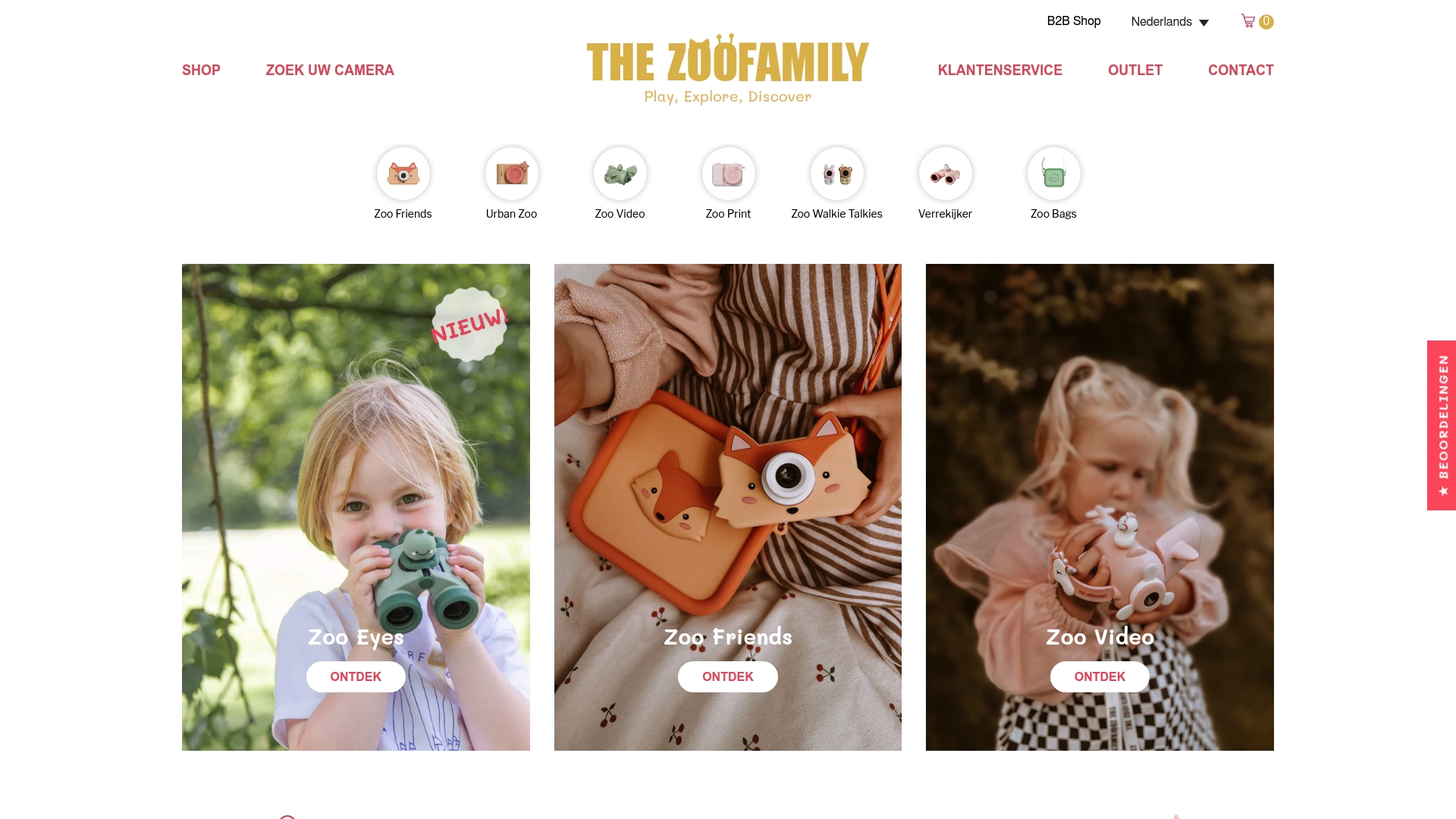
Pair a camera with a project. Photograph the birds at your feeder, record your bug hotel over a month, or take pictures of your neighbourhood clean-up. A walkie-talkie set also works well for team projects. Our article with seven teamwork stories shows how children can work together.
A simple one-week family kindness plan
If you want a ready plan, try this. Each day takes 10 to 30 minutes.
- Monday: Make a family kindness chart and choose this week’s person or group to help.
- Tuesday: Make cards or decorate paper bags with your kindness kit.
- Wednesday: Do one kind thing at home, such as sharing a chore.
- Thursday: Fill the bird feeder, tidy a patch of garden or pick up litter on a short route.
- Friday: Deliver your cards, bags or food collection, with permission.
- Weekend: Sit together and talk. What did you enjoy? Who did it help? What will you do next week?
Action for Children notes that teaching kindness helps children develop empathy and self-esteem, which supports a sense of belonging and greater overall happiness (Action for Children). A weekly rhythm gives that learning time to settle.
FAQ
What is a good first family kindness project?
A handmade card or a food bank collection is a good first project. Both are quick, cheap and easy to share between family members. Choose who you want to help, give each person a job and talk about it afterwards.
How do I get young children involved?
Give them tasks they can finish: drawing, sorting, carrying light items or decorating bags. Stay close and handle anything involving scissors, heat or roads yourself. Praise the kind act, not the result.
How do I keep children safe during a project?
Supervise at all times and set clear zones where children may go. Ask any organisation for permission before you deliver or work for it. Online, teach children not to share personal details such as addresses or passwords.
How often should we do a kindness project?
Once a week is enough for most families, and even once a month works. Keep each project short so that it stays enjoyable. A regular time, such as Sunday afternoon, helps it become a habit.
Sources
- National PTA: Community Kindness
- Doing Good Together: 24+ Quick Acts of Kindness for Families
- Action for Children: Activities for teaching kindness to toddlers and children
- BBC Children in Need: Daily Kind Acts
- UNICEF Parenting: Bullying, what is it and how to stop it
- British Red Cross: Kindness activity pack
- UNICEF: How to be safe on the internet
- UNICEF Parenting: How to talk to your children about conflict and war
- Bloomwise Learning: Mindfulness for preschoolers
- Riverside Pet Club: Surrender and rehoming