

Every parent faces that moment when a curious question about the environment leads to bigger worries about the world children will inherit. For families in France and Germany, nearly 1 billion children globally face extreme risks to their well-being due to climate change, from polluted air playgrounds to anxiety about their futures. This topic matters because protecting children’s health means understanding not just rising temperatures, but daily choices and hopeful actions that help your family connect with and care for nature.
Table of Contents
- What Climate Change Means For Children
- Major Causes And How It Happens
- Effects On Animals, Plants And People
- Real Stories And Family-Friendly Facts
- Empowering Kids To Help The Planet
Key Takeaways
| Point | Details |
|---|---|
| Impact on Children | Children face unique vulnerabilities to climate change, affecting their physical and mental health during crucial developmental years. |
| Empowerment Through Education | Educating children about climate change inspires them to take action and see themselves as part of the solution. |
| Local Actions Matter | Children can engage in local environmental projects, fostering a sense of agency and community involvement. |
| Hope and Solutions | Presenting stories of positive environmental actions alongside challenges helps children develop hope and resilience. |
What Climate Change Means for Children
Climate change is reshaping the world your children will inherit, and the impact is far more personal than abstract statistics about rising temperatures. Unlike adults who may have years to adapt, children face a fundamentally altered planet during their most critical developmental years. Climate change threatens children’s physical and mental health through shifting weather patterns, air quality degradation, water contamination, and the spread of infectious diseases. The reality is that nearly 1 billion children globally face extreme risks to their well-being, with consequences ranging from disrupted education to anxiety about their future. For a mum in France or Germany, this might mean worrying about heatwaves affecting your children’s school holidays, unpredictable flooding in your region, or the quality of the air your little ones breathe during outdoor play.
Your children’s health and development are affected from conception through adulthood, which is why climate change is not simply an environmental issue but a children’s health crisis. Young bodies are uniquely vulnerable to climate impacts because their immune systems are still developing, their organs are more sensitive to pollutants, and they cannot yet make independent choices about their safety. Many children experience increased mental health challenges as they become aware of environmental changes around them, with some developing eco-anxiety or depression about what the future holds. The food they eat may become less nutritious as crop yields decline. The water they drink could be contaminated. The summers they look forward to may become dangerously hot. Understanding how to care for the earth for our children helps transform this anxiety into purposeful action that strengthens your family’s connection to nature.
What makes this situation particularly urgent is that children have virtually no voice in the decisions being made about climate policy and finance, despite bearing the heaviest consequences. The solutions that work best are those that place children at the centre, recognising that their perspectives and needs drive more effective environmental action. As a parent, you have the power to bridge this gap by teaching your children about climate change in ways that inspire agency rather than despair. When children understand what is happening and why it matters, they develop resilience and become part of the solution rather than passive observers of the problem.
Pro tip: Start conversations about climate change by focusing on what your children can directly observe and control in your neighbourhood, such as local wildlife, seasonal changes, or family gardening projects, rather than overwhelming them with global statistics.
Here is a summary of how climate change affects children differently compared to adults:
| Factor | Impact on Children | Impact on Adults |
|---|---|---|
| Immune System | Still developing, high risk | Fully developed, lower risk |
| Organ Sensitivity | More sensitive to toxins | Less sensitive to pollutants |
| Personal Agency | Cannot protect themselves | Can make safety decisions |
| Vulnerability to Stress | Prone to eco-anxiety | Greater coping mechanisms |
| Health Consequences | Higher lifelong impacts | Effects may be less enduring |
Major Causes and How It Happens
Climate change is not some mysterious force beyond our control. It happens because of specific human activities that release gases into the atmosphere, and understanding how this process works helps you explain it to your children in ways that feel real and actionable. The greenhouse effect is not new—it’s a natural process that keeps Earth warm enough for life. What has changed is that humans have dramatically intensified it. When we burn fossil fuels for electricity, heating our homes, powering cars, and manufacturing goods, we release carbon dioxide into the air. When we raise livestock for meat and dairy, cattle release methane. When we clear forests to make space for agriculture or development, we remove trees that would otherwise absorb carbon dioxide. These activities have increased greenhouse gases in the atmosphere, trapping more heat than ever before and warming the planet at a pace that disrupts natural systems.
Think of the atmosphere like a blanket around Earth. A thin blanket keeps you warm at night—that is the natural greenhouse effect. But when you pile on extra blankets, you overheat. That is what is happening now. Gases like carbon dioxide, methane, nitrous oxide, and chlorofluorocarbons act as those extra blankets, holding heat close to the surface instead of allowing it to escape into space. The burning of fossil fuels is the largest contributor, accounting for the majority of emissions in most industrialised countries. In France and Germany, transport and heating are particularly significant sources because of your cooler climates and reliance on energy for comfort. Agriculture contributes substantially as well, especially in regions with intensive farming. Industrial processes, cement production, and chemical manufacturing add more greenhouse gases. What makes this urgent is the speed—natural climate variations happen over thousands of years, but current warming has occurred in just decades.
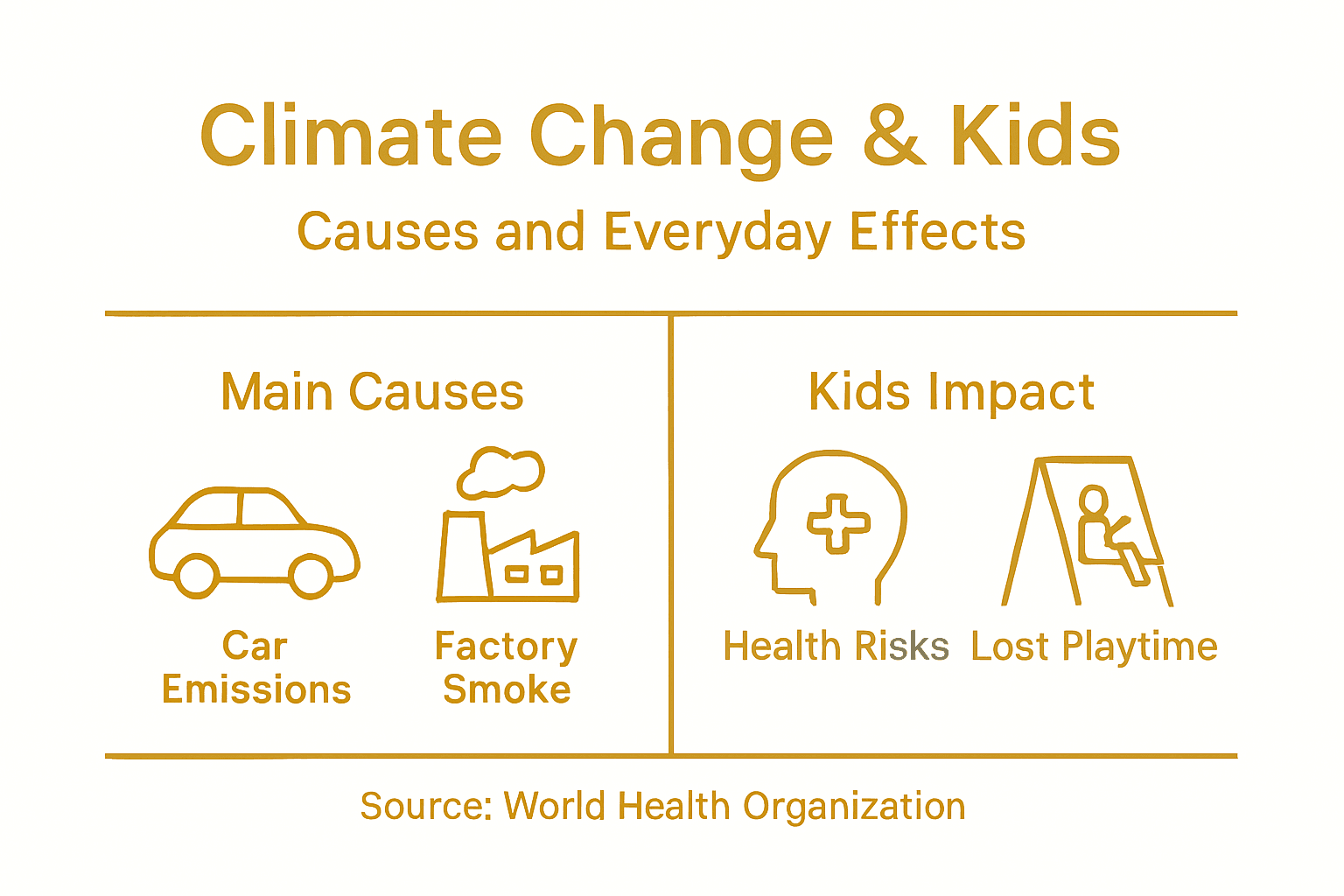
What separates recent climate change from natural variations is that natural factors like solar activity and volcanic eruptions contribute minimally to today’s warming. Scientists can distinguish between natural and human causes by examining the chemical signatures of the gases and studying historical climate patterns. The evidence is clear: human activities are responsible for approximately 97 percent of recent warming. This matters to you because it means the problem is not beyond our influence. The same human choices that created this situation can also solve it. Every action you take—from reducing energy use to teaching your children about consumption—contributes to shifting our collective trajectory.
Pro tip: Help your children understand their own carbon footprint by tracking one family activity over a week, such as car journeys or energy use, then brainstorm together how you might reduce it—this transforms abstract science into tangible family action.
To better understand the sources of greenhouse gases, see this comparison of major contributors:
| Activity Type | Greenhouse Gas Produced | Example Sources |
|---|---|---|
| Transportation & Heating | Carbon dioxide | Cars, lorries, home boilers |
| Agriculture | Methane, nitrous oxide | Cattle farming, fertilisers |
| Industrial Processes | Multiple gases | Cement and chemical factories |
| Deforestation | Carbon dioxide | Logging, land clearance |
Effects on Animals, Plants and People
Climate change is not affecting just distant polar bears or distant rainforests. It is reshaping the living world around you right now, from the birds visiting your garden to the crops grown in nearby fields to the health and wellbeing of your own family. Rising temperatures and shifting weather patterns are fundamentally altering where animals can live and what plants can grow. When springs arrive earlier, migratory birds that have travelled thousands of kilometres find food sources have already peaked, leaving them undernourished. When summers become hotter and drier, forests experience more wildfires, destroying habitats that took centuries to develop. When rainfall patterns change, rivers dry up or flood unpredictably, affecting everything from freshwater fish to the agricultural systems communities depend on. The effects ripple outward in ways that might seem invisible until you notice your local apple harvest is smaller, or the hedgehogs you used to see in your garden have disappeared.
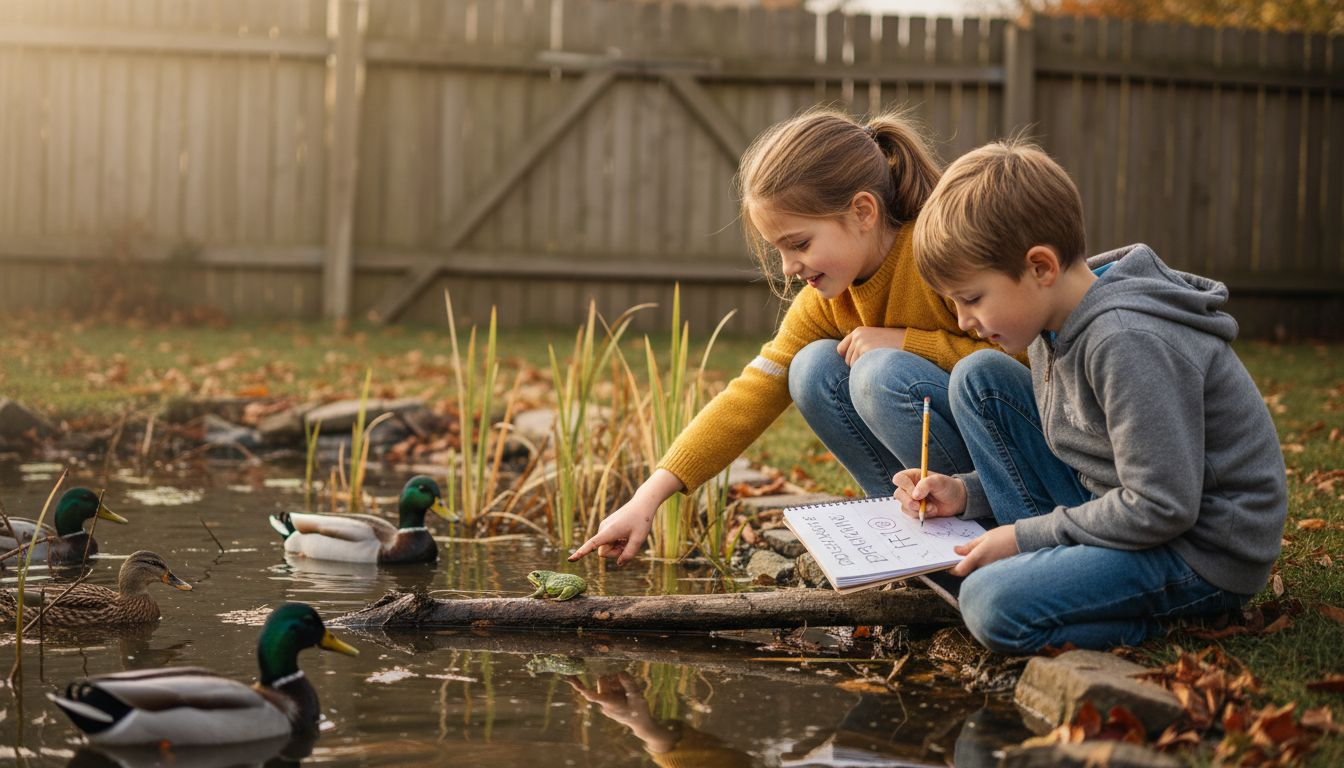
In the oceans, the story is equally sobering. Warming waters cause coral bleaching, where heat stress forces corals to expel the colourful algae living inside them, leaving bleached skeletons behind. These coral reefs support roughly one quarter of all marine species, so their collapse threatens fish populations that billions of people rely on for food and income. Ocean acidification, caused by increased carbon dioxide absorption, makes it harder for shellfish and other creatures to build their shells and skeletons. Fish are shifting their ranges, moving toward cooler waters, which disrupts fishing industries and food security in vulnerable coastal communities. On land, climate change impacts on wildlife habitats are forcing animals to migrate or adapt faster than they can manage. Species that cannot move or evolve quickly enough face extinction.
For people, the consequences are equally serious. Droughts threaten food production and clean water access, particularly in regions already struggling with poverty and limited resources. Extreme weather events like floods, hurricanes, and wildfires destroy homes, infrastructure, and livelihoods. Communities in low-lying areas face rising sea levels that literally erase their land. Disease-carrying insects like mosquitoes spread into new regions as temperatures warm, bringing malaria and dengue fever to places where they previously could not survive. The poorest and most vulnerable populations suffer most, despite having contributed least to the problem. Yet your children’s generation will inherit a world where they must navigate these challenges alongside their peers globally. This is why teaching them to care for nature is not just about environmental ethics—it is about building their capacity to live in a changing world with resilience and compassion.
Pro tip: Create a “nature notebook” with your children where you record local wildlife sightings, plant blooming dates, and weather patterns across seasons, helping them observe climate changes firsthand whilst building scientific observation skills.
Real Stories and Family-Friendly Facts
Climate change can feel overwhelming when you think about it in abstract terms, but real stories bring it to life in ways your children can understand and relate to. Consider the story of the vanishing snow leopards in the Himalayas. These magnificent cats live high in the mountains where snow and cold temperatures are essential to their survival. As temperatures rise, snow falls later and melts earlier, forcing these animals to hunt at lower elevations where they encounter humans and livestock. Children can visualise this change, understanding that animals are not just statistics but creatures with real lives disrupted by shifting conditions. Or think about the Australian bushfires of 2019 and 2020, where entire communities faced terrifying flames and smoke that turned day into darkness. Families evacuated their homes, and countless native species lost their habitats. These stories, whilst difficult, help children grasp that climate change is happening now, not in some distant future.
Closer to home in Europe, you have relatable examples your children can observe directly. The alpine glaciers in the Alps are retreating at an alarming rate. If you have taken family trips to ski resorts or hiked in the mountains, you may have noticed thinner snow cover or glacial lakes that did not exist a decade ago. Spring arrives earlier each year across France and Germany, meaning plants bloom before their pollinators emerge, disrupting the delicate timing that nature has relied on for millennia. The migration patterns of birds are shifting. Flooding has become more severe and unpredictable in recent years, affecting communities across both countries. These local changes make climate change tangible rather than theoretical. When you point out that cherry blossoms are appearing two weeks earlier than they did when you were a child, that is climate change your children can see and remember.
What makes these stories powerful is pairing them with examples of solutions already underway. Across Europe, renewable energy projects are expanding rapidly. Communities are planting millions of trees. Engineers are developing cleaner technologies. Organisations are protecting vital habitats. Young people are organising climate strikes and demanding action from leaders. Age-appropriate conversations about climate change that acknowledge emotions whilst sharing stories of progress help children develop hope rather than despair. They learn that the problem is real, but so are the solutions. When you tell your children about a local environmental group restoring a wetland, or show them a news story about a country reaching 100 percent renewable energy, you give them permission to feel optimistic about their role in creating change.
Intersperses facts with stories creates a balanced picture. Children learn that polar ice is melting, but they also learn about polar scientists working to protect polar bears and study climate solutions. They understand that forests are burning, but they also discover reforestation projects replanting thousands of trees. The goal is not to shield children from difficult truths, but to present those truths alongside evidence that humans are capable of responding positively when we choose to.
Pro tip: Watch age-appropriate climate documentaries or read picture books about environmental change together, then discuss what your children noticed and felt, allowing them to process information at their own pace whilst building critical thinking skills.
Empowering Kids to Help the Planet
Your children do not need to wait until they are adults to make a difference. In fact, some of the most meaningful environmental action happens when children take charge and realise their own power to create change. Education is the foundation that transforms awareness into action. When children understand how ecosystems work, how their choices affect the planet, and what solutions exist, they shift from feeling helpless to feeling capable. They begin asking questions about why the family drives a particular way, what happens to plastic after bin day, or whether the food they eat was grown sustainably. These conversations, sparked by genuine curiosity, are where real change begins. Education drives environmental action by building problem-solving skills and inspiring youth-led initiatives that connect classroom learning with tangible environmental stewardship.
The most powerful way to empower children is to give them real projects they can lead or participate in meaningfully. This is not about token gestures. It means starting a family composting system and letting them manage it, planting a native flower garden to attract pollinators, creating a water-saving challenge in your household, or participating in local clean-up days where they see the direct results of their work. When children plant a tree and watch it grow, or remove litter from a local stream and see the difference immediately, they understand viscerally that their actions matter. Community initiatives like school gardens, neighbourhood tree-planting days, or local environmental organisations often welcome family volunteers. These experiences build confidence and belonging. Children learn that they are not alone in caring about the planet, and that their generation is already leading the charge on climate action.
Encourage your children to become advocates and teachers in their own circles. A child who understands climate change can explain it to their grandparents, educate their friends, or inspire cousins to change their habits. This peer influence is powerful. Schools increasingly welcome student-led environmental projects, from starting recycling programmes to organising awareness campaigns. Some children become involved in youth climate councils or environmental clubs where they directly influence policy conversations. Others use creativity to spread their message through art, music, writing, or social media. The specific form of action matters less than the fact that children see themselves as agents of change rather than passive observers. Equipping young people with knowledge and skills for climate action positions them as active leaders in shaping sustainable futures.
At home, you model this empowerment by taking your own climate actions seriously and inviting your children into the process. When they see you making thoughtful choices about consumption, energy, food, and waste, and when you explain your reasoning, you show them that individual actions accumulate. Protecting the planet daily with your children transforms abstract environmental concerns into family values and practical routines. The goal is not to create perfectionism or guilt, but to build a household culture where caring for nature is normal, valued, and fun. Your children will carry these values and habits into adulthood, influencing their own families and communities.
Pro tip: Let your child choose one environmental project they genuinely care about, whether protecting a local species, reducing household waste, or cleaning a nearby green space, and support them in leading it so they experience the satisfaction of their own agency.
Inspire Your Child to Care for Nature with The Zoofamily
The challenges of climate change on children are real and immediate. With developing immune systems and limited personal agency, children need more than facts—they need inspiring tools that connect their curiosity with the natural world. At The Zoofamily, we understand your desire to empower your family to turn eco-anxiety into positive action while fostering a deep bond with nature. Our specially designed kids’ cameras, walkie-talkies, and binoculars feature animal references crafted to ignite a child’s imagination and love for the environment. Every product you choose not only encourages outdoor exploration but also supports reforestation efforts because for every camera sold, we plant a tree.
Explore how small choices lead to meaningful change by equipping your children with engaging tools from The Zoofamily. Start nurturing their role as agents of change today with products that celebrate nature and empower your family to take action. Visit The Zoofamily main site to discover our full range and be part of a community committed to restoring natural beauty for generations to come.
Frequently Asked Questions
What is the impact of climate change on children’s health?
Climate change threatens children’s physical and mental health, making them more vulnerable to issues such as respiratory illnesses, increased stress, and reduced nutrition due to declining crop yields. Young bodies are still developing, which heightens these risks.
How can I explain climate change to my children?
Start by discussing observable changes in your local environment, such as seasonal weather variations, local wildlife, and gardening projects. Use relatable stories and practical examples to make the concept of climate change more tangible and less abstract for them.
What actions can children take to help combat climate change?
Children can engage in meaningful environmental projects, such as starting a compost system, planting a garden, or participating in local clean-up events. Empowering them to lead these initiatives helps them understand their impact and fosters a sense of agency.
How can I help reduce my family’s carbon footprint?
You can track and reduce energy and transportation use, implement recycling practices, and encourage sustainable food choices. Discussing these efforts with your children instils values of sustainability and responsible consumption in your household.
Recommended
- 7 top livres enfants nature pour éveiller l’écologie – The Zoofamily
- Comprendre comment prendre soin de la terre pour nos enfants – The Zoofamily
- Meilleurs gadgets plein air enfants – Comparatif 2025 – The Zoofamily
- Comment protéger la planète au quotidien avec ses enfants – The Zoofamily
- Wildlife Nistkasten mit Metalldach | Ideal für Kohlmeisen & Sperlinge