

TL;DR:
- European parents in 2025 prioritize outdoor exploration over screens and structured activities.
- Unstructured outdoor play enhances children’s creativity, resilience, and emotional wellbeing.
- Families are increasingly choosing eco-certified products and incorporating sustainability into daily routines.
Scroll through any parenting forum in Europe right now and you will notice something striking. Rather than racing to buy the latest educational app or sign their children up for more structured classes, parents are heading outside. They are growing things, collecting leaves, and swapping plastic toys for wooden ones with ethical certifications. Far from the screen-dominated childhoods many predicted, 2025 has brought a genuine and research-backed surge in nature-focused parenting, eco-conscious product choices, and a renewed commitment to unstructured creative play. Here is what is driving that shift, what the evidence says, and how you can bring these trends into your family’s everyday life.
Table of Contents
- What’s shaping parenting trends in 2025?
- Nature-focused play: creativity, resilience and wellbeing
- Sustainability in everyday parenting
- Challenges and practical strategies for European families
- What most advice misses about parenting trends in 2025
- Discover family-friendly resources for sustainable parenting
- Frequently asked questions
Key Takeaways
| Point | Details |
|---|---|
| Nature play leads trends | Unstructured, outdoor activities are crucial for creativity and health in 2025 parenting. |
| Sustainability is mainstream | Eco-certified products and daily sustainable choices are increasingly normal in European parenting. |
| Barriers remain | Time, money and access still challenge families—but flexible, creative solutions exist for most households. |
| Small efforts matter | Even short outdoor moments or simple sustainability tips can make a real impact on children’s wellbeing. |
What’s shaping parenting trends in 2025?
To understand where parenting is heading, it helps to see where it currently sits. Formal childcare remains a cornerstone of European family life. EU data shows that 68.5% of children aged 3 to school age attended formal childcare for at least 25 hours per week in 2024, and even for under-3s the figure has risen to 39.3%. These are significant numbers, and they tell us that structured care settings are deeply embedded in how European families organise daily life.
Yet the data also reveals a troubling gap. Children from at-risk families access formal childcare at a rate of 59%, compared to 71.4% for the general population. That 12-percentage-point difference means some of the children who would benefit most from stimulating environments are least likely to reach them. This is precisely why the complementary role of accessible, low-cost, outdoor and nature-based play matters so much. It levels the playing field without requiring a waiting list or a monthly fee.
Key emerging themes in parenting for 2025:
- A measurable shift from screen-based entertainment toward unstructured outdoor exploration
- Growing consumer demand for eco-certified products in nurseries, toy boxes, and wardrobes
- Increased interest in nature crafts, wildlife observation, and garden-based learning
- A push to integrate sustainability education naturally into daily routines rather than as a lesson
- Greater awareness of how unequal access to quality environments affects child development
Families exploring Earth Day activities for their children are no longer doing so as a novelty once a year. Many are building these habits into weekends, school holidays, and even short weekday evenings. The trend is less about grand gestures and more about consistent, small choices.
| Trend area | 2022 parent priority | 2025 parent priority |
|---|---|---|
| Screen-based learning tools | High | Moderate |
| Outdoor and nature play | Moderate | Very high |
| Eco-certified products | Low | High |
| Unstructured creative time | Moderate | High |
| Formal enrichment classes | High | Moderate |
The numbers point in one clear direction: nature, creativity, and sustainability are not passing fads. They are reshaping how European parents think about childhood itself.
Nature-focused play: creativity, resilience and wellbeing
If access to formal childcare falls short for some families, outdoor play offers a powerful, research-backed alternative. The evidence here is genuinely compelling.
The 2025 Position Statement on Active Outdoor Play, developed with input from European research, makes a strong case that unstructured outdoor play is essential for creativity, physical health, and emotional resilience in children. Crucially, it is not just “going outside” that makes the difference. The features of the outdoor environment matter enormously. Gardens with varied textures and climbing elements, playhouses, loose parts like sticks and stones, and proximity to wildlife all increase what researchers call “exploratory play diversity.” Children who can poke around in soil, peer at insects, and build dens with branches are engaging entirely different cognitive and physical skills than those on a flat tarmac playground.
Separate research found that hiking frequency predicts significantly higher health-related quality of life and sleep consistency in children aged 8 to 12. That connection between regular outdoor activity and better sleep alone is something many exhausted parents will find immediately motivating. The study also confirmed that environments featuring gardens and playhouses produce greater play diversity compared to open, featureless spaces.
“Children allowed to take manageable risks outdoors show stronger problem-solving abilities and greater emotional self-regulation than those in exclusively supervised, structured settings.”
How to maximise the benefits of outdoor play:
- Prioritise variety in the outdoor environment: a garden with different zones (digging patch, planting area, climbing structure) beats a larger but uniform space every time.
- Reduce the urge to intervene: stepping back and allowing children to navigate small challenges builds the resilience the research describes.
- Introduce nature tools like binoculars, magnifying glasses, or child-friendly cameras to spark genuine curiosity about the world beyond the back fence.
- Connect outdoor time to child development outdoors by mixing physical activity with observation tasks: “Can you find three different-shaped leaves?” is more stimulating than open-ended “go and play.”
- Consider regular family hikes, even short ones of 30 to 60 minutes, as a consistent wellbeing investment rather than an occasional treat.
Creating gardens for child exploration does not require a large plot. Even a small balcony with containers of herbs, a bird feeder, and a shallow tray of water for insects can deliver meaningful nature contact for urban children.
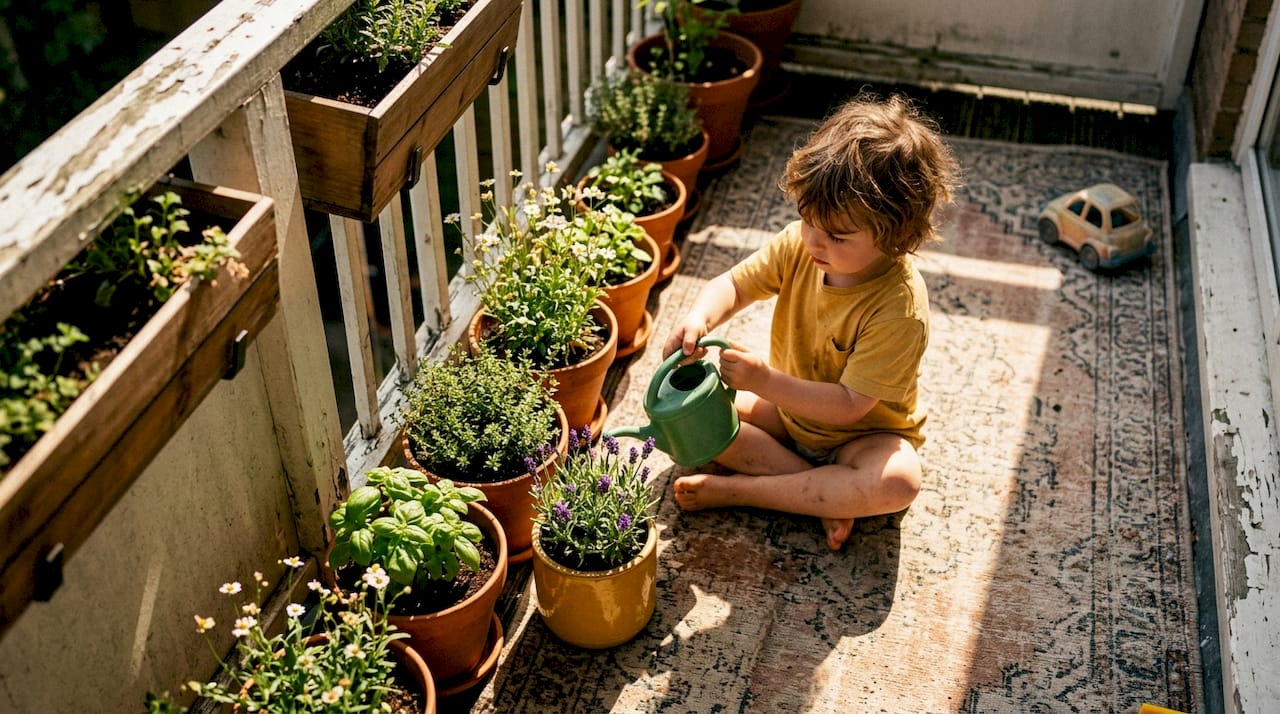
Pro Tip: Keep a small “nature bag” by the door with a notebook, pencil, and a simple magnifying glass. Even a 15-minute walk becomes a mini-expedition when children have tools and a purpose.
Sustainability in everyday parenting
Sustainability does not stop at outdoor play. It is becoming part of product choices and daily routines in ways that were largely niche just three years ago.
For parents navigating this space, eco-certifications can feel confusing at first. Here is a quick breakdown of the main ones you will encounter:
FSC (Forest Stewardship Council): Covers wood and paper products, guaranteeing responsible forest management. Relevant for wooden toys, books, and craft materials.
GOTS (Global Organic Textile Standard): The gold standard for fabrics. It certifies both the organic origin of fibres and the ethical conditions of production. More rigorous than OEKO-TEX, which focuses primarily on chemical safety but does not cover labour standards.
OEKO-TEX Standard 100: Certifies that every component of a textile has been tested for harmful substances. A solid baseline, but as research notes, GOTS exceeds OEKO-TEX for overall ethical rigour. Hybrids are sometimes needed where breathability and performance matter alongside ethics, for example in children’s outdoor clothing.
| Product type | Eco-certified option | Conventional option | Performance difference | Cost difference |
|---|---|---|---|---|
| Wooden toys (FSC) | Yes | No certification | Comparable durability | 15–30% higher |
| Children’s clothing (GOTS) | Yes | Standard cotton | Very similar | 20–40% higher |
| Bath toys (OEKO-TEX) | Yes | Standard plastics | Comparable | 10–25% higher |
| Craft materials (FSC) | Yes | Standard paper | Identical | Minimal |
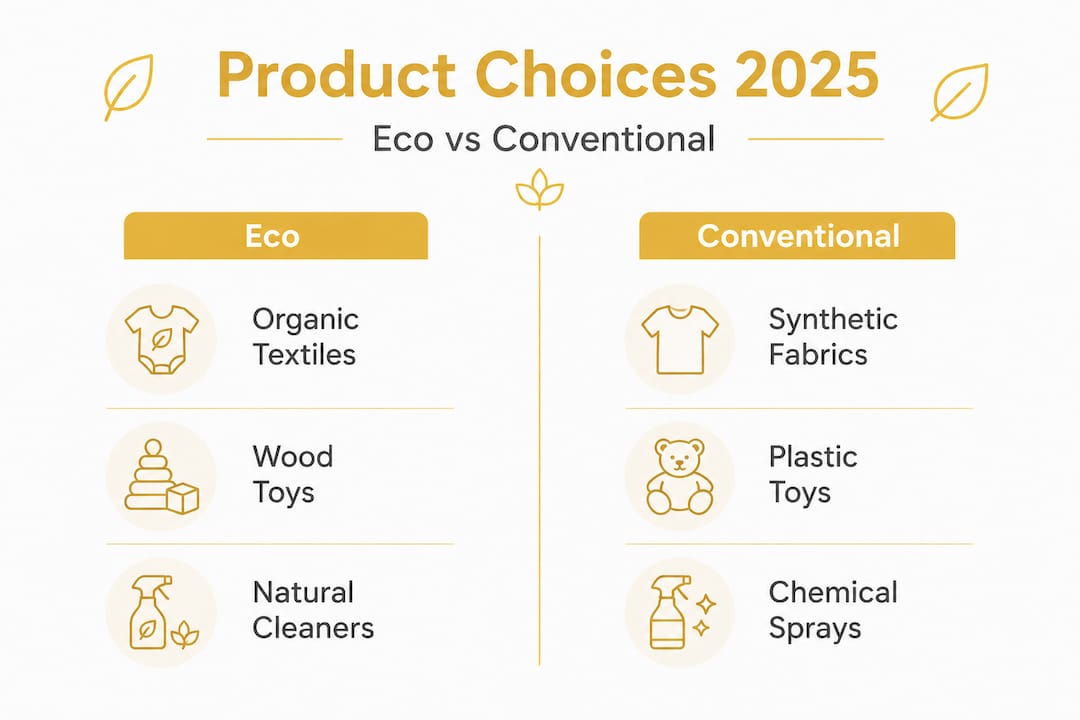
The ParticipACTION 2025 Position Statement on active outdoor play notes that weather and time remain genuine barriers to consistent outdoor engagement, but families who succeed tend to focus on motivation and creative problem-solving rather than perfect conditions. This applies equally to sustainability: you do not need to replace everything at once or spend a fortune. Starting with one certified product category and building from there is both practical and effective.
Accessible ways to teach sustainability daily:
- Involve children in choosing eco-certified products at the shop, explaining simply what the label means
- Set up a small composting system together, even a countertop bin for kitchen scraps
- Make nature crafts a regular weekend activity using materials found outside: seed pods, fallen leaves, and small branches
- Read picture books featuring environmental themes, then discuss them over dinner
- Explore eco-friendly parenting tips and eco-certified bath toys as entry points to larger habit changes
The shift does not require perfection. A family that makes three sustainable swaps a month and spends one afternoon outdoors each weekend is already living the trend in a meaningful, manageable way.
Challenges and practical strategies for European families
Knowing both the opportunities and constraints, here is how real families are bringing sustainability and unstructured play into daily life despite the inevitable friction.
Time is the most commonly cited barrier, and it is a legitimate one. European parents working full-time and managing school runs, meals, and household responsibilities do not always have an hour free for a woodland walk. The good news is that outdoor play benefits can accumulate quickly: research points to measurable attention boosts after as little as 20 minutes outside. That means even a short loop around the block after school, or ten minutes in the garden before dinner, contributes meaningfully.
Practical strategies for different family situations:
- Urban families with no garden: Use window boxes for growing herbs or salad leaves. Visit a local park with a specific nature mission (count how many birds you spot, find three types of bark). Many European cities have community allotments accessible to families for a modest annual fee.
- Families with tight budgets: Focus on free outdoor activities: beach-combing, pond-dipping with a net from a pound shop, or building a bug hotel from recycled materials. Sustainable does not have to mean expensive.
- Families with limited time: Batch outdoor time at weekends. One longer walk or nature outing replaces several short sessions and often creates stronger memories and more imaginative play.
- Families in wet or cold climates: Invest in good waterproof layers for children and reframe rain as an asset. Puddles, mud, and running water are extraordinarily engaging for young children who are dressed appropriately.
- Families with mixed-age children: Nature play scales beautifully. A toddler can collect stones while an older sibling identifies plant species with a field guide. Both are engaged, both are learning, and the activity requires minimal adult direction.
Connecting these micro-moments to resources like nature play at home helps families build a consistent vocabulary and identity around outdoor, creative living. It stops feeling like an effort and starts feeling like who you are.
Pro Tip: Create a “nature shelf” in your home where children can display found objects: an interesting stone, a feather, a pressed flower. It costs nothing, sparks conversation, and makes children feel that what they find outside genuinely matters.
What most advice misses about parenting trends in 2025
Here is the perspective that most trend roundups overlook. The conversation about parenting in 2025 is often framed as a battle between technology and nature, screens versus mud, structured versus free. That framing, while tidy, does not reflect how families actually live.
Technology and nature are not opposites. A child using a kids’ camera to photograph beetles in a wildlife-friendly garden is using technology in service of nature connection. A family watching a documentary about ocean ecosystems before planting a wildflower patch is weaving both together. The issue was never the tool; it was always the intention behind it.
What the trend coverage also misses is the weight of “doing it all right.” Parents who cannot afford FSC toys, who live in flats with no outdoor space, or who are working two jobs are not failing their children by falling short of the idealised nature-parenting picture. What matters is consistency of small moments, not the perfection of any single one.
At The Zoofamily, we see this clearly in how children respond to our binoculars and cameras. It is not the product itself that creates the connection. It is the moment a child lifts a pair of binoculars and genuinely sees a bird they had never noticed before. That moment of attention and wonder can happen in a suburban garden, a city park, or a hedgerow in the countryside. The setting matters less than the encouragement.
Adaptability is the real parenting superpower in 2025. Parents who give themselves permission to do nature imperfectly, to choose one sustainable swap rather than a complete overhaul, and to see a muddy 20-minute walk as a genuine investment rather than a poor substitute for something grander: those are the parents whose children are genuinely thriving.
Discover family-friendly resources for sustainable parenting
You have taken in the research, weighed up the challenges, and found the practical entry points. Now it is time to explore tools and guides designed specifically for families like yours.
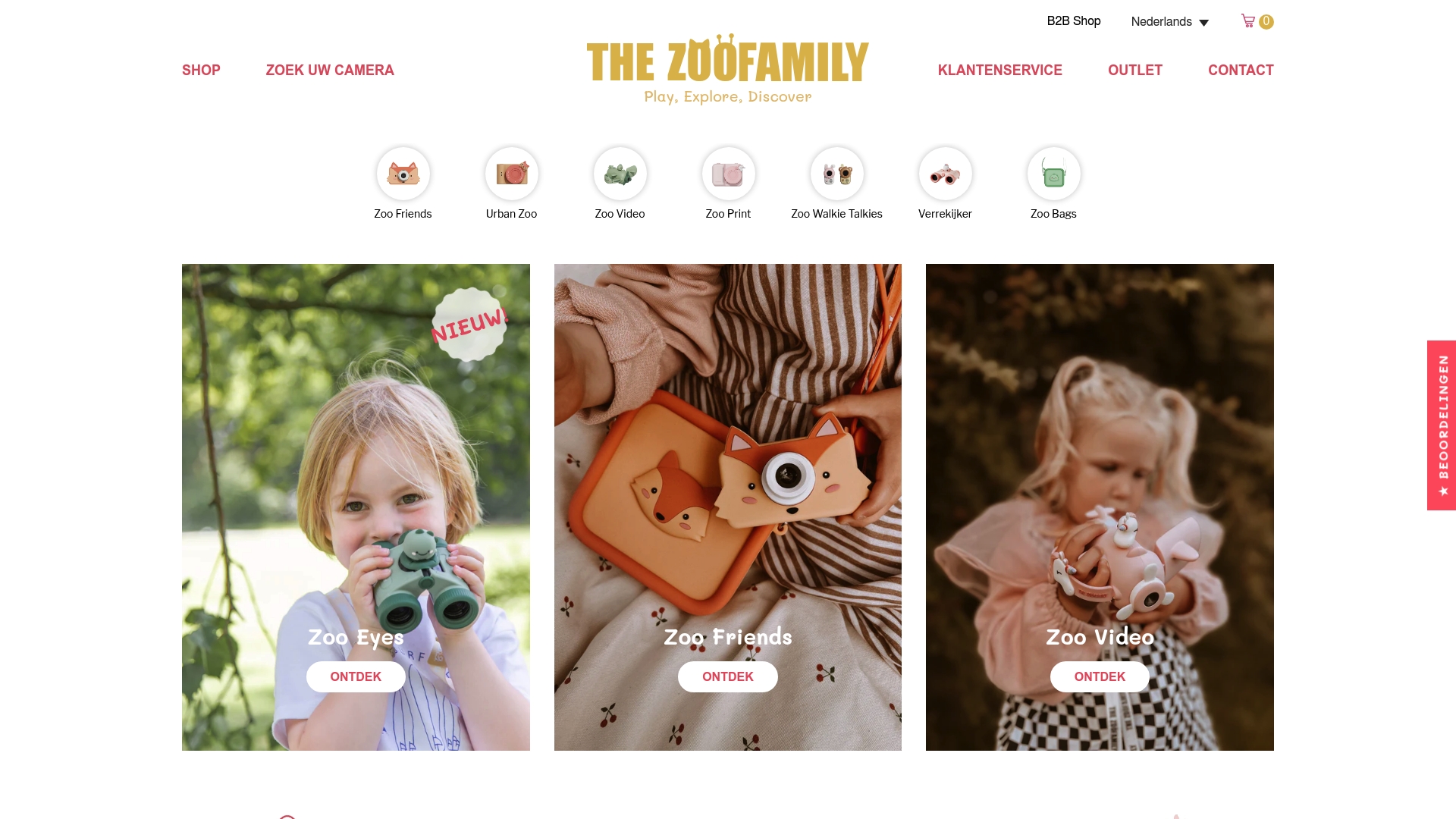
At The Zoofamily, our resources are built around one belief: that creativity and nature connection belong to every child, wherever they live and whatever their budget. From our curated blog guides on eco-conscious parenting to our range of animal-themed cameras, binoculars, and walkie-talkies designed to spark curiosity outdoors, everything we make is designed to bring children closer to the natural world. For every camera sold, we plant a tree, because the world your children are learning to love deserves to still be there when they grow up. Browse our full range and content library at The Zoofamily and find the tools that make nature feel like the greatest adventure of all.
Frequently asked questions
Are eco-friendly products as effective as conventional ones for children?
Yes, eco-friendly products match conventional options in performance across most categories, though they typically carry a modest price premium worth considering as a long-term investment.
How much time outdoors benefits a child’s creativity and wellbeing?
Research shows measurable attention benefits after just 20 minutes of outdoor play, making even short daily sessions a worthwhile habit for busy families.
What is GOTS certification and why does it matter?
GOTS certifies textiles for both organic fibre content and ethical production standards, and GOTS exceeds OEKO-TEX in overall rigour, making it the stronger choice for families who prioritise both safety and sustainability.
How does nature play compare to structured activities for development?
Unstructured outdoor play delivers broader benefits for creativity, physical development, and resilience than structured programmes, particularly when the environment includes varied features like gardens and climbing elements.