

Many European parents struggle to create inspiring natural play spaces that fit limited gardens whilst honouring environmental values. Balancing space constraints, child development needs, and sustainable choices can feel overwhelming. This guide offers practical strategies to evaluate criteria, select natural materials, and design creative outdoor play areas that connect your children with nature and foster their growth.
Table of Contents
- How To Choose The Best Natural Outdoor Play Ideas For Your Child
- Incorporating Natural Materials For Creative Play
- Creative Multi-Level And Natural Wood Play Zones
- Summary Comparison Of Natural Outdoor Play Ideas
- Discover The Perfect Natural Play Products For Your Family
- Frequently Asked Questions
Key takeaways
| Point | Details |
|---|---|
| Natural materials boost development | Natural playgrounds enhance focus, creativity, motor skills, teamwork, and reduce anxiety compared to plastic structures. |
| Space efficient designs work anywhere | Multi-level zones and sensory paths maximise vertical space, perfect for compact urban gardens. |
| Wildlife gardens teach ecology | Incorporating native plants and mud kitchens promotes hands-on learning about sustainability and local biodiversity. |
| Safety with managed risk | Balanced supervision encourages confident exploration whilst maintaining secure boundaries. |
| DIY natural play is cost effective | Simple projects using logs, stones, and recycled materials offer long-lasting engagement without high costs. |
How to choose the best natural outdoor play ideas for your child
Selecting the right natural play features requires thoughtful evaluation of several key factors. Start by assessing your available outdoor space, noting dimensions, existing features like trees or slopes, and sun exposure patterns. These physical constraints will guide which play structures fit comfortably whilst allowing safe movement.
Consider your child’s developmental stage and interests. Toddlers benefit from sensory exploration and simple climbing, whilst older children crave complex challenges and imaginative hideouts. Natural playgrounds boost kids’ focus, creativity, motor skills, teamwork, and reduce anxiety compared to traditional plastic structures, making them ideal for varied developmental goals.
Prioritise sustainable materials that align with your family’s environmental values. Natural wood, stone, and native plants offer tactile richness whilst supporting local ecosystems. These materials weather beautifully, blending into garden landscapes rather than dominating them with artificial colours.
Safety and managed risk form another crucial criterion. Children need opportunities to test limits and build confidence through age-appropriate challenges. Balance protective boundaries with freedom to explore, creating spaces where supervised risk-taking becomes a learning tool rather than a liability.
Pro Tip: Visit local natural playgrounds or forest schools to observe how children interact with different features before investing in your own space. This firsthand research reveals which elements truly engage kids versus those that sit unused.
For more comprehensive planning guidance, explore innovative outdoor play area ideas that demonstrate how European families maximise small spaces. The science behind natural play provides evidence-based insights into developmental benefits that can inform your selection process.
Incorporating natural materials for creative play
Natural materials transform ordinary gardens into sensory-rich play laboratories. Logs serve multiple purposes: horizontal for balance beams, vertical for stepping posts, and stacked for climbing structures. Their irregular surfaces challenge proprioception and motor planning in ways smooth manufactured equipment cannot match.
Stones offer remarkable versatility in play design. Smooth river rocks create tactile pathways, whilst larger boulders become seating circles for storytelling or climbing challenges. Arrange stones in patterns or scatter them as loose parts, inviting children to reorganise and reimagine their purpose daily.
Native plants add living, changing elements to play spaces. Choose species with varied textures: soft lamb’s ear for stroking, aromatic herbs for crushing, and sturdy grasses for hiding. Parents prefer natural wooden swings over plastic ones due to tactile pleasure, sustainability, and durability, and the same preference extends to planted areas that engage multiple senses.
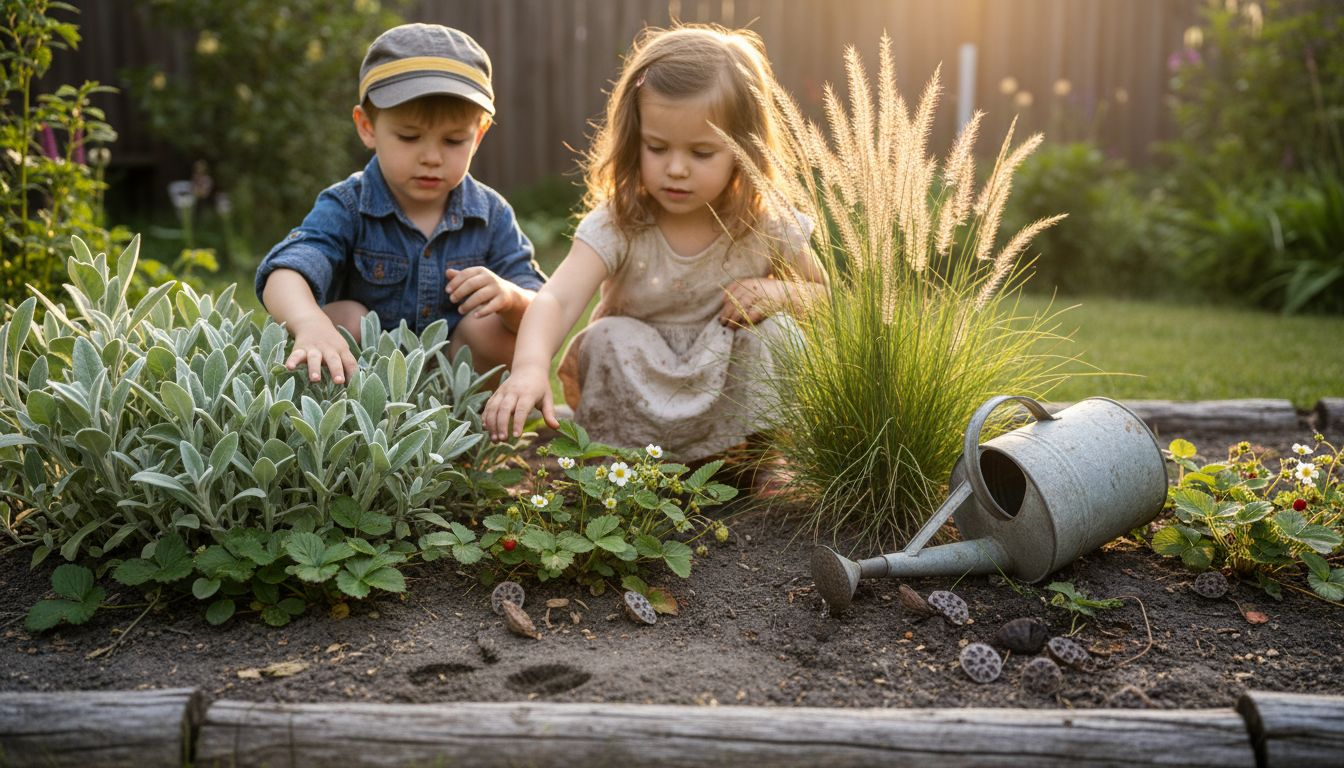
Loose parts like pinecones, shells, seed pods, and twigs fuel open-ended creativity. Children use these materials as currency in games, ingredients in mud kitchens, or building components for fairy houses. Their natural imperfection encourages improvisation rather than prescribed play patterns.
Weathered materials develop character over time rather than degrading into eyesores. Wood silvering, moss-covered stones, and self-seeding plants create evolving landscapes that teach children about natural cycles whilst remaining structurally sound for years.
Pro Tip: Collect natural materials during woodland walks, asking your child to choose pieces that interest them. This involvement builds investment in the play space and teaches sustainable foraging principles.
For detailed implementation strategies, review natural playground ideas for creative play featuring European garden transformations. Additional inspiration appears in children’s natural play area ideas with practical material sourcing guidance.
Creative multi-level and natural wood play zones
Vertical space offers solutions for compact gardens where horizontal expansion proves impossible. Multi-level decks constructed from natural timber create distinct zones at varying heights, each serving different play functions. Upper platforms become observation posts or quiet retreats, whilst ground level remains active for running games.
Natural wood forts provide rustic charm and tactile satisfaction that manufactured playhouses lack. Rough-hewn timber retains organic shapes, inviting imaginative narratives about treehouses or castles. Designing multi-level outdoor decks with natural wood forts allows simultaneous play for different age groups, keeping children engaged and physically active.
These structures accommodate multiple children with varied abilities and interests. Toddlers navigate lower steps whilst older siblings tackle climbing walls or monkey bars integrated into upper levels. This inclusive design promotes sibling cooperation and reduces arguments over space.
Pro Tip: Incorporate storage beneath raised decks for outdoor toys, creating functional use of otherwise wasted space whilst teaching organisational skills.
Design considerations for lasting structures
| Feature | Recommended Approach | Maintenance Frequency |
|---|---|---|
| Timber treatment | Use sustainably sourced hardwood with natural oil finish | Annual re-oiling |
| Deck height | Maximum 60cm for young children, 120cm for older | Check stability quarterly |
| Safety barriers | Natural rope or horizontal logs at 10cm spacing | Monthly tension checks |
| Foundation | Gravel drainage beneath posts prevents rot | Seasonal drainage clearing |
Regular inspections catch developing issues before they become safety hazards. Check for loose fixings, splintering wood, or unstable footing, addressing problems immediately. This proactive maintenance extends structure lifespan whilst ensuring continuous safe use.
Combining climbing challenges, swinging elements, and enclosed hideouts within one multi-level zone maximises engagement per square metre. Children transition between activities without leaving the structure, sustaining longer outdoor play sessions. Discover more innovative outdoor play ideas for integrated designs, and explore modern backyard playground ideas showcasing successful European implementations.
Summary comparison of natural outdoor play ideas
Choosing between natural play options becomes clearer with side-by-side evaluation. This comparison highlights key factors affecting suitability for your family’s specific circumstances, helping prioritise which features deliver maximum value.
| Play Idea | Space Required | Age Suitability | Developmental Focus | Cost Range | Sustainability Rating | Maintenance Level |
|---|---|---|---|---|---|---|
| Multi-level deck | Medium to large | 3-12 years | Physical, social, spatial awareness | £800-£2500 | High (timber lasts 15+ years) | Moderate (annual treatment) |
| Natural wood fort | Small to medium | 4-10 years | Imaginative, physical, problem solving | £300-£1200 | Very high (untreated hardwood) | Low (seasonal checks) |
| Sensory path | Small (linear) | 2-8 years | Sensory, motor skills, body awareness | £100-£400 | High (natural stones/logs) | Very low (occasional repositioning) |
| Wildlife garden | Small to large | 3-12 years | Ecological, observation, responsibility | £150-£600 | Highest (supports biodiversity) | Low (seasonal planting) |
| Mud kitchen | Very small | 2-10 years | Imaginative, fine motor, science concepts | £50-£250 | High (recycled materials) | Very low (occasional cleaning) |
This comparison reveals mud kitchens and sensory paths as ideal starting points for budget-conscious families or small spaces. Their low costs and minimal maintenance deliver immediate engagement whilst you plan larger projects. Wildlife gardens offer exceptional educational value, teaching ecological principles through hands-on observation of insects, birds, and plant cycles.
Multi-level decks and wood forts require greater investment but accommodate wider age ranges and multiple children simultaneously. Their longevity justifies initial costs, particularly for families planning long-term residence. Consider phased implementation, beginning with foundational elements and expanding as children grow.
Reflect on your priorities: physical challenge, creative play, environmental education, or balanced variety. Match these goals against the comparison highlights to identify which natural play features align best with your family’s needs. Further guidance appears in natural playground ideas exploring customisation options for different garden types.
Discover the perfect natural play products for your family
Creating meaningful outdoor experiences goes beyond physical structures to include tools that deepen nature connections. The Zoofamily offers carefully designed products that complement natural play areas, encouraging observation and exploration.
Our animal-themed cameras, walkie-talkies, and binoculars transform gardens into discovery zones where children document insects, track birds, and communicate during imaginative adventures. These tools align perfectly with wildlife gardens and natural play spaces, extending engagement beyond physical activity into scientific observation.
Explore The Zoofamily homepage to discover products supporting your child’s nature connection. Find additional inspiration through innovative outdoor play resources and DIY backyard play ideas offering step-by-step guidance for sustainable projects. Join families across Europe who prioritise environmental values whilst creating joyful childhood memories outdoors.
Frequently asked questions
What are the safest natural materials for outdoor play areas?
Use untreated hardwoods like oak or chestnut, smooth river stones without sharp edges, and non-toxic native plants such as lavender or ornamental grasses. Safety in natural play areas improves by trusting children’s abilities whilst maintaining secure boundaries, reducing injury rates compared to unsupervised play. Maintain clear zone boundaries and conduct regular checks for hazards like splinters, loose rocks, or toxic plant growth. Supervise younger children closely whilst allowing managed risk opportunities that build confidence and physical competence. For comprehensive safety guidance, review practical outdoor play safety ideas addressing European standards.
How can I create a natural play area in a small urban garden?
Consider vertical multi-level decks maximising upward space and compact natural wooden structures like A-frame climbers or low balance beams. Incorporate sensory paths using varied textures along narrow borders, and scatter loose natural parts like logs and stones for versatile rearrangement. Use container gardening with native plants and wildlife attractants such as bee-friendly flowers or bird feeders. Even balconies accommodate mini mud kitchens and potted sensory gardens. Explore innovative outdoor play ideas demonstrating successful small-space transformations across European cities.
What are some cost-effective ways to start a natural play area?
Start with loose natural parts like sticks, stones, pinecones, and leaves collected during walks, costing nothing but providing endless creative possibilities. Build simple sensory paths using accessible materials such as gravel, bark chips, and smooth pebbles arranged in patterns. Create a DIY mud kitchen with recycled pots, pans, and utensils combined with natural elements like water, soil, and sand. DIY natural play projects increase children’s outdoor playtime by 40% on average. Begin small and expand gradually as budget allows, focusing on materials that encourage open-ended play rather than expensive fixed structures. Find detailed instructions in DIY backyard play ideas and cheap natural play ideas.
How do natural play areas support environmental awareness in children?
Natural play areas immerse children in ecological processes, making abstract environmental concepts tangible through daily interaction. Wildlife gardens demonstrate pollination, decomposition, and food chains as children observe insects visiting flowers or birds eating seeds. Mud kitchens teach water conservation and soil composition through hands-on experimentation. Native plant cultivation shows seasonal cycles and local biodiversity importance. This experiential learning fosters genuine care for nature rather than abstract environmental messaging, creating lifelong conservation values through positive childhood associations with outdoor spaces.