

Every parent faces that moment when toys clutter the home but leave little real impact on their child’s curiosity. Finding ways to nurture a love for discovery and an appreciation for the planet can feel like a challenge, especially when you want playtime to mean more than just entertainment. Geography play transforms ordinary spaces into opportunities for children to connect with their environment, developing curiosity, problem-solving skills, and genuine respect for nature—all while having fun. This guide reveals which activities and toys support hands-on learning and spark that lasting connection to the natural world.
Table of Contents
- Defining Geography Play For Young Children
- Types Of Geography Play Activities And Toys
- Benefits Of Playful Geography For Nature Connection
- Choosing Sustainable Toys For Eco-Conscious Learning
- Avoiding Common Pitfalls In Geography Play
Key Takeaways
| Point | Details |
|---|---|
| Geography Learning Through Play | Young children engage in geography play by exploring their surroundings, leading to authentic learning experiences that foster curiosity and critical thinking. |
| Importance of Nature Connection | Regular outdoor exploration nurtures a lasting connection to nature, enhancing children’s respect for their environment and supporting their cognitive and emotional development. |
| Value of Sustainable Toys | Choosing sustainable toys promotes eco-conscious learning, teaching children the importance of sustainable practices while encouraging hands-on exploration and creativity. |
| Avoiding Memorisation Traps | Prioritising understanding over rote memorisation encourages children to build meaningful connections with geographical concepts and their real-world implications. |
Defining geography play for young children
Geography play for young children is far more than colouring in maps or memorising capital cities. It’s about hands-on exploration where children discover how places work, what makes environments unique, and how humans fit within the natural world. When your child builds a sandcastle by the beach, creates a pretend shop in the garden, or explores a local park, they’re engaging with geography in its most authentic form.
At its core, geography play means children learn by doing rather than listening. Play operates as a safe space where young learners ask questions about their surroundings, investigate natural features, and understand different places through direct experience. This approach aligns perfectly with how children’s brains develop best during the early years. Your daughter noticing how water flows differently on steep ground versus flat ground? That’s geography learning happening naturally.
What makes geography play distinctive is that it’s intrinsically motivated. Children choose what interests them, whether that’s tracking where birds nest in the garden, building miniature villages from twigs and stones, or asking why the park looks different in each season. There’s no external pressure or test at the end. This freedom makes learning stick because children pursue their own curiosity.
The spaces where play happens matter too. Play is spatialized, meaning the specific location shapes what children learn. A muddy patch becomes a geography classroom where children discover soil types, drainage patterns, and ecosystem relationships. Your local forest path teaches about terrain, vegetation zones, and how humans navigate natural landscapes. These real environments spark deeper understanding than any worksheet could offer.
Geography play also nurtures something increasingly rare: genuine connection to nature. When children explore freely, get their hands dirty, notice animal tracks, or observe how weather changes an outdoor space, they develop what researchers call “place attachment.” They begin caring about their environment because they genuinely know it.
Pro tip: Start small by letting your child lead nature exploration in your garden or local park at least once weekly, asking “What do you notice?” rather than teaching facts, which transforms any outdoor space into a geography classroom.
Types of geography play activities and toys
Geography play thrives when children have access to activities and toys that invite exploration and hands-on discovery. The best options combine simple materials with open-ended possibilities, allowing your child to create, build, and imagine whilst developing spatial awareness and understanding how landscapes work.
Construction play stands out as particularly effective for geography learning. Building with blocks, LEGO, or natural materials like sticks and stones helps children understand elevation, slope, and how terrain shapes itself. When your child creates a miniature village or constructs hills from sand, they’re exploring topography without realising they’re learning geography. Hands-on building activities improve spatial skills through creative manipulation of geographic features, making abstract concepts concrete and understandable.
Thematic and role play activities unlock imagination whilst building geographic knowledge. Setting up a pretend camping trip, creating a forest shelter, or playing explorer encourages children to think about real-world environments and how humans interact with them. These scenarios prompt questions: Where are we? What challenges does this landscape present? What resources do we need? This type of play develops decision-making skills within geographic contexts.
Model-making using everyday materials opens countless possibilities. Play-Doh works brilliantly for sculpting hills and valleys. Empty boxes become buildings. Natural items like leaves, twigs, and stones create miniature landscapes. These activities teach children how different landforms relate to one another and how geography shapes human settlement patterns.
Board games and simulations provide another valuable avenue. Games that involve resource management, navigation, or community building help children understand cause and effect in geographic systems. They learn how weather affects farming, how distance impacts trade, or how terrain influences where people build homes.
Binoculars, magnifying glasses, and cameras transform outdoor exploration into purposeful investigation. These tools encourage observation of details: animal tracks, plant varieties, water flow patterns. They make children feel like genuine researchers discovering their environment.
Pro tip: Combine purchased toys with found materials from your garden and local park, giving your child permission to collect, build, and modify their geography creations without worrying about mess or perfection.
Here’s how different types of geography play activities support learning:
| Activity Type | Main Learning Focus | Example Toy/Material |
|---|---|---|
| Construction Play | Spatial reasoning, topography | Wooden blocks, LEGO, stones |
| Thematic Role Play | Human-environment interaction | Pretend camping kit |
| Model Making | Landform relationships | Play-Doh, natural objects |
| Outdoor Exploration | Observation, research skills | Binoculars, magnifying glass |
| Board Games/Simulations | Geographic systems, decisions | Resource strategy games |
Benefits of playful geography for nature connection
When your child plays outdoors and explores their surroundings, something shifts inside them. Geography play isn’t just about learning where things are located. It creates genuine, lasting connection to nature that shapes how your child sees their place in the world.
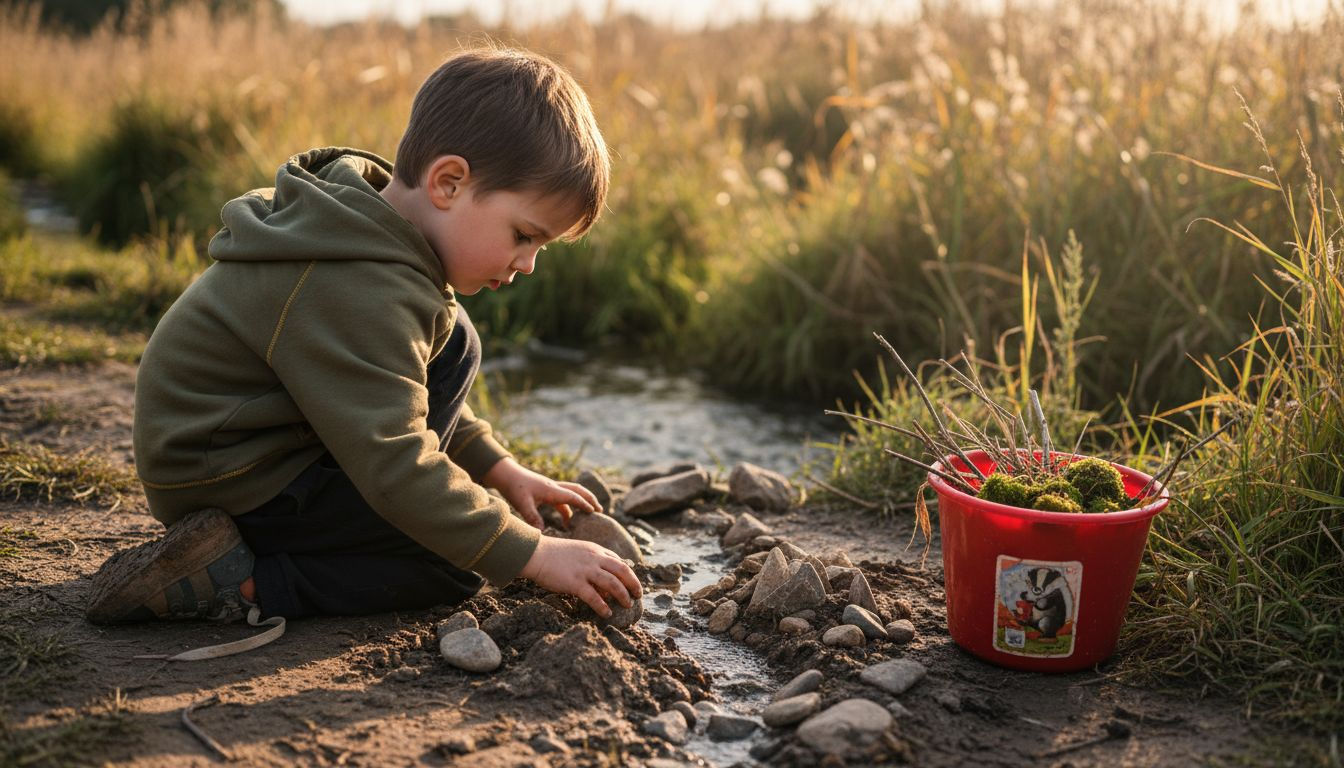
Nature-enhanced learning improves academic performance whilst simultaneously boosting cognitive function and mental wellbeing. Children who learn geography through outdoor exploration develop stronger environmental attitudes and deeper personal compassion. When your daughter builds a shelter from fallen branches or tracks how water moves through different soil types, she’s not just gaining knowledge. She’s developing respect for how natural systems work.
Playful geography in outdoor environments triggers genuine curiosity. Children ask better questions when they’re invested in discovering answers themselves. Why does moss grow on the north side of that tree? Where do these stones come from? What happens to leaves when they fall? These self-directed inquiries create knowledge that sticks far longer than any fact learned from a textbook.
Play in natural settings supports emotional and social development whilst fostering environmental stewardship. Children who regularly play in nature develop creativity, resilience, and problem-solving skills through real-world challenges. They learn to navigate obstacles, adapt to weather changes, and work with what nature provides rather than against it.
There’s something profound about what happens when children feel genuinely connected to a place. They stop seeing nature as something distant or separate. Your child begins caring about that park where she builds mud villages because she knows it intimately. She notices when invasive plants appear or when a stream runs dry. That awareness transforms into action and genuine eco-respect.
Regular outdoor geography play also builds confidence in children. Navigating terrain, solving problems with natural materials, and discovering their own capabilities outdoors creates a sense of competence that radiates into other areas of life.
Pro tip: Revisit the same outdoor space across different seasons with your child, allowing them to observe how geography changes and deepening their connection to that specific place.
Choosing sustainable toys for eco-conscious learning
The toys you select for your child send a powerful message about what you value. Choosing sustainable options means investing in your child’s learning whilst also teaching them that their choices matter for the planet. It’s not about perfection; it’s about making thoughtful decisions that align with your values.
Sustainable toys prioritise eco-friendly materials and ethical production, reducing the environmental impact of traditional toy manufacturing. Wood from responsibly managed forests, recycled plastics, and natural fibres create toys that are safer for your child and gentler on the environment. These materials often last longer too, meaning fewer replacements and less waste accumulating in landfill over time.
Durability matters more than most parents realise. A toy that survives years of play and can be passed to younger siblings or cousins teaches your child something vital: that quality endures. When your daughter plays with a wooden explorer kit that was made to withstand outdoor adventures, she’s learning that thoughtful design creates lasting value.
Look for toys made from sustainable materials using green design principles that explicitly reduce waste and environmental impact. Manufacturers increasingly use wood waste and recycled components, transforming materials that would otherwise be discarded into engaging learning tools. This approach teaches children about responsible consumption without requiring a lecture.
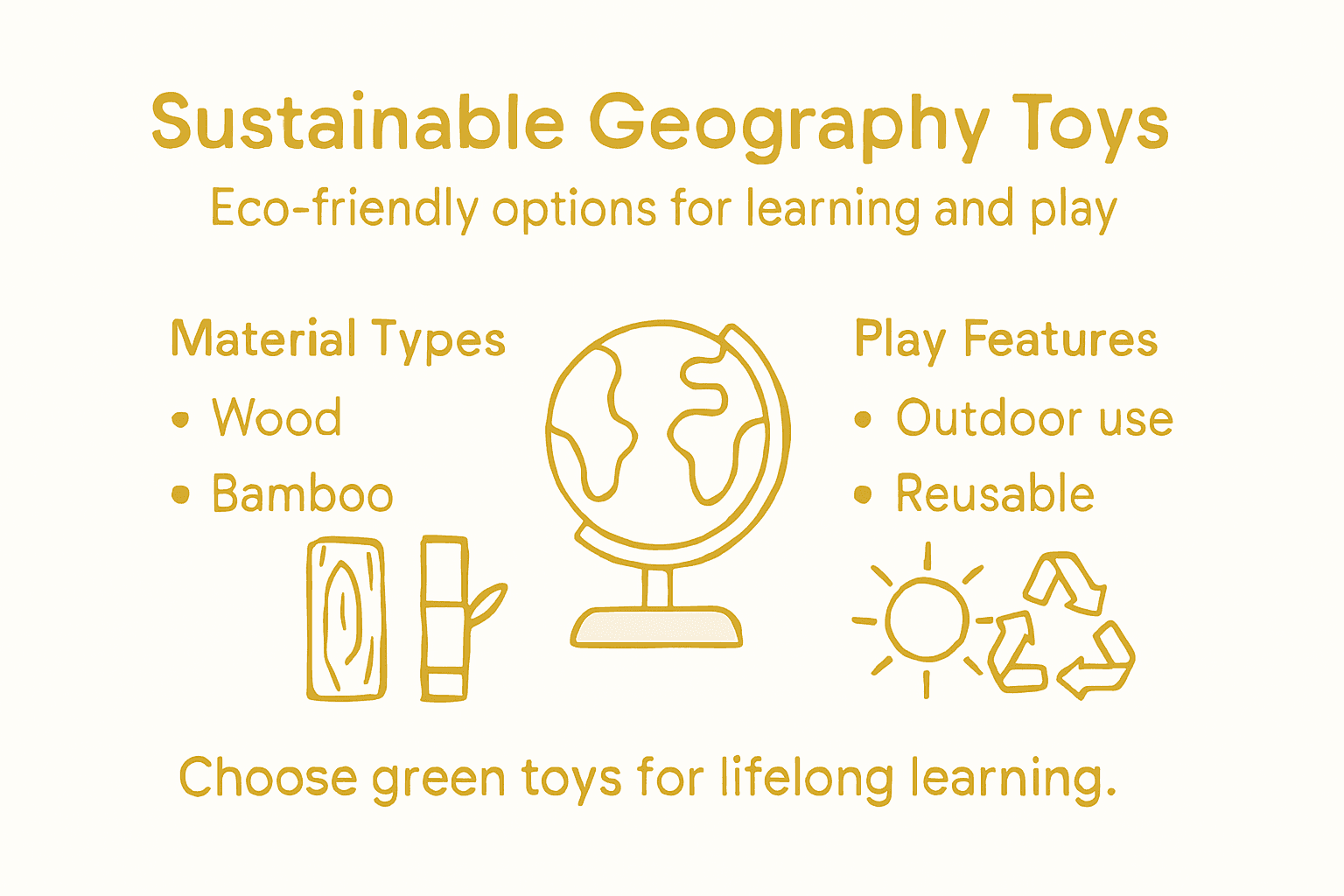
When selecting geography-focused toys, consider whether they encourage outdoor exploration or hands-on discovery rather than passive entertainment. Binoculars, magnifying glasses, and natural material construction sets align beautifully with sustainability principles because they’re durable, plastic-light, and inspire genuine connection with nature.
Transparency matters. Brands that openly discuss their materials, production practices, and environmental commitments deserve your attention. Companies genuinely committed to sustainability won’t hide their supply chains or practices.
One final consideration: toys that grow with your child offer exceptional sustainability value. A quality set of building materials or exploration tools can be used differently at ages three, six, and nine, extending the useful lifespan significantly.
Pro tip: Before purchasing any new toy, check whether it can be used outdoors in nature, lasts across multiple age ranges, or can be repurposed, since multi-functional sustainable toys offer better long-term value than single-use options.
Consider these aspects when selecting sustainable geography toys:
| Sustainability Feature | Why It Matters | Example Consideration |
|---|---|---|
| Eco-friendly Materials | Lowers environmental impact | FSC-certified wood, recycled plastic |
| Durability | Extends toy lifespan | Can survive outdoor use |
| Multi-age Flexibility | Increases reusability | Suitable for ages 3 to 9 |
| Transparency | Supports ethical purchase | Brand discloses sourcing and process |
Avoiding common pitfalls in geography play
Geography play can go sideways without intention. Parents often stumble into patterns that undermine learning, even when their hearts are in the right place. Knowing what to avoid transforms geography play from well-meaning activity into genuinely meaningful exploration.
The biggest trap is prioritising memorisation over understanding. Many parents ask children to name capitals or identify countries on maps, treating geography like a vocabulary test. Encouraging curiosity and critical thinking instead of rote memorisation helps children develop genuine spatial awareness and meaningful connection to places. Your child needs to understand why a city developed where it did, not just spell its name correctly.
Another pitfall involves disconnecting geography from human experience. When you focus purely on physical features—mountains, rivers, climate zones—you miss what makes geography real to children. How do people actually live in these places? What challenges do they face? What do they care about? These connections transform abstract learning into something that matters.
Insufficient preparation sabotages play activities. Before attempting a geography game or simulation, ensure students have background knowledge and clear learning objectives. If your child has never heard of erosion, building a stream simulation won’t teach her much. Quick background conversation first makes the play meaningful.
Skipping reflection after play activities represents another missed opportunity. After your daughter builds a miniature settlement or explores a local area, pause and ask questions. What did you notice? Why do you think things were arranged that way? What surprised you? This debriefing crystallises learning and prevents play from becoming mere entertainment.
Avoid overly directing play. Children learn best when they pursue their own questions within a supportive framework. You’re not meant to be a geography lecturer; you’re a curious companion asking genuine questions alongside your child.
Finally, don’t ignore sensitive environmental topics. If your child notices pollution or habitat destruction during play, acknowledge it honestly. These moments spark genuine eco-respect and environmental awareness.
Pro tip: Before starting any geography play activity, ask yourself whether it encourages curiosity about real places and real people rather than memorisation, and whether you’ll pause afterwards to let your child reflect on discoveries.
Inspire Your Child’s Geography Exploration with The Zoofamily
Unlock the full potential of playful geography learning by equipping your child with tools designed to nurture their curiosity and eco-respect. The article highlights key challenges such as encouraging hands-on exploration and fostering genuine connection to nature rather than memorising facts. At The Zoofamily, we understand these goals deeply. Our range of kids’ cameras, binoculars, and walkie-talkies are crafted to transform any garden or park visit into an immersive geographic adventure where children observe, question, and learn through real-world experiences.
Start empowering your young explorer today by visiting The Zoofamily. With every purchase, you support a greener planet through our one camera, one tree initiative while inspiring your child to build lasting environmental empathy. Discover creative ways to bring play geography to life and strengthen your child’s bond with the natural world by exploring our collection. Give your child the gift of environmentally conscious wonder that grows with them over time.
Frequently Asked Questions
How can I encourage my child to engage in geography play?
Start by giving your child the freedom to explore their surroundings. Organise regular outdoor activities in nature, such as trips to the park or garden, and encourage them to ask questions about what they observe.
What types of materials are best for geography play?
Opt for sustainable materials that promote hands-on exploration, such as wooden building blocks, natural objects, and tools like binoculars or magnifying glasses. These foster creativity while being environmentally friendly.
How does geography play contribute to a child’s connection with nature?
Geography play nurtures a child’s understanding of their environment through direct interaction, allowing them to observe natural patterns and develop a sense of place attachment, leading to greater respect for nature.
What should I avoid when facilitating geography play for my child?
Avoid focusing solely on memorisation of facts, such as capitals or country names. Instead, encourage exploration and understanding of the relationship between people and their environments to foster meaningful learning.
Recommended
- Making Learning Fun: Engaging Activities for Your Kids – The Zoofamily
- 7 idées goûter nature enfants pour éveiller leur curiosité – The Zoofamily
- 7 top livres enfants nature pour éveiller l’écologie – The Zoofamily
- Comment protéger la planète au quotidien avec ses enfants – The Zoofamily
- Eco Friendly Cleaning Solutions: For Safer Homes – naturessoulshop