

Finding meaningful activities that spark creativity while nurturing a love for nature can feel overwhelming for parents. Between screen time and structured routines, opportunities for children to explore the outdoors thoughtfully are often limited. Photography offers a brilliant solution, combining artistic expression with environmental connection in ways that captivate young minds. This guide provides practical steps to introduce your child to nature photography, from selecting equipment to managing outdoor sessions, helping you foster both creativity and ecological awareness through accessible, engaging activities tailored for families across Europe.
Table of Contents
- What You Need To Get Started
- Step By Step Guide To Introducing Photography To Children
- Tips To Manage Challenges And Keep Kids Engaged
- What Results To Expect And Nurturing Ongoing Interest
- Explore More Nature Photography Activities And Resources
- Frequently Asked Questions
Key takeaways
| Point | Details |
|---|---|
| Photography builds nature connection | Children develop environmental awareness and wellbeing through creative outdoor exploration |
| Simple equipment works best | Basic cameras or smartphones with protective accessories suit beginners perfectly |
| Short, playful sessions succeed | Activities under 60 minutes with clear goals keep young children engaged and enthusiastic |
| Safety and ethics matter | Respecting wildlife distance and teaching responsible practices ensures positive experiences |
| Lasting benefits emerge quickly | Kids show improved creativity, observation skills, and pro-environmental attitudes within weeks |
What you need to get started
Before heading outdoors, gathering the right equipment and preparing your child mentally sets the foundation for enjoyable photography sessions. You do not need expensive gear to begin. A smartphone with a decent camera works brilliantly for younger children, offering simplicity and familiarity. For kids aged seven and up, consider a basic digital camera with automatic settings and large buttons they can operate independently. Cameras in outdoor play act as inquiry tools fostering exploration, transforming simple walks into discovery missions.
Protective accessories make outdoor photography safer and more comfortable. A wrist strap prevents accidental drops, whilst a lightweight case protects the camera from bumps and weather. Pack a small cloth for wiping lenses, as curious fingers inevitably leave smudges. Avoid complicated camera bags; a simple pouch attached to your child’s belt or rucksack keeps equipment accessible without feeling burdensome.
Weather appropriate clothing matters more than you might expect. Layered outfits allow children to adjust as they move between shaded woodland and sunny clearings. Waterproof jackets and sturdy footwear keep them comfortable during longer sessions, whilst hats protect from sun or cold depending on the season. Bring snacks and water, as physical activity and concentration drain energy quickly. For more guidance on preparing children for outdoor photography, explore our ecological photography for children resources.
Preparing your child mentally proves equally important. Explain that photography involves patience and observation rather than constant action. Set clear expectations about session length, typically 30 to 45 minutes for younger children. Discuss what you will photograph together, whether flowers, insects, or landscape features, giving them a sense of purpose. Emphasise that mistakes are part of learning and that experimentation leads to interesting discoveries.
Pro Tip: Create a simple checklist with your child showing camera, strap, cloth, snacks, and water. Let them tick items off before each outing, building responsibility and excitement for the adventure ahead.
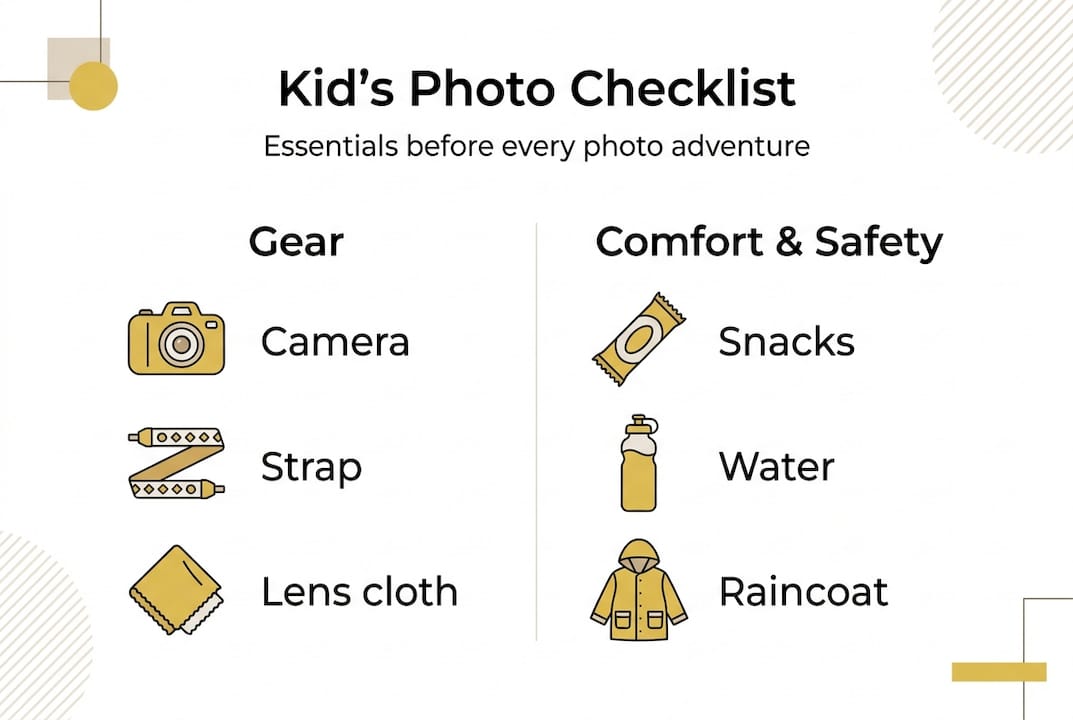
Safety basics require straightforward conversations. Teach children to watch where they walk whilst looking through the viewfinder, stopping to frame shots rather than moving. Explain the importance of staying on paths to protect plants and avoid disturbing wildlife habitats. Establish boundaries for how far they can wander from you, using visual landmarks rather than abstract distances. These preparations transform photography outings from chaotic experiments into structured, rewarding experiences that children genuinely enjoy.
Step by step guide to introducing photography to children
Starting with fundamentals prevents frustration and builds confidence quickly. Begin by showing your child how to hold the camera steady with both hands, elbows tucked against their body. Demonstrate how to look through the viewfinder or at the screen, explaining that the camera captures what they see in that frame. Let them take several practice shots of stationary objects like garden furniture or flowers, reviewing each image together to discuss what worked well.
Basics like holding the camera, framing, and simple photo activities help develop skills progressively. Introduce framing by asking your child to position their subject in different parts of the viewfinder, noticing how placement changes the feeling of the photograph. Avoid technical jargon initially; instead, use descriptive language like “putting the butterfly near the edge” or “filling the whole picture with the tree.”
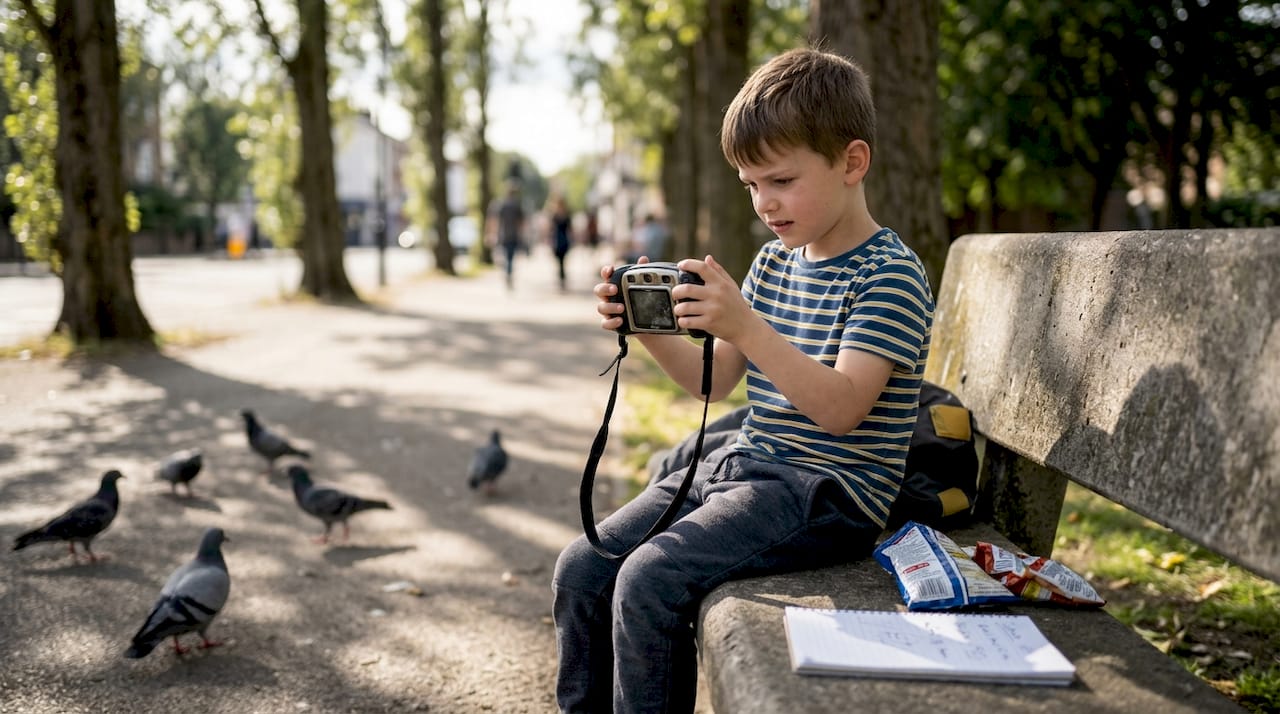
Photo hunts transform learning into play brilliantly. Create simple challenges like “find five different leaf shapes” or “photograph three things that are red.” These activities teach observation whilst keeping sessions goal oriented. A “my day in photos” project works wonderfully for documenting a park visit or nature walk, encouraging children to think about storytelling through images. For additional activity ideas, visit our easy photography guide for children.
Once comfortable with basics, introduce simple composition concepts through demonstration rather than rules. Show how photographing a flower from ground level creates drama compared to standing shots. Explain the rule of thirds by dividing the viewfinder into imaginary sections, suggesting they place interesting subjects where lines intersect rather than dead centre. Encourage experimentation with different angles and distances, praising creative attempts even when results are imperfect.
Pro Tip: Use a “photographer’s eye” game where you and your child take turns describing interesting scenes without photographing them first. This builds observation skills and helps them visualise shots before pressing the shutter.
Keep sessions playful by mixing photography with other activities. Photograph for 15 minutes, then explore without cameras for 10 minutes, returning to photography when interest renews. Allow children to photograph whatever captures their attention, even if subjects seem mundane to adults. A child fascinated by pebbles or bark textures is developing visual literacy and personal artistic voice, both valuable outcomes worth encouraging.
Limit sessions to under 60 minutes for most children aged five to eight, extending slightly for older kids showing sustained interest. Watch for signs of fatigue or frustration, ending positively rather than pushing through declining engagement. Reviewing photos together afterwards reinforces learning and celebrates achievements, building enthusiasm for the next outing.
Tips to manage challenges and keep kids engaged
Attention spans vary significantly among children, requiring flexible approaches. Younger kids thrive with shorter, highly structured sessions focused on single subjects like “photographing only insects today.” Older children handle broader themes and longer durations, especially when they help plan the outing. Younger kids need shorter, play based sessions whilst cold weather requires layers and snacks, and maintaining safe distances from wildlife remains essential regardless of age.
Weather challenges demand practical solutions rather than cancellations. Light rain creates atmospheric conditions perfect for photographing water droplets and reflections, provided children wear waterproof clothing. Overcast days eliminate harsh shadows, making portraits and close-ups easier. Extremely hot or cold weather requires shorter sessions with frequent breaks in shade or shelter. Always pack extra layers and refreshments, as comfortable children remain engaged longer.
Wildlife photography presents unique safety and ethical considerations. Teach children to observe animals from considerable distances, using zoom features rather than approaching closely. Explain that disturbing wildlife causes stress and disrupts natural behaviours, making respectful observation part of being a good photographer. Never use bird calls or attempt to lure animals closer, as this interferes with their routines and can expose them to predators. Our photography ethics for children guide offers detailed approaches to teaching responsible practices.
Patience and observation skills develop gradually through consistent practice. When children grow restless, shift focus to different subjects or take a complete break from photography. Some days, simply carrying the camera without pressure to use it maintains familiarity whilst reducing stress. Celebrate small victories like capturing a clear image of a moving butterfly or waiting quietly for a bird to appear, reinforcing behaviours you want to encourage.
“The camera becomes a tool for inquiry, encouraging children to look closely at their environment and ask questions about what they observe, fostering both creativity and scientific thinking.”
Cognitive and physical differences require thoughtful accommodations. Children with shorter attention spans benefit from highly visual goal cards showing specific subjects to photograph. Those with motor skill challenges may need cameras with larger buttons or touch screens. Adjust expectations based on individual abilities rather than age alone, focusing on enjoyment and personal progress rather than comparing outputs between children.
Managing frustration when photographs do not meet expectations involves reframing success. Emphasise that professional photographers take hundreds of shots to get one excellent image, normalising the trial and error process. Review “unsuccessful” photos together, discussing what makes them interesting despite technical imperfections. A blurry shot of a bee might beautifully convey motion, whilst an off centre composition could create unexpected drama. Teaching children to find value in imperfection builds resilience and creative confidence that extends beyond photography.
What results to expect and nurturing ongoing interest
The benefits of nature photography emerge quickly and span multiple developmental areas. Children showed improved nature connectedness, wellbeing, and pro-environmental attitudes after participating in photography projects, with effects lasting months beyond initial activities. You will likely notice your child asking more questions about plants and animals, demonstrating increased curiosity about ecological relationships and environmental processes.
Creativity flourishes as children experiment with perspectives, subjects, and compositions. They begin noticing details adults overlook, from intricate leaf patterns to subtle colour variations in stones. This enhanced observation transfers to other areas, improving focus during schoolwork and enriching imaginative play. Photography also builds technical skills including planning, problem solving, and evaluating outcomes, all valuable for academic and personal development.
Celebrating your child’s photography reinforces their efforts and builds confidence. Create a dedicated display space at home where you rotate favourite images weekly. Digital frames work brilliantly for showcasing evolving portfolios without cluttering walls. Consider printing standout photographs for grandparents or creating simple photo books documenting seasonal changes in your local park. These tangible outputs make abstract creative work feel significant and valued.
Encouraging ongoing projects maintains momentum between formal sessions. A “garden through the seasons” series documents changes in your outdoor space across months. “Creatures I have seen” collections build naturally as your child encounters different insects and birds. For inspiration on displaying and organising children’s nature photography, explore our children’s nature photo gallery tips.
Joining photography workshops or nature clubs connects your child with peers sharing similar interests. Many European cities offer family friendly photography walks and children’s nature photography competitions that provide structure and social motivation. Local wildlife trusts and environmental organisations frequently run programmes combining photography with ecological education, deepening your child’s understanding whilst expanding their creative community.
Building photography into regular routines ensures sustained engagement. Designate one weekend morning monthly as “photography adventure time,” allowing your child to choose locations and subjects. Incorporate cameras into existing nature activities like beach visits or woodland walks, making photography a natural extension of outdoor exploration rather than a separate hobby requiring special arrangements.
Scientific curiosity develops alongside artistic skills as children use photography to document observations. They might photograph the same tree weekly, noticing bud development and leaf changes. Recording different cloud formations or tracking moon phases combines photography with meteorology and astronomy. This intersection of art and science creates rich learning opportunities that formal education often struggles to provide, making photography a uniquely valuable tool for holistic child development.
Explore more nature photography activities and resources
You have taken the first steps towards nurturing your child’s creativity and environmental connection through photography. The Zoofamily offers extensive resources to support this journey, from practical guides on ecological photography for children to detailed advice on teaching photography ethics for children. Our community provides ongoing inspiration and support as your family explores nature together.

Discover equipment designed specifically for young photographers, combining durability with child friendly features that encourage independent exploration. Access seasonal activity guides, creative challenges, and tips for capturing wildlife respectfully. Join families across Europe who are fostering the next generation of nature lovers, one photograph at a time, through resources available at The Zoofamily.
Frequently asked questions
How can I choose the right camera for my child?
For children aged five to seven, smartphones or simple point and shoot cameras with automatic settings work best. Look for models with large buttons, sturdy construction, and wrist straps to prevent drops. Avoid cameras with complicated menus or manual controls that frustrate young users. Durability matters more than image quality at this stage, as children will inevitably bump and drop equipment whilst learning.
What are safe practices when photographing wildlife with children?
Maintain significant distances from all animals, using zoom features rather than approaching closely. Teach children never to use bird calls, feed wildlife, or attempt to touch animals for photographs. Explain that disturbing wildlife causes stress and disrupts natural behaviours essential for their survival. For comprehensive guidance on ethical wildlife photography, visit our photography ethics for children resource.
How long should photography sessions be for young children?
Sessions under 60 minutes suit most children aged five to eight, with 30 to 45 minutes often ideal for maintaining enthusiasm. Incorporate breaks for snacks, exploration without cameras, or simply resting. Watch for signs of fatigue or declining interest, ending positively rather than pushing through frustration. Older children showing strong interest can handle slightly longer sessions, particularly when they help plan activities and choose subjects.
Can photography help children with attention difficulties?
Photography provides structured focus that many children with attention challenges find engaging. The immediate feedback from reviewing images maintains interest, whilst clear goals like photo hunts provide direction without overwhelming complexity. Shorter sessions with frequent subject changes accommodate shorter attention spans effectively. Adjust expectations to celebrate effort and engagement rather than technical perfection, building confidence through achievable successes.
Recommended
- Initier à la photographie écologique pour enfants facilement – The Zoofamily
- Initier enfants à la photo : guide facile et ludique – The Zoofamily
- Self Image Photography for Kids: A Step-by-Step Guide – The Zoofamily
- DIY Artbook Publishing: Create Stunning Visual Collections – The Mansion Press