

An eco friendly toilet bowl cleaner is a plant-based, biodegradable product that removes stains and bacteria from toilets without bleach, hydrochloric acid, or other harsh chemicals. Brands like Kit & Kin, Blueland, and NaturaPod lead this category, using citric acid, lactic acid, and natural surfactants to deliver genuine cleaning power. These products are safer for children, pets, and waterways than conventional cleaners, and they work. The shift toward sustainable toilet cleaners is not about compromise. It is about choosing ingredients that do the job without leaving a toxic trail behind them.
What ingredients make eco friendly toilet bowl cleaners effective?
The cleaning power in a natural toilet cleaner comes from food-grade acids and plant-derived surfactants, not from bleach or synthetic solvents. Citric and lactic acid are the two workhorses: citric acid dissolves mineral deposits and limescale, while lactic acid sanitises surfaces by disrupting bacterial cell walls. Kit & Kin’s eco toilet cleaner, for example, operates at a pH of 2.2 to 3.0, which is acidic enough to break down hard-water staining without requiring chlorine.
Natural thickeners like xanthan gum give these formulas the cling needed to coat the bowl and stay in contact with stains long enough to work. Without that cling, a thin liquid would simply run off before the acids could act. Essential oils, often tea tree or eucalyptus, add fragrance and contribute mild antimicrobial properties.
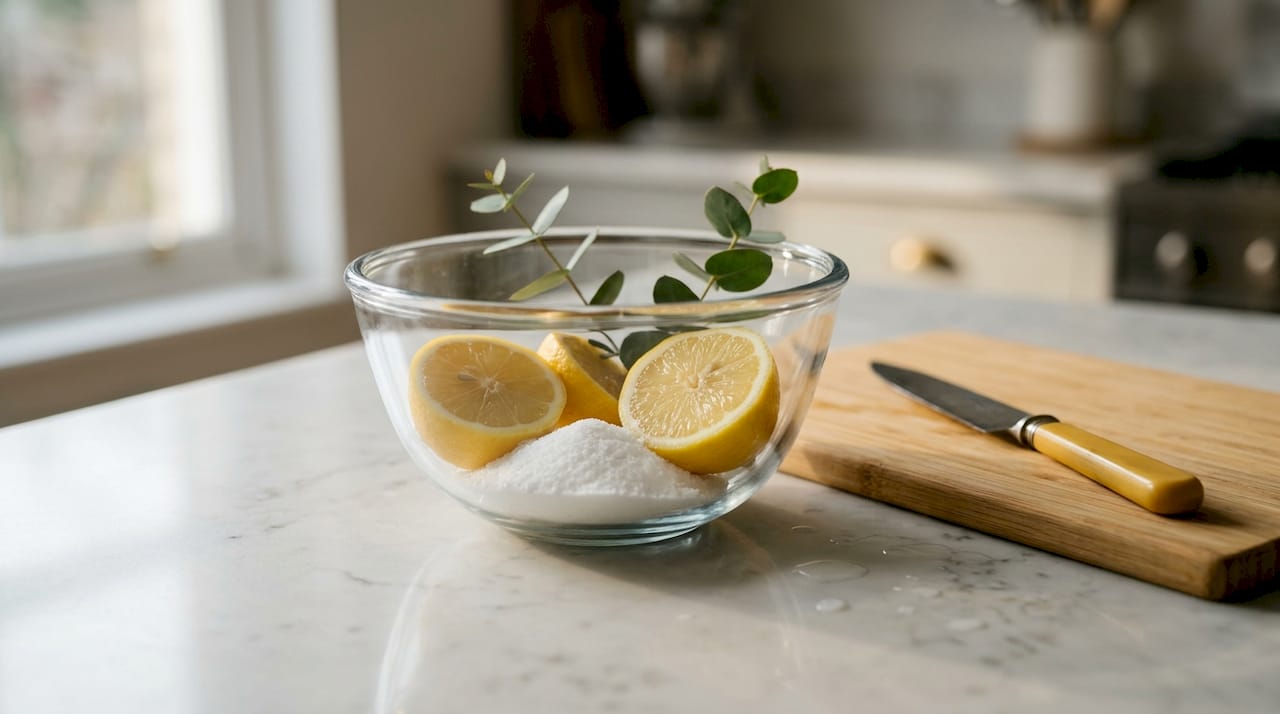
One common misconception is that “chemical-free” means no chemistry at all. No cleaner is truly chemical-free; the eco label means the formula avoids harsh substances like chlorine bleach, hydrochloric acid, and synthetic preservatives. Understanding this distinction helps you read product labels with confidence rather than confusion.
Pro Tip: Dwell time matters as much as the ingredients themselves. Apply the cleaner, let it sit for the time stated on the label (usually five to ten minutes), then scrub. Cutting dwell time short reduces effectiveness; exceeding it on older plumbing can cause unnecessary wear.
Eco toilet cleaner formats compared: which suits your home?
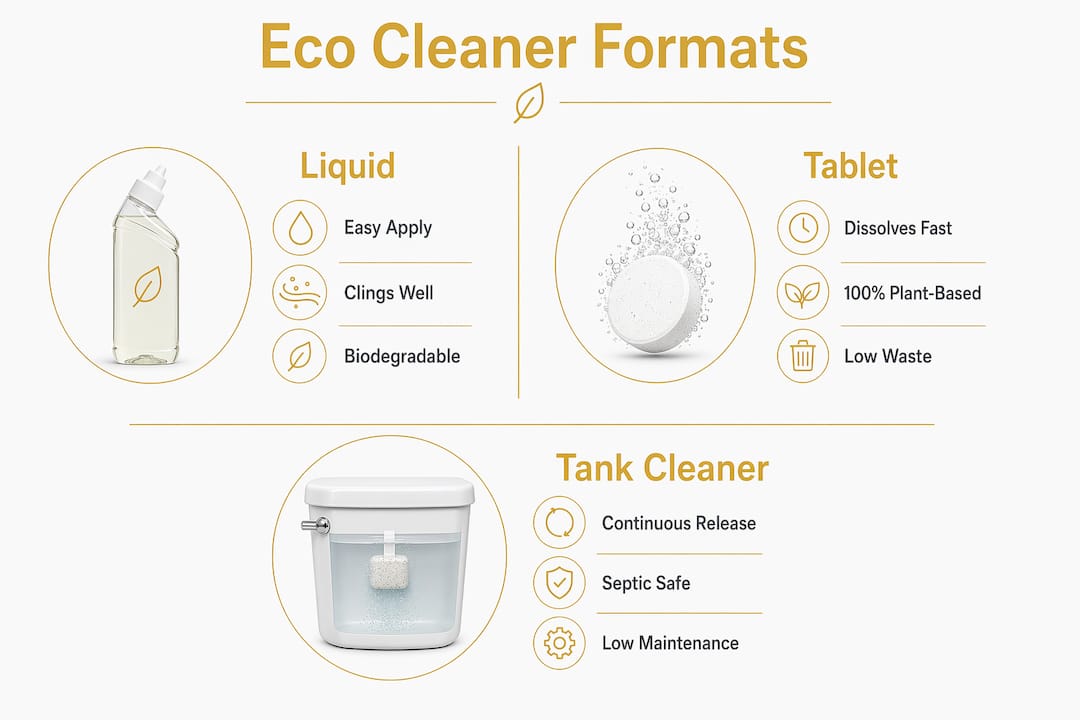
The sustainable toilet bowl cleaner market now offers three distinct formats, each with different trade-offs on convenience, cost, and environmental footprint.
Liquid bottles like Kit & Kin’s cleaner are the most familiar format. They apply easily under the rim, cling well, and require no preparation. The downside is plastic packaging, even when the bottle is recyclable.
Refill tablets like those from Blueland dissolve in water to create a cleaning solution. Blueland’s tablets are 100% plastic-free, arrive in industrially compostable packaging, carry EPA Safer Choice and Leaping Bunny certifications, and start at $1.16 per tablet. This format dramatically cuts packaging waste and suits families who want a zero waste toilet cleaner without sacrificing cleaning credentials.
Automatic tank cleaners like NaturaPod work differently. NaturaPod’s tank cleaner sits inside the cistern and releases a plant-powered formula with every flush, preventing mineral rings and maintaining freshness for up to 90 days. There is no scrubbing required between deep cleans, and the glass body is reusable. This format suits busy households where consistent prevention is more practical than weekly manual cleaning.
| Format | Packaging | Key active ingredients | Septic safe | Approx. cost | Usage frequency |
|---|---|---|---|---|---|
| Liquid bottle (Kit & Kin) | Plastic bottle | Citric acid, lactic acid, xanthan gum | Yes | Mid-range | Weekly |
| Refill tablet (Blueland) | Compostable paper | Citric acid, baking soda, essential oils | Yes | From $1.16/tablet | Weekly |
| Tank cleaner (NaturaPod) | Reusable glass | Plant-powered formula | Yes | Mid-range | Every 90 days |
All three formats avoid bleach and chlorine, making them suitable for septic systems. The right choice depends on how much manual effort you want to invest and how much plastic you want to eliminate from your bathroom.
How do eco cleaners compare with traditional chemical cleaners?
The most important difference between an environmentally friendly toilet bowl cleaner and a conventional one is not cleaning power. It is what each product cleans best. Citric acid outperforms bleach on mineral stains and toilet rings because it chemically dissolves calcium and magnesium deposits. Bleach, by contrast, is a strong sanitiser but does almost nothing to break down mineral buildup. If your toilet has hard-water staining, an acidic eco cleaner is actually the more effective choice.
Where conventional cleaners have an edge is speed. Bleach-based products often require less scrubbing because they are more aggressive. A green toilet bowl cleaner typically needs physical agitation to achieve the same result. Blueland’s tablets require brushing after foaming to fully remove stains. That is a small trade-off for eliminating chlorine from your home.
The safety benefits for families are significant. Bleach vapours irritate airways and eyes, and conventional cleaners often carry warnings to keep children and pets away during and after use. Eco formulas at pH 2.2 to 3.0 are acidic but not volatile, meaning they do not produce fumes under normal use.
Here are four safety precautions to follow when switching from a conventional to an earth friendly toilet bowl cleaner:
- Rinse the bowl thoroughly before applying the new product. Residue from bleach-based cleaners mixed with an acid-based eco formula can produce chlorine gas.
- Never mix any toilet cleaner with bleach or ammonia, regardless of how natural the label sounds.
- Ventilate the bathroom during and after cleaning by opening a window or running the extractor fan.
- Store all cleaning products, eco or otherwise, in a locked cupboard away from children.
“Mixing bleach with acid-based cleaners produces toxic chlorine gas, posing severe respiratory hazards especially in homes with children and pets.” Spec Gas Inc.
Pro Tip: If you are switching from a bleach-based cleaner, flush the toilet twice and wipe the bowl with a damp cloth before applying your new eco product. This removes residue that could react with acidic ingredients.
Safety considerations for families using non-toxic toilet bowl cleaners
Parents often assume that because a product is labelled non-toxic or natural, it can be used more casually than a conventional cleaner. That assumption needs correcting. Acidic eco cleaners at pH 2.2 to 3.0 require the same respect as any cleaning product: follow the label, respect the dwell time, and keep them away from children.
The specific risks worth knowing about are:
- Plumbing compatibility. Leaving an acidic cleaner in contact with older rubber seals or certain plumbing components for longer than recommended can cause degradation over time. Follow the stated contact time precisely.
- Fume production from mixing. Acid and bleach residues in the same bowl can generate chlorine gas. This is the most serious hazard when transitioning between product types.
- Skin and eye contact. Even at food-grade concentrations, citric and lactic acid can irritate skin and eyes. Wear gloves if you have sensitive skin.
- Pet access. Dogs and cats are curious about toilet bowls. Keep the lid down after cleaning until the product has been fully flushed away.
For households with young children, eco-friendly bathroom cleaners that reduce indoor pollutants are a meaningful upgrade from conventional products. The absence of chlorine and synthetic solvents lowers the chemical load in the air your family breathes every day.
Pro Tip: Keep a dedicated set of cleaning gloves in the bathroom and make it a habit to wear them every time, even with eco products. It normalises safe handling and sets a good example for older children who may one day help with household chores.
Choosing and using the right eco cleaner for your home
Selecting a biodegradable toilet cleaner that fits your household comes down to three practical questions: how often do you clean, what type of staining do you deal with, and how much packaging waste do you want to generate?
For families with hard water, a liquid formula containing citric acid (such as Kit & Kin) applied weekly will address mineral rings before they become stubborn. For households focused on reducing plastic, Blueland’s refill tablets offer a zero waste toilet cleaner solution that is also cost-effective over time. For parents who want consistent prevention with minimal effort, NaturaPod’s tank cleaner handles the baseline and requires only an occasional manual clean on top.
A few practical points to guide your routine:
- Start with one format and use it consistently for four weeks before judging results. Switching too quickly makes it hard to assess what is working.
- For tough stains, apply the cleaner, close the lid, and allow the full dwell time before scrubbing. Repeated applications over two or three days are more effective than scrubbing harder in a single session.
- Buy refill formats where available. They reduce plastic waste and typically cost less per use than single-use bottles.
- Check that any product you choose is certified septic-safe if your home uses a septic tank.
For a broader view of sustainable cleaning practices across the home, the principles are the same: fewer harsh chemicals, better ingredient transparency, and less packaging. The toilet is a good place to start because it is one of the most frequently cleaned surfaces in any home.
Key takeaways
Eco friendly toilet bowl cleaners work through food-grade acids and plant-derived surfactants, and they outperform bleach on mineral stains while being safer for families, pets, and waterways.
| Point | Details |
|---|---|
| Acidic ingredients do the work | Citric and lactic acid dissolve limescale and sanitise without bleach or chlorine. |
| Format affects footprint | Refill tablets and tank cleaners reduce plastic waste significantly compared to single-use bottles. |
| Eco does not mean effortless | Most eco cleaners require brushing and correct dwell time to achieve full stain removal. |
| Mixing products is dangerous | Acid-based eco cleaners and bleach residues produce toxic chlorine gas; always rinse between product changes. |
| Follow the label precisely | Even at food-grade pH levels, acidic cleaners can damage plumbing if left beyond recommended contact times. |
Why I think eco toilet cleaners deserve more credit than they get
Most people who try an eco toilet cleaner for the first time expect it to underperform. That expectation is almost always wrong, but it shapes how they use the product. They scrub too quickly, do not allow enough dwell time, and then conclude the formula is weak. The product was not the problem.
What I have found, both personally and from reading the evidence carefully, is that acidic eco formulas are genuinely superior to bleach for the most common toilet problem: mineral staining. Bleach looks dramatic. It smells powerful. But it does not dissolve calcium deposits. Citric acid does. That is not a marketing claim. It is basic chemistry.
The area where I think eco cleaners still need improvement is user education. The labels are often too brief, and the instructions assume a level of chemistry knowledge that most people do not have. Brands like Blueland and Kit & Kin are doing good work, but the industry as a whole needs clearer guidance on dwell time, mixing hazards, and what “natural” actually means on a label.
My honest advice: treat your eco cleaner with the same seriousness you would give any cleaning product. Read the label. Wear gloves. Do not mix products. And give it a fair trial of at least a month before drawing conclusions. The results, for your family and for the planet, are worth the small adjustment in habit.
For families who also want eco-friendly floor cleaners that meet the same safety standards, the same principles apply across the board.
— ALAIN
Explore eco-friendly cleaning with Thezoofamily
At Thezoofamily, the commitment to protecting the natural world extends beyond kids’ cameras and binoculars. Choosing products that are safe for your family and kind to the planet is part of the same mission. Whether you are looking for guidance on eco-friendly house cleaners or want to explore how small household choices add up to real environmental impact, Thezoofamily brings together trusted resources for eco-conscious families. Every camera sold plants a tree. Every informed choice you make at home plants something too. Start with the bathroom, and see how far the ripple goes.
FAQ
What is an eco friendly toilet bowl cleaner?
An eco friendly toilet bowl cleaner is a plant-based, biodegradable formula that cleans and sanitises toilets using natural acids like citric acid and lactic acid, without bleach, chlorine, or synthetic solvents. It is designed to be safe for families, pets, septic systems, and waterways.
Are eco toilet cleaners as effective as bleach-based products?
Eco cleaners that contain citric acid are actually more effective than bleach at removing mineral stains and hard-water rings, because acid dissolves calcium deposits while bleach only sanitises. For germ removal, lactic acid provides comparable antibacterial action without the fumes.
Is it safe to mix an eco toilet cleaner with a conventional bleach product?
No. Mixing acid-based cleaners with bleach produces toxic chlorine gas, which causes respiratory irritation and can be dangerous in enclosed bathrooms. Always rinse the bowl thoroughly and flush twice before switching between product types.
How often should I use a sustainable toilet bowl cleaner?
Liquid and tablet formats work best when applied weekly with brushing. Tank-based options like NaturaPod provide continuous protection for up to 90 days, reducing the need for frequent manual cleaning while maintaining a consistently fresh bowl.
Are eco toilet cleaners safe for septic tanks?
Yes. Products like Blueland’s refill tablets and NaturaPod’s tank cleaner are specifically formulated to be septic-safe, using biodegradable ingredients that break down without disrupting the bacterial balance in a septic system.