

Eco crafts with kids are hands-on creative activities that use natural, recycled, or reusable materials to make something new while teaching children about sustainability. Projects range from plantable seed paper to nature collages and upcycled binoculars. They build fine motor skills, problem-solving, and environmental awareness, all without specialist supplies or large budgets.
Key facts at a glance:
- Eco crafts use materials such as leaves, twigs, cardboard tubes, and scrap paper.
- They suit children from toddlers to school age, scaling in complexity as children grow.
- Sustainable crafts develop fine motor skills, engineering thinking, and a view of waste as a creative resource.
- No special purchases are needed. Most materials come from your recycling bin.
Top eco-friendly craft projects for kids to try right now
These projects use natural or recycled materials and work across a range of ages. Each one can be set up with basic tools: scissors, non-toxic glue, and paint.
1. Plantable seed paper
Tear toilet paper into small pieces and soak in a jar of water. Shake to form a pulp, add wildflower seeds, then press the mixture into a cookie cutter on a mesh screen. Squeeze out excess water and leave to dry flat in a sunny spot for a day or more. Once dry, plant the paper in soil and water it. Children can observe plant growth from start to finish, linking craft, science, and gardening in one activity.
Materials: toilet paper, water, mason jar, mesh screen, cookie cutter, wildflower seeds.
2. Leaf-printed tote bags
Collect fresh leaves with clear veins, such as oak, maple, or fern. Dab fabric paint onto the textured underside of each leaf, then press it firmly onto a plain cotton tote bag. Lift carefully to reveal the print. Repeat with different leaves and colours, overlapping for effect. Using fresh, pliable leaves gives the clearest vein detail and the sharpest print.
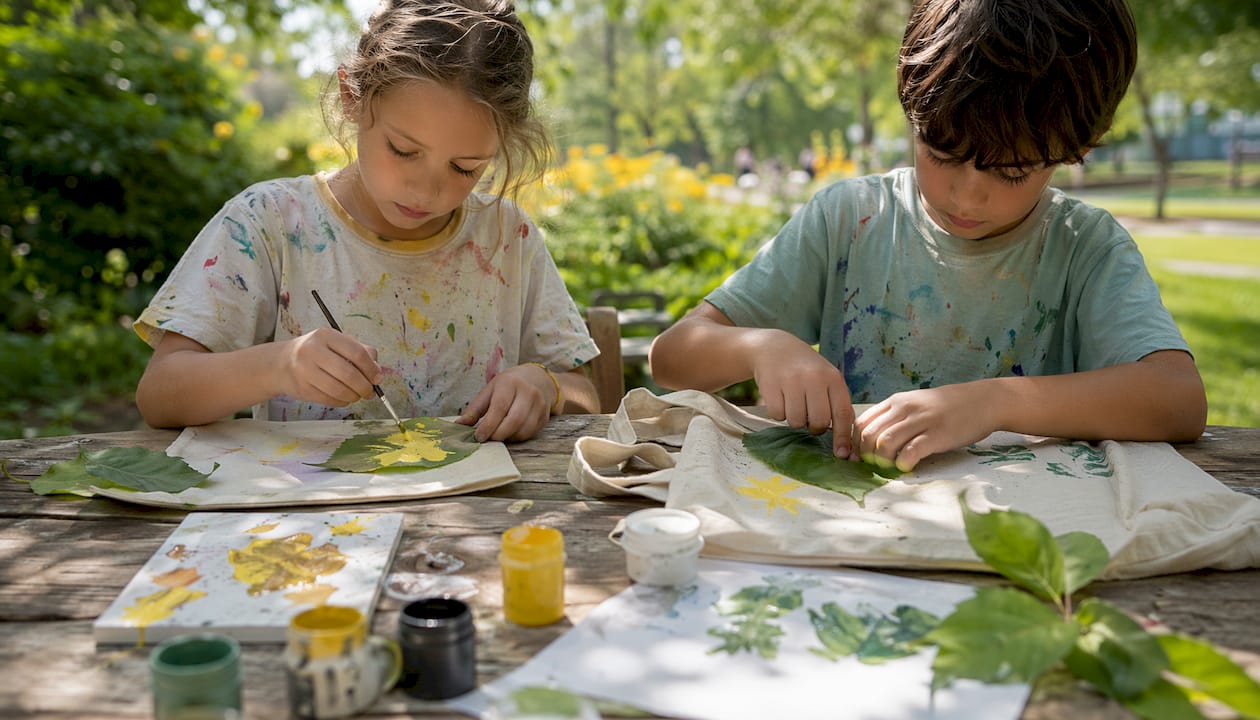
Materials: plain cotton tote bag, fresh leaves, fabric paint, small brush, scrap cardboard to place inside the bag.
3. Nature collages
Take children outside to collect leaves, petals, small twigs, pebbles, and seeds. Back indoors, arrange the finds on a piece of recycled cardboard and glue them down to create a scene, abstract pattern, or mandala. The collecting stage builds observation skills; the arranging stage builds spatial reasoning.
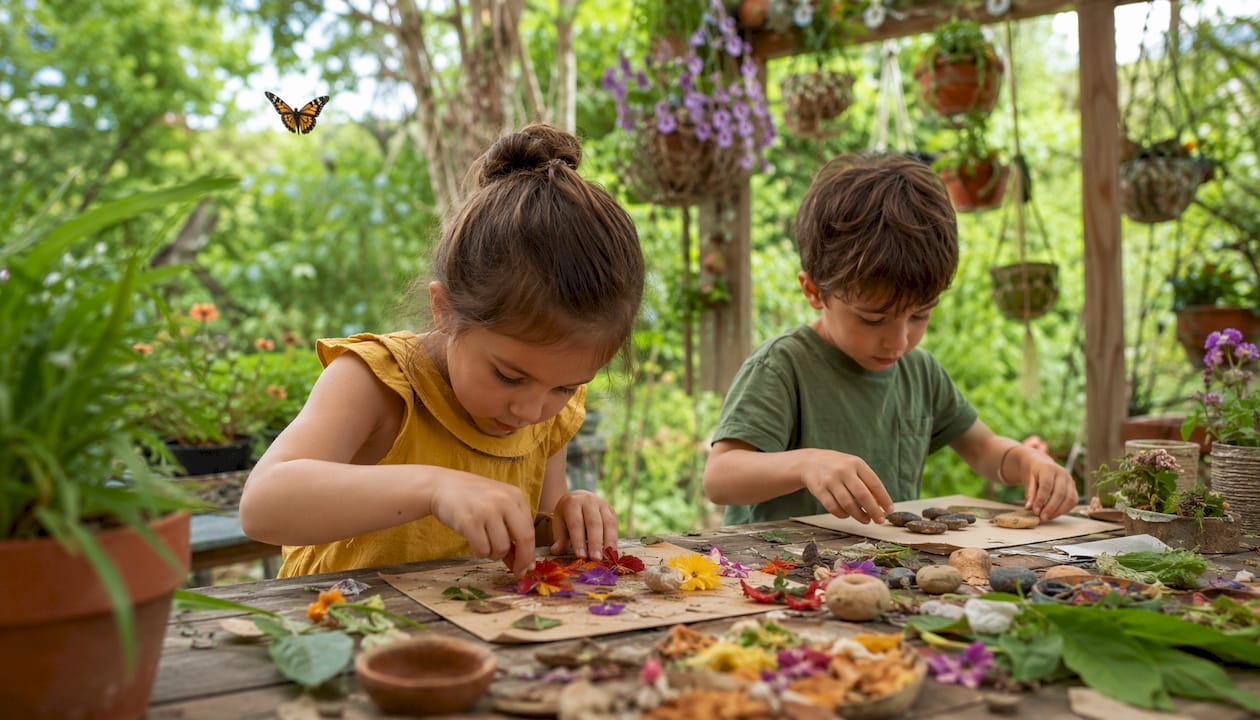
Materials: recycled cardboard, non-toxic glue, natural finds from outdoors.
4. Toilet-roll binoculars
Glue two cardboard toilet rolls side by side. Decorate with paint, stickers, or markers, then attach a length of string so children can wear them around their necks. Nature-themed binoculars like these cost nothing and encourage outdoor exploration immediately after making them.
Materials: two toilet rolls, non-toxic glue, paint or markers, string.
5. Pine cone bird feeders
Tie string around a pine cone, roll it in peanut butter, then coat it in sunflower or sesame seeds. Hang from a tree branch and watch birds arrive. This project connects craft directly to wildlife observation, making it a natural fit alongside a pair of binoculars.
Materials: pine cones, string, peanut butter, sunflower or sesame seeds.
6. Recycled magazine collages
Ask families to donate old magazines. Children cut out images, colours, or words and glue them onto card stock, overlapping pieces so no white shows through. Older children can build themed collages around nature or environmental topics. It’s a zero-cost project that also practises cutting and composition skills.
7. Impermanent nature art
Arrange natural objects, such as pebbles, petals, and sticks, into a pattern or picture on the ground outdoors. Photograph the finished piece, then return the materials to nature. This approach, which shifts focus from product to process, produces no waste at all and works well for any age.
How to gather and prepare sustainable crafting materials
The most sustainable materials are already in your home. Parents often assume eco crafting requires specialist purchases, but everyday recyclables are the best starting point.
Collecting recyclables:
- Save cereal boxes, cardboard tubes, jar lids, scrap paper, and clean food containers.
- Ask families or classrooms to donate clean recyclables to keep project costs at zero.
- Store items in labelled boxes so children can find materials independently.
Gathering natural materials:
- Collect leaves, twigs, pebbles, pine cones, and seeds on regular outdoor walks.
- Choose fresh, pliable leaves for printing projects; dry or brittle ones crack under paint.
- Avoid taking materials from protected areas or removing too much from any single plant.
Preparing materials safely:
- Wash and dry all recyclables before use, particularly food containers.
- Test leaves by dabbing a small amount of paint on the underside to check paint transfer before committing to a full project.
- Keep tools simple: scissors, non-toxic glue, and washable paint cover most projects.
Pro Tip: Set up a dedicated “maker bin” filled with cardboard tubes, jar lids, and scrap paper. A maker bin turns your recycling into a ready-to-use creative supply that children can access without asking, which encourages spontaneous making and reduces the urge to buy new supplies.
Why sustainable crafting benefits children’s development
Sustainable crafting habits include slow-crafting, making functional art, avoiding worst-offender materials, saving scraps, and starting art gardens. These habits do more than reduce waste. They shape how children think about materials and the environment.
Developmental benefits:
- Fine motor skills: cutting, tearing, pressing, and gluing all build hand strength and coordination.
- Problem-solving: working with irregular or limited materials requires children to adapt and think creatively.
- Engineering awareness: building structures from cardboard or weaving strips of paper introduces basic engineering principles.
- Environmental stewardship: children who view waste as a creative resource carry that mindset beyond the craft table.
Avoid glitter, foam sheets, polymer clay, and spray paint. These are the worst-offender craft supplies due to microplastics, PVC content, and volatile compounds. Homemade alternatives, such as biodegradable glitter made from plant starch, are widely available or easy to make at home.
Eco crafts adapt across ages, from simple texture play with leaves and pebbles for toddlers to multi-step projects like seed paper or botanical printing for school-age children. The same materials work at every stage; only the complexity changes.
How to involve children in choosing eco-friendly materials
Children engage more deeply with a craft when they have helped select the materials. Giving them a role in sourcing builds ownership and reinforces the sustainability lesson.
- Take children on a “nature hunt” before starting any outdoor-material project. Let them choose which leaves, pebbles, or twigs to collect.
- Show children the recycling bin and ask them to pick items they think could become something new. A cardboard tube, a jar lid, or a scrap of fabric all become more interesting when a child has chosen them.
- Let children sort and organise the maker bin. Categorising materials by type, colour, or size is itself a learning activity.
- When buying any new supplies, involve children in reading labels. Look for “non-toxic,” “water-based,” or “biodegradable” together, and explain briefly what each term means.
- Follow eco-conscious craft creators online with your children. Seeing other children make things from waste normalises the habit and provides fresh ideas without encouraging the purchase of new plastic-heavy supplies.
Thezoofamily supports eco-friendly creativity for children
Thezoofamily builds products that connect children with nature, from animal-themed cameras and binoculars to walkie-talkies designed to encourage outdoor play. For every camera sold, Thezoofamily plants one tree, linking each purchase directly to environmental restoration.
If you are looking for creative recycled projects to pair with outdoor exploration, the Thezoofamily blog covers practical ideas for families and educators. From DIY nature ornaments to Earth Day activities, the resources are free, practical, and built around the same materials this article covers.
Key takeaways
Eco crafts with kids work best when children help source the materials, projects use what is already at home, and the focus stays on process rather than a perfect finished product.
| Point | Details |
|---|---|
| Start with what you have | Cereal boxes, cardboard tubes, and scrap paper are the best eco craft supplies. |
| Avoid worst-offender materials | Skip glitter, foam sheets, polymer clay, and spray paint due to environmental harm. |
| Set up a maker bin | A labelled bin of recyclables gives children independent access to creative materials. |
| Scale projects by age | Tactile texture play suits toddlers; multi-step projects like seed paper suit school-age children. |
| Thezoofamily | Plants one tree per camera sold and publishes free eco craft ideas for families and educators. |