

Slow living sounds simple but it is quickly becoming a powerful antidote to modern chaos. People are moving at such a breakneck speed that roughly 74 percent of adults now report feeling regularly overwhelmed by stress or digital overload. Here is the unusual bit. Instead of dropping out from society, slow living encourages you to dive back in, reconnect with yourself and your surroundings and actually get more out of life by doing less.
Table of Contents
- Defining Slow Living: A Mindful Approach To Life
- The Importance Of Slow Living In Today’s Fast-Paced World
- Key Concepts Of Slow Living: Simplicity, Mindfulness, And Sustainability
- Practical Applications Of Slow Living In Family Life
- Real-World Examples: How Slow Living Transforms Daily Routines
Quick Summary
| Takeaway | Explanation |
|---|---|
| Prioritise intentional living | Focus on making deliberate choices that align with your values and promote happiness. |
| Implement mindful family practices | Engage in meaningful interactions that strengthen connections, such as device-free meals and shared activities. |
| Simplify your daily routines | Reduce complexity by decluttering your space and prioritising essential activities that enhance quality of life. |
| Cultivate mindfulness in everyday moments | Practice being fully present to improve emotional regulation and enhance personal growth during daily tasks. |
| Make sustainable consumption choices | Choose quality over quantity in purchases, support local producers, and minimise waste for a more fulfilling lifestyle. |
Defining Slow Living: A Mindful Approach to Life
Slow living represents a deliberate lifestyle philosophy focused on mindfulness, intentionality, and quality over quantity. At its core, this approach challenges the modern societal tendency towards constant busyness and productivity, encouraging individuals to pause, reflect, and engage more deeply with their immediate experiences.
The Philosophy Behind Slow Living
Slow living emerged as a conscious response to the accelerating pace of contemporary life. According to The Guardian, this movement originated from the broader “slow” cultural trend, which first gained prominence in food culture with the slow food movement. The fundamental principle is simple yet profound: prioritise meaningful connections, personal well-being, and present moment awareness over perpetual multitasking and external validation.
Key philosophical foundations of slow living include:
- Intentional consumption of experiences and resources
- Mindful decision making
- Reducing unnecessary complexity in daily routines
Understanding Slow Living in Practice
Practical slow living is not about complete disengagement from modern life, but strategic recalibration. It involves making conscious choices that align with personal values and promote genuine happiness. Psychology Today suggests this approach helps individuals combat stress, improve mental health, and create more authentic life experiences.
For parents and families, slow living can translate into spending quality time together, reducing digital distractions, and creating purposeful daily rhythms that nurture connection and individual growth. It means recognising that life’s richness comes not from constant activity, but from deeply experiencing and appreciating each moment.
Ultimately, slow living is a personal journey of rediscovering balance, intentionality, and genuine fulfilment in an increasingly fast-paced world.
The Importance of Slow Living in Today’s Fast-Paced World
In an era characterised by constant digital connectivity, rapid technological advancement, and relentless productivity demands, slow living emerges as a critical counterbalance to modern lifestyle pressures. The significance of this approach extends far beyond a simple lifestyle choice it represents a fundamental reimagining of personal well-being and human interaction.
Mental Health and Psychological Resilience
The contemporary world presents unprecedented challenges to individual mental health. Harvard Medical School reveals that chronic stress can lead to significant psychological and physiological complications, making intentional deceleration not just desirable, but essential. Slow living offers a structured approach to managing these pressures by emphasising mindful practices and deliberate lifestyle choices.
Key psychological benefits of slow living include:
- Reducing chronic stress levels
- Enhancing emotional regulation
- Improving overall mental clarity
- Creating space for self-reflection
Reconnecting with Personal Values
In the whirlwind of modern existence, individuals often lose sight of their core values and personal aspirations. Slow living provides a framework for realignment, encouraging people to critically examine their priorities and create more meaningful life experiences. According to Psychology Today, this approach helps individuals develop a more authentic and purposeful life trajectory.
The practice of slow living enables people to:
- Prioritise relationships over productivity
- Make more intentional consumption choices
- Develop deeper self-awareness
- Create more sustainable personal and professional boundaries
By consciously choosing to slow down, individuals can reclaim control over their time, energy, and overall life experience.
This approach is not about complete withdrawal from modern life, but about creating meaningful engagement that supports genuine well-being and personal growth.
Key Concepts of Slow Living: Simplicity, Mindfulness, and Sustainability
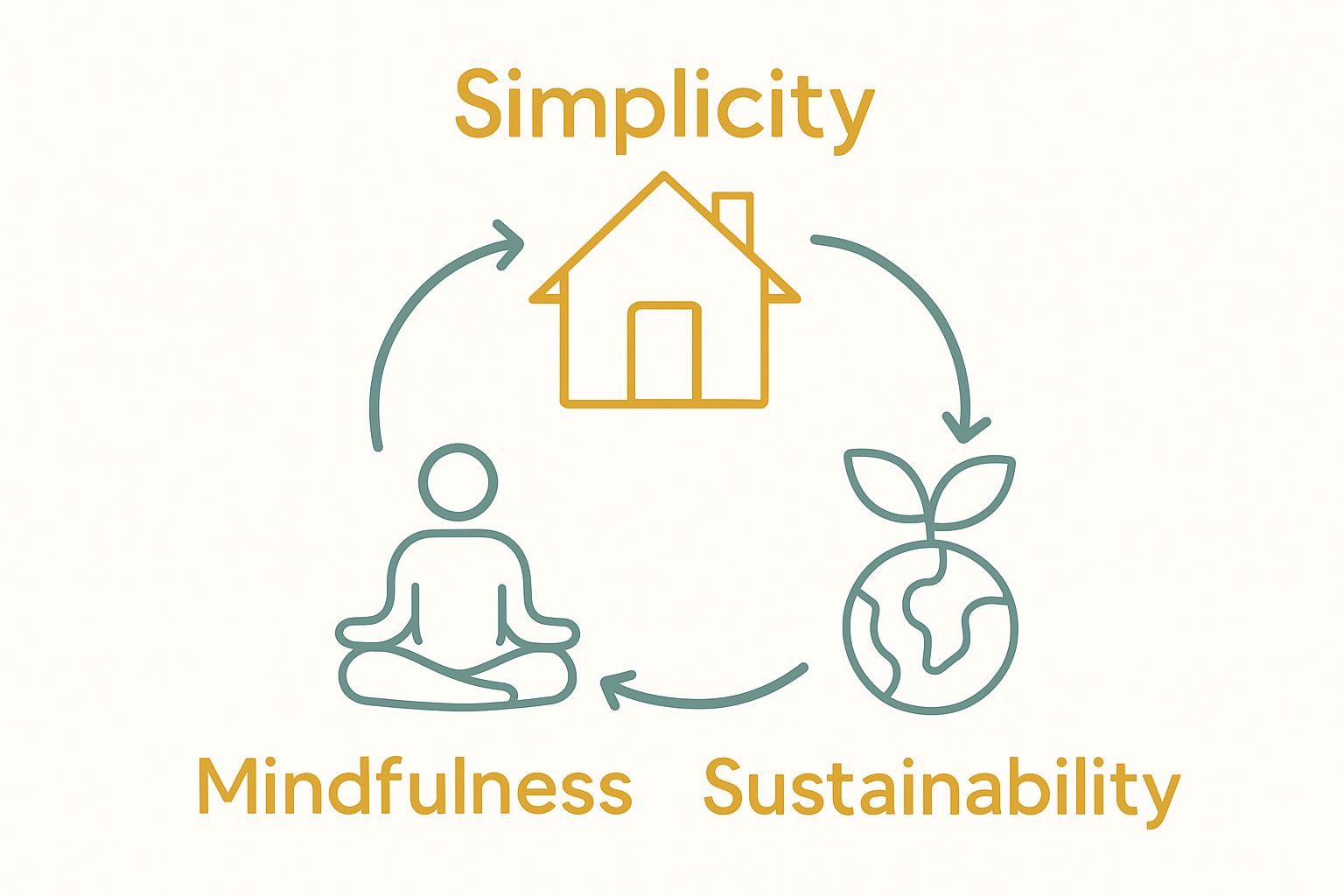
Slow living transcends mere lifestyle trend by integrating three fundamental principles: simplicity, mindfulness, and sustainability. These interconnected concepts form a holistic approach to navigating modern life with greater intention, awareness, and ecological responsibility.
Simplicity as a Foundational Principle
Simplicity in slow living represents a deliberate reduction of unnecessary complexity in daily experiences. Minimalism.com suggests that simplifying one’s life allows individuals to focus on what truly matters, reducing mental clutter and increasing overall life satisfaction. This principle encourages people to curate their experiences, possessions, and commitments with thoughtful consideration.
Key aspects of simplicity include:
- Decluttering physical and mental spaces
- Prioritising meaningful activities
- Reducing unnecessary consumption
- Creating space for genuine connections
Mindfulness and Intentional Living
Mindfulness represents the active practice of being fully present and engaged in each moment. Unlike passive existence, mindful living involves conscious awareness of one’s thoughts, actions, and interactions. Greater Good Magazine describes mindfulness as a powerful tool for emotional regulation and personal growth, enabling individuals to respond to life’s challenges with clarity and compassion.
When integrated with slow living principles, mindfulness helps individuals understand eco-friendly routines and make more sustainable lifestyle choices. By cultivating awareness, people become more attuned to their environmental impact and personal well-being.
Sustainability: Beyond Environmental Consciousness
In the context of slow living, sustainability extends beyond ecological considerations to encompass personal, social, and environmental dimensions. It involves making choices that support long-term well-being for individuals, communities, and the planet. This holistic approach recognises the interconnectedness of personal actions and broader systemic impacts.
Sustainability in slow living translates to conscious consumption, supporting local economies, reducing waste, and creating regenerative lifestyle practices that contribute positively to personal and collective well-being.
To clarify the key dimensions of slow living discussed in the article, the following table compares the foundational concepts of simplicity, mindfulness, and sustainability and how they are expressed within this mindful lifestyle approach.
| Principle | Core Focus | Practical Expression |
|---|---|---|
| Simplicity | Reducing unnecessary complexity | Decluttering, prioritising meaningful activities, minimising consumption |
| Mindfulness | Being fully present and intentional | Practising awareness in daily tasks, emotional regulation, eco-friendly routines |
| Sustainability | Supporting long-term well-being | Conscious consumption, supporting local economies, reducing waste |
Practical Applications of Slow Living in Family Life
Slow living is not an abstract concept but a tangible approach that families can integrate into their daily routines. By adopting intentional practices, parents can create more meaningful, connected, and balanced family experiences that support individual and collective well-being.
Reimagining Family Time and Interactions
Families in Transition highlights that slowing down helps families develop deeper connections and communication. This means transforming routine interactions into opportunities for genuine engagement, moving beyond mere transactional exchanges to more meaningful shared experiences.
Practical strategies for implementing slow living in family contexts include:
- Establishing device-free meal times
- Creating weekly family rituals
- Practicing active listening
- Allowing unstructured play and exploration
Mindful Technology and Screen Time Management
Modern families face significant challenges with digital overwhelm. Learning to limit screen time becomes crucial in maintaining family connections and individual well-being. Slow living encourages intentional technology use, recognising digital tools as servants rather than masters.
Key approaches to mindful technology engagement involve:
- Setting clear boundaries for device usage
- Creating tech-free zones in the home
- Modelling healthy digital habits for children
- Prioritising face-to-face interactions
Cultivating Sustainable Family Rhythms
Slow living in family contexts extends beyond individual actions to creating holistic, sustainable lifestyle patterns. This involves making conscious choices about consumption, time management, and personal energy allocation. Families can develop routines that prioritise quality experiences, emotional well-being, and collective growth.
By embracing slow living principles, families can transform their daily experiences from fragmented and stressful to connected, intentional, and nurturing.
The following table organises the main ways slow living can be practically integrated into family life, highlighting specific actions and their intended benefits according to the article.
| Focus Area | Example Practices | Benefits |
|---|---|---|
| Family Time & Interaction | Device-free meals, weekly rituals, active listening | Deeper connections, improved communication |
| Technology Management | Screen time limits, tech-free zones, digital modelling | Healthier habits, greater presence |
| Sustainable Family Rhythms | Mindful consumption, balanced routines | Reduced stress, enhanced collective growth |

Real-World Examples: How Slow Living Transforms Daily Routines
Slow living is not a theoretical concept, but a practical approach that manifests through intentional daily choices. By transforming seemingly mundane activities into mindful experiences, individuals can fundamentally reshape their relationship with time, consumption, and personal well-being.
Morning Routines: Reimagining Daily Beginnings
The New York Times suggests that morning routines represent a critical opportunity for implementing slow living principles. Instead of rushing through breakfast and preparing for work in a state of perpetual stress, slow living advocates for creating deliberate, peaceful morning transitions that set a positive tone for the entire day.
Transformative morning slow living practices include:
- Waking 30 minutes earlier for meditation or journaling
- Preparing and enjoying a mindful breakfast
- Avoiding immediate digital device engagement
- Practicing gentle movement or stretching
Work and Productivity: Quality Over Quantity
Slow living challenges traditional productivity paradigms by emphasising meaningful output rather than constant busyness. Psychology Today highlights that intentional work practices can significantly improve professional performance and personal satisfaction.
Key slow living work transformations involve:
- Implementing focused work blocks
- Taking genuine breaks without digital distractions
- Prioritising tasks based on personal values
- Creating clear boundaries between work and personal time
Consumption and Lifestyle: Intentional Choices
Slow living extends to consumption patterns, encouraging individuals to make thoughtful choices about purchasing, consuming, and discarding. This approach recognises that every transaction represents an opportunity for alignment with personal values and broader ecological considerations.
Practical approaches to mindful consumption include selecting quality over quantity, supporting local producers, minimising waste, and choosing products that genuinely enhance life quality. By treating each purchase as a conscious decision, individuals can create more sustainable and fulfilling lifestyle patterns.
Through these real-world applications, slow living demonstrates its transformative potential not as a radical lifestyle overhaul, but as a series of intentional, incremental changes that gradually reshape daily experiences.
Bring Mindfulness and Connection to Your Family with The Zoofamily
The article explores how modern families are seeking simplicity, mindfulness, and genuine connections in a world that is often overrun by busyness and digital distractions. Are you finding it challenging to slow down, reconnect with your children, and nurture their appreciation for the natural world? Discovering intentional moments together does not have to be difficult. With The Zoofamily, you can easily create purposeful family experiences that support the very principles of slow living discussed above.
Choose tools that inspire curiosity and real engagement. Each kids’ camera, set of binoculars, and walkie-talkie from The Zoofamily is designed to motivate children to pause, observe, and connect both with their surroundings and with each other. For every kids’ camera you purchase, we help restore the planet by planting a tree, making mindful sustainability a part of your everyday routine. Visit The Zoofamily kids’ cameras and start your family’s journey toward mindful, connected living today.
Frequently Asked Questions
What is slow living?
Slow living is a lifestyle philosophy that focuses on mindfulness, intentionality, and prioritising quality over quantity in daily experiences, challenging the prevalent culture of constant busyness.
How can slow living improve mental health?
Slow living can improve mental health by reducing chronic stress levels, enhancing emotional regulation, creating space for self-reflection, and promoting overall mental clarity through mindful practices.
What are the key principles of slow living?
The key principles of slow living include simplicity, mindfulness, and sustainability, all aimed at creating a more intentional and balanced approach to life.
How can families practice slow living together?
Families can practice slow living by establishing device-free meals, creating weekly rituals, allowing unstructured play, and fostering genuine communication to deepen connections and enhance family experiences.