

Time might feel like it slips away faster every day for busy families. Families with consistent routines see greatly reduced stress and stronger relationships. Most think better time management just means squeezing in more tasks, but it can actually build deeper trust between parents and children. The real secret is that getting control over your time unlocks a happier and far more connected home.
Table of Contents
- What Is Time Management And Its Importance For Families?
- Why Teaching Time Management Matters For Children’s Development
- How Time Management Skills Impact Daily Life And Responsibilities
- Key Concepts In Time Management: Planning, Prioritisation, And Organisation
Quick Summary
| Takeaway | Explanation |
|---|---|
| Establish family routines for productivity. | Predictable daily schedules reduce stress and enhance family functioning. Regularly scheduled activities lead to improved overall well-being. |
| Teach time management early to children. | Early instruction helps children develop essential cognitive skills like planning and prioritisation for future success. |
| Create a structured approach for task completion. | Systematic organisation and prioritisation of tasks maximise efficiency and reduce procrastination tendencies, leading to greater achievement. |
| View time management as a shared family skill. | Collaborative time management fosters stronger communication and support, creating an environment conducive to personal and collective growth. |
| Focus on emotional well-being through time management. | Effective time management leads to lower anxiety, enhanced self-esteem, and improved emotional resilience for both parents and children. |
What is Time Management and Its Importance for Families?
Time management represents a strategic approach to organising and controlling how family members allocate their most precious resource: time. At its core, this skill involves intentionally structuring daily activities to maximise productivity, reduce stress, and create meaningful interactions between parents and children.
The following table summarises the key components of effective family time management and their respective descriptions to help clarify each foundational concept.
| Component | Description |
|---|---|
| Predictable daily schedules | Consistent timings for activities that reinforce routine and provide structure to the day. |
| Clear expectations | Each family member understands their roles and responsibilities within the household. |
| Balanced commitments | Thoughtful allocation of time to work, personal needs, and family priorities. |
| Flexible yet structured approach | Systems in place that allow for adaptation whilst maintaining consistency and order. |
Understanding Time Management Fundamentals
For families, time management is more than simply tracking hours. It is a comprehensive system of planning, prioritising, and executing tasks that align with household goals and individual needs. Research from Stanford University confirms that well-established family routines contribute significantly to reduced household stress and improved overall family functioning.
Key components of effective family time management include:
- Creating predictable daily schedules
- Establishing clear expectations for each family member
- Balancing work, personal, and family commitments
- Developing flexible yet structured approaches to task completion
The Psychological Benefits of Structured Time
Proper time management offers profound psychological advantages for families. Children who experience consistent routines develop better emotional regulation, increased sense of security, and improved self-discipline. Parents benefit from reduced anxiety, clearer mental boundaries, and enhanced capacity to be present during family interactions.
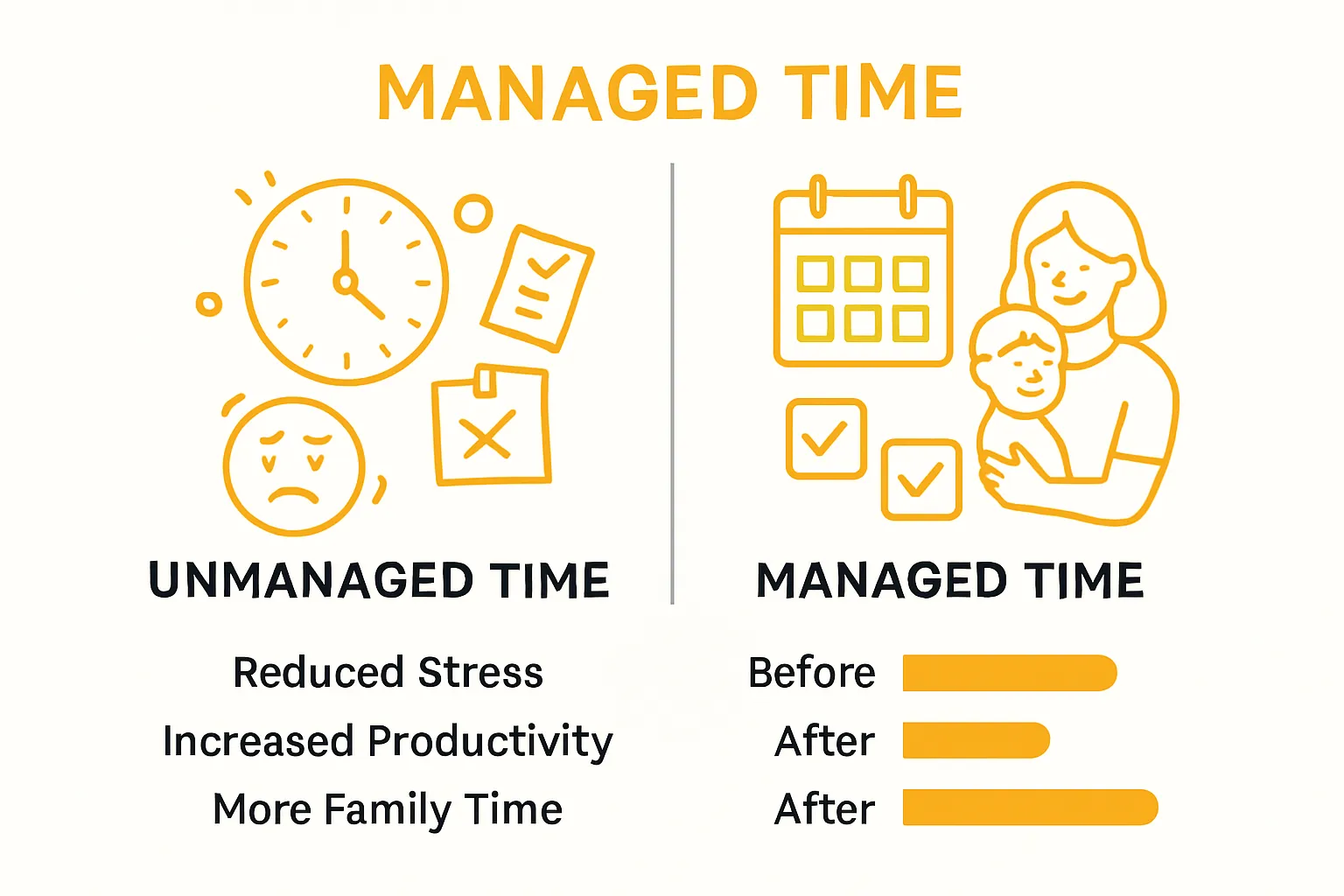
Parents who successfully implement time management strategies create environments where:
- Children feel more supported and understand expectations
- Family members communicate more effectively
- Individual and collective goals become achievable
- Stress levels are significantly reduced
Thinking of time management as a collaborative family skill rather than an individual responsibility transforms how households operate. By viewing time as a shared resource, families can create harmonious systems that support everyone’s growth, learning, and personal development.
Why Teaching Time Management Matters for Children’s Development
Teaching time management is a critical skill that extends far beyond simple scheduling. It represents a foundational life lesson that helps children develop essential cognitive and emotional capabilities necessary for future success.
The Cognitive Development Impact
Research from the American Psychological Association demonstrates that early time management instruction significantly enhances children’s executive function skills. These skills include planning, prioritising, and goal setting, which are fundamental for academic achievement and personal development.
Key cognitive benefits of teaching time management include:
- Enhanced decision making abilities
- Improved self regulation and impulse control
- Better understanding of task prioritisation
- Increased capacity for long term planning
Psychological and Emotional Growth
Beyond cognitive development, time management skills contribute profoundly to children’s psychological well-being. Children who understand how to manage their time effectively experience reduced anxiety, increased self confidence, and a greater sense of personal control. Check out our guide on making learning fun to discover interactive ways of teaching these crucial skills.
Emotional advantages of structured time management include:
- Reduced stress and overwhelm
- Greater sense of personal accomplishment
- Improved ability to handle multiple responsibilities
- Enhanced self esteem through successful task completion
By introducing time management concepts early, parents provide children with a powerful toolkit for navigating complex personal and academic challenges.
The following table compares the cognitive benefits and emotional advantages of teaching time management to children, helping to distinguish how these skills support overall development.
| Aspect | Cognitive Benefits | Emotional Advantages |
|---|---|---|
| Decision Making | Enhanced ability to evaluate and select optimum courses of action | Greater sense of personal accomplishment |
| Self-regulation | Improved impulse control and organisation of thoughts | Reduced stress and overwhelm |
| Task Prioritisation | Stronger understanding of how to sequence and rank assignments | Improved ability to handle multiple responsibilities |
| Goal Setting | Increased long-term planning skills | Enhanced self-esteem through successful completion |
How Time Management Skills Impact Daily Life and Responsibilities
Time management transcends mere scheduling, becoming a transformative skill that fundamentally reshapes how individuals navigate their personal and professional landscapes. This approach enables people to strategically allocate their most finite resource while maintaining balance and reducing unnecessary stress.
Enhancing Personal Productivity
Research from the National Institutes of Health indicates that effective time management directly correlates with improved personal productivity and reduced psychological strain. By implementing structured approaches to task completion, individuals can dramatically increase their efficiency and sense of accomplishment.
Key productivity improvements include:
- Systematic task prioritisation
- Reduced procrastination tendencies
- More consistent goal achievement
- Enhanced ability to manage competing responsibilities
Emotional and Mental Well-being
Beyond practical advantages, time management profoundly influences emotional regulation and mental health. Individuals who master these skills experience lower stress levels, greater emotional resilience, and a more balanced approach to daily challenges. Learn more about developing children’s skills to understand how foundational capabilities contribute to overall personal development.
Emotional benefits of effective time management encompass:
- Decreased anxiety about unfinished tasks
- Improved self confidence
- Better work life integration
- Enhanced sense of personal control
Time management is not about cramming more activities into limited hours, but strategically designing life experiences that align with personal values and priorities. By treating time as a purposeful resource, individuals transform potential overwhelm into meaningful, intentional living.
Key Concepts in Time Management: Planning, Prioritisation, and Organisation
Time management represents a sophisticated approach to controlling personal and professional activities through strategic frameworks that enable efficient resource allocation. Understanding the fundamental concepts of planning, prioritisation, and organisation transforms how individuals approach complex responsibilities.
The Architecture of Effective Planning
Research from Harvard Business Review reveals that successful planning goes beyond simple task listing. It involves creating comprehensive frameworks that align daily actions with overarching personal and professional goals, ensuring coherent and purposeful progress.
Critical elements of strategic planning include:
- Establishing clear, measurable objectives
- Breaking complex goals into actionable steps
- Creating realistic timelines
- Developing contingency strategies
Prioritisation: The Decision Making Mechanism
Prioritisation serves as the cognitive filter through which tasks are evaluated and sorted based on their strategic importance and potential impact. This process enables individuals to focus energy on activities that generate maximum value and contribute meaningfully to personal and professional growth. Learn more about developing essential skills to understand how foundational capabilities enhance decision making.
Key prioritisation strategies encompass:
- Using urgency and importance matrices
- Identifying high impact tasks
- Understanding personal energy cycles
- Recognising potential bottlenecks
Effective time management transcends mechanical scheduling, representing a holistic approach to personal development. By integrating planning, prioritisation, and organisation, individuals transform potential chaos into structured, intentional progress, creating pathways for sustained achievement and personal growth.
Transform Your Family’s Time Management Journey with The Zoofamily
As a busy mum, you understand the daily challenge of balancing routines, supporting your children, and still finding meaningful moments together. The article highlighted the real struggle of managing time, building healthy family routines, and fostering independence in your children. At The Zoofamily we recognise these hurdles and believe families deserve tools that not only simplify daily life but also nurture creativity and curiosity.

Imagine using our beloved kids’ cameras, walkie-talkies, and binoculars as part of your new structured family schedule. These products encourage shared adventures, hands-on exploration, and natural routines that support time management skills in real, memorable ways. Visit The Zoofamily to discover how our nature-inspired gadgets can help you transform everyday moments into lasting connections. Start now to make learning time fun, reduce stress, and create stronger bonds together.
Frequently Asked Questions
What is the importance of teaching time management to children?
Teaching time management to children is crucial as it equips them with essential life skills like planning, prioritising, and goal-setting, which are fundamental for both academic success and personal development.
How can busy moms effectively teach their kids time management skills?
Busy moms can teach time management skills by establishing consistent routines, setting clear expectations, and involving children in planning their daily activities, which not only helps manage time better but also fosters responsibility.
What are some practical strategies for implementing time management in daily family life?
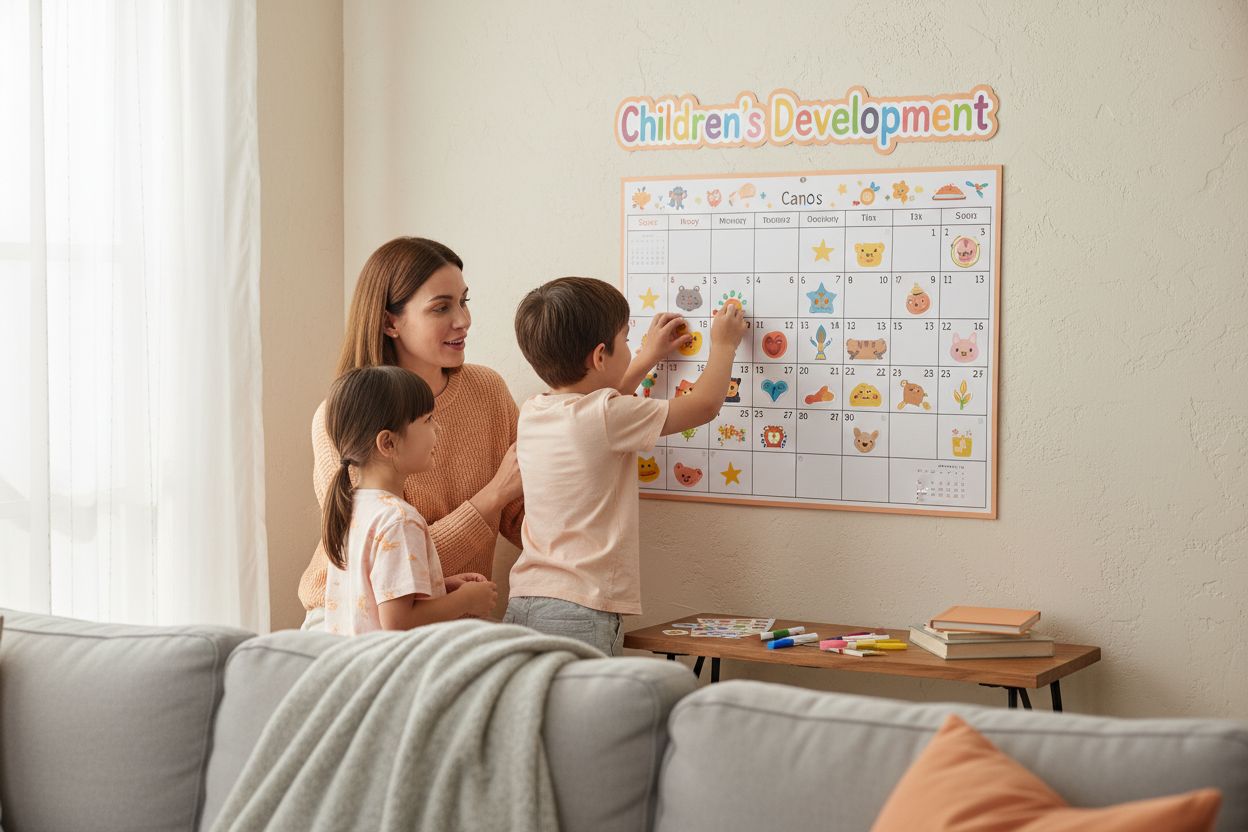
Practical strategies include creating predictable schedules, using visual calendars or planners, prioritising tasks together, and having regular family meetings to discuss upcoming activities and responsibilities.
How does effective time management contribute to family well-being?
Effective time management can significantly reduce stress levels and improve communication among family members, creating a more harmonious environment where everyone feels supported and understood.