

You can parent with schizophrenia. Many people do. The key is staying on your medication, keeping your NHS team informed, and having a clear plan for your child’s care on difficult days.
Start here: Take your prescribed medication as directed. Contact your GP or community mental health team (CMHT) this week. Write down one trusted person who can step in if you need support.
Your three actions right now:
- Confirm your current medication and next prescription date
- Save your CMHT’s number and NHS 111 in your phone
- Name one backup carer for your child
Table of Contents
- How does parenting schizophrenia work with NHS support?
- What family-centred strategies reduce stress day to day?
- Which nature-based activities help you bond with your child?
- How do you reduce parenting stress on hard days?
- When should you contact emergency services or social care?
- Which UK services can support you as a parent?
- How do you build a crisis plan you can use today?
- Key takeaways
- A note on strengths and small wins
- Thezoofamily: nature-play tools for parents and children
- Useful UK sources and helplines
How does parenting schizophrenia work with NHS support?
Medication adherence is the cornerstone of managing schizophrenia, but it works best alongside family-centred care. That means combining clinical treatment with practical parenting support: routines, stress reduction, and peer networks.
Around a third of people with schizophrenia or a related serious mental illness are parents. Parenting programmes exist, though the evidence base for specific interventions is still developing.
Steps for working with your NHS team:
- Contact your GP first. Tell them you are a parent and want a referral to your local CMHT.
- Ask the CMHT about a care coordinator who can link your mental health plan to your parenting role.
- Request a crisis team number for out-of-hours support.
- Keep a brief written record of your symptoms and any medication side effects to bring to appointments.
Pro Tip: Before any appointment, write a one-page timeline: current medication, dose, last change, and two or three recent symptoms. Clinicians can act faster when they have this in front of them.
A pilot group programme called Me, My Child, and Us showed feasibility and early benefits for parents with psychosis, including reduced parenting stress and improved confidence. Ask your CMHT whether a similar group runs locally.
What family-centred strategies reduce stress day to day?
Research shows that warmth in parent–child interactions is linked to better outcomes for both parent and child. Reducing criticism and increasing positive remarks is a practical, achievable target.
Core strategies:
- Use a visual schedule for mornings and evenings so your child knows what to expect.
- Keep rules simple: three household rules maximum, stated positively.
- Involve one trusted adult (a partner, family member, or friend) in your safety net.
- Practise short, low-pressure interactions rather than long, demanding ones.
Sample visual schedule:
| Time | Morning | Evening |
|---|---|---|
| Wake / wind-down | Get dressed, eat breakfast | Tidy one thing, put on pyjamas |
| Together time | 10-minute activity | Story or quiet game |
| Handover check | Confirm school bag | Confirm tomorrow’s plan |
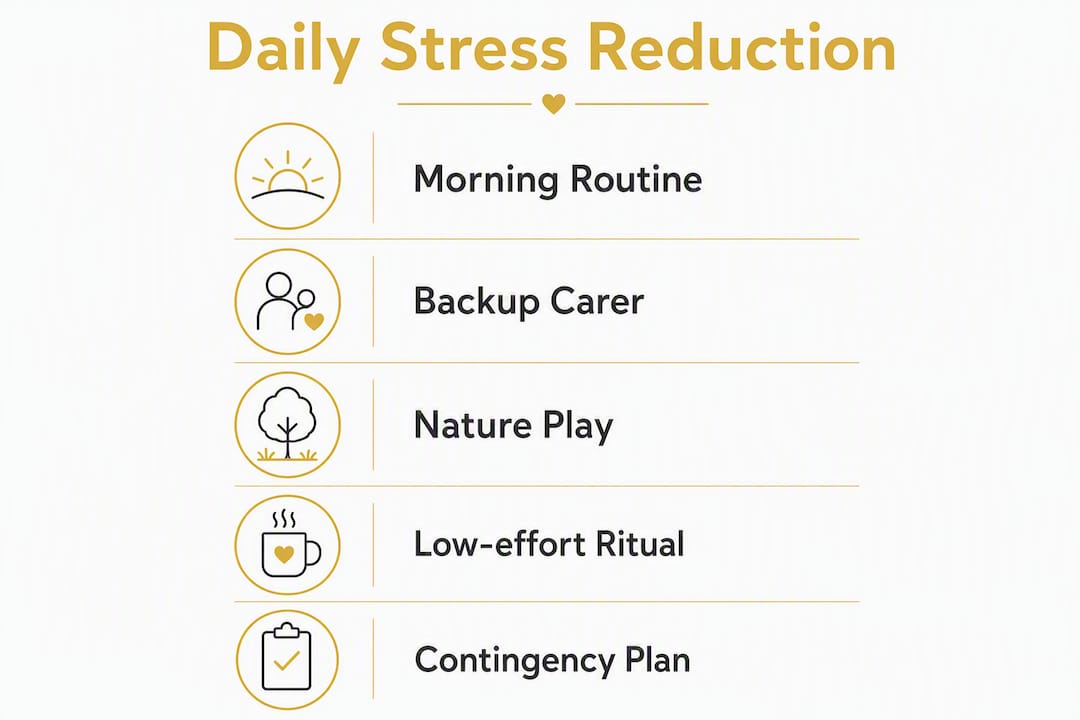
Pro Tip: When you introduce a backup carer to your child, keep it simple: “Sometimes [name] will help look after you, just like [name] does.” Children accept this more easily when it is framed as normal, not as a crisis.

Practitioner guidance recommends explicit contingency planning with trusted backups to reduce stress and prevent crisis escalation. Building this into your routine, rather than waiting for a bad day, makes it far easier to use.
Which nature-based activities help you bond with your child?
Qualitative research confirms that low-stress, sensory-rich activities such as outdoor play, simple crafts, and reading together strengthen the parent–child bond and provide grounding for the parent. Nature-based play is particularly useful because it is repeatable, low-cost, and does not require sustained concentration.
Activity ideas by age and energy level:
- Low energy (any age): Sit outside together and listen for birds; collect leaves or stones.
- Moderate energy (3–8 years): Simple nature crafts — leaf rubbings, pressed flowers, mud painting.
- Active (5+ years): Short walks with a purpose — spot three types of tree, count insects.
Toy categories that support this:
| Toy type | Why it helps |
|---|---|
| Kids’ binoculars | Focuses attention outward; shared discovery with minimal effort |
| Children’s cameras | Gives the child agency; creates a shared memory without pressure |
| Walkie-talkies | Short-range communication game; builds connection through play |
| Nature exploration kits | Tactile, sensory engagement; works at the child’s own pace |
Pro Tip: Set a “good enough” rule for nature play: ten minutes outside counts. You do not need a plan. Sitting on the doorstep and watching the sky together is enough.
For more parent–child bonding ideas using nature and creativity, Thezoofamily’s blog has practical, low-effort starting points.
How do you reduce parenting stress on hard days?
Parents with psychosis often show high warmth toward their children, yet parenting stress can feed directly into symptom cycles. Small daily habits break that cycle before it builds.
Practical daily tactics:
- Use micro-routines: a two-minute grounding exercise before school drop-off, a fixed bedtime sequence.
- Delegate one task per day to another adult when possible.
- Keep a sleep anchor: the same wake time each day stabilises mood more than total sleep hours.
Sample scripts:
- Bedtime: “We are going to do our quiet routine now. First [step], then [step].”
- Feeling overwhelmed: “I need five minutes. I am going to sit here. You can sit with me.”
- Asking for help: “I am finding today hard. Can you take [child] for an hour?”
Pro Tip: Pick one low-effort family ritual and protect it: a Friday film, a Saturday walk, a specific song at bedtime. When symptoms rise, that ritual is the anchor both you and your child can rely on.
When should you contact emergency services or social care?
Call 999 if you or your child are in immediate danger. Call NHS 111 for urgent mental health support that is not an emergency. Contact your local children’s social care if you are worried about your child’s safety and cannot reach your CMHT.
Steps if you are concerned about safety:
- Call your CMHT crisis line first; they can advise and escalate if needed.
- If unavailable, call NHS 111 and say you have a mental health crisis and are a parent.
- If a child is at risk right now, call 999.
- Note the date, time, and what happened; this record helps any follow-up.
Asking for help is protective. Proactive engagement with services demonstrates responsible parenting. Practitioners advise that seeking support can help maintain custody, not threaten it.
For legal guidance, contact Citizens Advice (0800 144 8848) or the NSPCC helpline (0808 800 5000). The UK “Think Family” approach means services are expected to consider your parenting role alongside your mental health needs.
Which UK services can support you as a parent?
- NHS CMHT: Your first clinical contact. Ask for a care coordinator who links mental health and parenting support.
- Mind: 0300 123 3393. Information, local groups, and advocacy. mind.org.uk
- Rethink Mental Illness: 0300 5000 927. Diagnosis-specific advice and carer support. rethink.org
- Family Hubs: Local early-help centres run by your council. Find yours at gov.uk/find-family-hubs. Offer parenting groups, respite, and practical support.
- NSPCC: 0808 800 5000. Advice on child welfare and safeguarding for parents and professionals.
- Citizens Advice: Free legal and benefits guidance, including housing and parenting rights.
To find a diagnosis-specific parent group, ask your CMHT or search Rethink Mental Illness’s local services directory. Peer-led digital programmes are increasingly available and can be a good first step if in-person groups feel difficult.
How do you build a crisis plan you can use today?
A written plan, stored somewhere visible, prevents crisis escalation and reduces anxiety on stable days. Fill in the fields below and share a copy with your backup carer.
Crisis plan template:
- My name and date of birth:
- My GP name and phone number:
- My CMHT / care coordinator name and number:
- My current medication and dose:
- My emergency contact (name, relationship, phone):
- My backup carer for my child (name, phone, what they know):
- My child’s school / nursery contact:
- Signs that I need help (list two or three early warning signs):
- What helps me most when symptoms rise:
- What my backup carer should say to my child:
Checklist once complete:
- Store one copy on the fridge or noticeboard
- Send a copy to your backup carer
- Share relevant sections with your CMHT at your next appointment
- Review it every three months or after any change in medication
Sample handover script: “I am not well today and need you to look after [child’s name]. My plan is on the fridge. Please call [CMHT number] if you are unsure about anything. I will check in with you by [time].”
Key takeaways
Parenting with schizophrenia is possible when medication, a clear safety net, and low-pressure daily routines work together.
| Point | Details |
|---|---|
| Medication plus NHS contact | Stay on prescribed medication and keep your CMHT’s number saved; these are your two most protective steps. |
| Written crisis plan | A completed plan with backup carer details, stored visibly, prevents escalation on difficult days. |
| Routine and warmth | Visual schedules and positive, low-pressure interactions improve outcomes for both parent and child. |
| Nature-based play | Short, sensory outdoor activities strengthen the parent–child bond and provide grounding with minimal effort. |
| Thezoofamily tools | Kids’ cameras, binoculars, and walkie-talkies from Thezoofamily support low-pressure nature play that benefits both you and your child. |
A note on strengths and small wins
The conventional framing around parenting schizophrenia focuses almost entirely on risk. That framing is not wrong, but it is incomplete. What it misses is that parents living with schizophrenia often bring a specific kind of attentiveness to their children — a hard-won awareness of what matters and what does not.
The evidence on warmth is telling. Studies show that parents with schizophrenia frequently display high warmth toward their children, and that warmth is the single strongest predictor of positive parent–child outcomes. The clinical challenge is not warmth. It is consistency, energy, and stress management. Those are addressable with the right supports.
Nature play fits here precisely because it removes the pressure to perform. A ten-minute walk is not a lesser version of a full day out. For a parent managing symptoms, it is often the better choice: low demand, sensory, shared. Small wins, repeated, build the attachment that matters most.
Thezoofamily: nature-play tools for parents and children
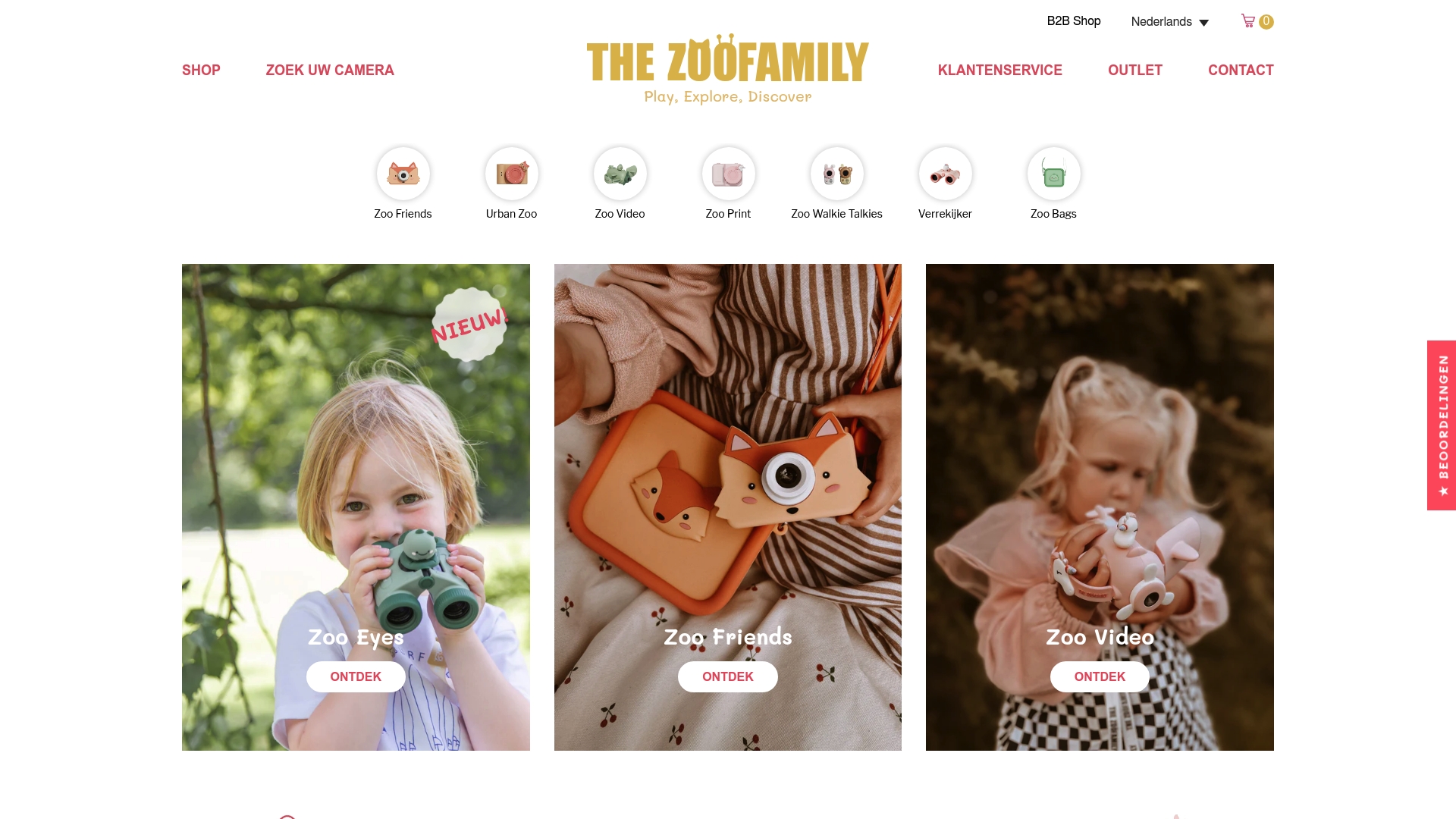
When you are looking for low-effort ways to connect with your child outdoors, having the right tools makes those short sessions easier to start and easier to repeat. Thezoofamily makes kids’ cameras, binoculars, and walkie-talkies designed to get children engaged with the natural world. Each camera sold funds the planting of one tree, so the purchase connects directly to the nature-first values behind the play ideas in this article.
You do not need a plan or a destination. Hand your child a kids’ camera or binoculars and step outside. That is enough to start.
Useful UK sources and helplines
- NHS mental health services: nhs.uk/mental-health — find your local CMHT and crisis team
- Mind: mind.org.uk | 0300 123 3393 — information, local groups, advocacy
- Rethink Mental Illness: rethink.org | 0300 5000 927 — diagnosis-specific support and carer advice
- NSPCC: nspcc.org.uk | 0808 800 5000 — child welfare guidance for parents
- Family Hubs: gov.uk/find-family-hubs — local early-help and parenting support
- Citizens Advice: citizensadvice.org.uk | 0800 144 8848 — legal, benefits, and housing guidance
For your crisis plan: save your CMHT number, NHS 111 (for urgent non-emergency mental health support), and 999 for immediate danger. Share the plan with your backup carer before you need it.
This article provides general information, not professional medical or legal advice. Confirm current guidance and your own situation with your GP, CMHT, or a qualified professional.