

Over 80 percent of children today spend less than an hour outdoors each day. This dramatic shift means many kids are missing out on powerful tools for emotional and physical development that only nature can provide. Nature as play therapy offers a fresh approach by blending proven therapeutic techniques with the healing properties of the outdoors, giving children a meaningful way to manage emotions, build resilience, and grow in healthy new ways.
Table of Contents
- What Is Nature as Play Therapy?
- Different Types of Nature Play Therapy
- How Nature Supports Emotional Development
- Sensory And Physical Benefits Of Nature Play
- Safety Considerations In Natural Play Therapy
- How Parents Can Facilitate Nature Play Therapy
Key Takeaways
| Point | Details |
|---|---|
| Nature as Play Therapy | Utilizes natural environments for children’s emotional and psychological healing through play. |
| Variety of Approaches | Encompasses several therapeutic strategies, including outdoor immersion, indoor nature play, and animal-assisted therapy. |
| Importance of Safety | Requires thoughtful planning and supervision to ensure children’s safety during nature play activities. |
| Parental Engagement | Parents can enhance nature play therapy by actively facilitating outdoor experiences and encouraging discovery. |
What Is Nature as Play Therapy?
Nature as play therapy is an innovative therapeutic approach that leverages natural environments and experiences to support children’s emotional and psychological healing. According to research from PubMed, this method utilizes play within natural settings to help children express complex emotions and resolve underlying psychological challenges.
At its core, nature play therapy combines traditional play therapy techniques with structured and unstructured experiences in outdoor environments. As detailed by Taylor Francis, this approach provides children with unique opportunities to engage with their emotions through direct interaction with natural elements like trees, stones, water, and wildlife.
The therapeutic process typically involves several key components:
- Creating safe, open natural spaces for exploration
- Using natural materials as therapeutic tools
- Encouraging child-led play and discovery
- Supporting emotional regulation through sensory engagement
- Developing resilience and confidence through outdoor interactions
For parents interested in understanding more about child development, our guide on childhood brain development offers additional insights into how natural play can support cognitive and emotional growth.
Different Types of Nature Play Therapy
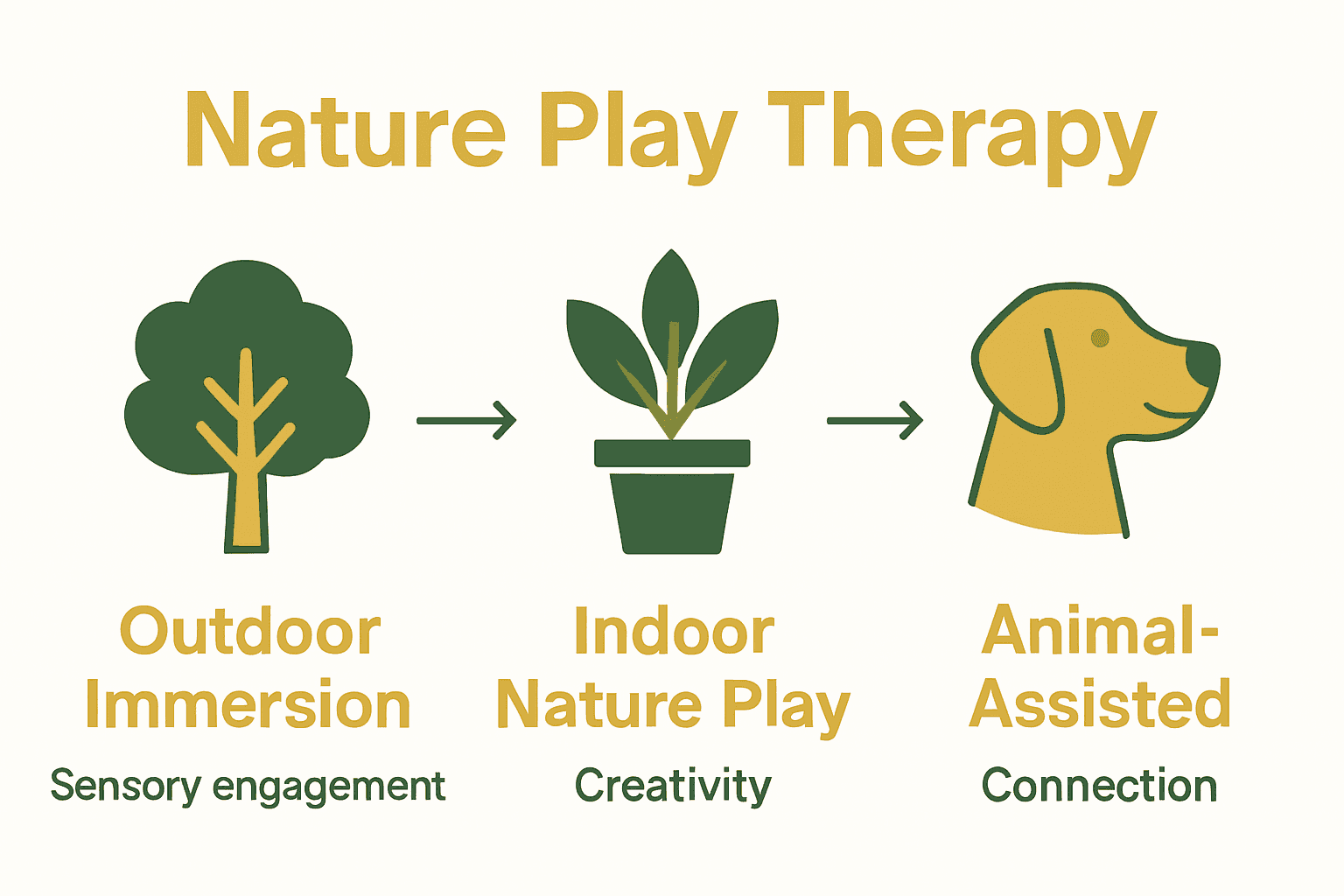
Nature play therapy isn’t a one-size-fits-all approach but encompasses multiple therapeutic strategies designed to support children’s emotional well-being through nature-based interactions. According to research from Taylor Francis, this therapeutic method includes diverse approaches tailored to individual child needs.
One prominent variant is Indoor Nature-Based Play Therapy, which brings natural elements directly into therapeutic settings. As detailed by Ovid, this approach involves introducing nature-inspired materials like stones, plants, and natural textures into indoor play environments, allowing children to explore and express emotions through tactile experiences.
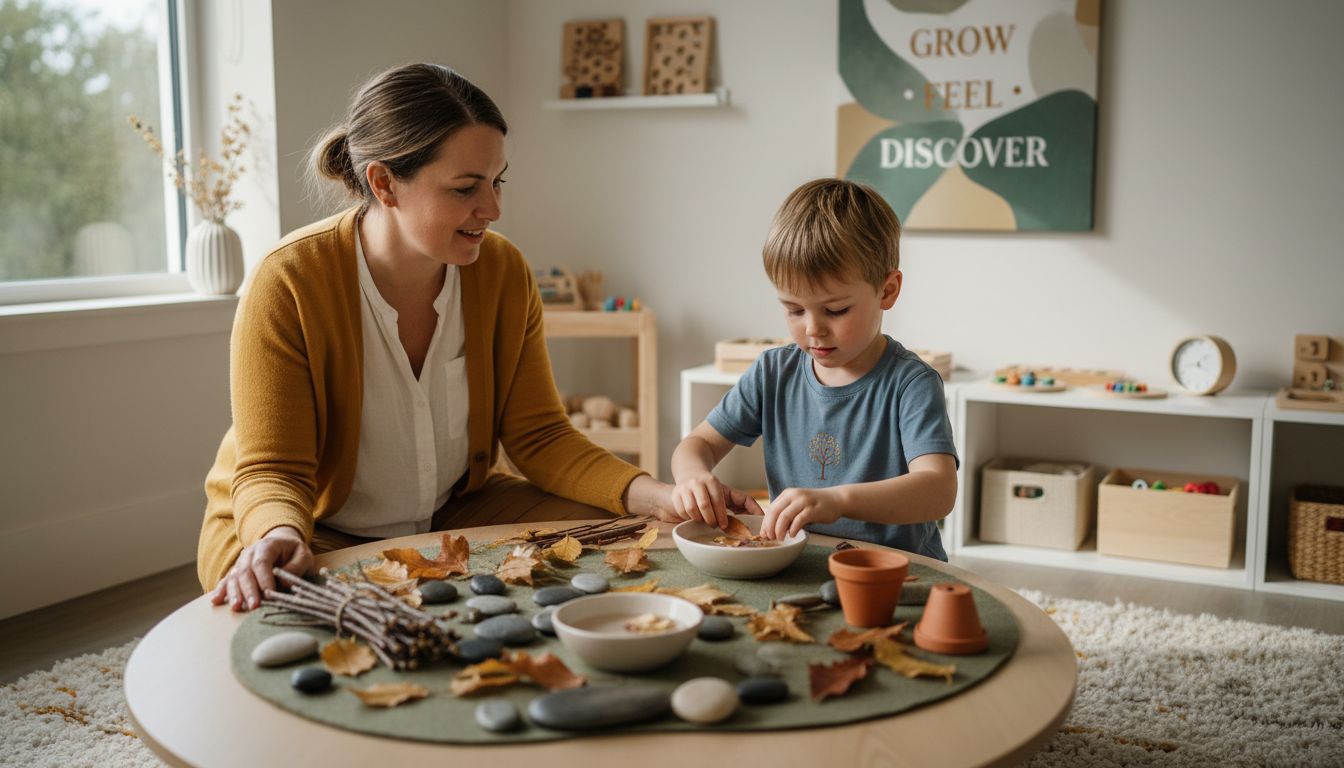
The primary types of nature play therapy include:
- Outdoor Immersion Therapy: Conducting sessions in natural landscapes like forests, parks, or gardens
- Indoor Nature-Based Play: Using natural materials and sensory experiences within controlled environments
- Wilderness Therapy: Engaging children in structured outdoor activities that challenge and support emotional growth
- Horticultural Therapy: Utilizing gardening and plant-based activities as therapeutic interventions
- Animal-Assisted Nature Therapy: Incorporating interactions with animals in natural settings
For parents seeking engaging ways to support their children’s development, our guide on making learning fun offers complementary insights into creative learning approaches.
How Nature Supports Emotional Development
Nature play provides a unique and powerful pathway for supporting children’s emotional growth and psychological well-being. According to research from the Australian Institute of Family Studies, engaging with natural environments can significantly improve children’s emotional regulation, resilience, and overall mental health by offering critical opportunities for stress reduction and authentic emotional expression.
The emotional benefits of nature play extend far beyond simple recreation. Emotional development through natural interactions involves complex psychological processes that help children understand and manage their feelings. MDPI Research highlights that nature play supports emotional development by providing experiences that enhance children’s emotional well-being, social skills, and fundamental connection to the environment around them.
Key emotional development mechanisms in nature play include:
- Building emotional resilience through unpredictable outdoor experiences
- Developing self-regulation by navigating natural environments
- Reducing stress through sensory engagement with natural elements
- Enhancing emotional intelligence by observing and interacting with wildlife
- Promoting self-confidence through independent exploration
Parents interested in understanding more about creative learning approaches can explore our guide on imaginative play, which complements the emotional growth principles of nature-based interactions.
Sensory And Physical Benefits Of Nature Play
Nature play offers a profound opportunity for children to develop critical physical skills through unstructured, sensory-rich experiences. According to research from PubMed, unstructured nature play positively impacts children’s physical health by promoting physical activity, enhancing motor skills, and providing extensive sensory stimulation through diverse natural environments.
The physical development benefits are comprehensive and multifaceted. Australian Institute of Family Studies highlights that nature play contributes significantly to children’s physical capabilities, including improved coordination, balance, and overall physical fitness. These experiences go beyond traditional exercise, offering dynamic, unpredictable environments that challenge and strengthen children’s physical capabilities.
Key sensory and physical benefits of nature play include:
- Gross motor skill development through terrain navigation
- Fine motor skill refinement by manipulating natural objects
- Proprioceptive awareness from climbing, jumping, and balancing
- Sensory integration through diverse tactile experiences
- Physical endurance built by exploring varied landscapes
- Spatial reasoning enhanced by navigating natural environments
For parents interested in supporting their children’s motor skill development, our guide on developing fine motor skills offers complementary insights into childhood physical growth.
Safety Considerations In Natural Play Therapy
Nature play therapy offers incredible developmental benefits, but requires thoughtful safety planning and supervision. According to the Australian Institute of Family Studies, while nature play involves inherent risks, appropriate supervision and strategic risk management can ensure children’s safety while allowing them to engage in beneficial risk-taking activities.
Professional guidance is crucial for creating safe natural play environments. MDPI Research emphasizes the importance of implementing comprehensive safety measures, including thorough environmental assessments and proactive education about safe practices to minimize potential hazards during nature play therapy sessions.
Key safety considerations for natural play therapy include:
- Thorough site assessment before beginning play activities
- Age-appropriate risk evaluation
- Continuous adult supervision
- Teaching children basic safety awareness
- Checking for potential environmental hazards
- Having first aid equipment readily available
- Understanding individual child’s physical limitations
Parents interested in exploring safe nature experiences can find additional insights in our Montessori nature exploration guide, which offers strategies for engaging children safely in natural environments.
How Parents Can Facilitate Nature Play Therapy
Parents play a crucial role in supporting their children’s nature play therapy journey by creating opportunities for meaningful outdoor experiences. According to the Australian Institute of Family Studies, this involves encouraging outdoor activities, providing access to natural environments, and actively participating in nature-based play to enhance bonding and emotional development.
Intentional engagement is key to successful nature play therapy. Taylor Francis Research highlights that parents can foster a deep connection to nature by actively participating in therapeutic outdoor activities, supporting their children’s psychological and emotional well-being through shared experiences.
Effective strategies for parents include:
- Create dedicated outdoor exploration time
- Minimize digital distractions during nature play
- Allow child-led discovery and exploration
- Ask open-ended questions about natural experiences
- Model curiosity and respect for natural environments
- Provide age-appropriate natural play materials
- Encourage sensory engagement with natural elements
Parents seeking creative ways to make learning enjoyable can explore our guide on engaging activities for kids, which complements the principles of nature-based play and learning.
Nurture Emotional Growth Through Nature Play with The Zoofamily
Unlock the full potential of nature as play therapy by enriching your child’s outdoor experiences with thoughtfully designed tools that inspire creativity and connection. The article highlights key challenges such as supporting emotional regulation, encouraging resilience, and fostering self-confidence through sensory engagement in natural settings. At The Zoofamily, we understand these goals and provide innovative products like kids’ cameras, binoculars, and walkie-talkies that serve as bridges to nature exploration and imaginative play.
Give your child the chance to develop emotional intelligence and physical skills while deepening their bond with the environment. Act now to bring nature’s benefits home by visiting The Zoofamily and discover how our carefully crafted tools with animal references spark curiosity and meaningful outdoor activities. Enhance your child’s nature play therapy journey with our creative solutions and join us in restoring natural beauty for generations to come. Explore more about making learning fun with engaging activities for kids and discover ways to encourage fine motor skill development that complement your child’s emotional growth.
Frequently Asked Questions
What is nature play therapy?
Nature play therapy is a therapeutic approach that uses natural environments to help children express emotions and address psychological challenges through structured and unstructured play in outdoor settings.
What are the benefits of nature play therapy for children?
Nature play therapy supports emotional development, enhances physical skills, reduces stress, and promotes emotional regulation and resilience by allowing children to engage with natural elements in a safe environment.
What different types of nature play therapy exist?
Different types of nature play therapy include outdoor immersion therapy, indoor nature-based play therapy, wilderness therapy, horticultural therapy, and animal-assisted nature therapy, each tailored to enhance children’s emotional well-being.
How can parents facilitate nature play therapy at home?
Parents can facilitate nature play therapy by creating opportunities for outdoor exploration, minimizing digital distractions, allowing child-led play, and encouraging sensory engagement with natural elements to enhance their children’s emotional and psychological growth.
Recommended
- Making Learning Fun: Engaging Activities for Your Kids – The Zoofamily
- Understanding the Benefits of Imaginative Play – The Zoofamily
- Childhood Brain Development: A Guide for Modern European Mums – The Zoofamily
- 7 Astuces pour explorer la nature et decouvertes montessori – The Zoofamily
- Understanding Why Outdoor Play Toys Benefit Children – Learning Bugs