

The best winter activities for a family are the ones that give children a small mission. Look for animal tracks, count the birds on the feeder, take photos of frost, or send a message from one end of the garden to the other. A mission gets children outside in the cold and keeps them busy indoors when it is dark at four o’clock. This guide sorts ideas by the kind of day you have: snow, grey and dry, too cold, or too dark. Most cost nothing. We also show where a children’s camera, binoculars or walkie-talkie turns a walk into a game.
TL;DR
- Match the activity to the day: snow play, a nature walk, an indoor game or a craft at the kitchen table.
- Give children a job outdoors, such as finding tracks, spotting birds or taking photos. They stay out longer.
- Torches, paper snowballs, sock hockey and balloon games cost almost nothing and work indoors.
- Layers, water and a sledging spot away from roads cover most of the safety side.
- A camera, binoculars or walkie-talkies from The Zoofamily suit children aged 3 and up and make good winter gifts.
Table of Contents
- Outdoor winter fun, with snow or without
- Winter wildlife: tracks, birds and feeders
- Indoor games for dark and rainy days
- Winter crafts and kitchen projects
- Free and low-cost ideas
- Adapting to age, weather and space
- Keeping children comfortable outside
- A winter gift that gets children outside
- Our point of view
- FAQ
- Sources
Outdoor winter fun, with snow or without
Snow is rare in much of Britain, France, Belgium and Germany’s lowlands, so a plan that needs snow will often fail. Keep two lists: one for snow days and one for every other day.
If it snows
The classics still work. PBS KIDS for Parents suggests sledging and rolling down hills, snow angels, snowmen and snowy nature walks. It also suggests drawing a hopscotch course in the snow with a stick when chalk will not show. That small change shows children that snow is a new surface to solve, not an obstacle.
For snow forts, Parents.com describes using plastic storage bins as moulds. Fill a bin with snow, pat it down, flip it to release a brick, and stack the bricks in rows. Squirt bottles of water with a little food colouring let children decorate the walls.
For sledging, BBC CBeebies suggests a park or public field away from roads. Walk the slope first, look for fences, trees and water at the bottom, and finish with a flask of hot chocolate.
If it does not snow
Most winter days are grey, damp and mild. Parents.com’s no-snow guide lists ice skating, family hikes, capture the flag, stargazing with a journal, birdwatching with a sketchbook, and a picnic with a hot drink. Add a campfire only where it is allowed, such as a campsite or a managed fire pit.
PBS KIDS also suggests turning summer traditions into winter ones. Go back to your favourite park or trail. In winter it is usually quieter, and bubbles, chalk and bikes still work. Children enjoy seeing the same place look different, and a familiar route is easy for younger children to manage.
Give the walk a job
Children aged 3 to 8 rarely want to walk for the sake of walking. They will walk for a reason. Here are five reasons that work in cold weather:
- Photo hunt. Ask for five pictures: something frozen, something red, something round, a bird and a track.
- Collecting. PBS KIDS suggests gathering pinecones, acorns and sticks to build a fairy house or den.
- Spotting. Count how many different birds you can see in 20 minutes.
- Messages. Split into two teams and use walkie-talkies to guide each other to a hidden object.
- Then and now. Take a photo of a summer spot and recreate it in winter.
For more ideas in the same spirit, see our guides to nature play ideas that spark curiosity and ways to boost family outdoor adventures.
Winter wildlife: tracks, birds and feeders
Winter is a good season for children to start looking at nature. Leaves are off the trees, birds come closer to food, and mud and frost show footprints.
Animal tracks
Virginia State Parks suggests playing ‘I spy’ for signs of animals in mud or snow, such as tracks, half-eaten nuts and scratches on bark. Children aged 4 and up can sketch what they find. At home, they can compare the sketch with a library book on British or European wildlife. Look at the size, the shape, the pattern and whether claw marks show. A muddy field edge or a path after rain works as well as snow.

Birds
The same park guide recommends winter walks for hearing resident and migrating birds. In the UK, the RSPB runs Big Garden Birdwatch every January. It is free to take part. You spend one hour counting the birds that land in your garden, local park or balcony, then report what you saw. Even a count of zero is accepted. It is a ready-made winter project for a family with a young child and a notepad.
A simple feeder helps too. PBS KIDS suggests a DIY birdfeeder, and Parents.com describes one made from a pinecone, peanut butter and seed. Hang it where you can see it from a window. Children can then watch from the warm and tick off the visitors.
Binoculars make this more exciting for children, because the bird that was a dot becomes a face. The Zoo Eyes binoculars cost €39.95 and are designed for young children aged 3 and up. If you want a weekend built around birds, read our guide to a family bird observation weekend.
Indoor games for dark and rainy days
When it is too cold, wet or dark to go out, movement games keep energy levels sensible. Most of these need only things you already own.
Torch games
Early sunsets are an opportunity. PBS KIDS recommends torch games for dark evenings: freeze dance, a scavenger hunt and limbo using the beam of light. Turn off the lights, give each child a torch and ask them to find objects you describe. Children also learn when it gets dark in winter compared with summer, a good question to ask at tea time.
Paper snowballs
Scrunch sheets of paper into balls. Puddles & Play describes a target game for ages 2 to 8: soft snowballs or crumpled paper go into a hula hoop for 1 point or a laundry basket for 3. Clear lamps and breakables first. Kid Activities adds a version where you knock a ping-pong ball off the top of a bottle without toppling it, which suits older children.

Small-space movement games
Teaching Expertise lists several games that work in a living room or hallway:
- keep the balloon up for as long as possible
- a balance beam made from painter’s tape on the floor
- sock hockey with laundry baskets as goals
- indoor bowling with plastic cups
- paper aeroplane contests
Children’s Health suggests an indoor obstacle course from household items, and ten-minute tidy-up races. A tidy-up race is a game and a chore at once, which parents tend to like.
A game with the dog
If you have a dog, include it. Hiding treats around the house and letting the dog sniff them out is a good rainy afternoon game. Our partners have a guide to easy scent games for dogs that children can help set up, and the dog gets a workout too.
Quiet games
Not every game needs running. Memory matching, winter bingo, puzzles that last several days, story circles and reading aloud all work. Parents.com recommends reading aloud, with Jan Brett’s The Mitten as one example, and family film afternoons with a hot drink.
Winter crafts and kitchen projects
Crafts fill the hour before dinner and give children something to show for the day.
- Paper snowflakes. Parents.com says the youngest children can fold the paper two or three times and cut the corners. Older children can try more intricate patterns.
- Decorated pinecones. Glue, pompoms and glitter are enough. Use pinecones from your nature walk.
- Nature crafts. Virginia State Parks suggests crafts made only from fallen materials, such as tree cookies, nature weaving and pinecone decorations.
- Baking. Biscuits, gingerbread houses and a cookie competition. Today’s Parent suggests having friends and neighbours bake, with the children judging and making certificates as prizes.
- A living-room picnic. Spread a cloth on the floor, bring out sandwiches and soup in mugs, and treat it as a day out.
For children who like making things with a record of the result, photography fits well. A child can photograph each stage of a gingerbread house, then pick the best photo. The Zoo Print instant print camera costs €109.95 and prints pictures children can stick into a winter scrapbook. You can see the range on our Zoo Print page.
Free and low-cost ideas
Winter does not have to be expensive. Parents.com says many winter activities are free or cheap and mostly need a winter coat. BBC CBeebies lists free options for families:
- local parks, some with free winter displays
- winter nature walks
- library visits, including baby and toddler sessions
- family bike rides
- looking at Christmas lights in your own neighbourhood
A flask of hot chocolate turns almost any of these into an outing. Add a task from the lists above and a free walk becomes a project. For more low-cost ideas, try our list of creative family day ideas for nature-loving families.
Adapting to age, weather and space
The same activity can be too easy for one child and too hard for another. Puddles & Play sorts its winter ideas by weather: snow days, grey days with no snow, and days that are too cold to go out. It also gives age, preparation time and mess level for each. You can use the same approach at home.
| Situation | Good choice | What you need |
|---|---|---|
| Snow | Sledging, snow fort, snow angels | Coats, gloves, a bin or sledge |
| Grey and dry | Track hunt, bird count, photo walk | Notebook, binoculars or a camera |
| Too cold | Paper snowballs, sock hockey, baking | Paper, socks, a basket |
| Dark early | Torch games, film and picnic | Torches, blankets |
| Small flat | Balloon games, tape balance beam | Balloons, painter’s tape |
Toddlers and preschoolers
Keep it short, tactile and repeatable. Paper snowballs, a snow-dough sculpture, a pinecone collection and a ten-minute dance party all work for ages 3 to 5. Let them lead, and let them get a little wet. PBS KIDS encourages parents to support children as they try slippery activities like sledging or skating, and to treat getting wet as normal.
Ages 6 to 9
Older children like rules, scores and responsibility. Give them a camera and a list of photos to find. Give them the walkie-talkie and the role of team leader. Let them keep the tally in a bird count. Games like indoor capture the flag, and timing and scoring paper-snowball rounds, suit this age.
Mixed ages
Pair a younger child with an older one. The older one reads the clue, and the younger one finds the object. Torch scavenger hunts and track hunts work well like this because both children can contribute.
Keeping children comfortable outside
A few habits cover most of what you need outdoors in winter.
- Layer up. Virginia State Parks advises layering clothing, so children can take a layer off if they warm up on the walk.
- Take water. The same guide recommends carrying water on winter hikes. A warm drink in a flask is a good addition.
- Choose sledging slopes with care. BBC CBeebies recommends a park or public field away from roads.
- Stay out a little at a time. The guide notes that the longer you spend in the cold, the quicker the body adapts. Short outings first make long ones easier.
- Check on young children. If a child is shivering, wet or going quiet, go indoors, change into dry clothes and warm up.
A winter gift that gets children outside
Winter is also gift season. If you are looking for a present for a child aged 3 or older that encourages outdoor play, our range is built around animals and nature. For each camera sold, we plant one tree.
Here is how each product fits into the activities above:
| Product | Price | Fits with |
|---|---|---|
| Zoo Friends camera | €69.95 | Photo hunts and nature walks |
| Urban Zoo camera | €89.95 | Photo hunts and nature walks |
| Zoo Video camera | €79.95 | Filming a snowman or sledge run |
| Zoo Print instant print camera | €109.95 | Scrapbooks and printed winter photos |
| Zoo Walkie-Talkie | €54.95 | Team games outdoors |
| Zoo Eyes binoculars | €39.95 | Bird watching |
| Zoo Light night light | €39.95 | Dark evenings and bedtime |
| Zoo Bags | €19.95 | Carrying a camera and pinecones |
| Zoo Sleeves | €9.95 | Camera accessory |
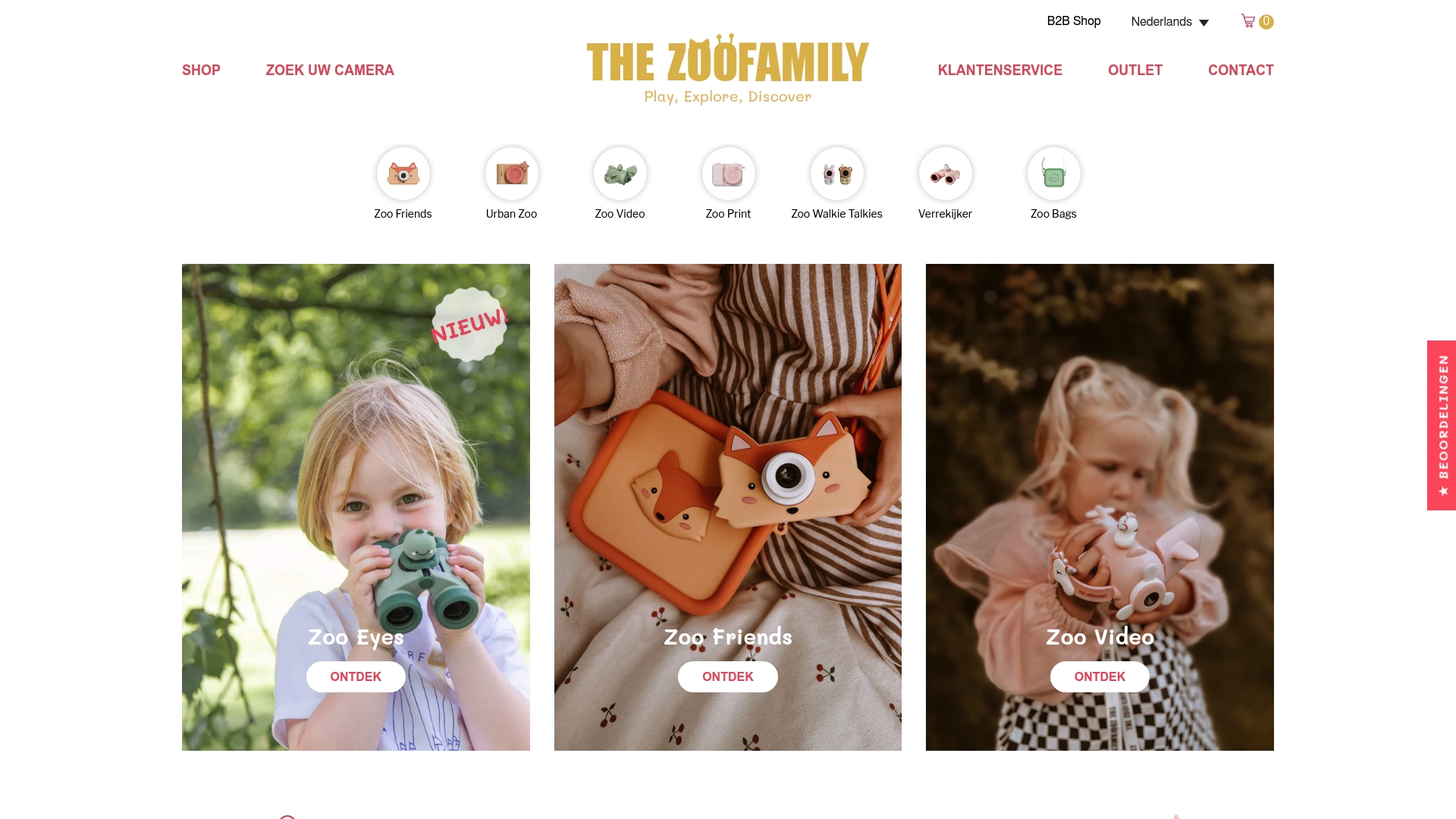
You can browse the full kids’ camera collection, or look at the Zoo Video cameras. All our products are on thezoofamily.com.
Our point of view
We designed The Zoofamily products with animal references because we want children to be curious about nature. Winter is a good time to start. Animals are easier to see on bare branches, tracks show in mud and frost, and children are close to the window when it is cold.
Our advice is to give a child a small tool and a task. A camera asks the child to look carefully at one thing and decide what is worth keeping. Binoculars bring a bird closer. A walkie-talkie turns a walk into a team game. The result is children who notice more and stay outside a little longer.
We also want children to feel connected to the planet they are exploring, which is why we plant one tree for each camera sold. Our products are made for children aged 3 and up, and we hope they help your family enjoy the winter outdoors, together.
ALAIN
FAQ
What are some fun winter activities for a family at home?
Try a torch scavenger hunt, paper-snowball target games, sock hockey, a balloon game, baking and a living-room picnic. Most need only things you already own. Choose one active game and one quiet activity so the afternoon has some balance.
What can we do in winter if there is no snow?
Go for a nature walk, look for animal tracks in mud, count birds, have a picnic with a hot drink, or visit a park you normally only see in summer. Give children a task such as taking five photos or finding three types of leaf, and the walk feels like an adventure.
What are some free winter activities for families?
Visit a local park, take a nature walk, go to the library, ride bikes, look at Christmas lights in your neighbourhood, or go sledging if there is snow. Parents.com notes that most winter activities need little more than a winter coat. A flask of hot chocolate makes any of them feel like a treat.
How do I keep young children active when it is dark early?
Use the early dark as part of the game. Torch freeze dance, torch scavenger hunts and torch limbo all work indoors. A tidy-up race or a short obstacle course in the hallway also burns energy before dinner.
What gift helps children enjoy winter outdoors?
A children’s camera, binoculars or walkie-talkies give a child a reason to go outside. The Zoofamily range starts at €39.95 for binoculars, and the cameras are designed for children aged 3 and up. Each camera sold also means one tree planted.
Sources
- PBS KIDS for Parents: 8 Winter Wonderland Family Activities
- Parents.com: 25 Winter Activities for Kids, No Snow Required
- Parents.com: Budget-Friendly Winter Activities to Do With Kids
- BBC CBeebies: Things to do for free with kids
- Virginia State Parks: How to enjoy parks in winter
- RSPB: Big Garden Birdwatch FAQs
- Puddles & Play: 31 Winter Activities for Kids
- Teaching Expertise: 40 Indoor and Outdoor Winter Games for Kids
- Children’s Health: Winter Activities for Kids
- Today’s Parent: 50 essential winter activities for families