

Selecting the right outdoor water activities for young children can feel overwhelming when you want something that truly engages their creativity while fostering a genuine connection with nature. Many parents across Europe struggle to find water play options that go beyond simple splashing, seeking experiences that stimulate imagination, develop coordination, and build environmental awareness. This guide provides a practical framework for choosing safe, enriching water play activities alongside inspiring ideas you can implement immediately, whether in your garden or at dedicated outdoor spaces designed for young explorers.
Table of Contents
- How To Choose Outdoor Water Play Activities For Young Children
- Seven Inspiring Outdoor Water Play Ideas For Young Nature Lovers
- Popular European Water Playgrounds That Combine Fun, Learning, And Nature
- Safety Essentials And Clothing Tips For Outdoor Water Play
- Explore More Outdoor Activities And Gear With The Zoofamily
- Frequently Asked Questions
Key takeaways
| Point | Details |
|---|---|
| Developmental benefits | Water play enhances concentration, hand-eye coordination, and sensory processing whilst encouraging creative exploration |
| Safety first | Active supervision near water is non-negotiable, with quick-drying clothing and environmental checks essential |
| Nature integration | Activities using natural materials like stones and sticks deepen children’s connection with the outdoor world |
| Adaptability matters | Choose activities matching your child’s comfort level and developmental stage for optimal engagement |
How to choose outdoor water play activities for young children
Finding suitable water play activities requires thoughtful consideration of several key factors that balance fun with safety and developmental appropriateness. Water activities should be adapted to the child’s comfort level rather than pushing them beyond their readiness. Start by observing how your child responds to water, whether they prefer gentle splashing or more adventurous exploration, then build activities around their natural curiosity.
Clothing choices significantly impact the quality of outdoor water play experiences. Quick-drying fabrics allow children to move freely between wet and dry activities without discomfort or extended chill periods. Cotton retains moisture and takes hours to dry, potentially cutting playtime short and creating unnecessary cold exposure. Synthetic blends or technical fabrics designed for active outdoor use maintain comfort throughout extended play sessions, especially important during cooler European spring and autumn days.
Safety is paramount in water activities, particularly for young children who lack the judgment to assess risks independently. Drowning accounts for 7% of injury-related deaths globally, making constant supervision absolutely critical. Never leave children unattended near any water source, regardless of depth or perceived safety. Even shallow garden water features require your full attention.
Before starting any water play session, evaluate environmental conditions carefully:
- Check water temperature to ensure comfort without risk of hypothermia
- Inspect the play area for sharp objects, slippery surfaces, or hidden hazards
- Assess water depth and flow rate if using natural sources like streams
- Consider weather conditions including sun exposure and wind chill
Pro Tip: Create a simple pre-play checklist covering supervision arrangements, clothing suitability, and environmental safety so you never skip crucial preparations in the excitement of getting started.
Prioritise activities that naturally encourage creativity and environmental connection rather than purely physical entertainment. Water play becomes far more enriching when children can experiment with natural materials, observe cause and effect relationships, and develop their own imaginative narratives around their discoveries. This approach aligns perfectly with choosing water play activities that nurture both development and environmental awareness.
Seven inspiring outdoor water play ideas for young nature lovers
These seven activities offer varying levels of complexity and engagement, each designed to stimulate creativity whilst connecting children with natural elements and processes.
-
Natural water trough systems: Set up a series of containers at different heights using garden troughs, buckets, or repurposed kitchen items. Children manipulate water flow by pouring between levels, creating their own irrigation systems. Add natural materials like pebbles, moss, and small branches for dam building and flow redirection. This activity teaches basic physics whilst encouraging problem-solving and spatial reasoning.
-
Sensory nature pools: Fill shallow containers with water and carefully selected natural items such as smooth river stones, pine cones, bark pieces, and safe aquatic plants. Children explore different textures, weights, and behaviours as objects interact with water. Water play increases concentration and supports sensory needs whilst developing fine motor control through careful manipulation of small objects.
-
DIY water pumps and sluices: Simple hand pumps designed for children allow them to move water between containers whilst understanding mechanical cause and effect. Sluices made from halved guttering or bamboo create flowing channels where children experiment with speed, direction, and volume. These setups encourage extended focused play and collaborative problem-solving when children work together.
-
Floating garden exploration: Create miniature floating gardens using leaves, flower petals, and small twigs arranged on water surfaces. Children observe how different natural materials behave in water, which float or sink, and how wind affects their creations. This gentle activity suits quieter children whilst teaching observation skills and basic scientific principles.
-
Water painting on natural surfaces: Provide brushes and containers of plain water for painting on stones, tree bark, paving slabs, or wooden fences. Children watch their artwork appear then gradually disappear as water evaporates, learning about natural processes whilst expressing creativity without mess or waste. This calming activity works beautifully for developing brush control and artistic confidence.
-
Stream diversion engineering: In safe, shallow natural streams or created water courses, children use stones and sticks to redirect water flow, build bridges, and create pools. This physically active play develops gross motor skills, spatial awareness, and understanding of natural water behaviour whilst allowing imaginative storytelling around their constructions.
-
Rain collection and measurement: Set up various containers to collect rainwater, then use the collected water for other play activities. Children compare collection rates in different container shapes, measure volumes, and discuss the water cycle. This activity connects weather observation with hands-on learning and resource awareness.
Pro Tip: Rotate activities based on your child’s energy levels and weather conditions, using active water play for high-energy days and gentler sensory exploration when they need calming engagement.
These inspiring water play ideas work individually or combined, adapting easily to available space and resources whilst maintaining focus on creative, nature-connected experiences.
Popular European water playgrounds that combine fun, learning, and nature
Several exceptional outdoor water playgrounds across Europe exemplify how designed spaces can deliver the same developmental benefits as home activities whilst adding social interaction and varied equipment.
Gwunderwasser water playground in Switzerland features an extensive trough system where children manipulate water through channels, locks, and pools. The natural mountain setting enhances the experience, with water playgrounds offering exercise, fun, and cooling effects that appeal to families seeking quality outdoor time. Children learn cooperation as they work together to direct water flow through increasingly complex pathways.
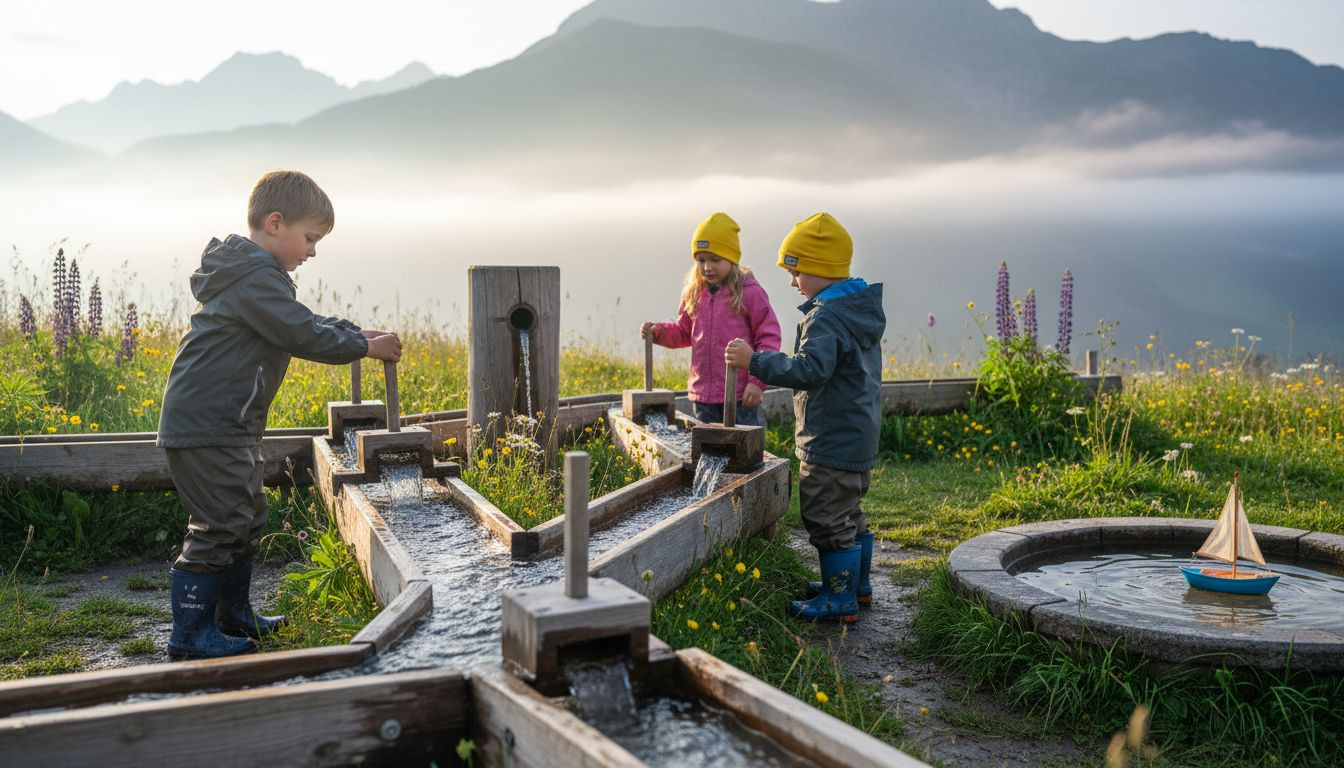
Mooraculum adventure park combines traditional playground equipment with interactive water features including hand pumps, Archimedean screws, and sluice gates. The design encourages children to experiment with water mechanics whilst parents appreciate the comprehensive safety features and natural materials used throughout. Picnic areas and shaded rest spots make extended family visits comfortable.
Globi Wild Wasserwelt playground offers themed water play zones inspired by Swiss wildlife and landscapes. Children engage with water through play structures that mimic natural environments, learning about local ecosystems whilst developing physical skills. The facility includes educational signage explaining water cycles and environmental conservation in child-friendly language.
| Playground | Key Features | Best For | Location | | — | — | | Gwunderwasser | Trough systems, mountain setting, cooperative play | Engineering-minded children, families | Switzerland | | Mooraculum | Pumps, screws, sluice gates, comprehensive facilities | Active learners, extended visits | Switzerland | | Globi Wild Wasserwelt | Themed zones, educational elements, wildlife focus | Nature enthusiasts, environmental learning | Switzerland |
These destinations demonstrate how thoughtfully designed water play environments support the same developmental goals as home activities whilst offering social experiences and equipment variety that complement your regular outdoor play routine. Many European countries feature similar facilities, worth researching in your local area for convenient family outings.
Safety essentials and clothing tips for outdoor water play
Implementing proper safety measures and clothing choices transforms water play from potentially risky to confidently enjoyable for both children and parents.
Active supervision represents your most critical safety tool. Never leave children unattended during water play, even in seemingly safe shallow containers. Young children can drown in as little as five centimetres of water within seconds, making constant visual contact essential. Position yourself within arm’s reach of non-swimmers and maintain awareness of all children in the play area simultaneously. The statistic that drowning causes 7% of injury-related deaths worldwide underscores why supervision cannot be compromised, even briefly.
Clothing selection directly impacts both safety and enjoyment. Quick-drying materials are essential for water activities, particularly during spring and summer when children move between wet and dry play. Choose synthetic fabrics or technical blends that wick moisture away from skin and dry within minutes rather than hours. Avoid heavy cotton that becomes sodden and uncomfortable, potentially causing children to abandon play prematurely or experience unnecessary cold.
Footwear requires careful consideration based on the specific activity and surface:
- Water shoes with non-slip soles prevent slips on wet surfaces whilst protecting feet from sharp objects
- Sandals with secure straps work well for gentle water play but may come off during active movement
- Barefoot play suits soft, inspected surfaces but requires constant vigilance for hazards
- Never allow slippery-soled shoes near water as they dramatically increase fall risk
Environmental assessment before each play session prevents most accidents. Check water sources for unexpected depth changes, strong currents, or contamination. Inspect play surfaces for slippery algae growth, sharp edges, or unstable footing. Verify that all equipment remains securely positioned and free from damage that could cause injury.
“Teaching water safety through play rather than fear creates confident, aware children who understand risks without developing anxiety around water activities.”
Pro Tip: Establish consistent safety rules that children help create, such as “Always tell an adult before getting near water” or “We check the water together before playing”, building their safety awareness through participation rather than just instruction.
Sun protection deserves equal attention during outdoor water play. Water reflects UV rays, increasing exposure risk. Apply broad-spectrum sunscreen before play begins, reapplying after water exposure even with water-resistant formulas. Consider UV-protective clothing and hats for extended sessions, particularly during peak sun hours.
Explore more outdoor activities and gear with The Zoofamily
Outdoor water play represents just one element of nature-connected childhood experiences that build creativity, confidence, and environmental awareness. The Zoofamily provides comprehensive resources for parents seeking to enrich their children’s outdoor adventures through quality gear and expert guidance. Our nature-inspired approach helps families create meaningful connections with the natural world whilst ensuring children have appropriate equipment for safe, engaging exploration.
Discover additional early years water play suggestions that complement the activities outlined here, or explore our guide to nature-inspired water play tables for creating permanent outdoor learning stations. The Zoofamily community shares your commitment to fostering environmental stewardship through joyful, creative outdoor experiences that children remember for life.
Frequently asked questions
What are the best materials for children’s clothing during outdoor water play?
Polyester blends and technical synthetic fabrics designed for active outdoor use provide optimal performance during water play. Quick-drying materials are important for water activities because they prevent prolonged dampness that causes discomfort and potential chilling. Cotton should be avoided entirely as it absorbs water readily and requires hours to dry, often ending play sessions prematurely when children become uncomfortable.
How can outdoor water play support my child’s development?
Water play improves concentration, coordination and sensory engagement whilst providing calming sensory input for children who benefit from such experiences. Children develop fine motor skills through pouring, scooping, and manipulating objects in water. The open-ended nature of water play encourages creative thinking and problem-solving as children experiment with cause and effect relationships independently.
What safety precautions should I take during outdoor water play?
Supervision is vital and children must never be left unattended near any water source, regardless of depth or familiarity. Given that drowning accounts for 7% of injury deaths globally, constant visual contact within arm’s reach remains essential. Check environmental conditions before play, ensure appropriate non-slip footwear, and teach children basic water safety concepts through gentle, play-based learning rather than fear-based warnings.
At what age can children safely begin outdoor water play?
Children can enjoy supervised water play from infancy, with activities adapted to developmental stage and comfort level. Babies might explore water through gentle hand splashing in shallow containers whilst toddlers engage with pouring and simple cause-effect activities. Always match activity complexity to your child’s abilities rather than age alone, progressing as their confidence and skills develop naturally.
How do I create engaging water play when space is limited?
Small gardens, balconies, or patios accommodate water play beautifully with compact setups. Use washing-up bowls, storage containers, or purpose-built water tables that pack away easily. Focus on quality over quantity by providing interesting natural materials and simple tools like jugs, funnels, and scoops that enable creative exploration within confined spaces. Vertical water walls using recycled bottles create engaging flow systems without requiring floor space.