

Every parent faces the challenge of finding an engaging gift that encourages both creativity and environmental awareness. For eco-conscious families across France, Germany, and Belgium, choosing the right camera can turn simple outdoor moments into opportunities for learning and connection with nature. This guide reveals what makes a camera truly kid-friendly, from impact-resistant design to interactive features, so your child’s curiosity and love for the environment can flourish safely and joyfully.
Table of Contents
- What Makes A Camera Kid-Friendly
- Types Of Cameras Suitable For Children
- Simple Camera Functions Every Child Needs
- Encouraging Nature Exploration Through Photography
- Safety, Durability, And Eco-Friendly Choices
Key Takeaways
| Point | Details |
|---|---|
| Kid-Friendly Features | Cameras for children should prioritise durability, large buttons, and interactive features to enhance usability and safety. |
| Age-Appropriate Choices | Select cameras suitable for specific age groups to nurture creativity and ensure an enjoyable experience. |
| Encouraging Exploration | Photography can promote nature exploration and environmental awareness, providing experiential learning opportunities. |
| Safety and Sustainability | Focus on cameras made from non-toxic materials with eco-friendly production methods to support children’s health and environmental consciousness. |
What Makes a Camera Kid-Friendly
When selecting a camera designed for young children, several key features transform an ordinary device into an engaging and child-friendly tool. Kid-friendly cameras prioritise specific design elements that make photography accessible, safe, and enjoyable for young explorers.
The primary considerations for a child-friendly camera include physical design, durability, and interactive features. Large, tactile buttons allow small hands to navigate settings easily, while robust construction protects against inevitable drops and bumps. Lightweight materials ensure the camera remains comfortable during extended outdoor adventures, and water-resistant exteriors provide additional protection against unexpected environmental challenges.
Beyond physical attributes, the most effective children’s cameras incorporate creative modes that spark imagination. Interactive games, simple photo filters, and intuitive menus encourage children to experiment without feeling overwhelmed. Age-appropriate features are crucial manufacturers select different complexity levels for preschoolers versus older children who might appreciate more advanced manual controls.
Pro tip: When introducing a camera to a child, start with basic functions and gradually expand their technical understanding through playful, guided exploration.
Types of Cameras Suitable for Children
Children’s cameras come in diverse ranges tailored to different ages and developmental stages. Camera types span from simple toy models to sophisticated learning devices, offering progressive complexity that matches a child’s growing skills and interests.
For young learners aged 3-6, toy cameras provide the perfect introduction. These devices feature oversized buttons, robust plastic construction, and minimal technical complexity. Preschoolers can capture images without technical barriers, building confidence through immediate visual feedback. As children progress, instant print cameras become particularly engaging, allowing them to physically hold and share their creative moments instantly.
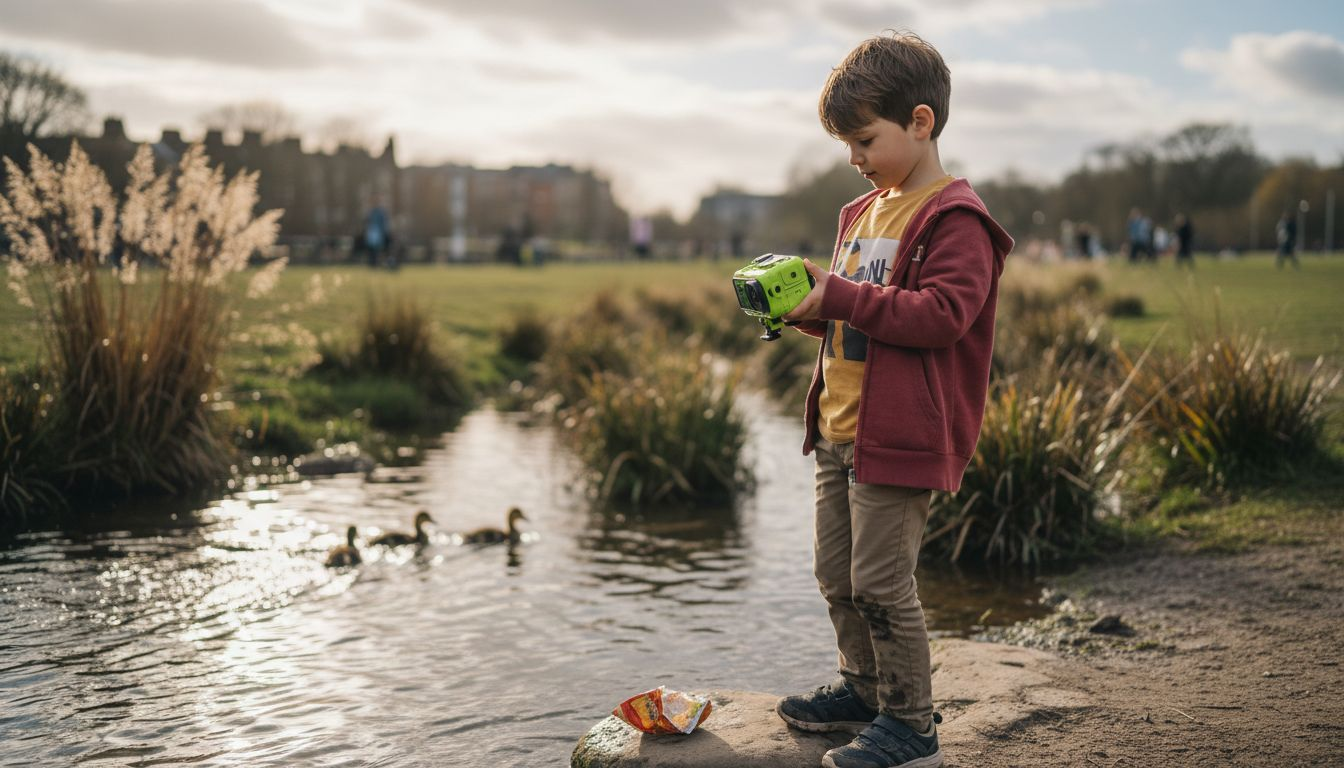
Older children between 7-12 years might appreciate more advanced options like waterproof action cameras or entry-level digital compact cameras. These models introduce slightly more sophisticated features while maintaining child-friendly design principles. Rugged compact cameras with protective exteriors enable outdoor exploration, encouraging children to document nature walks, family adventures, and spontaneous creative moments.
Teenagers ready for more technical challenges can transition to beginner-level DSLR or mirrorless cameras. These devices offer manual controls, interchangeable lenses, and advanced settings that support deeper photographic learning. By selecting age-appropriate cameras, parents can nurture their child’s creativity while ensuring a safe, enjoyable photographic experience.
Here’s a comparison of camera types by age group and suitable features:
| Age Group | Recommended Camera Type | Key Features for Engagement | Typical Learning Outcome |
|---|---|---|---|
| 3-6 years | Toy camera | Oversized buttons, robust build | Confidence in basic photography |
| 7-12 years | Instant print, action cam | Waterproof, simple filters, rugged | Exploration and creative projects |
| 13+ years | Entry-level DSLR/mirrorless | Manual controls, interchangeable lens | Advanced photographic skills |
Pro tip: Choose a camera that challenges your child slightly beyond their current skill level, creating opportunities for growth and continued excitement.
Simple Camera Functions Every Child Needs
Digital camera functions for children must balance simplicity with creative potential, offering intuitive interfaces that empower young photographers to explore their artistic vision. The most essential features transform a complex technological device into an accessible tool for childhood creativity.
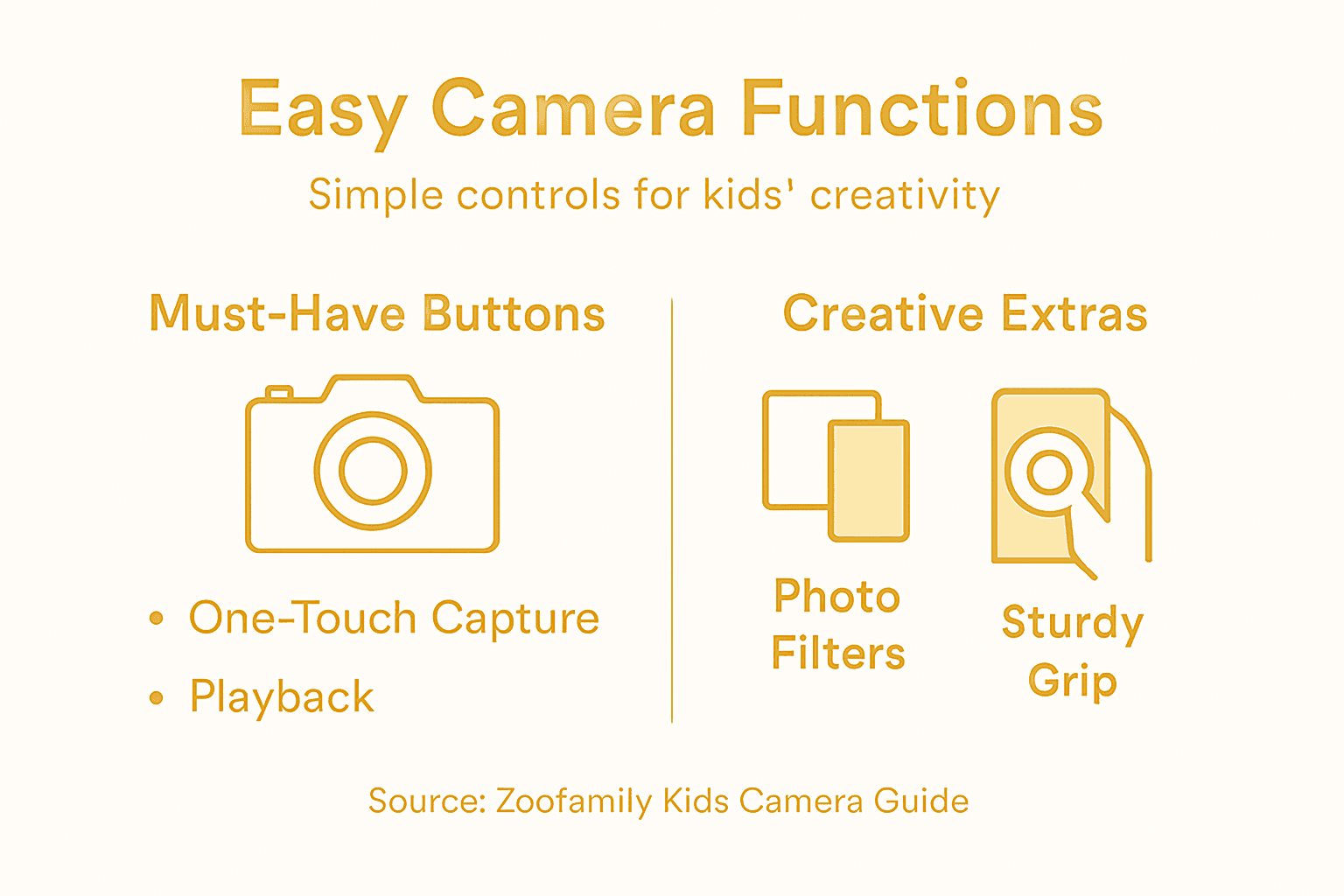
Primary functions should include a one-touch capture button that allows immediate image taking with minimal technical complexity. Automatic focus becomes crucial, enabling children to capture moments without struggling with precise positioning. Built-in preview screens are equally important, providing instant feedback that helps young photographers understand composition and perspective. These straightforward mechanisms reduce frustration and encourage continued exploration.
Additional child-friendly features might include basic photo filters, simple playback controls, and robust physical design. Developmentally appropriate camera interfaces support independent learning by minimising technical barriers. Bright, colourful buttons, clear icons, and uncomplicated menu structures help children navigate their photographic journey with confidence and enthusiasm.
For parents and educators, selecting cameras with minimal settings but maximum creative potential is key. The goal is to provide a tool that feels like a toy while offering genuine opportunities for artistic expression and visual storytelling.
Pro tip: Select a camera with fewer buttons and more intuitive design to help your child focus on creativity rather than technical complexity.
Encouraging Nature Exploration Through Photography
Nature photography activities transform outdoor experiences into profound learning opportunities for children, bridging creativity with environmental awareness. By placing a camera in a child’s hands, parents and educators can unlock a powerful tool for connecting young minds with the natural world around them.
Children become active observers when equipped with cameras, developing keen skills of perception and appreciation. They learn to notice intricate details often overlooked: the delicate veins of a leaf, the subtle colour variations in tree bark, or the miniature ecosystem inhabiting a small garden patch. Photographing natural environments encourages children to pause, examine, and reflect on the complex beauty surrounding them.
Elementary outdoor photography experiences support holistic learning by integrating visual arts, environmental science, and personal discovery. Photography becomes a medium for storytelling, allowing children to document their explorations, share their unique perspectives, and develop a deeper connection with biodiversity. By framing landscapes, capturing wildlife, or recording seasonal changes, young photographers learn to appreciate ecological complexity and their role in environmental stewardship.
Guided photography activities can transform simple walks into immersive learning journeys. Scavenger hunt challenges, seasonal documentation projects, and collaborative nature journals provide structured yet creative approaches to exploring the environment through a camera lens.
Pro tip: Create themed photography missions that challenge your child to discover and document different aspects of nature, turning exploration into an exciting visual adventure.
Safety, Durability, and Eco-Friendly Choices
Durable children’s cameras represent a critical intersection of safety, sustainability, and creative potential. Parents seeking responsible technology solutions for their children must consider multiple dimensions beyond simple functionality.
Safety begins with robust physical design. Impact-resistant exteriors protect against inevitable drops and bumps, while secure battery compartments prevent accidental exposure to electrical components. Non-toxic materials ensure the camera remains safe for young hands, with rounded edges and lightweight construction minimising potential injury risks. Waterproof and dustproof ratings provide additional protection, enabling children to explore outdoor environments confidently.
Eco-friendly considerations extend beyond physical durability. Manufacturers increasingly prioritise sustainable production methods, utilising recycled plastics, minimising packaging waste, and developing energy-efficient devices. These choices reflect a growing commitment to reducing environmental impact while providing high-quality educational tools for children. By selecting cameras manufactured with ecological principles, parents can simultaneously support their child’s creativity and environmental consciousness.
Choosing a camera involves balancing technical specifications with age-appropriate design. Young children require simple, robust devices that withstand enthusiastic handling, while older children might appreciate more sophisticated features that support developing photographic skills.
Below is a summary of essential safety and eco-friendly aspects for children’s cameras:
| Safety Aspect | Eco-Friendly Consideration | Benefit to Children |
|---|---|---|
| Impact-resistant design | Use of recycled materials | Survival through rough handling |
| Non-toxic materials | Reduced packaging waste | Healthier interaction |
| Secure battery compartment | Energy-efficient hardware | Prevention of electrical risks |
Pro tip: Prioritise cameras from manufacturers demonstrating genuine commitment to sustainable production and child safety standards.
Spark Your Child’s Creative Journey with Nature-Inspired Cameras
The article highlights the challenges parents face when finding the perfect camera that balances simplicity, durability, and inspiring features for young children. It recognises the importance of kid-friendly design such as one-touch capture, robust build, and interactive elements that encourage exploration and creativity without overwhelming technical complexity. Moreover, it stresses how cameras can connect children deeply with nature by encouraging observation and storytelling through photography.
At The Zoofamily, we understand these needs intimately. That is why we created not only cameras tailored for children’s hands and imaginations but also a meaningful mission to reconnect kids with the natural world. Our animal-themed cameras are designed to captivate young minds and fuel their curiosity about wildlife while ensuring safety, simplicity, and durability for outdoor adventures. With every camera purchased, we plant one tree, nurturing a future where children can continue to explore and cherish our planet.
Begin your child’s inspiring photography journey today with our carefully crafted kids’ cameras that bring nature closer. Visit The Zoofamily to explore our collection and discover how you can encourage creativity, environmental awareness, and joyful learning with durable, eco-conscious tools your child will love. Make this moment the start of a lifelong connection with nature and imagination.
Frequently Asked Questions
What features should I look for in a kid-friendly camera?
When selecting a camera for children, prioritise features such as durable construction, large tactile buttons, lightweight design, and waterproof exteriors. This ensures the camera is robust enough for young hands and engaging for creative exploration.
At what age can children start using cameras?
Children can begin using simple toy cameras around the age of 3. These devices have oversized buttons and minimal technical complexity, allowing preschoolers to capture images confidently and enjoyably.
How can photography enhance a child’s exploration of nature?
Photography encourages children to become keen observers of their environment. It helps them notice intricate details in nature, fostering appreciation for ecological diversity and their role in environmental stewardship through creative expression.
What are the essential camera functions for young photographers?
Key functions for children’s cameras should include a one-touch capture button, automatic focus, and built-in preview screens. These features simplify the photography process, allowing kids to focus on creativity rather than technical challenges.
Recommended
- 7 top livres enfants nature pour éveiller l’écologie – The Zoofamily
- 7 idées goûter nature enfants pour éveiller leur curiosité – The Zoofamily
- 7 Tips for Exciting Photography Scavenger Hunts – The Zoofamily
- Aventure Nocturne Nature : Éveiller L’écologie chez l’Enfant – The Zoofamily
- Candid Photography: Capturing Life’s Spontaneous Moments | Candid Studios