

Eco friendly wooden toys are playthings crafted from sustainably harvested timber and finished with non-toxic materials, designed to be safe for children and kind to the planet. Brands like Le Toy Van, Grimm’s, and Noelino have built their entire ranges around this principle, combining FSC-certified wood with water-based dyes and plant-oil finishes. Unlike mass-produced plastic alternatives, these natural wooden playthings are built to last years rather than months, reducing landfill waste and teaching children from an early age that the things they love can come from the earth responsibly. Choosing them is one of the most direct ways a parent can act on environmental values without sacrificing play quality.
What certifications make eco friendly wooden toys genuinely sustainable?
FSC certification is the primary sustainability standard in the wooden toy market, guaranteeing that timber comes from responsibly managed forests where biodiversity and workers’ rights are protected. This matters because not all wood labelled “natural” is sourced ethically. A toy made from illegally logged timber is no greener than one made from plastic.
Beyond forest sourcing, safety standards govern what goes onto the wood. EN 71 in Europe and ASTM F963 in the US remain the authoritative benchmarks for mechanical safety and material toxicity in 2026. These standards set limits on heavy metals in paints and dyes, test for small parts that could cause choking, and verify structural integrity under rough play conditions. A toy carrying both FSC and EN 71 marks has cleared two independent layers of scrutiny.
Finishes are where many parents get caught out. Water-based, non-toxic dyes and natural oil finishes such as olive oil and plant resins reduce chemical exposure significantly compared to synthetic paints. Plan Toys, for example, uses formaldehyde-free glue and organic colour pigments across its range. This approach protects children who mouth toys and reduces the chemical load released during manufacturing.
Here is what to look for on packaging before you buy:
- FSC logo with a certification code you can verify online
- EN 71 or CE marking for European market toys
- Non-toxic finish declaration, specifying water-based dyes or natural oils
- Country of origin and manufacturer contact, indicating accountability
- No PVC or BPA in any component, including packaging
Pro Tip: Search the FSC certificate code printed on the packaging at info.fsc.org to confirm it is current and covers the specific product category. Counterfeit FSC logos do exist on cheaper imports.
How do wooden toys support child development and creativity?
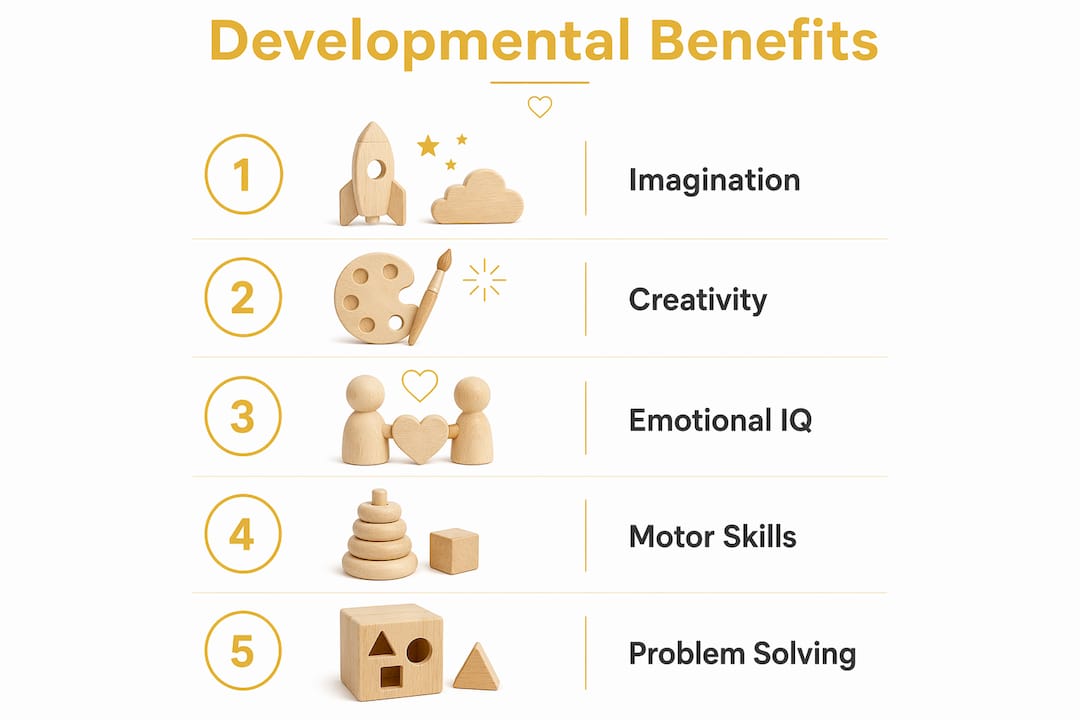
Open-ended wooden toys foster narrative thinking and emotional intelligence by inviting children to invent stories without fixed rules. A set of Grimm’s stacking rings can be a rainbow, a tower, a crown, or a pretend campfire. No battery, no screen, and no instruction manual dictates what the child must do. That freedom is developmentally significant.
Plastic, battery-operated toys tend to reward passive observation. A toy that lights up and plays a song when a button is pressed teaches a child that pressing buttons produces entertainment. A wooden block set teaches spatial reasoning, cause and effect, and narrative construction simultaneously. The developmental richness of free play is well documented, and open-ended objects are its most reliable vehicle.
The best sustainable wooden toys are also designed to grow with the child. Wooden toys evolve with a child’s imagination, offering greater developmental value than single-use plastic alternatives. Grimm’s large conical stacking tower, for instance, is appropriate for a one-year-old learning to grasp and for a five-year-old building elaborate colour-sorted structures. That longevity is both a developmental advantage and an environmental one.
Noelino’s Waldorf-inspired stone playscene illustrates the design philosophy well. The pieces are shaped to suggest natural objects without dictating their use, which means a child’s play evolves as their cognitive capacity grows. This is what Thezoofamily means when it talks about stimulating creative connections between children and the natural world. The toy becomes a conversation starter about rocks, rivers, and ecosystems, not just a prop.
You can read more about why open-ended toys matter for creative, mindful children on the Thezoofamily blog.
What safety features should parents look for in wooden toys?
Safety in wooden toys goes beyond certification labels. The physical construction of each piece determines whether a toy is genuinely hazard-free in daily use. Here is a practical checklist to apply before purchasing:
- Check wheel construction. Wheels glued onto toy cars detach and become choking hazards. Integrated, carved wheels that form one piece with the body are the safe standard for toddlers.
- Run your hand over every surface. Splinter-free, smooth finishes are non-negotiable. Any roughness or raised grain indicates poor sanding or a finish that has begun to degrade.
- Verify paint or dye type. Confirm the finish is water-based or natural oil. Bright synthetic paints on cheap imports often contain heavy metals including lead and cadmium.
- Check for age-appropriate sizing. Pieces smaller than a 35mm diameter circle are a choking risk for children under three. Reputable brands mark minimum ages clearly.
- Inspect joints and connections. Dowels and mortise joints are stronger than glued flat joints. Shake the toy firmly. Nothing should rattle loose.
- Consider unpainted natural wood. Unpainted beech wood toys produce soft, quiet sounds compared to painted or electronic alternatives, making them better suited to calm home and public environments. The absence of paint also eliminates finish-related chemical concerns entirely.
Pro Tip: For children under 18 months, choose toys with zero small parts and no applied finishes at all. Plain, sanded hardwood is the safest surface a young child can mouth.
How to choose and care for wooden toys to maximise their lifespan
Selecting the right wood species is the first decision. Hardwoods including ash, beech, lime, and maple are the preferred choices for durable green kids toys because they resist denting, splitting, and moisture absorption better than softwoods like pine. Beech is the most common choice in European toy manufacturing because it machines cleanly, accepts dyes evenly, and is widely available from FSC-certified sources.
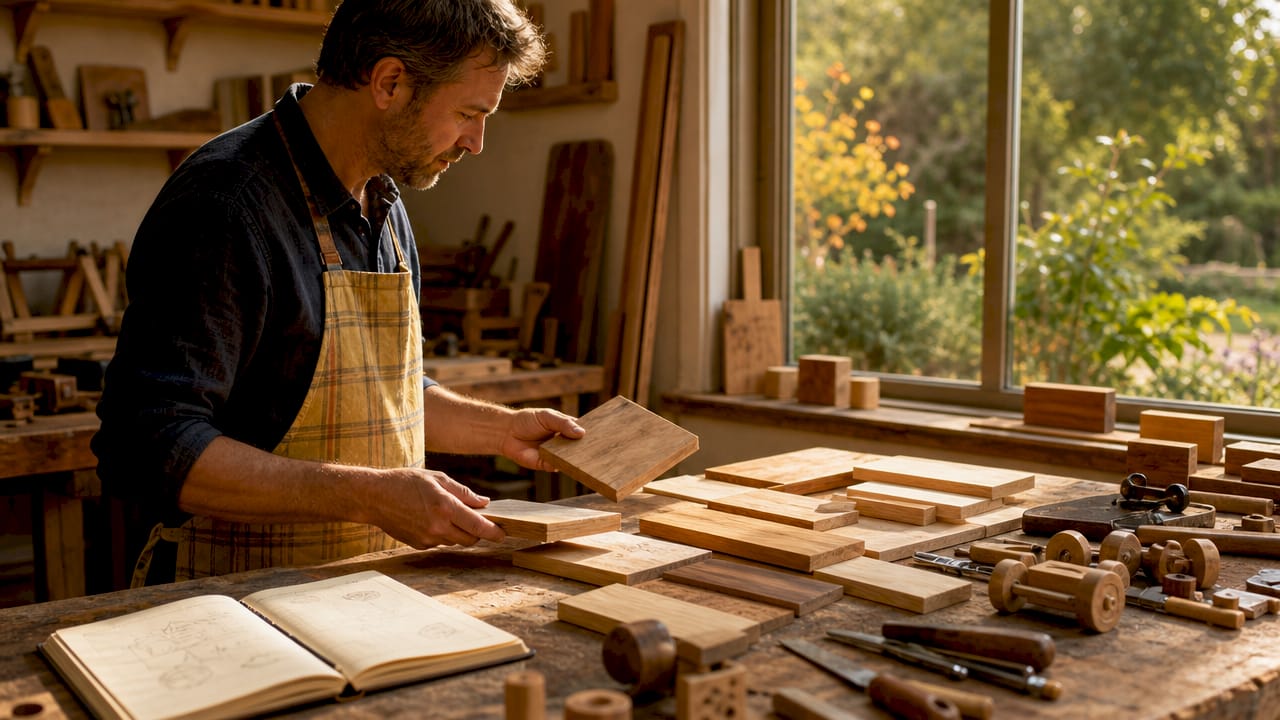
Natural variations in wood grain and colour are signs of authenticity and craftsmanship, not defects. Two pieces from the same batch will never look identical. This is a feature worth explaining to children. It is a tangible lesson in how natural materials differ from factory-stamped plastic, and it builds an early appreciation for the imperfect beauty of the natural world.
Caring for wooden toys properly extends their life by years and keeps them safe:
- Wipe with a damp cloth after use. Never submerge in water or put in a dishwasher, as prolonged moisture causes warping and cracking.
- Dry immediately if the toy gets wet. Stand pieces upright in a warm room, not in direct sunlight, which bleaches and dries out the wood.
- Treat occasionally with food-grade olive oil or a beeswax polish to restore moisture and protect the surface. This is especially useful for unpainted hardwood toys.
- Store in a dry, ventilated space. Fabric bags or open wooden crates are better than sealed plastic boxes, which trap humidity.
Buying from brands that support artisan communities and preserve traditional craftsmanship adds a further layer of sustainability. Social enterprises sourcing toys through ethical supply chains provide fair wages and sustain skills that would otherwise disappear. When you buy a handcrafted toy, you are funding a person, not a machine.
| Wood type | Why it is a good choice |
|---|---|
| Beech | Dense, smooth, widely FSC-certified, ideal for painted and unpainted toys |
| Ash | Flexible and shock-resistant, excellent for push and pull toys |
| Maple | Hard-wearing, fine grain, takes natural oil finishes particularly well |
| Lime | Lightweight and easy to carve, preferred for detailed figurines |
For a broader overview of what to look for when buying green kids toys, the Thezoofamily guide on eco-friendly toy choices covers the full picture in practical terms.
Key takeaways
Eco friendly wooden toys are the most durable, developmentally rich, and environmentally responsible choice available to parents in 2026, provided they carry FSC certification, meet EN 71 safety standards, and use non-toxic natural finishes.
| Point | Details |
|---|---|
| Certifications matter most | Look for FSC certification and EN 71 or CE marking before any other quality signal. |
| Construction beats decoration | Integrated carved wheels and smooth splinter-free surfaces prevent the most common hazards. |
| Open-ended design builds more | Toys without fixed rules develop narrative thinking, spatial reasoning, and emotional intelligence simultaneously. |
| Hardwood outlasts softwood | Beech, ash, maple, and lime resist damage and last years longer than softwood or plastic alternatives. |
| Care extends sustainability | Wiping clean, drying promptly, and treating with olive oil keeps wooden toys safe and beautiful for a decade. |
Why I think wooden toys are one of the best decisions a parent can make
I have watched children play with both ends of the toy spectrum, and the difference is not subtle. A child given a battery-powered toy with lights and sounds will engage with it intensely for about three days. A child given a set of plain hardwood blocks or a Grimm’s stacking tower will still be inventing new uses for it two years later. The open-ended object wins every time, not because it is nostalgic, but because it respects the child’s intelligence.
What strikes me most is how wooden toys change the atmosphere of play. The quieter sounds, the natural textures, the absence of flashing screens. Children slow down. They concentrate. They talk to each other rather than watching a toy perform. That shift in play quality is something parents notice within a week of making the switch.
The environmental argument is real but secondary in my view. Yes, FSC-certified wood from responsibly managed forests is far better than virgin plastic. Yes, a toy that lasts ten years and biodegrades is better than one that ends up in landfill after six months. But the primary reason to choose these toys is that they are simply better for children. The sustainability benefit is a bonus that happens to align with the values most parents already hold.
The one honest caveat: wooden toys cost more upfront. A well-made beech push car from Wooden Toy Story or a Noelino playscene is not cheap. But the cost-per-hour of play over a three-year lifespan is lower than almost any plastic alternative. Buy fewer, better toys. That is the most practical and most ecological advice I can offer.
— ALAIN
Explore natural wooden playthings at Thezoofamily
Thezoofamily curates a range of eco conscious toys designed to connect children with the natural world through imaginative, screen-free play. Every product is selected with sustainability and safety in mind, reflecting the same principles covered in this guide.
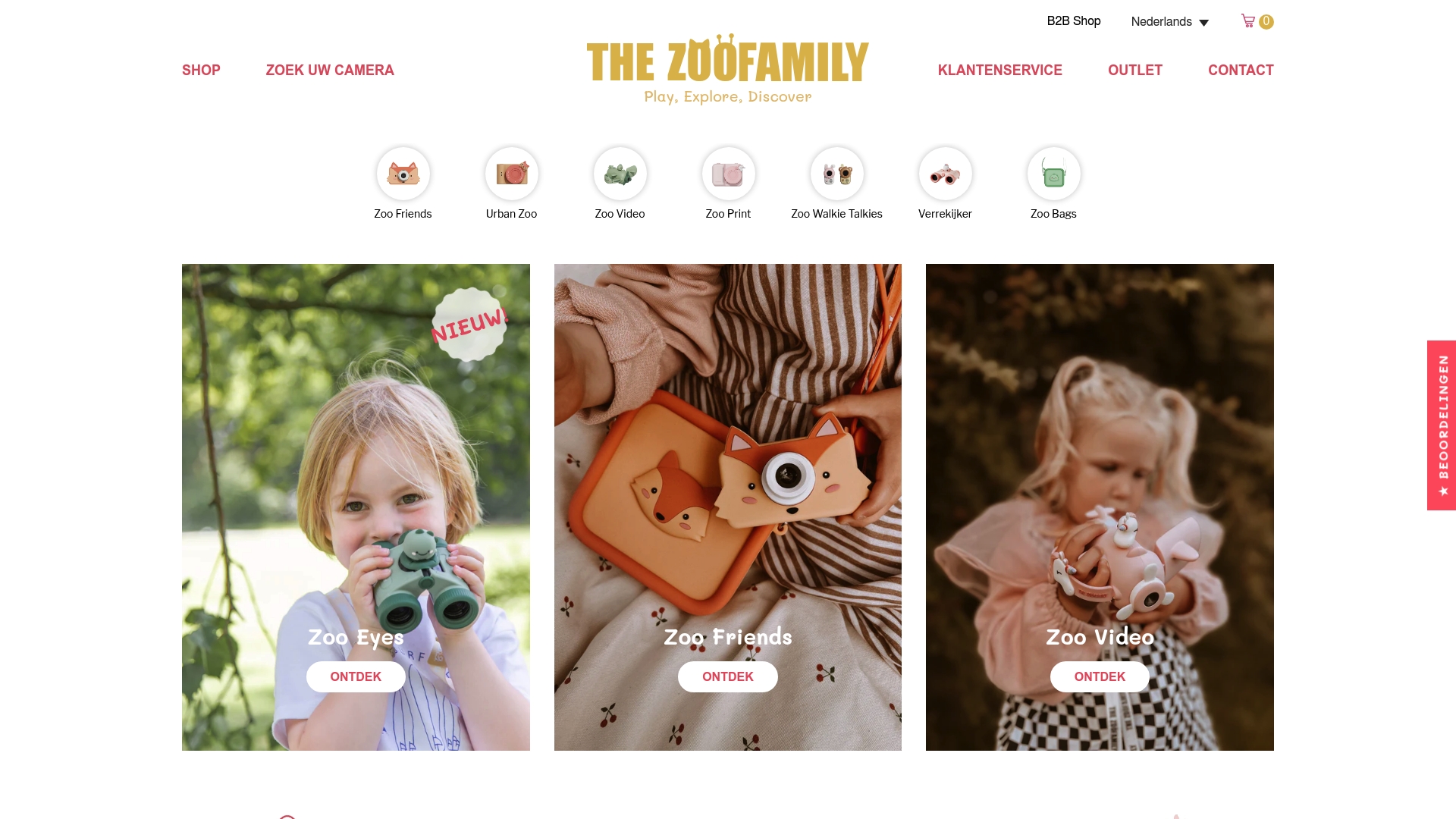
Thezoofamily’s approach goes beyond selling toys. For every camera sold, the brand plants one tree, and its animal-themed designs are built specifically to spark children’s curiosity about nature and wildlife. If you are looking for sustainable play options that align with FSC standards, non-toxic materials, and open-ended creative play, the Thezoofamily collection is a strong place to start. Visit the website to explore the full range and find age-appropriate picks for your child.
FAQ
What makes a wooden toy genuinely eco friendly?
A genuinely eco friendly wooden toy uses FSC-certified timber, non-toxic water-based or natural oil finishes, and meets EN 71 or equivalent safety standards. The combination of responsible sourcing and safe materials is what separates a truly sustainable toy from one that is simply made of wood.
Are wooden toys safer than plastic toys for young children?
Wooden toys made from solid hardwood with non-toxic finishes are generally safer than plastic toys because they contain no BPA, PVC, or synthetic chemical coatings. The key risk to avoid is glued-on small parts, particularly wheels, which can detach and become choking hazards.
Which wood types are best for durable, sustainable toys?
Beech, ash, maple, and lime are the preferred hardwoods for durable, sustainable wooden toys. These species resist denting and moisture better than softwoods, are widely available from FSC-certified sources, and accept natural finishes cleanly.
How do I care for wooden toys to make them last longer?
Wipe wooden toys with a damp cloth after use, dry them immediately if they get wet, and treat unpainted surfaces occasionally with food-grade olive oil or beeswax polish. Never submerge wooden toys in water or store them in sealed plastic containers, as trapped moisture causes warping.
At what age are wooden toys appropriate for children?
Most open-ended wooden toys are appropriate from 12 months onwards, provided all pieces are larger than 35mm in diameter and surfaces are splinter-free. For children under 18 months, plain sanded hardwood with no applied finishes and no small components is the safest choice.