

TL;DR:
- Spending time in nature benefits children’s physical health, mental wellbeing, and cognitive development. It also enhances immune function, reduces stress, and fosters independence through child-led outdoor play. Practical strategies include dressing appropriately for weather, encouraging exploration, and using child-friendly outdoor tools to make nature a daily habit.
Most parents know fresh air is good for children. But playing outside improves health in ways that go far beyond burning off energy before bedtime. The truth is, indoor play alone simply cannot replicate what happens to a child’s brain, body, and immune system when they spend real, unstructured time in nature. Why kids need nature is not a vague philosophical question. It has measurable, evidence-backed answers that every parent deserves to know. This guide covers the science, the surprising findings from Finland, and the practical steps you can take today.
Table of Contents
- Physical and mental health benefits of nature for kids
- Nature and immune health: learning from Finland’s natural playgrounds
- How nature restores children’s attention and reduces stress
- Practical ways to encourage outdoor play and nature connection
- Rethinking childhood play: why less structure and more nature matters
- Encourage your child’s love for nature with The Zoofamily
- Frequently asked questions
Physical and mental health benefits of nature for kids
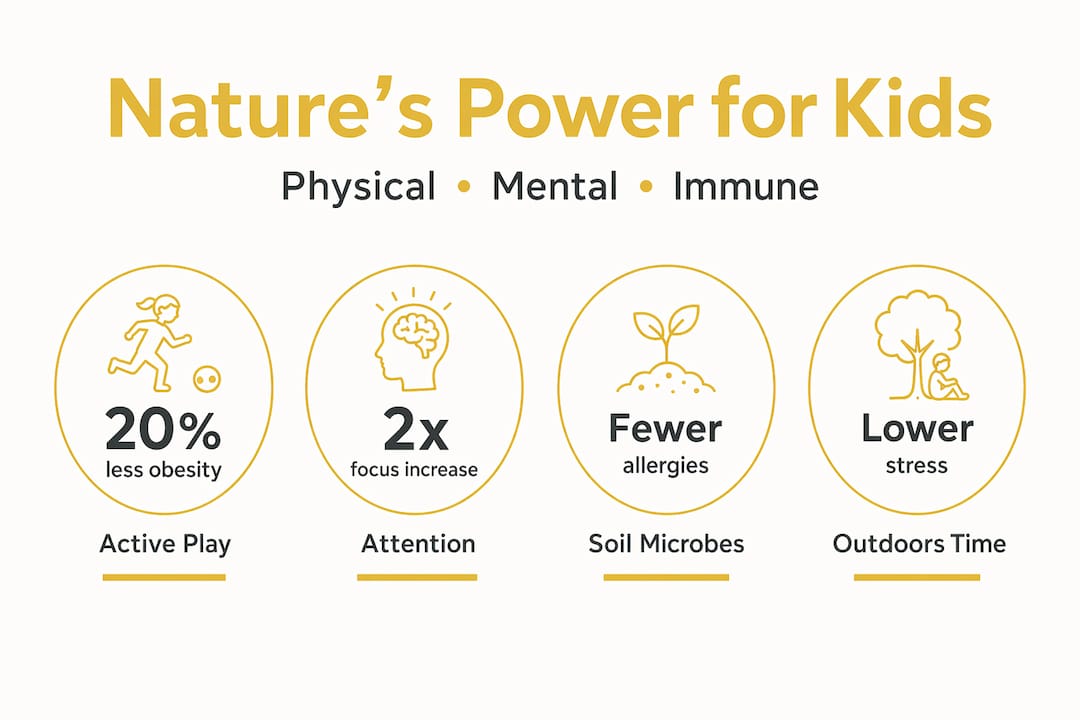
The evidence is genuinely hard to ignore. More outdoor time is linked to lower obesity rates, reduced myopia risk, improved motor development, and better focus and learning outcomes in children. That is a remarkable range of benefits from a single habit. And it makes sense when you consider that outdoor environments naturally encourage running, climbing, balancing, and exploring in ways that no living room ever quite manages.
The mental health case is equally strong. Children in natural settings show less anger, less aggression, improved impulse control, and reduced ADHD symptoms. Nature does not just tire children out. It genuinely calms them in ways that screen time or structured indoor activities cannot replicate.
Here is a quick overview of the core benefits:
- Physical health: Supports healthy weight, strengthens muscles and bones, reduces the risk of short-sightedness caused by too much close-up screen focus
- Mental wellbeing: Lowers anxiety, reduces aggression, and supports emotional regulation
- Cognitive development: Improves concentration, memory, and classroom engagement
- Social skills: Encourages cooperation, negotiation, and imaginative group play
- Emotional resilience: Builds confidence through small physical challenges and self-directed discovery
It is also worth understanding the role that animal play benefits can play here. When children engage with nature through a lens of curiosity about animals and wildlife, their connection deepens and the developmental benefits multiply.
“Nature is not a backdrop to childhood. For young children, it is one of the most powerful developmental environments available to them.”
Nature and immune health: learning from Finland’s natural playgrounds
Here is where things get genuinely surprising. A landmark study from Finland found that children in biodiverse playgrounds showed measurably reduced pathogens and increased immune-regulating T cells after just two years of playing on natural surfaces such as soil, moss, and plants instead of artificial rubber or plastic.
What the Finnish researchers essentially discovered is that contact with diverse soil microbes teaches children’s immune systems to function properly. Modern playgrounds, with their sanitised rubber surfaces and plastic equipment, may actually deprive children of microbial exposure that is genuinely good for them.
| Play environment | Microbial diversity | Immune benefit | Sensory experience |
|---|---|---|---|
| Artificial rubber/plastic surfaces | Low | Minimal | Limited |
| Natural soil, moss, and plants | High | Increased T cell activity | Rich and varied |
| Home garden with natural soil | Medium to high | Meaningful | Accessible daily |
| Mixed park environments | Medium | Moderate | Good overall |
The practical implications for European parents are straightforward. You do not need to move to Finland or overhaul your local park. Gardens with accessible soil, pots of plants children can dig into, and regular visits to natural outdoor play areas all offer meaningful immune benefits through exactly this kind of microbial contact.
Mud is not mess. It is medicine.
Pro Tip: Let your child dig with their hands in garden soil or a sandpit mixed with compost at least a few times per week. It does not need to be a big event. Five minutes of digging contact with natural earth carries genuine immune value.
How nature restores children’s attention and reduces stress
Most parents notice that after a long day indoors, particularly one heavy on screens, children become irritable, unfocused, and hard to settle. There is a physiological reason for this. Research shows that nature exposure reduces cortisol and alpha-amylase, two salivary biomarkers of stress, in children within surprisingly short periods of time. You are not imagining the mood shift after a walk in the park. It is measurable.
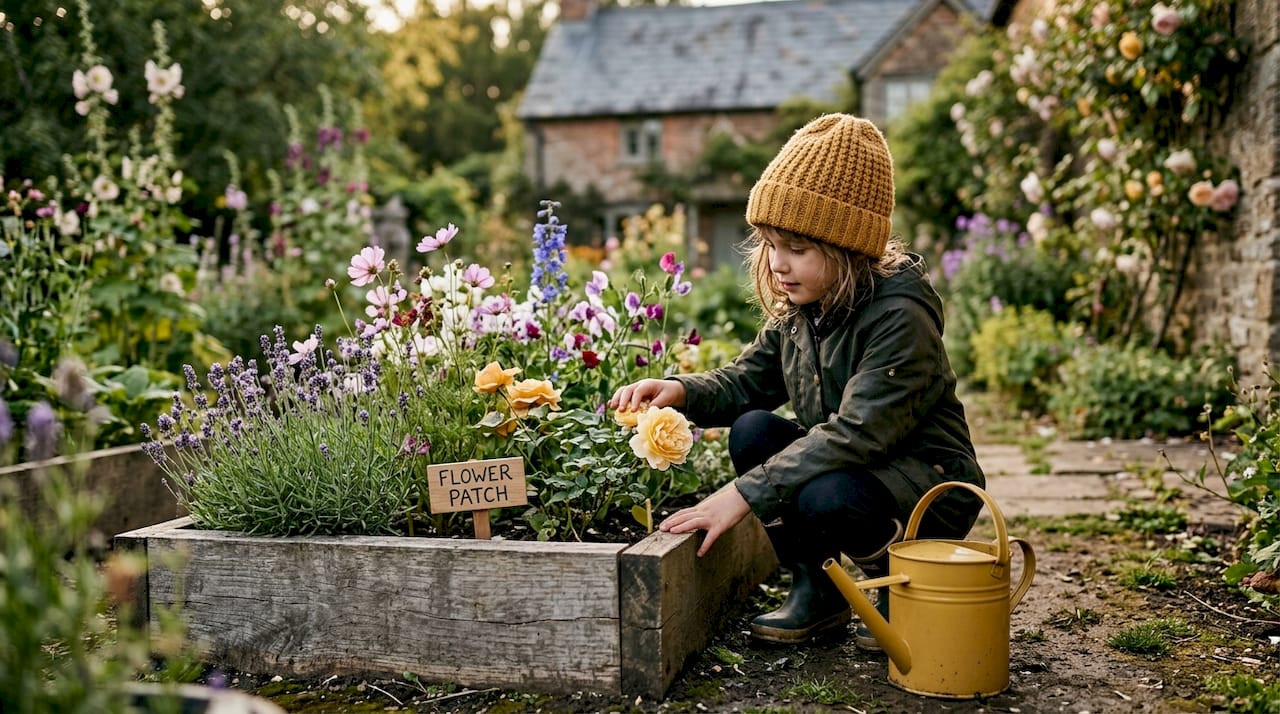
A useful framework for understanding this is Attention Restoration Theory, which proposes that natural settings restore depleted cognitive resources, helping children re-engage with learning and maintain focus more effectively. In plain terms: nature is like a reset button for a child’s attention system.
Here is how this plays out in daily life:
- A short walk before homework can measurably improve concentration
- Outdoor breaks during long indoor periods reduce restlessness and emotional dysregulation
- Children who spend regular time outside tend to show better classroom engagement without any other changes to their routine
- ADHD symptoms and anxiety both respond positively to regular outdoor exposure
Pro Tip: You do not need to plan a big outdoor adventure to get these effects. Research suggests that 10-minute nature exposure three times a week begins to lower stress biomarkers. A short garden session, a lunchtime walk, or even sitting in the park counts.
“Modern childhood is cognitively demanding in a way previous generations never experienced. Nature is not a luxury for today’s children. It is a necessity.”
Linking this back to child development outdoors more broadly, attention restoration is just one of many interconnected benefits that stack when outdoor time becomes a consistent habit rather than an occasional treat.
Practical ways to encourage outdoor play and nature connection
Knowing the benefits is one thing. Actually getting a reluctant child away from their tablet and into the garden on a grey Tuesday in November is another matter entirely. Here is what actually works.
Start with the right mindset about weather. Free imaginative outdoor play supports independence and resilience, and paediatric experts are clear: there is no bad weather, only unsuitable clothing. A good waterproof jacket and wellies remove the biggest barrier to year-round outdoor play. Once children are dressed for it, most actually enjoy the rain.
A practical starting plan for parents:
- Dress for every season. Invest in waterproof layers, warm underlayers, and good outdoor footwear. Make getting dressed for outdoors part of the routine, not a negotiation.
- Follow your child’s lead. Resist the urge to direct or teach during outdoor time. Children who explore freely build more independence and creativity than those who follow adult-structured activities.
- Use local green spaces. Parks, woodland paths, allotments, and coastal paths all offer rich sensory environments. You do not need to travel far.
- Set up simple backyard invitations. A patch of soil for digging, a bird feeder to observe, a collection pot for interesting stones or seeds. Small, open-ended setups inspire more imagination than expensive equipment.
- Model genuine enthusiasm. Children take their cues from parents. If you approach nature with curiosity, they will too.
- Limit screens before outdoor sessions. Rather than competing with screens, position outdoor time as what comes first, with screens as something that happens later.
- Connect with others. Community forest school groups, nature play clubs, and local wildlife events across Europe make outdoor exploration social and exciting.
For children aged 3 to 10, the best child safe exploration tools are the ones that amplify natural curiosity without replacing it. Binoculars for spotting birds, a camera for capturing insects, walkie-talkies for communicating across the garden. These tools make outdoor time feel like an adventure.
You can also think about your outdoor space differently. Check out these ideas for wildlife friendly gardens that attract birds, insects, and small creatures your child will genuinely want to observe.
Pro Tip: Rotate what is available outdoors rather than what is available indoors. Leave interesting natural objects on the doorstep or garden table: a feather, an interesting leaf, a snail shell. Children are naturally drawn to novelty, and nature provides it endlessly.
Rethinking childhood play: why less structure and more nature matters
Here is the perspective most parenting advice sidesteps. The quantity of outdoor time matters, but so does its quality, and specifically how much adult direction it involves.
We have become very good at organising children’s time. After-school activities, structured play dates, guided craft sessions. These things are not bad. But they crowd out something genuinely important: the experience of being a child who is a bit bored, in a natural setting, with no instructions and no objective. That kind of play is where child-directed outdoor play fosters independence, resilience, and cognitive benefits that structured activities simply do not replicate.
When a five-year-old decides to build a dam in a muddy puddle, they are making dozens of small decisions: what materials to use, how to test their design, how to involve their sibling in the project. No adult planned that. No learning objective was written down. Yet the problem-solving, creativity, and social negotiation happening in that puddle would be hard to engineer in any classroom.
The discomfort parents often feel watching unstructured outdoor play is worth examining. We worry about safety, about boredom, about children not “doing anything productive.” But children left to explore with independence in nature develop a sense of agency that translates directly into confidence, emotional stability, and academic engagement.
Supervision from a distance is a skill worth developing. You can see your child. You are nearby. But they are solving their own problems. That gap between total supervision and total freedom is where resilience actually grows.
Encourage your child’s love for nature with The Zoofamily
If you are looking for ways to make outdoor exploration more engaging for your child aged 3 to 10, The Zoofamily is built exactly for this.
We design animal-themed cameras, binoculars, and walkie-talkies that give children a genuine reason to go outside and look more closely at the world around them. Every product is created with child safety and natural curiosity in mind. Beyond the products, our blog is full of practical inspiration, from child safe outdoor tools to step-by-step outdoor play area ideas you can set up this weekend. Visit The Zoofamily to explore our full range and start making nature a daily adventure for your family.
Frequently asked questions
How much time should children spend outside daily?
School-aged children need 60 minutes of physical activity daily, with additional benefits gained from spending that time outdoors. Consistent, daily exposure builds the strongest long-term health outcomes.
Is outdoor play safe in bad weather?
Yes, provided children wear appropriate clothing for the conditions. Paediatric experts confirm that there is no bad weather, only unsuitable clothing choices, so waterproofs and layers are your best investment.
Can nature help children with ADHD?
Yes. Children in nature show measurably increased focus and reduced ADHD symptoms, making regular outdoor time one of the most accessible and effective non-clinical supports available.
How can I introduce nature play at home?
Create simple, open-ended spaces with natural elements such as soil, plants, and water, then step back and let children explore freely. Minimal adult direction produces the richest developmental outcomes.
What are the quickest ways to reduce stress in children using nature?
Short nature breaks three times weekly of just 10 minutes each have been shown to lower cortisol and other stress biomarkers in children significantly, making even small outdoor sessions genuinely worthwhile.