

Childhood trauma can reduce brain volume in critical areas by up to 20%, yet many parents struggle to understand how these experiences reshape their child’s developing brain. This guide explains the biological changes trauma causes in children aged 0 to 12 and offers practical strategies to support healing and emotional wellbeing.
Table of Contents
- Understanding Childhood Trauma And Brain Development
- Biological Mechanisms Behind Trauma’s Impact
- Timing And Sensitivity Of Brain Development To Trauma
- Emotional And Cognitive Consequences Of Trauma In Children
- Common Misconceptions About Childhood Trauma
- Hope And Intervention: Brain Recovery Potential
- Caregiving And Intervention Strategies For Healing
- Supporting Your Child’s Emotional Wellbeing With The Zoofamily
- Frequently Asked Questions
Key takeaways
| Point | Details |
|---|---|
| Neural circuit disruption | Childhood trauma alters brain development by disrupting emotional regulation and cognitive function circuits. |
| Critical developmental window | Early childhood (0 to 5 years) represents the most vulnerable period for lasting trauma effects on brain architecture. |
| Stress system dysregulation | Trauma causes abnormal cortisol levels that impair brain maturation and emotional control. |
| Recovery potential | Neuroplasticity allows partial recovery with early intervention and supportive caregiving. |
| Trauma-informed parenting | Consistent routines, empathy, and safe environments support emotional regulation and resilience building. |
Understanding childhood trauma and brain development
Childhood trauma encompasses experiences like physical or emotional abuse, neglect, witnessing domestic violence, or losing a caregiver. These events fundamentally alter how a child’s brain develops during the crucial years from birth to age 12.
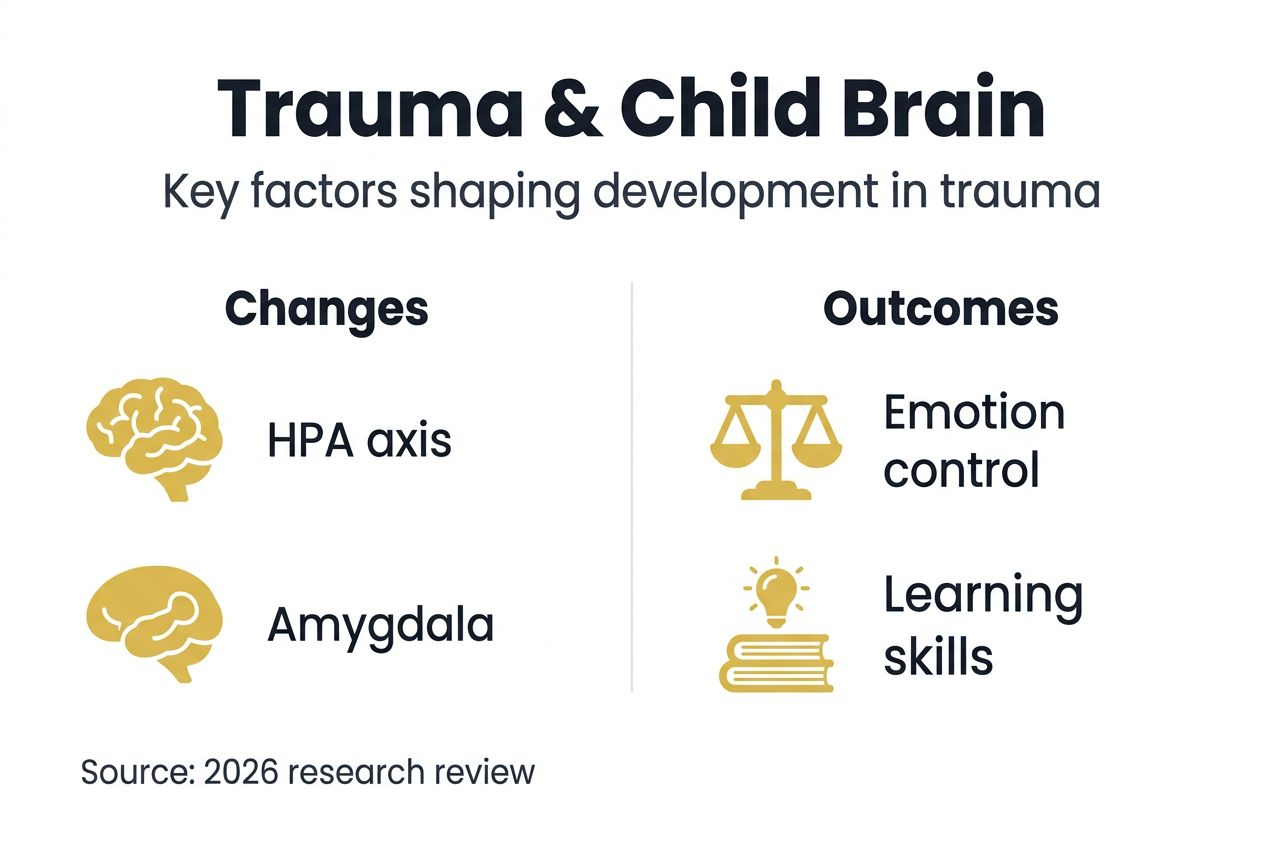
The developing brain builds neural circuits in specific regions that govern emotion and cognition. The amygdala processes emotional responses, the hippocampus manages memory formation, and the prefrontal cortex handles executive functions like planning and impulse control. During normal development, these areas grow and connect through strengthening neural pathways.
Trauma disrupts this natural process. Childhood trauma alters brain development by interfering with neural circuit formation in emotion regulation centres. Research shows prefrontal cortex and hippocampus volume reductions of 15 to 20% following prolonged trauma exposure, directly affecting memory consolidation and executive functions.
These structural changes manifest as difficulties regulating emotions and processing information. Children may struggle with:
- Controlling angry outbursts or emotional reactions
- Remembering instructions or learning new information
- Planning tasks or thinking through consequences
- Reading social cues from peers and adults
Understanding these biological foundations helps parents recognise that behavioural challenges often stem from physical brain changes, not wilful misbehaviour. The good news is that understanding brain development in middle childhood reveals opportunities for targeted support during ongoing maturation.
Biological mechanisms behind trauma’s impact
The body’s stress response system becomes fundamentally altered when children experience trauma. The hypothalamic-pituitary-adrenal (HPA) axis coordinates how we react to threatening situations by releasing cortisol, our primary stress hormone.
In healthy development, cortisol levels rise temporarily during stress then return to baseline. The HPA axis becomes dysregulated in traumatised children, leading to chronically elevated or abnormally suppressed cortisol production. This hormonal imbalance directly damages developing brain tissue.
The hippocampus proves particularly vulnerable to cortisol abnormalities. Excessive cortisol exposure prevents new neurons from forming and damages existing cells in this memory centre. Over time, the hippocampus shrinks and loses connectivity with other brain regions, impairing both memory formation and emotional processing.
Disrupted neural circuits create cascading effects across cognitive and emotional abilities. When the prefrontal cortex receives inconsistent signals from an overactive amygdala and impaired hippocampus, children struggle to:
- Calm themselves when upset
- Distinguish real threats from safe situations
- Learn from past experiences
- Focus attention on tasks
Parents may notice signs of dysregulated stress responses including frequent nightmares, exaggerated startle reactions, difficulty settling after minor upsets, physical complaints like headaches or stomach aches, and seeming constantly on edge or hypervigilant.
Recognising these patterns helps caregivers understand that their child’s nervous system has been wired differently through trauma exposure. Resources like our childhood brain development guide for European parents and understanding brain development in middle childhood offer deeper insights into supporting healthy neurological maturation.
Timing and sensitivity of brain development to trauma
Not all developmental periods carry equal vulnerability to trauma’s effects. Early childhood (0 to 5 years) represents a critical window when trauma exerts the most profound and potentially lasting impact on brain architecture.
During these first five years, the brain builds foundational neural circuits at an extraordinary pace, forming over one million new connections every second. This rapid growth creates remarkable learning capacity but also heightened vulnerability. Trauma during this sensitive period can permanently alter circuit formation in ways that persist into adulthood.
Children experiencing trauma before age 5 face substantially elevated risks compared to those affected later:
| Age range | Risk level | Primary brain changes | Recovery potential |
|---|---|---|---|
| 0 to 3 years | Highest | Severe disruption to attachment circuits, stress system, foundational architecture | Moderate with intensive early intervention |
| 3 to 5 years | Very high | Impaired emotional regulation centres, memory formation, language areas | Good with consistent therapeutic support |
| 6 to 12 years | Moderate to high | Executive function delays, social cognition deficits, attention problems | Very good with appropriate treatment |
Trauma occurring after age 6 still affects development but generally produces less severe structural changes. The brain has established more robust foundational circuits, offering some protective resilience. However, later trauma can still impair ongoing maturation of the prefrontal cortex and social brain networks.
Pro Tip: Early identification matters enormously for recovery outcomes. If you suspect your child has experienced trauma, seeking professional assessment during these sensitive periods maximises the brain’s natural plasticity for healing and compensation.
Emotional and cognitive consequences of trauma in children
The brain changes trauma causes translate into observable difficulties across emotional, social, and cognitive domains. Understanding these manifestations helps parents recognise trauma’s fingerprints in their child’s daily struggles.
Emotional regulation challenges appear most prominently. Children may experience:
- Intense anxiety or persistent fearfulness without clear triggers
- Depression characterised by withdrawal, sadness, or loss of interest in activities
- Explosive mood swings that seem disproportionate to situations
- Behavioural disorders including oppositional behaviours or aggression
Social cognition suffers measurably from trauma exposure. Trauma before age 5 increases impaired social cognition by 25%, affecting how children read facial expressions, understand others’ perspectives, and develop empathy. These deficits strain peer relationships, leading to social isolation or conflict.
Cognitive development shows significant delays across multiple domains. Children with trauma histories demonstrate 20 to 30% delays in language acquisition and executive function skills compared to non-traumatised peers. Parents might observe:
- Delayed speech or limited vocabulary for their age
- Difficulty following multi-step instructions
- Poor planning and organisational skills
- Trouble shifting attention between tasks
- Impaired working memory affecting learning
Behavioural signs indicating trauma’s impact include regression to earlier developmental stages, excessive clinginess or fear of separation, difficulty concentrating in school, avoiding situations that trigger trauma memories, and physical symptoms like headaches when stressed.
Recognising these patterns as neurological consequences rather than character flaws helps parents respond with appropriate support instead of punishment. Your child’s brain is struggling to perform functions that trauma has made physiologically difficult.
Common misconceptions about childhood trauma
Several persistent myths about childhood trauma prevent parents from seeking timely help or maintaining realistic recovery expectations. Dispelling these misconceptions supports more effective healing approaches.
The belief that children always outgrow trauma without intervention contradicts substantial evidence. Untreated trauma frequently evolves into chronic mental health conditions, relationship difficulties, and physical health problems persisting into adulthood. Children’s resilience exists but requires nurturing support, not passive waiting.
Here are three critical misconceptions and factual corrections:
-
Myth: All traumatised children show identical symptoms. Reality: Trauma responses vary dramatically based on age at exposure, trauma type and duration, genetic factors, and available support systems. One child may become withdrawn whilst another displays aggression, both responding to similar experiences.
-
Myth: Recovery happens quickly once therapy begins. Reality: Brain healing progresses gradually over months or years. Neural circuits require repeated positive experiences to rewire. Expecting rapid transformation sets families up for disappointment and premature treatment abandonment.
-
Myth: Professional therapy alone fixes trauma effects. Reality: Recovery requires coordinated effort combining professional treatment with consistent trauma-informed parenting at home. The daily caregiving environment profoundly influences whether therapeutic gains generalise to real life.
Pro Tip: Approach recovery as a marathon requiring patience and sustained commitment. Celebrate small improvements in emotional regulation or social skills rather than waiting for dramatic transformations. Consistent progress over time yields the most durable healing.
Hope and intervention: brain recovery potential
Despite trauma’s serious effects, childhood brains possess remarkable capacity for healing through neuroplasticity. This biological ability to form new neural connections and reorganise existing circuits offers genuine hope for recovery.
Neuroplasticity in childhood allows partial recovery and functional compensation when children receive appropriate interventions within supportive environments. The younger brain’s heightened plasticity means early treatment produces more substantial improvements.
Evidence-based therapeutic approaches demonstrate measurable benefits. Interventions like cognitive-behavioural therapy and play therapy improve brain function and emotional regulation in traumatised children. These treatments work by providing corrective experiences that gradually retrain stress responses and rebuild healthy neural pathways.
| Intervention type | Core method | Typical duration | Measured benefits |
|---|---|---|---|
| Cognitive-behavioural therapy (CBT) | Restructuring trauma-related thoughts and developing coping skills | 12 to 20 sessions | 40 to 60% reduction in anxiety and depression symptoms; improved emotional control |
| Play therapy | Processing trauma through symbolic play and creative expression | 6 to 12 months | Enhanced emotional expression; reduced behavioural problems; improved attachment security |
| Parent-child interaction therapy | Coaching parents in trauma-informed responses during live interactions | 12 to 20 sessions | Strengthened attachment; decreased disruptive behaviours; improved parental confidence |
| Trauma-focused CBT | Directly addressing trauma memories through gradual exposure and processing | 12 to 16 sessions | Significant PTSD symptom reduction; restored sense of safety; improved functioning |
Research using brain imaging shows these therapies produce observable changes in neural connectivity and activation patterns. Treatment combined with nurturing caregiving creates the optimal conditions for brain recovery.
Understanding neurological development in the early years reinforces why early intervention during periods of peak plasticity maximises healing potential.
Caregiving and intervention strategies for healing
Parents and caregivers play irreplaceable roles in supporting their child’s recovery through trauma-informed parenting approaches. These evidence-based strategies create daily healing opportunities beyond formal therapy.
Trauma-informed parenting rests on three foundational principles: safety, predictability, and empathy. Children recovering from trauma need consistent reassurance that their environment is secure and their caregivers are reliable.
Establishing routines provides essential predictability. Regular meal times, bedtime rituals, and structured daily schedules help dysregulated nervous systems gradually calm. Secure attachment forms when caregivers respond sensitively to emotional needs, validating feelings without judgement.
Practical steps for supporting emotion regulation include:
- Teaching simple breathing exercises or body relaxation techniques
- Creating a calm-down space with sensory tools like soft textures or fidget items
- Narrating emotions to build vocabulary (“I notice you seem frustrated right now”)
- Modelling healthy coping when you feel stressed
- Offering physical comfort like hugs when your child seeks connection
Do’s and don’ts for trauma-responsive caregiving:
Do:
- Maintain calm, measured responses even during challenging behaviours
- Explain consequences clearly and follow through consistently
- Celebrate effort and progress, not just outcomes
- Seek support for yourself to prevent caregiver burnout
Don’t:
- Use physical punishment, which retraumatises and worsens brain development
- Dismiss or minimise your child’s fears as silly or exaggerated
- Expect trauma responses to disappear quickly
- Compare your child’s progress to siblings or peers
Resources like understanding parenting with intention and how to build resilience naturally in families offer deeper guidance on creating healing home environments.
Pro Tip: Monitor your child’s progress by tracking specific behaviours like frequency of meltdowns or ability to use coping strategies. Share these observations with therapists to guide treatment adjustments. Seek professional consultation if concerning behaviours persist or worsen despite consistent support.
Supporting your child’s emotional wellbeing with The Zoofamily
Navigating childhood trauma’s effects on brain development requires ongoing learning and support. The Zoofamily offers a comprehensive resource hub designed specifically for parents addressing their children’s emotional and developmental needs.
Our expert articles cover brain development milestones, trauma-informed caregiving strategies, and practical tools for nurturing resilience in families. Whether you’re seeking understanding of neurological changes or actionable advice for daily challenges, our community provides evidence-based guidance grounded in developmental science.

Explore our growing collection of resources on emotional wellbeing, cognitive development, and positive parenting approaches. Visit The Zoofamily to access expert insights that support your family’s healing journey and help your child thrive despite early adversity.
Frequently asked questions
What are the early signs that a child has been affected by trauma?
Early indicators include unexplained anxiety or fearfulness, frequent mood swings, social withdrawal from peers and family, difficulty concentrating on tasks, persistent sleep problems including nightmares, and regression to earlier developmental behaviours. Physical complaints like stomach aches or headaches without medical cause also commonly signal trauma effects.
Can children fully recover from trauma-related brain changes?
Children’s brains can achieve substantial recovery through neuroplasticity when they receive appropriate therapy and consistent nurturing environments, enabling improved emotional regulation and cognitive function. Complete restoration to pre-trauma states rarely occurs, but meaningful healing that supports healthy development and wellbeing is absolutely possible with sustained intervention and support.
How can I support my child’s emotional regulation at home after trauma?
Maintain predictable daily routines and create calm, safe spaces where your child feels secure. Validate their feelings without judgement and encourage emotional expression through words, art, or play. Use trauma-informed communication that prioritises connection over correction, as explored in understanding parenting with intention.
At what age is trauma most damaging to brain development?
Trauma occurring between birth and age 5 typically produces the most severe and lasting brain changes because this period involves rapid foundational circuit formation. However, trauma at any age during childhood can significantly impact ongoing brain maturation, particularly in areas governing emotional regulation and executive functions.
How long does brain recovery take after childhood trauma?
Recovery timelines vary considerably based on trauma severity, the child’s age, intervention timing, and consistency of support. Meaningful improvements often emerge within 6 to 12 months of starting therapy, but complete neural reorganisation may require several years of sustained treatment and nurturing caregiving.