

Nearly half of British parents now actively consider sustainability when making family decisions, reflecting a dramatic shift from past generations. Environmental awareness is shaping not just shopping habits but also daily routines and conversations with children. As eco-friendly parenting gains momentum in British households, more families are discovering practical ways to inspire curiosity about nature and responsibility for our shared future.
Table of Contents
- Eco-Friendly Parenting: What It Means Today
- Types Of Sustainable Choices For Parents
- Swapping Everyday Products For Greener Options
- Sparking Children’s Connection With Nature
- Avoiding Common Pitfalls In Eco Parenting
Key Takeaways
| Point | Details |
|---|---|
| Holistic Environmental Consciousness | Eco-friendly parenting incorporates mindful consumption, energy conservation, and teaches children about ecological interconnectedness. |
| Empowering Future Generations | By instilling values of conservation and biodiversity, parents nurture children as future change-makers in environmental stewardship. |
| Engaging Nature Connection | Direct sensory experiences and nature exploration promote a child’s intrinsic motivation for environmental understanding. |
| Compassionate Eco-Learning | Creating a judgment-free environment encourages learning from mistakes, fostering a positive approach to sustainability. |
Eco-Friendly Parenting: What It Means Today
Eco-friendly parenting represents a conscious approach to raising children with sustainability at the core of family values. Modern parents are increasingly recognising that environmental education starts at home, where children can learn practical skills and develop a deep respect for our planet. Sustainable choices begin with daily habits that demonstrate care for the natural world.
Today’s eco-friendly parenting goes beyond simple recycling. It involves holistic environmental consciousness that integrates mindful consumption, energy conservation, and teaching children about ecological interconnectedness. Parents now understand that modeling environmentally responsible behaviour is crucial for children’s long-term understanding of sustainability. This means actively demonstrating practices like reducing waste, choosing reusable items, and making intentional purchasing decisions that minimise environmental impact.
The philosophy of eco-friendly parenting recognises children as potential change-makers who can influence future environmental policies and personal choices. By introducing concepts of conservation, biodiversity, and responsible consumption early, parents are nurturing a generation more attuned to planetary health. This approach isn’t about creating guilt, but inspiring curiosity, empathy, and proactive engagement with environmental challenges.
Pro Tip: Nature Connection: Spend at least one hour each week outdoors with your children, exploring local ecosystems, identifying plants and wildlife, and discussing how individual actions can protect these delicate environments.
Types Of Sustainable Choices For Parents
Sustainable parenting involves making intentional choices that reduce environmental impact while teaching children valuable ecological principles. Selecting school supplies made from recycled materials represents one practical way parents can introduce eco-conscious decision-making into daily life. These choices extend beyond individual product selection and encompass a broader philosophy of mindful consumption and environmental stewardship.
Parents can implement sustainable practices across multiple domains of family life. Nutrition choices play a significant role, with options like purchasing organic, locally sourced produce and encouraging plant-based snacks that reduce carbon footprint. Household strategies such as using cloth diapers, minimising single-use plastics, and creating waste-reduction systems can transform family routines into environmental learning opportunities.
Beyond product selections, sustainable parenting emphasises active engagement and education. Involving children in recycling activities, teaching them about resource conservation, and demonstrating ecological mindfulness helps cultivate lifelong environmental awareness. This approach transforms sustainability from an abstract concept into tangible, everyday actions that children can understand and replicate.
Pro Tip: Eco-Challenge: Create a weekly family sustainability challenge where everyone contributes one new eco-friendly action, tracking progress and celebrating collective environmental achievements.
Swapping Everyday Products For Greener Options
Reducing environmental impact begins with mindful product choices in family settings. Selecting reusable alternatives like water bottles and shopping bags represents a fundamental strategy for eco-conscious parents seeking to minimise household waste. By intentionally replacing single-use items with sustainable options, families can significantly decrease their carbon footprint while teaching children valuable environmental principles.
Sustainable material selection extends beyond everyday consumables into broader lifestyle domains. Parents can make impactful changes by choosing toys, clothing, and household items crafted from environmentally responsible materials. This approach involves understanding product lifecycles, prioritising items made from recycled or biodegradable components, and supporting manufacturers committed to ethical production practices. Eco-friendly transportation and cloth diapering exemplify how small substitutions can create meaningful environmental change.
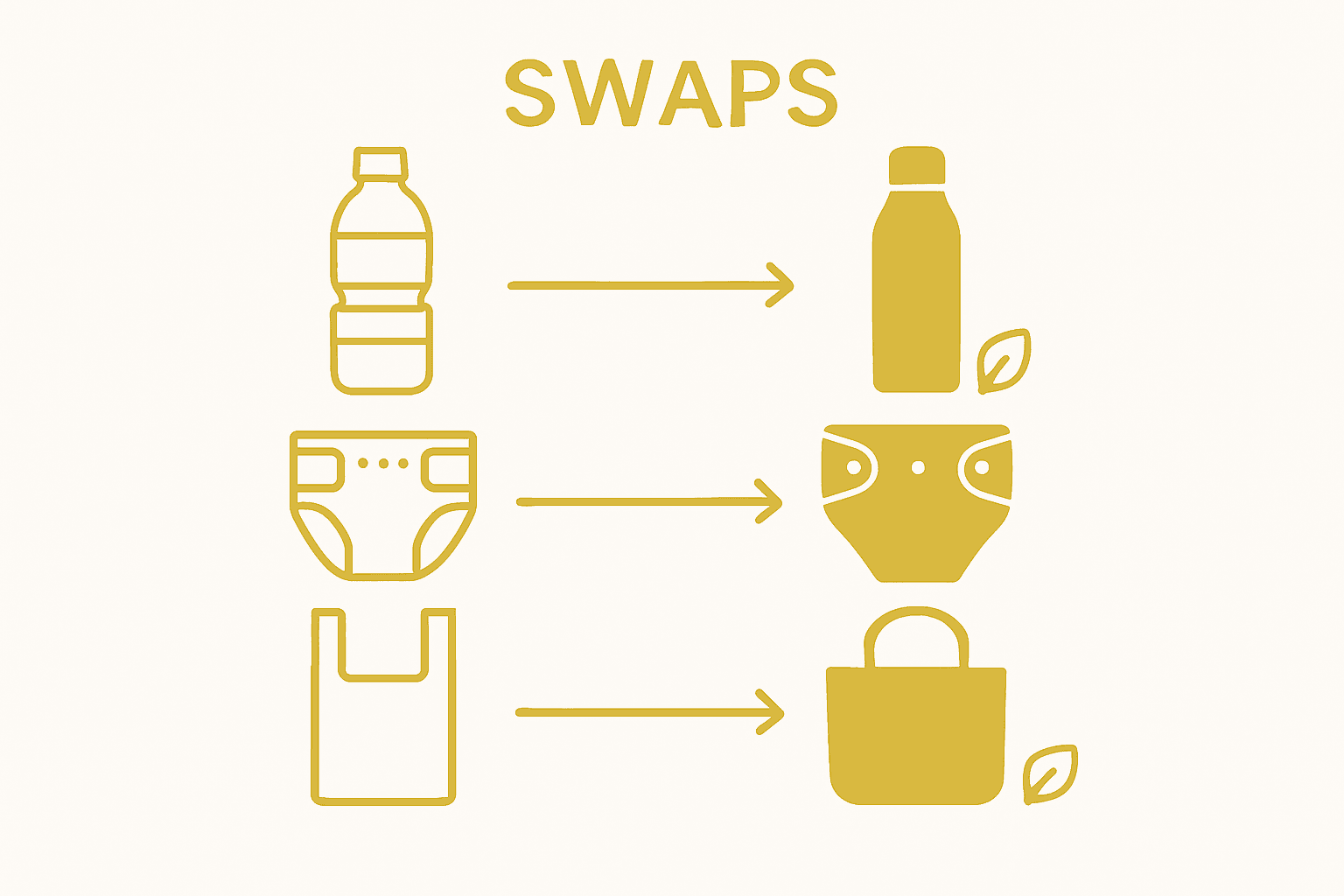
The transition to greener products requires thoughtful research and gradual implementation. Families should approach sustainable swapping as an educational journey, involving children in decision-making processes and explaining the rationale behind each environmental choice. This strategy transforms product substitution from a mere purchasing decision into a powerful learning experience that cultivates ecological awareness and responsible consumption habits.
Pro Tip: Green Swap Challenge: Commit to replacing one disposable household item with a reusable alternative each month, documenting and celebrating the cumulative environmental impact of these incremental changes.
Here is a comparison of eco-friendly product swaps and their typical benefits:
| Item to Replace | Conventional Option | Greener Alternative | Environmental Benefit |
|---|---|---|---|
| Water bottles | Single-use plastic | Stainless steel reusable | Reduces plastic waste significantly |
| Nappies | Disposable | Cloth, washable nappies | Lowers landfill contribution |
| Shopping bags | Plastic carrier bags | Fabric tote bags | Cuts down on single-use plastics |
| Toys | Plastic, non-recyclable | Wooden, recycled material | Minimises resource exploitation |
| Cleaning products | Chemical-based liquids | Eco-certified, refillable | Decreases harmful chemical runoff |
Sparking Children’s Connection With Nature
Building a meaningful relationship between children and the natural world requires intentional, engaging experiences that go beyond passive observation. Nature exploration techniques inspired by Montessori principles can transform ordinary outdoor moments into powerful learning opportunities that cultivate curiosity and environmental awareness.
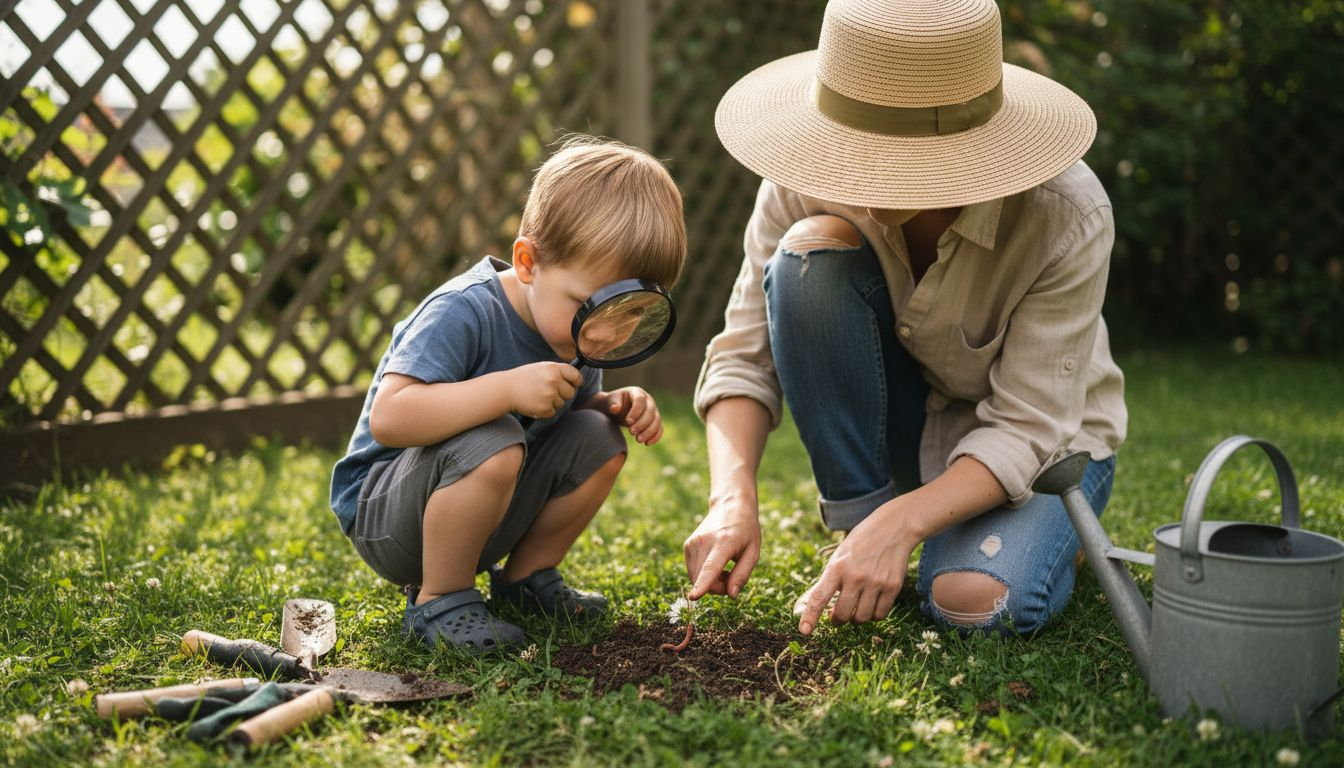
Children learn best through direct sensory experiences that invite exploration and discovery. This means creating opportunities for tactile interactions with natural environments - touching tree bark, collecting interesting leaves, observing insect behaviours, and understanding ecological interconnections. Such hands-on encounters help children develop a visceral understanding of environmental systems, moving beyond theoretical knowledge to genuine emotional connection.
Parental engagement plays a crucial role in nurturing children’s natural curiosity. By approaching nature as a collaborative exploration rather than a structured lesson, parents can help children develop intrinsic motivation for environmental understanding. This involves asking open-ended questions, encouraging observation, and demonstrating genuine wonder at the complexity of natural systems. The goal is not to lecture, but to inspire a sense of reverence and respect for the living world around us.
Pro Tip: Nature Detective: Create a weekly family nature journal where everyone records one interesting observation, sketch, or discovery from outdoor experiences, transforming exploration into a shared, collaborative adventure.
The following table outlines strategies to nurture children’s connection with nature, highlighting the approach and expected outcome:
| Strategy | Approach | Expected Outcome |
|---|---|---|
| Sensory exploration | Encourage tactile interaction outdoors | Deepened curiosity and observation |
| Collaborative investigations | Parent-child joint discovery sessions | Stronger family bonds through nature |
| Nature journaling | Weekly records of findings and sketches | Enhanced memory and environmental care |
| Open-ended questioning | Ask guiding and reflective questions | Improved critical thinking and wonder |
Avoiding Common Pitfalls In Eco Parenting
Successful eco-parenting requires nuanced understanding beyond surface-level environmental practices. Exploring different parenting approaches reveals that well-intentioned strategies can sometimes inadvertently create resistance or disengagement in children’s environmental learning. Parents must strike a delicate balance between education and inspiration, avoiding didactic or guilt-driven environmental messaging.
One significant challenge lies in recognising that sustainable practices are not universally accessible. Socioeconomic factors critically influence families’ capacity to implement eco-friendly strategies, meaning parents should focus on realistic, incremental changes rather than idealistic or financially burdensome transformations. This approach prevents feelings of inadequacy and maintains motivation for environmental engagement.
Communicating environmental concepts requires emotional intelligence and age-appropriate strategies. Common pitfalls include overwhelming children with complex ecological challenges, using fear-based messaging, or presenting sustainability as a burdensome obligation. Instead, parents should frame environmental stewardship as an exciting, collaborative journey of discovery, celebrating small victories and maintaining a sense of hope and empowerment.
Pro Tip: Compassionate Eco-Learning: Create a judgment-free family environment where environmental mistakes are seen as opportunities for learning and growth, emphasising progress over perfection.
Inspire Eco-Friendly Parenting with Tools That Connect Kids to Nature
Many parents find it challenging to nurture genuine environmental curiosity while making sustainable choices accessible and fun for their children. This article highlights key approaches such as engaging children through sensory nature experiences and modelling mindful consumption, which are essential to raising greener children. If you want to strengthen your child’s connection with the natural world without overwhelming them, you need tools that stimulate creativity and curiosity while supporting eco-conscious values.
Discover how The Zoofamily transforms eco-friendly parenting by offering carefully designed kids’ cameras, walkie-talkies, and binoculars that inspire young explorers to engage with wildlife and their surroundings. Each product includes animal references that spark excitement and learning about biodiversity, encouraging children to become lifelong advocates for the planet. Plus, for every camera sold, we plant a tree—making your purchase part of a wider movement to restore natural beauty for generations to come. Make sustainable parenting hands-on and joyful today by visiting The Zoofamily and starting your child’s eco-adventure now.
Frequently Asked Questions
What are some effective eco-friendly parenting tips?
Some effective eco-friendly parenting tips include choosing reusable alternatives for everyday products, involving children in sustainable practices like recycling, and nurturing a direct connection with nature through outdoor exploration.
How can I encourage my children to adopt sustainable habits?
Encourage sustainable habits by modelling environmentally responsible behaviours, creating family eco-challenges, and engaging them in hands-on environmental learning experiences that foster curiosity and empathy for the planet.
What are the benefits of using eco-friendly products?
Using eco-friendly products reduces waste and pollution, minimises harmful chemicals, and promotes sustainability. It also teaches children about responsible consumption and helps them develop lifelong habits of environmental stewardship.
How can I introduce my children to nature effectively?
Introduce your children to nature by facilitating sensory explorations, maintaining a nature journal for observations, and encouraging collaborative investigations that deepen their curiosity and emotional connection with the environment.
Recommended
- Comment protéger la planète au quotidien avec ses enfants – The Zoofamily
- Understanding Eco Friendly Routines for Modern Families – The Zoofamily
- Eco Friendly Cleaning Tips For Busy European Mums – The Zoofamily
- Comprendre comment prendre soin de la terre pour nos enfants – The Zoofamily
- Nachhaltig Mit Batterien Umgehen: Der Komplettguide - accu.blog