

Here are easy, ready-to-use indoor activities to beat boredom today, suitable for solo time, families and groups. The list ahead works with things most homes already have, needs little setup, and suits a wet afternoon or a stretch of free time. Age notes and quick how-to tips follow so you can match the right idea to the right person in minutes.
TL;DR:
- Children ages 1 to 5 need at least 180 minutes of varied daily activity; for ages 3 to 4, 60 minutes should be moderate to vigorous.
- WHO guidance sets no screen time at age one and up to one hour at age two; pair digital prompts with physical activity.
- Clear loose rugs and sharp corners before movement games; use stairs only when carpeted and clear, and save vigorous circuits for children who follow stop signals.
- For a home escape room, hide four clues that reveal parts of a code and set a timer for 20 minutes; use picture clues for younger children.
Table of Contents
- 1. A quick curated shortlist: 25 indoor activities to try now
- 2. Creative and crafty activities you can set up at home
- 3. Active indoor movement to replace outdoor play
- 4. Games, puzzles and social play for families and groups
- 5. Screen and digital activities with a creative or active twist
- 6. Structured projects that especially suit tweens
- 7. How animal-themed products can support indoor play and creative learning
- 8. An author’s take on cultivating curiosity through play
- 9. An easy way to extend indoor activities with The Zoofamily
- FAQ
- Sources
1. A quick curated shortlist: 25 indoor activities to try now
Scan the list below and pick whatever fits your space, group size and the minutes you have. Each entry gives a quick instruction, what you need and roughly how long it takes.
- Cushion obstacle course: Lay cushions, chairs and tape on the floor as a path. Ten minutes to set up, five to ten minutes to play, suits ages 4 and up.
- Balloon keep-up: Bat a balloon between players without it touching the floor. One balloon, two minutes to start, any age from 3 upward.
- Stop-motion short film: Shoot a short scene frame by frame on a phone or tablet. Thirty to sixty minutes, suits tweens and older children.
- Marble run: Build a track from cardboard tubes and tape. Twenty minutes to build, suits ages 5 and up.
- Sensory playbox: Fill a tray with rice, pasta or dried beans plus scoops and cups. Five minutes to set up, suits toddlers and pre-schoolers.
- Home escape room: Hide clues around a room leading to a final “key”. Thirty minutes to set, twenty to play, suits families and groups.
- Charades: Act out words or phrases for others to guess. No materials needed, five minutes or longer, any age from 5 up.
- Indoor den building: Use sheets, chairs and clothes pegs to build a fort. Fifteen minutes, suits most ages.
- Card game tournament: Run a bracket with a favourite card game. Thirty minutes or more, suits families and groups.
- Make-your-own board game: Design rules, a board and pieces from card. Forty-five minutes, suits tweens.
- Animal-movement races: Hop like a frog, crawl like a bear across the room. Five minutes, suits children 3 to 8.
- Photo scavenger hunt: List items or themes to photograph around the house. Twenty minutes, suits families.
- Baking or simple cooking: Make biscuits or a no-bake snack together. Forty-five minutes, suits all ages with supervision for younger children.
- Puzzle relay: Split a jigsaw between two teams racing to finish first. Twenty minutes, suits families and groups.
- Shadow puppet show: Use a torch and paper cut-outs against a wall. Fifteen minutes, suits younger children.
- Indoor bowling: Use plastic bottles and a soft ball down a hallway. Ten minutes, suits ages 4 and up.
- Dance or movement challenge: Follow a short routine or freestyle to music. Ten minutes, suits any age.
- Story-inspired maker challenge: Build something from a favourite storybook scene using card and tape. Thirty minutes, suits tweens.
- Mystery hunt with riddles: Write simple clues that lead from room to room. Twenty minutes, suits families.
- Paper aeroplane contest: Fold and test designs for distance or accuracy. Fifteen minutes, suits ages 6 and up.
- Drawing or comic strip creation: Sketch a short comic with a beginning, middle and end. Thirty minutes, suits tweens and older.
- Indoor picnic: Lay a blanket and plates for a simple themed meal. Twenty minutes to set, suits families.
- Walkie-talkie roleplay mission: Split into two rooms and run a pretend mission using handsets. Fifteen minutes, suits children 4 and up.
- Family trivia quiz: Write or find questions and keep score. Twenty minutes, suits all ages.
- Binoculars window-watch: Spot birds, weather changes or neighbours from a window using binoculars. Ten minutes, suits children 3 and up.
That spread covers quiet solo time, fast group games and longer projects, so the next sections go deeper into the categories that need a bit more guidance.
2. Creative and crafty activities you can set up at home
Craft sessions work best when materials are ready before anyone sits down, so a short prep step saves most of the mess later.
- Make-your-own board game: card, markers, dice from an old game, bottle caps as pieces, roughly 45 minutes.
- Stop-motion project: a phone or tablet with a basic stop-motion app, small figures or clay, a steady surface, 30 to 60 minutes.
- Marble run: cardboard tubes, tape, scissors, a marble or small ball, around 20 minutes.
- Sensory playbox: a shallow tray, dried rice or pasta, scoops, small containers, 5 minutes to fill.
- Story-inspired maker challenge: a favourite picture book, card, glue, string, 30 minutes.
Household substitutes keep the cost down: cereal boxes replace craft card, bottle caps replace counters, and old magazines replace coloured paper for collage work. The NAEYC describes a simple design-challenge cycle of think, build, try, revise and share, which works well as a loose structure for any of these projects rather than aiming for a finished result on the first attempt.
Difficulty bands roughly follow age: sensory boxes and shadow puppets suit pre-schoolers in under 15 minutes, while board game design and stop-motion suit tweens over 30 to 60 minutes with several sittings.

Pro Tip: Keep a labelled box of loose parts (tubes, caps, string, card) so a craft session can start in under five minutes next time.
3. Active indoor movement to replace outdoor play
Rain does not have to mean a still afternoon. Small spaces can carry real movement with a bit of furniture rearranging and some tape on the floor.
- Mini obstacle course: cushions to crawl over, a chair to go under, tape lines to balance along, five to ten minutes of play.
- Balloon keep-up: one balloon, a flat open patch of floor, two or more players.
- Animal-movement races: hop, crawl or waddle across the room and back, good for short bursts of under five minutes.
- Timed circuits: star jumps, wall sits and stair climbs in 30-second rounds with short rests between.
- Stair step-ups: using a bottom step for repeated step-ups, a safe option where stairs are carpeted and clear.
The WHO recommends that children aged 1 to 5 get at least 180 minutes of varied physical activity every day, and for children aged 3 to 4 at least 60 minutes of that should be moderate to vigorous. Short indoor bursts, repeated through the day, add up towards that total even when outdoor play is not an option.
Something worth knowing: several five-minute bursts of movement, spaced through a rainy day, can realistically add up to the recommended total without needing one long session.
Keep floors clear of loose rugs and sharp furniture corners before starting any running or crawling game, and save the more vigorous circuits for children old enough to follow stop signals reliably.
4. Games, puzzles and social play for families and groups
Group games turn an ordinary room into a shared activity without needing anything beyond what is already in a drawer somewhere.
- Charades: write words on slips of paper, split into teams, act out one at a time, no materials beyond paper and a pen.
- Cooperative jigsaw relay: split a puzzle between two teams and race to finish, scales from 50 to 500 pieces depending on patience.
- Home escape room: hide three or four clues leading to a final locked box or envelope, written riddles for older players, picture clues for younger ones.
- Mystery hunt: write a short story with a missing object, scatter clues through two or three rooms, suits mixed ages when clues vary in difficulty.
- Card or board game adaptation: add a house rule, a time limit, or a point twist to a familiar game to keep it fresh for repeat play.
For a quick at-home escape room, write four clues that each reveal part of a code, hide them in obvious but separate spots, and set a 20-minute timer. Swap riddles for simple picture matches when younger children are playing, and add a locked box or combination padlock for tweens who want more challenge.
5. Screen and digital activities with a creative or active twist
Screens work better as a starting point than an endpoint. Pairing a short digital prompt with something physical keeps the activity from turning into passive viewing.
- Stop-motion apps: film a short scene, then build the set and characters from card and clay first.
- Family dance challenge: follow a short routine video, then make up a new ending as a group.
- Photo scavenger hunt with a twist: ask for creative interpretations such as “something that looks like an animal” rather than a plain checklist, which tends to hold attention longer and produce more interesting results, as this photo scavenger hunt guide sets out.
- Digital drawing followed by a physical version: sketch a design on a tablet, then recreate it with paper and paint.
- Video call show and tell: record or call a relative to show off a craft or game just finished.
The WHO’s guidance on screen time for young children sets limits by age, including no screen time for one-year-olds and up to one hour for two-year-olds, which makes the hands-on follow-up step especially useful for keeping a digital activity short and purposeful rather than open-ended.
6. Structured projects that especially suit tweens
Tweens tend to stay engaged longer with projects that have a few steps, a real decision to make and room to redo something that did not work the first time.
- Collaborative cooking: plan a simple two-course meal together, divide tasks, and let one person manage timing.
- Stop-motion production: write a short script, build a set, film in stages over two or three sessions rather than one sitting.
- Maker-design challenge linked to a storybook: pick a scene from a favourite book and build a model of it from card, string and tape, following a loose cycle of planning, building and revising.
- Tweenteen-style art sessions: borrow the format used by library maker programmes, repeatable sessions with everyday materials and an open brief, as seen in events like a library tweenteen art club.
Younger children generally need more scaffolding: clear steps, pre-measured materials and a shorter time horizon. Tweens do better with autonomy, a loose brief and the freedom to redo a step that did not work, which fits the NAEYC’s framing of tinkering and maker activities as most valuable when they combine problem-solving with some independence.
Pro Tip: Break a longer project into three short sessions, plan, build, finish, so attention does not run out before the result does.
7. How animal-themed products can support indoor play and creative learning
Animal-themed gear gives a few of these activities a sharper focus without changing what they already are.
- A kids camera turns a photo scavenger hunt into a proper mission, with instant prints giving children something to hold and talk about straight after.
- A walkie-talkie set makes a two-room mystery hunt or roleplay mission easier to run, letting children coordinate without shouting through the house.
- Binoculars add a focus to window-watching or an indoor “spot the detail” game, useful on a day when going outside is not an option.
The animal references across our designs are meant to spark curiosity about nature even during an entirely indoor afternoon, and for every camera sold we plant one tree, connecting a single purchase to a small piece of environmental impact.
8. An author’s take on cultivating curiosity through play
The best indoor afternoons I have watched happen when nobody is directing them too closely. A child left with a box of odd materials and no instructions will usually build something stranger and more interesting than anything on a printed activity sheet.

Adults tend to want to fix the plan, correct the model, or speed up the craft. Stepping back and just watching what a child chooses to do with ten minutes and a pile of cardboard tubes often reveals more about what interests them than asking outright ever does.
Pick one idea from this list today and let it run a little longer than planned. Share whichever one stuck with your own family; the best indoor games tend to spread that way.
— ALAIN
9. An easy way to extend indoor activities with The Zoofamily
Several of the ideas above get a boost from the right prop in hand. A scavenger hunt feels more like a real mission with a camera built for small hands, and a storytelling session becomes something to look back on once the prints are sitting on a table afterwards.
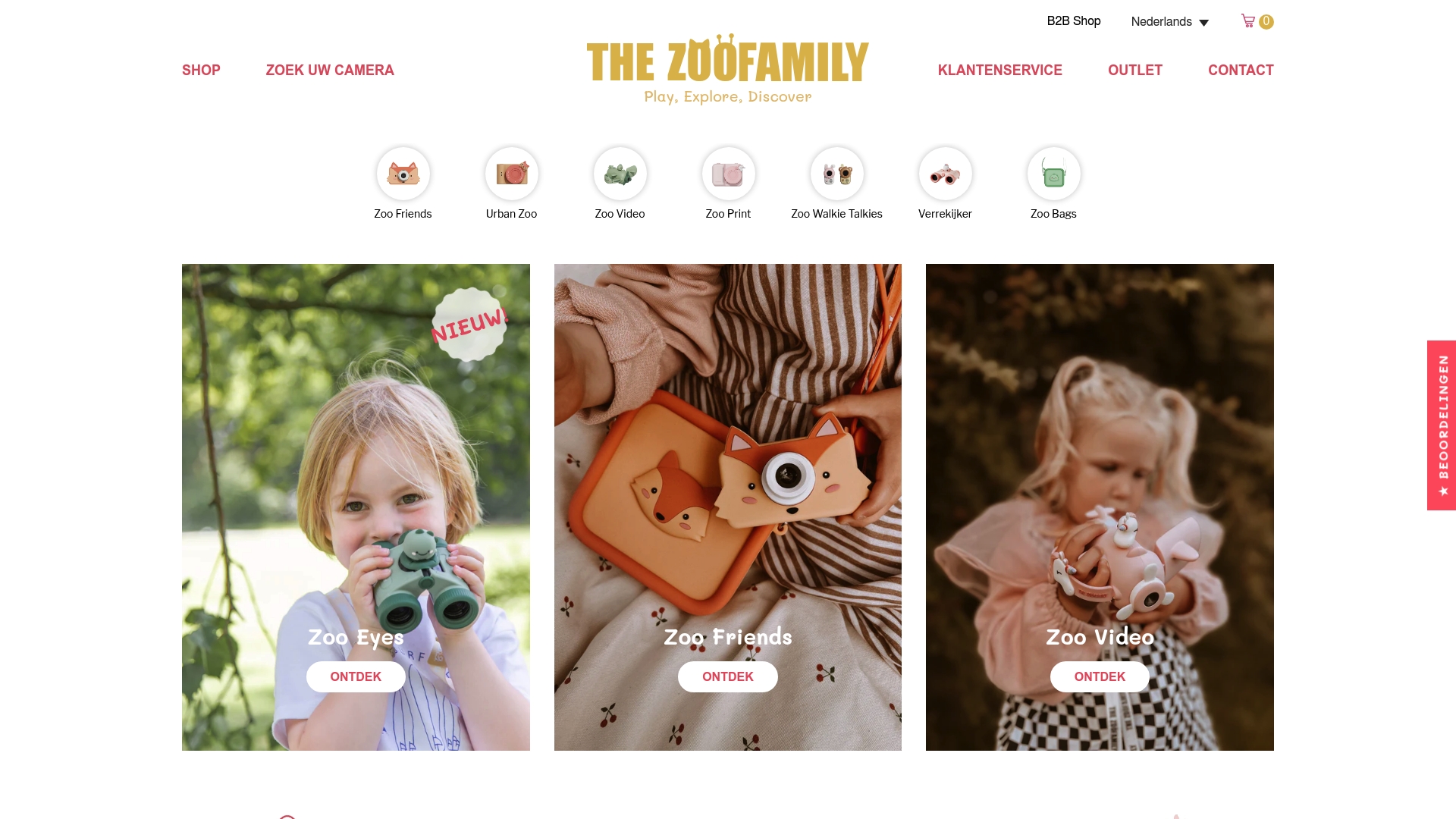
- Pair a photo scavenger hunt with a Zoo Print camera so children can hold their results straight away.
- Run a two-room mystery hunt with a Zoo Walkie-Talkie set so teams can coordinate clues without leaving their stations.
- Add a pair of zoo eyes binoculars to a window-watch game for a sharper, more focused version of an old favourite.
Browse our full kids camera collection for options that fit straight into these activities, and remember that each camera sold plants one tree, a small, steady link between indoor play and the outdoors it is inspired by.
FAQ
What are 5 indoor activities?
A cushion obstacle course, a photo scavenger hunt, charades, a sensory playbox and a stop-motion mini project cover active, creative, social and calm play in one short list. Each takes under an hour and uses materials most homes already have, as set out in the shortlist above.
What activities can be done indoors?
Indoor options range from active games like balloon keep-up and mini obstacle courses to quieter ones like puzzles, craft projects and sensory boxes. Screen-based prompts paired with a hands-on follow-up, such as a dance challenge or a stop-motion short, also work well for mixed-age groups.
What to do inside when bored?
Pick something that matches the energy in the room: a quick active game such as animal-movement races for restlessness, or a longer project like a make-your-own board game for a slower afternoon. The WHO recommends children aged 1 to 5 get at least 180 minutes of varied activity daily, so mixing a few short bursts of movement into an indoor day helps meet that even without going outside.
What are 10 best indoor games?
Charades, home escape rooms, cooperative jigsaw relays, card game tournaments, balloon keep-up, animal-movement races, indoor bowling, mystery hunts, trivia quizzes and board game adaptations cover most group sizes and ages. Several of these appear with setup notes in the games and social play section above.
How long should a typical indoor activity session last?
Most of the ideas in this list run between 10 and 60 minutes depending on complexity, from a five-minute balloon game to a stop-motion project spread across two or three sessions. Matching the length to attention span matters more than following a fixed time, particularly for younger children.
Sources
- To grow up healthy, children need to sit less and play more (WHO)
- Build it! Activities to stretch children’s understanding of STEM concepts (NAEYC)