

A family tree garden is a one‑tree‑per‑product planting programme that turns a single purchase, like a children’s camera, into a small patch of real trees planted on the buyer’s behalf. Every camera sold funds one tree, and over time a family builds its own cluster of plantings tied to birthdays, holidays or milestones.
If you’re browsing for an eco‑friendly, nature‑inspired camera for a child and you see a pledge like this on a product page, here’s what to check before you buy:
- A clear pledge stating the ratio (usually 1 product = 1 tree), not a vague “we support sustainability” line.
- A named planting partner, such as One Tree Per Child or a regional forestry group, rather than an unnamed “reforestation fund”.
- Some form of tracking or certificate, even a basic planting record, so the pledge isn’t just marketing copy.
Thezoofamily runs exactly this model: for every camera sold, one tree is planted through a named partner. Programmes like this sit alongside established, research‑backed initiatives such as One Tree Per Child and guidance from Penn State Extension, both of which show that structured, accountable planting produces real environmental and developmental returns, not just a feel‑good sticker on a box.
Table of Contents
- Why family tree gardens benefit children, families and communities
- How does a one‑tree‑per‑product programme actually work?
- What to look for when buying an eco‑friendly kids’ camera
- How to start or join a family tree garden yourself
- Kid‑friendly activities to bring the family tree garden to life
- How to track and share your family tree garden’s progress
- One Tree Per Child and Tree Pittsburgh: what success actually looks like
- Why Thezoofamily backs family tree gardens
- Key takeaways for busy gift‑buyers
- Sources
Why family tree gardens benefit children, families and communities
Trees do measurable work long before a child is old enough to understand what “carbon sequestration” means. Mature canopy filters particulate matter from the air, cools surrounding ground temperature, and slows stormwater runoff during heavy rain, according to a tree resource guide compiled for schools. None of that requires a forest. A handful of trees on a street or in a schoolyard shifts the microclimate around them.
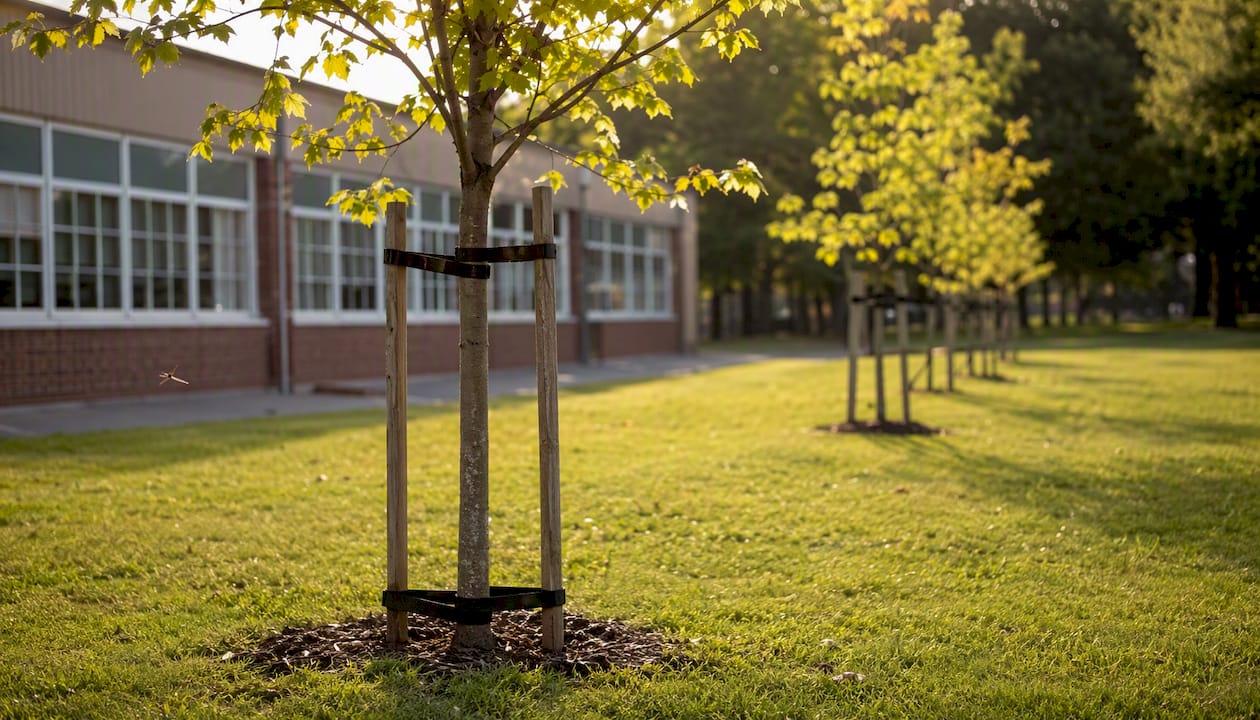
The developmental case is just as strong. Penn State Extension reports that school planting projects improve student focus, behaviour and offer hands‑on science learning that a worksheet can’t replicate. Separate research on tree‑rich learning environments points to reduced cortisol, the body’s main stress hormone, and fewer ADHD symptoms among children with regular access to trees and green space, according to Earth Day’s overview of student outcomes. A study of 64 urban primary schools in Auckland found that greener school grounds correlated with better wellbeing and more varied learning opportunities, as covered by Phys.
Scale matters here too. One Tree Per Child has shown what’s possible when a community commits properly: its Bristol programme planted tens of thousands of trees across many primary schools over several years. That’s not a pilot project. It’s proof that a simple pledge, repeated at volume, reshapes a neighbourhood’s tree cover within a generation, which is roughly the same logic behind Thezoofamily’s own one‑camera‑one‑tree model, just scaled to individual families rather than whole school districts. You can read more on the benefits of green spaces for families if you want the wider wellbeing picture.
How does a one‑tree‑per‑product programme actually work?
The mechanics are simpler than most parents expect, though the details vary by brand.
- You buy the product. The pledge is baked into the price, so there’s no separate donation step at checkout.
- Funds are pooled or granted to a planting partner. This is usually a forestry non‑profit or community group with existing land access and expertise, rather than the retailer planting trees itself.
- The partner identifies a planting site. This might be a school ground, a community park, or degraded urban land earmarked for restoration.
- Planting happens within a defined seasonal window, since saplings need the right ground temperature and moisture to establish.
- Aftercare follows for at least a year, with replacement of any sapling that fails to establish.
- The buyer receives tracking information or a certificate, confirming the tree was planted on their behalf.
Timelines matter more than most buyers realise. A tree pledged in spring might not go into the ground until the following autumn planting window, and first‑year survival checks typically happen at planting, six months, and twelve months, based on guidance from Penn State Extension. A programme with no replacement policy for failed saplings is a weaker pledge than one that explicitly commits to it.
Before you trust a brand’s tree pledge, look for these signals:
- A named planting partner you can independently search for.
- A stated survival or replacement policy, not just “we plant a tree”.
- Some form of photographic, map, or GPS verification.
- A certificate or reference number tied to your specific order.
What to look for when buying an eco‑friendly kids’ camera
Choosing a camera for a child under a tree‑planting pledge means balancing two things: does the product genuinely suit the child, and does the pledge behind it hold up.
Start with the pledge itself. Look for a stated ratio (1 camera = 1 tree), a named partner, and some kind of tracking, exactly as outlined above. Then move to the product itself:
- Age‑appropriateness: buttons, screens and grip size suited to small hands, typically from age 3 upwards.
- Durability: a drop‑resistant body matters more for a five‑year‑old than megapixel count.
- Battery life: rechargeable batteries reduce both cost and landfill waste over the camera’s life.
- Material safety: look for BPA‑free plastics and non‑toxic finishes, particularly on cameras aimed at younger children.
- Packaging: low‑waste or recyclable packaging is a reasonable proxy for how seriously a brand treats its environmental claims elsewhere.
Pro Tip: A camera that survives three years of rough handling and gets passed down to a younger sibling does more for the environment than a cheaper model replaced twice. Longevity is its own form of sustainability.
On cost: a nature‑inspired camera with a genuine planting pledge often sits at a similar price point to comparable toy cameras without one. The pledge isn’t usually a premium you’re paying extra for. It’s a design choice baked into how the brand sources and prices its products, so the real comparison is durability and safety, not just the sticker price against a generic alternative.
How to start or join a family tree garden yourself
You don’t need a partnership with a national charity to build your own family tree garden. A single tree in a garden, a school corner, or a community plot counts, provided it’s planted properly and cared for.
- Secure permission and pick a site. Check land ownership, utility lines, and whether the site gets enough sun for the species you want.
- Source seedlings through a partner. Local conservation groups, extension offices, or a school’s existing relationship with a forestry charity are more reliable than a generic garden centre sapling for community projects.
- Plan the planting day. Assign simple roles, even for young children: digging helper, water carrier, photographer.
- Set up short‑term aftercare. Weekly watering checks for the first two months, then monthly through the first year.
- Keep basic records. Species, planting date, and site location, so you can track survival over time.
Species selection deserves real thought. Native species generally need less irrigation once established and support local wildlife better than ornamental imports. Avoid anything with thorns, toxic berries, or brittle branches near play areas, and think about mature size relative to fences, houses, and power lines before you plant, not after.
For practical tips on making the space wildlife‑friendly once your tree is in, see Thezoofamily’s guide to creating wildlife friendly gardens.
Kid‑friendly activities to bring the family tree garden to life
The planting day is just the start. What keeps children engaged is ongoing observation, and this is where a camera earns its place as more than a toy.
- Photo journalling: have your child photograph “their” tree monthly, building a simple visual record of growth.
- Seasonal phenology charts: note first bud, first leaf, and leaf drop each year on a simple chart.
- Naming and tracking: giving a tree a name increases long‑term stewardship, according to One Tree Per Child’s own programme findings.
- Simple citizen science tasks: counting visiting birds or insects around the tree, logged weekly.
Preschoolers can manage watering and simple photos with guidance. Early primary children can keep a basic growth chart and identify leaf shapes. Older primary children can take on measuring trunk circumference, researching the species, and presenting findings to siblings or classmates. Guidance from the Arbor Day Foundation backs scaling tasks this way, matching complexity to age rather than giving every child the same job.
Classrooms extend this naturally: a school planting day becomes a term‑long project when tied to science lessons, and families can mirror that at home with a simple photo album or nature journal kept alongside the camera. For more starter prompts, Thezoofamily’s fun facts about trees works well as certificate copy or a conversation starter on planting day.
How to track and share your family tree garden’s progress
A simple record beats an elaborate one that never gets filled in. The fields worth keeping are straightforward.
| Field | Example entry |
|---|---|
| Purchaser name | Parent or gift‑buyer’s name |
| Order or reference ID | Order number from the camera purchase |
| Tree species | Native species chosen by planting partner |
| Planting date | Date within the seasonal planting window |
| Planting site | School ground, park, or community plot |
| Photo evidence | Dated photo at planting, 6 months, 12 months |
A certificate given to a child needs even less: the tree’s name, its planting site (a general location, not necessarily exact GPS), the planting date, and a rough milestone, such as “check back in one year to see how tall I’ve grown.”
Be careful about overclaiming carbon impact. A single sapling doesn’t sequester meaningful carbon for years, and precise figures per tree vary hugely by species, climate and soil. State what you can verify: trees planted, survival policy, and planting dates. That’s a claim you can stand behind, and it’s also more honest with children than inflated numbers they’ll eventually question.
One Tree Per Child and Tree Pittsburgh: what success actually looks like
Two programmes show what a family tree garden looks like once it scales past a single household.
One Tree Per Child built its model around school partnerships, nursery visits, and structured aftercare, and its Bristol rollout, 100,000 trees across 130 primary schools over nine years, demonstrates that consistency over time beats a single big planting event. Tree Pittsburgh has run a comparable local model in the United States, combining nursery education with hands‑on planting to improve neighbourhood resilience to heat and stormwater, as reported by Yale Climate Connections.
Children planting trees can measurably change neighbourhoods, combining nursery visits, planting days, and aftercare education into a single ongoing programme rather than a one‑off event.
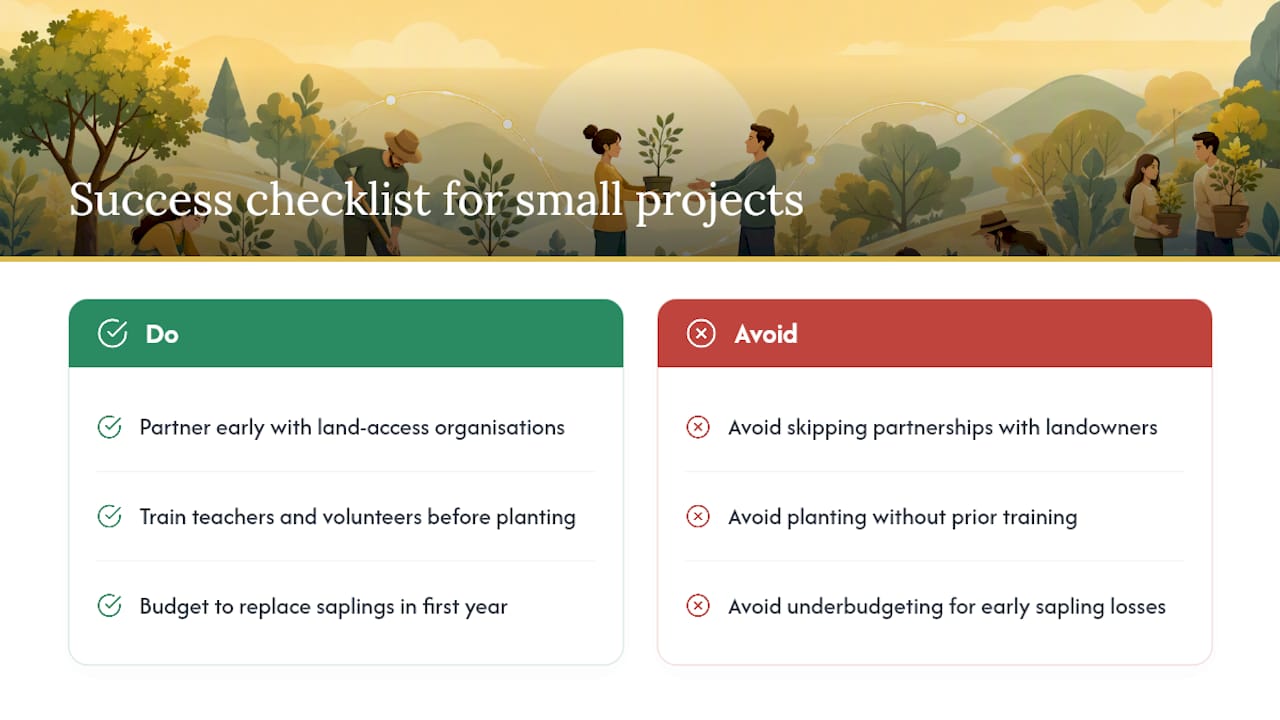
The lesson for a smaller project, whether that’s a single family or a classroom, is the same: partner early with an organisation that has land access and expertise, get teachers or volunteers proper training before planting day, and budget for replacing saplings that don’t survive their first year. Skipping any one of those three steps is usually where good intentions quietly fail.
Why Thezoofamily backs family tree gardens
At Thezoofamily, the pledge is simple: for every camera we sell, we plant one tree. It’s built into the price, not an optional add‑on, because we wanted the environmental commitment to sit on equal footing with the product itself, not as an afterthought at checkout.
We work with a named planting partner to place trees where they’ll genuinely help, and we keep the process as transparent as a small brand reasonably can, aligned with the same accountability standards you’d expect from established programmes like One Tree Per Child. If you’re choosing a camera as a gift and the tree pledge matters to you as much as the product does, that alignment is worth checking before you buy.
If you’d also like to pair a camera gift with a personalised keepsake, Nicholas & Rose’s guide to eco‑conscious gifting has some useful ideas that complement a tree‑planting pledge nicely. To see our current range and planting policy in full, visit Thezoofamily.
Key takeaways for busy gift‑buyers
A family tree garden ties one tree to one camera purchase, and the pledge only means something if it comes with a named partner and a real tracking or certificate system.
| Point | Details |
|---|---|
| Confirm the pledge | Look for a stated ratio, such as one camera equals one tree, on the product page. |
| Check the planting partner | A named organisation, like One Tree Per Child, is more trustworthy than a vague fund. |
| Match the camera to the child | Prioritise durability, battery life and safe materials over extra features. |
| Ask about tracking | A certificate or reference number confirms your specific tree was planted. |
| Start small if you want more | A single tree at home or school, cared for properly, counts as a family tree garden too. |
Sources
For readers who want to verify the research behind this guide or find local partners, these sources are a solid starting point:
- Why schools should plant trees | Penn State Extension
- One Tree Per Child | Join us to plant One Tree Per Child
- Working With Children | Arbor Day Foundation
- Kids plant trees, change neighborhoods » Yale Climate Connections
Use these for implementation detail and partner leads rather than taking any single source as the final word. For brand‑specific detail on how Thezoofamily’s own planting policy works, our tree planting benefits guide covers the practical side, and our bird‑friendly garden guide is a good next step once your first tree is in the ground.