

Finding a water play activity table that aligns with your values as a European mom can seem daunting. Many families now prioritize eco-friendly choices, with over 60 percent of British parents seeking sustainable products for outdoor play. Nurturing creativity and a love for nature starts with the right setup. This guide offers practical steps to help you select and create an engaging water play station that supports your child’s development and environmental awareness.
Table of Contents
- Step 1: Select The Right Water Play Activity Table
- Step 2: Gather Eco-Friendly Materials And Nature Items
- Step 3: Set Up The Water Play Station Safely
- Step 4: Incorporate Nature-Themed Play Elements
- Step 5: Encourage Creative And Collaborative Water Activities
- Step 6: Review Safety And Sustain Ongoing Play
Quick Summary
| Key Insight | Explanation |
|---|---|
| 1. Choose appropriate table features | Select a water table with multiple interactive elements to encourage creative and sensory exploration. |
| 2. Use eco-friendly materials | Incorporate natural, non-toxic materials to enhance play and promote environmental consciousness. |
| 3. Ensure safe play setup | Position the table on a flat surface, supervise children, and maintain hygiene for safe water play. |
| 4. Integrate nature-themed elements | Add natural items to inspire curiosity and encourage unstructured, imaginative play experiences. |
| 5. Promote collaborative activities | Facilitate group play with collaborative tools to enhance social skills and encourage teamwork among children. |
Step 1: Select the right water play activity table
Choosing the perfect water play activity table requires thoughtful consideration of several essential factors that will transform your child’s playtime into an engaging learning experience. Optimal water table selection involves understanding your child’s developmental needs and creating an environment that stimulates creativity and exploration.
Consider key aspects like table size relative to your available outdoor space, the number of children who will use it simultaneously, and the variety of interactive features. Look for design elements such as multiple tiers, water cascades, spinners, and ramps that encourage imaginative play and sensory exploration. Age appropriateness matters significantly water tables designed for younger children typically feature simpler mechanisms, while those for older kids include more complex interactive elements like rain shower effects or intricate water flow systems.
Materials and durability are crucial considerations when selecting a water play table. Seek robust, weather-resistant constructions that can withstand outdoor conditions and frequent use. Tables with good drainage systems, removable accessories, and easy cleaning options will save you considerable time and effort. Some models even include sun shelters or umbrellas, protecting children during outdoor play.
Expert Advice: Select a water play activity table with removable accessories to extend its play value and keep your child’s interest consistently engaged.
Step 2: Gather eco-friendly materials and nature items
Creating a nature-inspired water play experience begins with selecting sustainable materials that are safe for children and kind to our environment. Non-toxic sustainable materials form the foundation of an engaging and responsible play setup, ensuring both fun and ecological consciousness.
Look for play items crafted from natural resources such as FSC-certified wood, food-grade silicone, and natural rubber. These materials are free from harmful chemicals like BPA, PVC, and phthalates, providing a safe sensory experience for children. Complement manufactured items with authentic natural elements like smooth river stones, pinecones, driftwood, and large leaves that will transform your water play table into a rich, tactile exploration zone. Nature-inspired play resources create opportunities for open-ended play, encouraging problem-solving and imaginative interactions with the environment.
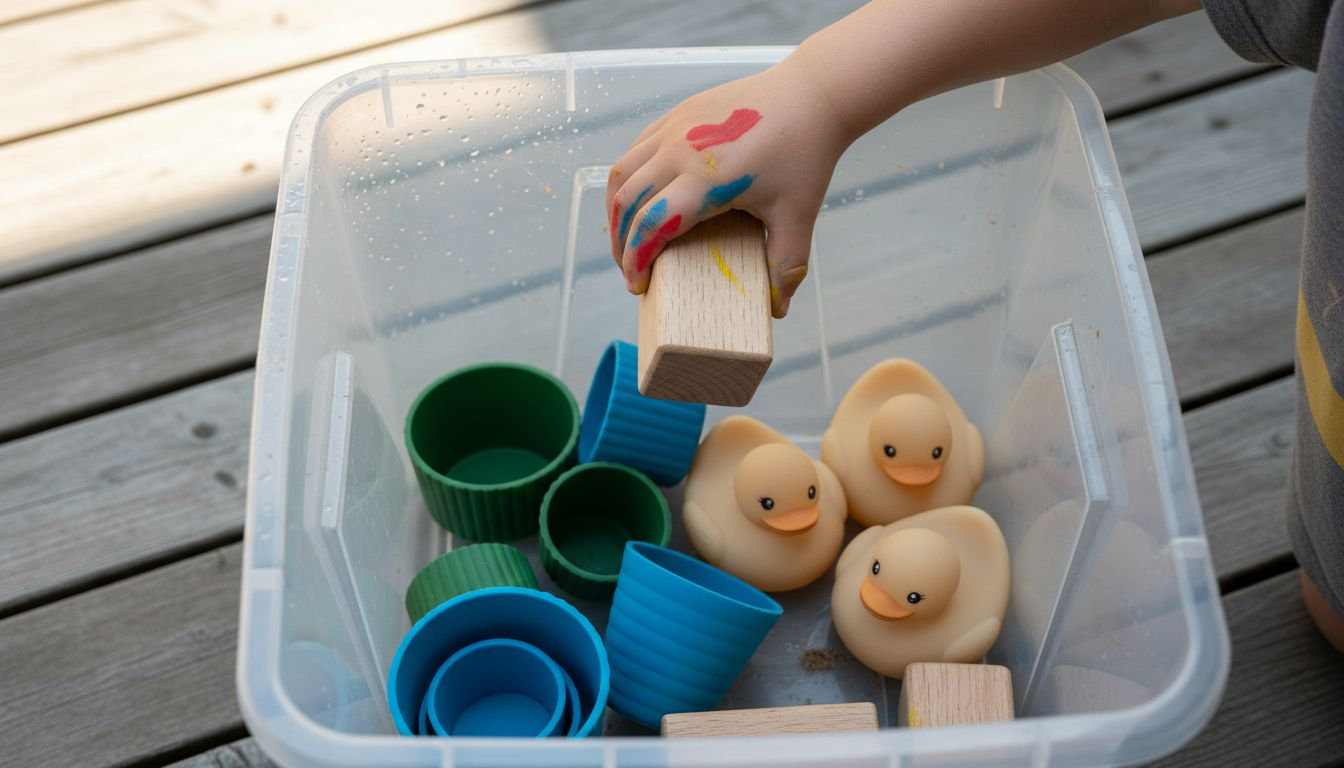
Consider collecting organic materials during family walks, ensuring they are clean, smooth, and free from sharp edges. Rinse collected items thoroughly and allow them to dry completely before introducing them to your water play activity table. This approach not only provides unique play elements but also teaches children about local ecosystems and environmental stewardship.
Expert Advice: Rotate natural materials regularly to maintain hygiene and keep your child’s play experience fresh and exciting.
Here is a summary comparing materials commonly used for eco-friendly water play:
| Material Type | Safety Benefits | Environmental Impact | Typical Uses |
|---|---|---|---|
| FSC-certified Wood | No harmful chemicals | Biodegradable, sustainable | Table parts, accessories |
| Food-grade Silicone | Non-toxic, soft surfaces | Long-lasting, recyclable | Toys, scoops, funnels |
| Natural Rubber | Safe for chewing and touch | Renewable, biodegradable | Boats, figures, grips |
Step 3: Set up the water play station safely
Creating a safe and engaging water play environment requires careful consideration of multiple factors to ensure your children can explore and learn without unnecessary risks. Water play station safety begins with selecting an appropriate location that provides stability, comfort, and optimal interaction for young learners.
Choose a flat surface with excellent drainage, preferably on a slightly sloped area to prevent water accumulation. The water play table should be positioned at an ergonomic height matching your children’s age group, allowing comfortable scooping and pouring without physical strain. Water play safety guidelines emphasise the importance of using clean water and changing it between play sessions to maintain hygiene. Ensure the table has rounded edges, tip-resistant legs, and a broad stable footprint to minimise potential accidents.
Prepare your play station with individual water containers for children, especially if any have specific health considerations. Keep cleaning supplies nearby, supervise children constantly, and establish clear guidelines about gentle play and hand washing before and after water activities. Materials should be non-toxic, UV stable, and feature smooth surfaces that are easy to clean and maintain.
Expert Advice: Create a designated drying area near your water play station to quickly manage wet clothing and towels.
Step 4: Incorporate nature-themed play elements
Transforming your water play activity table into a nature exploration zone requires thoughtful integration of organic materials that spark curiosity and imagination. Nature sensory water play offers children an opportunity to engage with natural elements through tactile and exploratory experiences that stimulate cognitive development and creative thinking.
Collect an assortment of natural loose parts such as smooth river stones, pinecones, fallen leaves, flower petals, and small branches to create a rich sensory landscape. Unstructured play with natural elements encourages children to experiment with floating, sinking, mixing, and observing how different materials interact with water. Encourage your children to sort objects, create miniature landscapes, and develop innovative play narratives that connect them intimately with natural textures and processes.
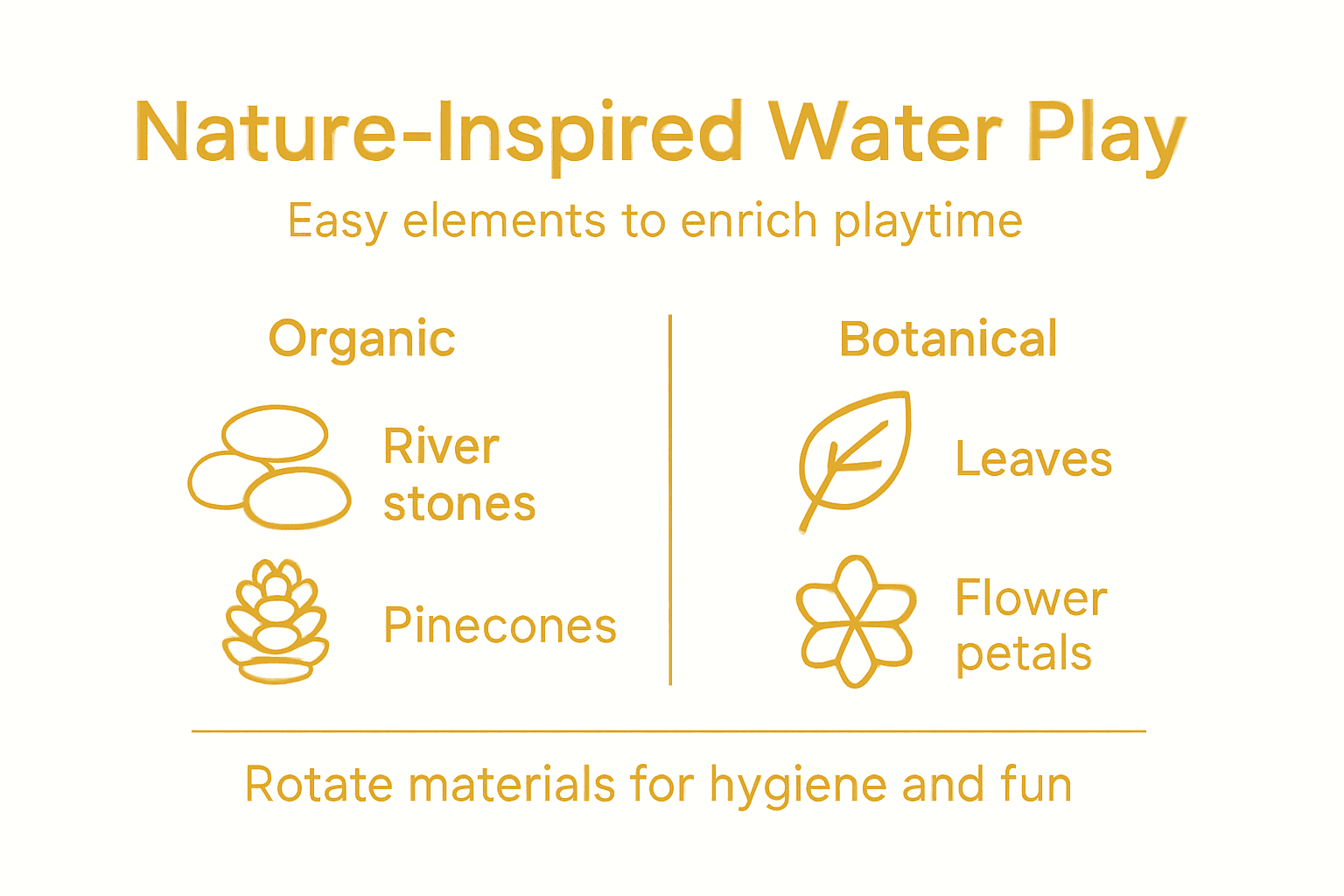
Arrange your collected materials strategically around the water play table, providing easy access and visual intrigue. Consider creating themed zones like a ‘forest floor’ area with bark and leaves or a ‘riverbed’ section with stones and pebbles. Rotate materials periodically to maintain novelty and prevent bacterial growth, always ensuring items are clean and appropriate for water play.
Expert Advice: Photograph your child’s nature play arrangements to document their creativity and track their evolving understanding of natural systems.
Step 5: Encourage creative and collaborative water activities
Transforming water play into a rich social learning experience requires intentional design that promotes interaction and shared exploration. Group water play activities offer remarkable opportunities for children to develop crucial social skills while enjoying sensory experiences together.
Introduce collaborative tools like multiple scoops, funnels, and shared containers that naturally encourage turn-taking and communication. Collaborative water play techniques can include themed challenges such as creating water channels together, filling different sized containers, or constructing miniature water landscapes that require teamwork. Provide open ended props like cups, small boats, and water wheels that invite children to negotiate roles, share ideas, and problem solve collectively.
Establish gentle ground rules that promote respectful interaction such as using kind words, waiting turns, and helping one another. Design activities that reward cooperation rather than competition creating an environment where children learn to communicate effectively and support each other’s creativity during water play.
Expert Advice: Rotate play partners regularly to help children develop broader social interaction skills and prevent potential conflicts.
Below is a quick comparison of collaborative versus solo water play activities:
| Activity Type | Key Benefits | Typical Challenges |
|---|---|---|
| Solo Play | Fosters independent skills | Limited social interaction |
| Collaborative Play | Develops teamwork, sharing | Requires adult supervision |
Step 6: Review safety and sustain ongoing play
Maintaining a safe and engaging water play experience requires consistent attention to hygiene, equipment condition, and child safety. Water table safety practices demand regular monitoring and proactive maintenance to ensure continued enjoyment and prevent potential hazards.
Establish a routine inspection protocol that includes checking the structural integrity of your water play table, examining toys for damage, and ensuring all accessories remain in excellent condition. Ongoing water play safety involves draining water after each play session, thoroughly cleaning and drying equipment, and rotating or replacing natural materials to prevent mould and bacterial growth. Supervise children constantly, remove any potential slip hazards immediately, and educate young participants about gentle play and basic safety guidelines.
Implement a cleaning schedule that involves washing toys with mild, child safe detergents, disinfecting surfaces, and storing equipment properly when not in use. Pay special attention to drainage systems, inspect for any signs of wear, and replace components that show deterioration. Keep a dedicated storage area for water play accessories that is clean, dry, and out of direct sunlight.
Expert Advice: Create a simple visual safety checklist that children can help complete before and after water play to make safety a collaborative learning experience.
Bring Nature-Inspired Water Play to Life with The Zoofamily
Creating a safe and engaging nature-themed water play activity table is about more than just fun it is about fostering a deep connection between children and the natural world. The article highlights challenges such as selecting eco-friendly materials, maintaining hygiene and safety, and encouraging collaborative exploration. At The Zoofamily, we understand these key goals and provide solutions designed to spark creativity while nurturing a love for nature.
Explore our range of thoughtfully designed kids’ cameras, walkie-talkies, and binoculars at The Zoofamily that perfectly complement sensory water play. Each product features animal references that inspire curiosity and environmental mindfulness, supporting your ambition to create a nature-inspired play experience that lasts. Take the next step to enhance your child’s outdoor learning and play by visiting The Zoofamily collection, where every camera sold also plants a tree, helping restore the very natural beauty your child is discovering through play.
Frequently Asked Questions
How do I choose the right water play activity table for my child?
Selecting the right water play activity table involves considering your child’s age, the available outdoor space, and the number of children who will use it. Assess features like multiple tiers and interactive elements to enhance play; aim for a table that encourages creativity and exploration.
What eco-friendly materials can I include in my water play table setup?
Utilise sustainable materials such as FSC-certified wood, food-grade silicone, and natural rubber to create a safe and eco-conscious play environment. Incorporate natural elements like river stones and leaves, which can provide unique tactile experiences; aim to collect a variety for a richer sensory exploration.
How can I ensure safety when setting up a water play station?
To ensure safety, position the water play table on a flat surface with good drainage and at an ergonomic height for children. Regularly inspect the area for hazards and supervise play to promote safe interactions; establish clear guidelines to encourage gentle play and hygiene practices.
What nature-themed elements can I incorporate into water play activities?
Incorporate organic materials such as smooth stones, pinecones, and fallen leaves to transform your water play table into a nature-inspired exploration zone. Arrange these items creatively to invite experimentation and imaginative play; consider rotating materials frequently to maintain interest and freshness.
How can I encourage collaboration during water play activities?
Promote collaboration by providing tools like scoops and funnels that encourage turn-taking and communication among children. Organise themed challenges that require teamwork, ensuring each child can contribute; establish ground rules to nurture respectful interaction and support sharing.
How should I maintain hygiene and safety in the water play area?
Regular maintenance involves draining and cleaning the water play table after each session, inspecting toys for wear, and rotating natural materials to prevent mould growth. Create a cleaning schedule and ensure that all items are stored properly when not in use; aim to conduct these checks weekly to ensure ongoing safety.
Recommended
- Making Learning Fun: Engaging Activities for Your Kids – The Zoofamily
- Making Learning Fun: Engaging Activities for Your Kids – The Zoofamily
- 7 Astuces pour explorer la nature et decouvertes montessori – The Zoofamily
- Bricolages avec coquillages : Créez des cadeaux uniques pour enfants – The Zoofamily
- How to Customize Team Games for Enhanced Collaboration - Blog
- Mindfully Play with Kids: A Guide to Nurturing Connection and Joy – Human Design Insights