

Kid friendly eco projects are hands-on sustainability activities designed to teach children about the environment through making, observing, and experimenting. The best ones use recycled or household materials, cost almost nothing, and produce results children can see and touch. Projects like compost bins, seed bombs, and bug hotels sit at the intersection of craft, science, and gardening. They give children a genuine role in caring for the planet rather than simply learning about it in the abstract.
1. How to make a kid friendly compost bin at home
A DIY compost bin is one of the most educational sustainable projects for children because it turns kitchen waste into something visibly useful. You need a 24–30 gallon upcycled plastic container with holes drilled around the sides for airflow. Assembly takes roughly 20 minutes and costs between £0 and £10. That low barrier means almost any family can start this weekend.
The key to a healthy bin is the brown to green ratio: three parts brown materials such as cardboard, dry leaves, and newspaper to one part green materials such as vegetable peelings and grass clippings. Getting this ratio wrong is the most common mistake. A bin that is too wet smells unpleasant and puts children off the whole project.
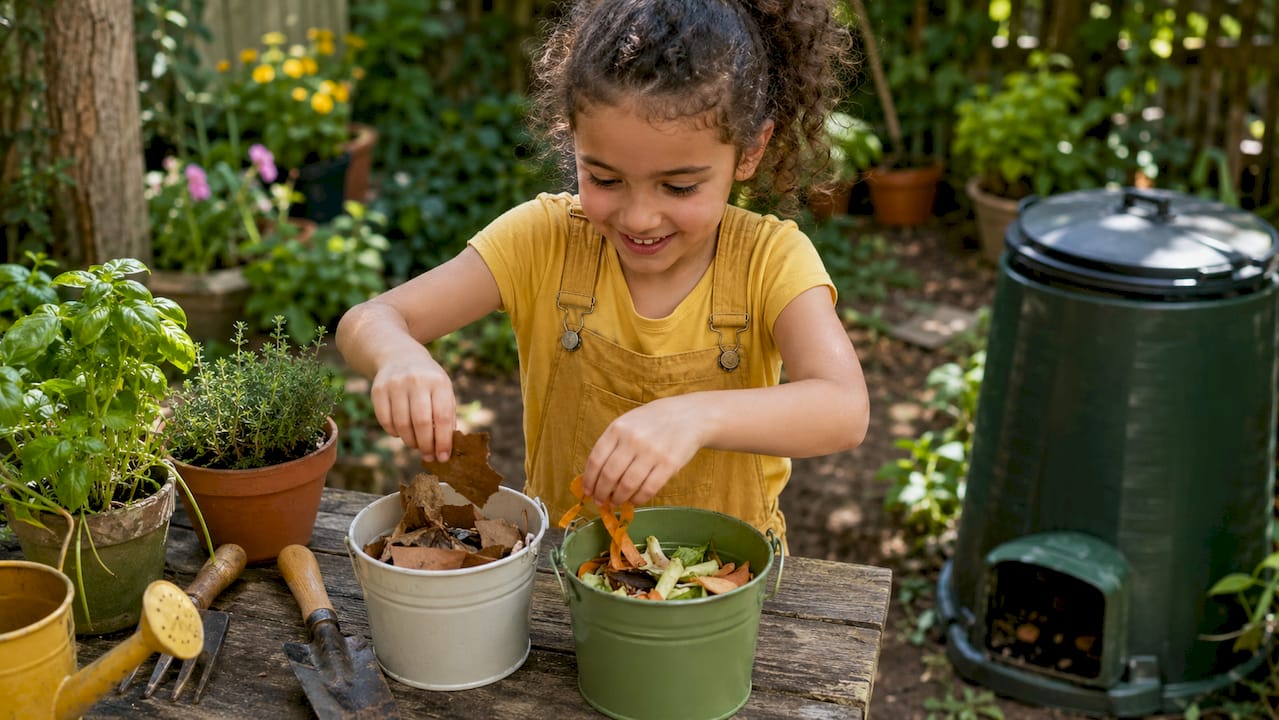
Children can take ownership of daily mixing, which aerates the compost and speeds decomposition. Give them a dedicated stick or small garden fork and make it a morning routine. Watching food scraps transform into dark, crumbly compost over several weeks teaches decomposition, waste reduction, and patience in a way no worksheet can.
Pro Tip: Label two small buckets in the kitchen, one for brown materials and one for green. Children can sort waste themselves before adding it to the bin, which reinforces the ratio lesson every single day.
2. Seed paper and seed bomb projects that teach plant growth
Seed paper is one of the most satisfying eco friendly crafts for kids because the finished product is both beautiful and functional. You soak torn newspaper or egg carton pieces in water until they form a pulp, mix in small seeds such as marigold, basil, or chia, then press the mixture flat and leave it to dry. Drying takes 8–12 hours, so plan this as a two-day activity.
The choice of paper matters more than most guides admit. Avoid glossy or plastic-coated paper entirely. It does not biodegrade properly, which means seeds cannot push through and the whole point of the project is lost. Stick to matte cardboard, egg cartons, and newspaper.
Once dry, children can cut the paper into shapes, write messages on it, and gift it to neighbours or plant it directly in the garden. Under warm, moist conditions, seeds germinate within days. That quick result keeps younger children engaged while the longer growing cycle teaches older ones about plant life cycles.
- Use marigold, basil, or chia seeds. They are small, lightweight, and dry well inside the paper.
- Keep the paper moist but not soaked during the germination stage.
- Try egg cartons as seed paper moulds. They are the perfect single-portion size.
- Avoid seeds with hard outer coats. They need pre-soaking and complicate the process for young children.
- Turn it into a science experiment by planting identical pieces in different light and water conditions and recording what happens.
Pro Tip: Educators note that combining crafting with observation maximises learning in eco projects. Set up a simple chart where children record germination dates, height, and conditions. This turns a craft afternoon into a weeks-long science project.
3. Building bug hotels from recycled materials
A bug hotel is one of the most effective STEM-based environmental activities for kids because it connects engineering, ecology, and observation in a single project. Children in grades K–4 can complete a basic bug hotel in under an hour using materials already in most homes.
| Material | What it attracts | Notes |
|---|---|---|
| Hollow bamboo stems | Solitary bees | Rinse before use to remove debris |
| Cardboard tubes | Beetles, earwigs | Pack tightly to prevent collapse |
| Tin cans | Ground beetles | Remove sharp edges, fill with stems |
| Plastic containers | Mixed insects | Drill entry holes, fill with natural material |
| Straw bundles | Lacewings, hoverflies | Tie tightly so bundles stay firm |
The most important preparation step is rinsing all natural materials before assembly. Hollow stems and bamboo attract pollinators far more effectively than sticks or rocks alone, but they can carry unwanted pests if used straight from the garden. A quick rinse and air dry solves this.
Once the hotel is placed outdoors, children can observe which compartments insects prefer, photograph visitors using a kids’ camera, and modify the design based on what they find. This mirrors the engineering design process: build, test, observe, improve. That cycle of thinking is exactly what STEM education aims to develop.
4. Upcycled bird feeders and recycled art projects
Eco friendly art projects for kids do not need specialist materials. The most engaging ones use items that would otherwise go in the bin.
- Upcycled bird feeders: Coat a toilet roll tube in peanut butter, roll it in birdseed, and hang it from a branch. Children can observe which bird species visit and sketch them in a nature journal.
- Painted rock garden markers: Collect stones from a walk, paint them with plant names, and use them to label a vegetable patch or herb garden. This links art directly to growing food.
- Recycled paper collages: Tear old magazines, catalogues, and wrapping paper into shapes and create landscape scenes. Discuss where each piece of paper came from and where it would have gone without the project.
- Tin can planters: Clean empty tins, punch drainage holes in the base, and fill with compost and herb seeds. Children can decorate the outside with paint or twine.
These recycled art projects work well as rainy-day activities and require almost no preparation. The environmental benefit is real. Every item repurposed is one less item in landfill. More importantly, children begin to see potential in objects they would normally discard, which is a habit that lasts well beyond the afternoon.
5. Starting seeds in egg cartons: a quick win for younger children
Seed starting in egg cartons is the fastest green project for school or home because results appear within days. Fill each cup with compost, press in one or two seeds, water gently, and place on a sunny windowsill. Children can check progress every morning and record what they see.
Mixing quick-result activities like egg carton seed starting with longer projects like compost bins keeps children’s interest consistent over time. Immediate feedback motivates children with shorter attention spans. Longer projects teach patience and the concept of natural cycles. Running both at the same time gives children something to celebrate now and something to look forward to later.
When seedlings outgrow the carton, the whole thing can be planted directly into the ground. The cardboard biodegrades naturally. This detail alone generates genuine excitement in young children and reinforces the idea that good materials return to the earth.
Pro Tip: Write the planting date on each egg carton cup with a permanent marker. Children can calculate how many days have passed since planting, which adds a simple maths element to the activity.
6. Which eco projects suit which age group?
Choosing the right project for your child’s age makes the difference between a successful afternoon and a frustrated one.
- Ages 3–5: Egg carton seed starters and painted rock markers. These deliver results quickly and require minimal fine motor skill. Adult supervision is needed for watering and placement.
- Ages 6–8: Seed paper and seed bombs. Children this age can manage the pulping and mixing process with guidance. The two-day timeline suits their growing patience.
- Ages 9–11: Compost bins and bug hotels. Both projects require sustained attention, record-keeping, and problem-solving. They work well as school holiday projects.
- Ages 12 and up: Full wildlife garden planning, including bee hotels and butterfly stations. Older children can research local species, design layouts, and take full ownership of maintenance.
For indoor families or those without a garden, seed paper, egg carton starters, and recycled art projects all work on a kitchen table. Compost bins can sit on a balcony if the container has a lid. Bug hotels belong outdoors but can be placed on a windowsill ledge in a pinch.
Successful eco projects combine quick wins with longer observation tasks. That mix sustains motivation across age groups and keeps the learning continuous rather than one-off.
Key takeaways
The most effective kid friendly eco projects combine immediate results with longer observation cycles, using recycled materials to teach sustainability, science, and responsibility at the same time.
| Point | Details |
|---|---|
| Match project to age | Quick projects suit under-8s; compost bins and bug hotels work best for ages 9 and up. |
| Use the right materials | Avoid glossy paper for seed projects; rinse natural materials before building bug hotels. |
| Maintain the compost ratio | Three parts brown to one part green prevents odour and keeps children engaged. |
| Add observation to every project | Recording germination dates or insect visitors turns crafts into genuine science learning. |
| Mix timescales | Pair a quick-win activity with a longer project to sustain children’s interest over weeks. |
Why eco projects changed how I think about parenting
The honest truth about eco projects with children is that the mess is the point. I spent years trying to keep activities tidy and contained, and every time I did, the learning shrank with it. The afternoon my son tipped a bowl of seed pulp across the kitchen table and spent 20 minutes pressing it back into shapes was the afternoon he remembered every single step of making seed paper. Mess signals engagement.
What surprised me most was how quickly children move from doing to questioning. A compost bin is not just a bin after a few weeks. It becomes a source of genuine curiosity. Why does this bit smell? Why is this corner warm? Those questions are the beginning of scientific thinking, and they come entirely from the child, not from a worksheet or a lesson plan.
The projects that lasted longest in our household were the ones with something to check every day. The egg carton seedlings on the windowsill. The bug hotel in the corner of the garden. Children are natural observers when you give them something worth observing. The role of the parent is simply to set it up and then get out of the way.
Thezoofamily’s approach resonates with me because it treats nature as something children connect with actively, not passively. A camera that plants a tree for every unit sold is a product with a story children can be part of. That kind of tangible link between action and outcome is exactly what eco projects teach at their best.
— ALAIN
Explore more eco activities with Thezoofamily
Thezoofamily exists to build real connections between children and the natural world, through play, exploration, and creativity.
If the projects in this article sparked ideas, there is a full library of guides waiting for you. Discover how to celebrate Earth Day with kids through upcycled crafts and wildlife activities. Read the guide on creative recycling ideas for eco-conscious families, packed with bug hotels, bird feeders, and garden projects. Every article is written for parents who want their children to grow up curious about the planet. Visit Thezoofamily to find the full collection and discover the kids’ cameras, binoculars, and walkie-talkies designed to take that curiosity outdoors.
FAQ
What are the easiest eco projects for young children?
Egg carton seed starters and painted rock markers are the simplest starting points. Both deliver visible results within days and need only basic household materials.
How do I stop a kids’ compost bin from smelling?
Maintain a ratio of three parts brown materials to one part green and mix the bin daily. A wet, unbalanced bin is the main cause of odour in children’s compost projects.
Can eco crafts work without a garden?
Seed paper, egg carton starters, and recycled art projects all work indoors on a kitchen table. A compost bin can sit on a balcony if it has a secure lid.
What seeds work best for seed paper projects?
Marigold, basil, and chia seeds are the best choices. They are small, lightweight, and dry well inside the paper without clumping or preventing clean cuts.
How do bug hotels support local wildlife?
Bug hotels provide shelter for pollinators and decomposers such as solitary bees, lacewings, and beetles. Hollow stems and bamboo attract beneficial insects most effectively.