

Over 60% of british parents believe that going green means sacrificing convenience or spending more. For mothers across Western Europe who care about the world their children inherit, this misconception can make sustainable choices feel out of reach. Understanding the real meaning behind eco-friendly living reveals simple ways to educate children, create daily routines with less waste, and discover gifts that nurture environmental responsibility—all without overwhelming your family or your budget.
Table of Contents
- Going Green: Definition And Misconceptions
- Eco-Friendly Choices For Family Routine
- Engaging Children In Nature And Planet Care
- Simple Sustainable Swaps For Everyday Living
- Teaching Lifelong Green Habits At Home
Key Takeaways
| Point | Details |
|---|---|
| Holistic Approach to Going Green | Going green involves a comprehensive strategy for reducing ecological impact, integrating sustainable practices into daily life without overwhelming changes. |
| Common Misconceptions Addressed | Many believe going green is costly and requires radical shifts; in reality, incremental changes can yield significant benefits and save money. |
| Engaging Families in Sustainability | Involving all family members in eco-friendly practices fosters collective responsibility and enhances understanding of environmental stewardship. |
| Education as a Tool for Change | Integrating environmental education into daily routines helps children develop lifelong ecological awareness and responsibility. |
Going green: Definition and misconceptions
Going green represents a comprehensive approach to environmental stewardship that extends far beyond simple recycling or purchasing eco-friendly products. It is a holistic strategy aimed at minimising human impact on natural ecosystems while promoting sustainable practices across personal, professional, and societal levels.
The concept of green growth emerged as a strategic framework to address environmental challenges without compromising economic development. Sustainable economic strategies seek to harmonise economic expansion with ecological preservation, challenging traditional models of growth that prioritise industrial output over environmental health. This approach recognises that economic progress and environmental protection are not mutually exclusive goals but interconnected systems requiring thoughtful integration.
Common misconceptions about going green often stem from oversimplified interpretations. Many individuals believe environmentally conscious behaviour requires radical lifestyle changes or significant financial investments. However, green practices can be implemented incrementally through small, consistent actions. Green growth approaches demonstrate that sustainable development involves strategic economic planning, technological innovation, and systemic shifts in how we conceptualise progress and resource utilisation.
Here’s a comparison of common misconceptions versus the reality of going green:
| Misconception | Reality | Impact |
|---|---|---|
| Going green is expensive | Many changes save money over time | Cost reduction, accessibility |
| Requires drastic lifestyle overhaul | Small, gradual steps are effective | Greater participation, sustainability |
| Only about recycling | Encompasses energy, water, and transport | Broad environmental benefits |
| For environmentalists only | Accessible for all individuals and families | Widespread cultural adoption |
Pro tip: Start your green journey by making one sustainable change each month, such as reducing single-use plastics or choosing energy-efficient appliances, to build momentum without feeling overwhelmed.
Eco-friendly choices for family routine
Family sustainability represents a collective effort to reduce environmental impact through mindful daily practices. Transforming household routines into eco-conscious experiences requires collaborative participation from every family member, turning small actions into meaningful environmental contributions.
Implementing sustainable practices begins with reducing household waste systematically. This involves strategic choices like minimising single-use plastics, selecting reusable containers, and creating dedicated recycling zones within the home. By establishing clear sorting systems and educating children about waste management, families can dramatically decrease their ecological footprint while simultaneously teaching valuable environmental stewardship skills.
Conscious consumption extends beyond waste management. Sustainable lifestyle choices encompass energy conservation, mindful purchasing, and reducing overall resource consumption. Practical strategies include choosing energy-efficient appliances, encouraging walking or cycling for short journeys, purchasing secondhand items, and selecting locally produced goods that minimise transportation emissions. These approaches not only benefit the environment but also demonstrate to children that responsible consumer behaviour can create meaningful change.
Pro tip: Create a family sustainability challenge where each member suggests one eco-friendly change monthly, turning environmental consciousness into an engaging, collaborative game.
Engaging children in nature and planet care
Nature connection is a powerful pathway to nurturing environmental consciousness in children, transforming passive learning into active engagement. By creating meaningful experiences that link children directly with the natural world, parents can inspire a genuine passion for ecological stewardship that extends far beyond classroom teachings.
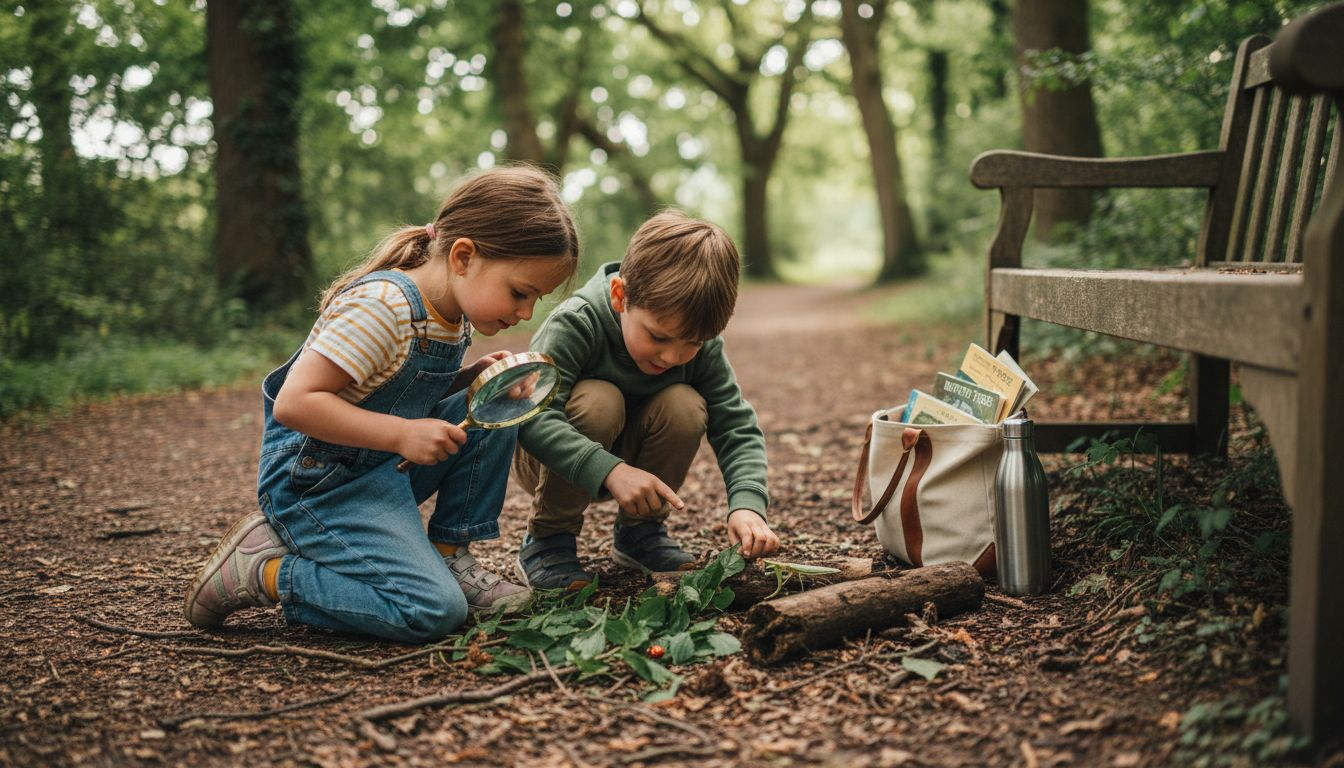
Developing children’s connection with nature involves structured yet playful approaches that encourage exploration, curiosity, and hands-on learning. Outdoor activities like gardening, wildlife observation, and nature walks provide immersive experiences that help children understand ecological systems, biodiversity, and their personal role in environmental preservation. These experiences not only educate but also develop critical cognitive skills, enhance emotional intelligence, and build a lifelong appreciation for the planet’s intricate ecosystems.
Beyond individual activities, parents can integrate environmental education into daily family life by creating opportunities for children to participate in sustainable practices. This might include involving children in recycling processes, discussing the environmental impact of consumer choices, and encouraging them to make eco-conscious decisions. Nature engagement supports holistic child development by improving problem-solving skills, reducing stress, and fostering a sense of responsibility towards the environment.
Pro tip: Create a family nature journal where children can document their outdoor discoveries, sketch wildlife, and reflect on their environmental learnings, transforming observation into a creative and educational experience.
Simple sustainable swaps for everyday living
Sustainable living begins with thoughtful, incremental changes that transform everyday habits into environmentally conscious practices. Contrary to popular belief, becoming eco-friendly doesn’t require dramatic lifestyle overhauls but rather a series of mindful, achievable modifications that collectively create significant positive impact.
Simple sustainable lifestyle swaps can dramatically reduce household environmental footprints. This involves strategic replacements like switching single-use plastic items for reusable alternatives, selecting energy-efficient appliances, and adopting more intentional consumption patterns. Kitchen and shopping routines offer particularly fertile ground for sustainable transformations - replacing disposable water bottles with durable containers, choosing local produce over imported goods, and selecting products with minimal packaging can significantly decrease individual carbon emissions.
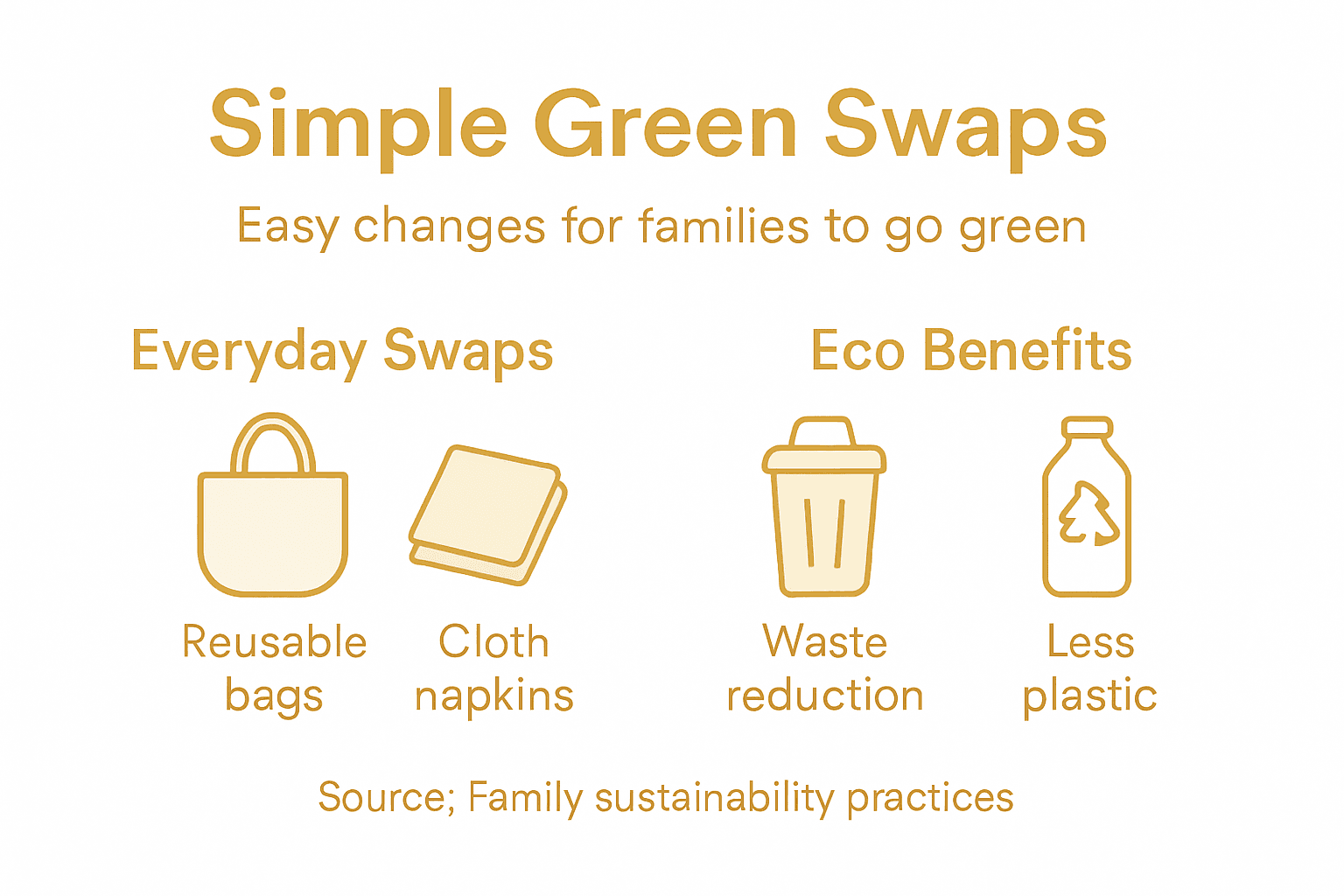
Consumption patterns represent another critical area for sustainable intervention. Mindful consumption strategies involve making deliberate choices about purchasing, using, and disposing of items. This might mean buying higher-quality, longer-lasting products, repairing items instead of replacing them, and consciously supporting businesses with strong environmental credentials. By viewing each purchase as an opportunity to support sustainable practices, families can create meaningful change through their everyday economic interactions.
Below is a summary of simple sustainable swaps and their benefits:
| Swap | Environmental Benefit | Family Advantage |
|---|---|---|
| Reusable shopping bags | Reduces plastic waste | Saves money long term |
| Energy-efficient appliances | Lowers energy usage | Reduces utility bills |
| Local produce over imported | Decreases transport emissions | Fresher, healthier options |
| Repair instead of replace | Minimises landfill waste | Teaches resourcefulness |
Pro tip: Create a family sustainability challenge where each member tracks and reduces their weekly waste, turning eco-conscious living into an engaging, collaborative experience.
Teaching lifelong green habits at home
Environmental education is most powerful when integrated seamlessly into family life, transforming sustainability from an abstract concept into tangible, everyday actions. Parents play a crucial role in shaping children’s understanding of ecological responsibility by creating meaningful, engaging experiences that make green living feel natural and exciting.
Environmental education strategies can be implemented through interactive, age-appropriate activities that connect learning with real-world experiences. This might involve creating home recycling stations where children learn sorting techniques, establishing small indoor or garden vegetable patches to understand food systems, or conducting energy-saving challenges that turn conservation into a collaborative family game. By making sustainability tangible and enjoyable, parents can help children develop intrinsic motivation for environmental stewardship.
Nature-based learning approaches demonstrate that consistent exposure and hands-on experiences are fundamental to developing lifelong ecological awareness. Children learn most effectively through direct interaction, whether that involves composting kitchen waste, monitoring household energy consumption, or participating in local environmental conservation projects. These experiences help children understand the interconnectedness of human actions and environmental outcomes, fostering a sense of personal responsibility that extends far beyond childhood.
Pro tip: Create a family sustainability journal where children can document their green achievements, track progress, and reflect on the positive environmental impact of their daily choices.
Inspire Green Living and Nature Connection in Your Family Today
The challenge many families face is making sustainable living accessible and engaging for children without overwhelming them. This article highlights key pain points such as gradual lifestyle changes, nurturing children’s nature connection, and teaching lifelong green habits. At The Zoofamily, we share your goal to empower young minds with practical and joyful eco-friendly activities that turn everyday moments into meaningful environmental learning.
Our range of specially designed kids’ cameras, walkie-talkies, and binoculars [https://thezoofamily.com] stimulates curiosity about wildlife and the natural world, making sustainability a tangible adventure. With every camera sold, we plant one tree to help restore natural beauty for generations to come. This unique approach supports the article’s emphasis on incremental green actions and nature engagement as foundational to environmental education.
Explore how encouraging your family’s green journey can be fun and impactful with The Zoofamily.
Start inspiring your children today by choosing products that foster creative connections with nature. Visit The Zoofamily main page to discover how simple swaps and mindful choices can grow into lifelong green habits. Connect your family with nature and empower young minds to care for our planet now.
Frequently Asked Questions
What are some simple steps to start going green with my family?
Start by implementing small changes such as using reusable shopping bags, minimising single-use plastics, and creating recycling zones in your home. Gradually introduce more sustainable practices like energy conservation and mindful purchasing.
How can I engage my children in eco-friendly practices?
Involve your children in everyday green activities such as sorting recyclables, gardening, and participating in nature walks. Create a family sustainability challenge where each member suggests one eco-friendly change monthly to encourage participation.
Why is it important to connect children with nature?
Connecting children with nature enhances their understanding of ecological systems and fosters a sense of responsibility for the environment. It improves cognitive skills, emotional intelligence, and promotes lifelong environmental stewardship.
What are some adjustments we can make in our daily routines to live more sustainably?
Consider making simple swaps like using energy-efficient appliances, choosing locally produced goods over imported items, and repairing instead of replacing broken items. These adjustments can reduce your overall environmental impact while contributing to a sustainable lifestyle.
Recommended
- Comment protéger la planète au quotidien avec ses enfants – The Zoofamily
- Understanding Eco Friendly Routines for Modern Families – The Zoofamily
- Making Learning Fun: Engaging Activities for Your Kids – The Zoofamily
- Comprendre comment prendre soin de la terre pour nos enfants – The Zoofamily
- 7 Smart Ways to Use Eco Friendly Pet Food Packaging – Ultimate Pet Foods