

TL;DR:
- Children living with climate risks need age-appropriate, everyday actions to foster hope and agency.
- Small routines and nature experiences help develop lasting environmental connection and positive habits.
- Focusing on emotional wellbeing and consistent micro-habits empowers children to be climate advocates.
Nearly all children in Europe are already living with climate risk, yet most family conversations about the environment still rely on abstract warnings or adult-sized concepts that leave young children feeling powerless. There is a better way. By weaving small, purposeful habits into your daily routines, and by meeting your child where they are emotionally, you can raise a generation that feels capable, hopeful, and genuinely connected to the natural world. This guide pulls together evidence-backed strategies, practical activity ideas, and insights from leading child welfare organisations to help you turn everyday life into a quiet, joyful form of climate action.
Table of Contents
- Why children should be at the heart of climate action
- Turning climate anxiety into resilience and hope
- Everyday routines: Agency-first activities for families
- Nature connection: The secret ingredient for long-term impact
- What most parents miss about child-friendly climate action
- Keep your child’s climate journey inspired with The Zoofamily
- Frequently asked questions
Key Takeaways
| Point | Details |
|---|---|
| Start with child agency | Let children lead simple routines so they feel their climate choices matter. |
| Mix emotion and action | Go beyond facts: use emotional support and hope to help children process climate topics. |
| Prioritise nature connection | Unstructured outdoor time is as important as structured eco tasks for lasting impact. |
| Daily rituals add up | Build small, climate-positive habits into everyday family life for the biggest long-term results. |
Why children should be at the heart of climate action
It is tempting to think of climate change as a problem for future generations to solve once they are grown. The evidence tells a different story. Children are not waiting for the future. They are living with the consequences right now, and they have both the right and the capacity to be part of the solution.
UNICEF’s guidance is clear: children are disproportionately affected by climate risks, yet they are consistently left out of decision-making processes that shape the world they will inherit. This is not just a moral issue. It is a practical one. When children feel excluded from solutions, they are far more likely to feel helpless and disengaged.
“Children are not just the most vulnerable to climate change. They are also its most powerful advocates when given the tools and space to act.”
The numbers are striking. Nearly half of children in high-risk countries face extremely high levels of climate hazard, from flooding and heatwaves to air pollution and food insecurity. Even in countries that feel relatively stable, children’s bodies and developing minds are more sensitive to these changes than adults.
So what does child-led climate action actually look like in practice? It does not mean organising marches or writing to politicians, although those things have value. For younger children, it looks like this:
- Choosing which vegetables to grow on a windowsill
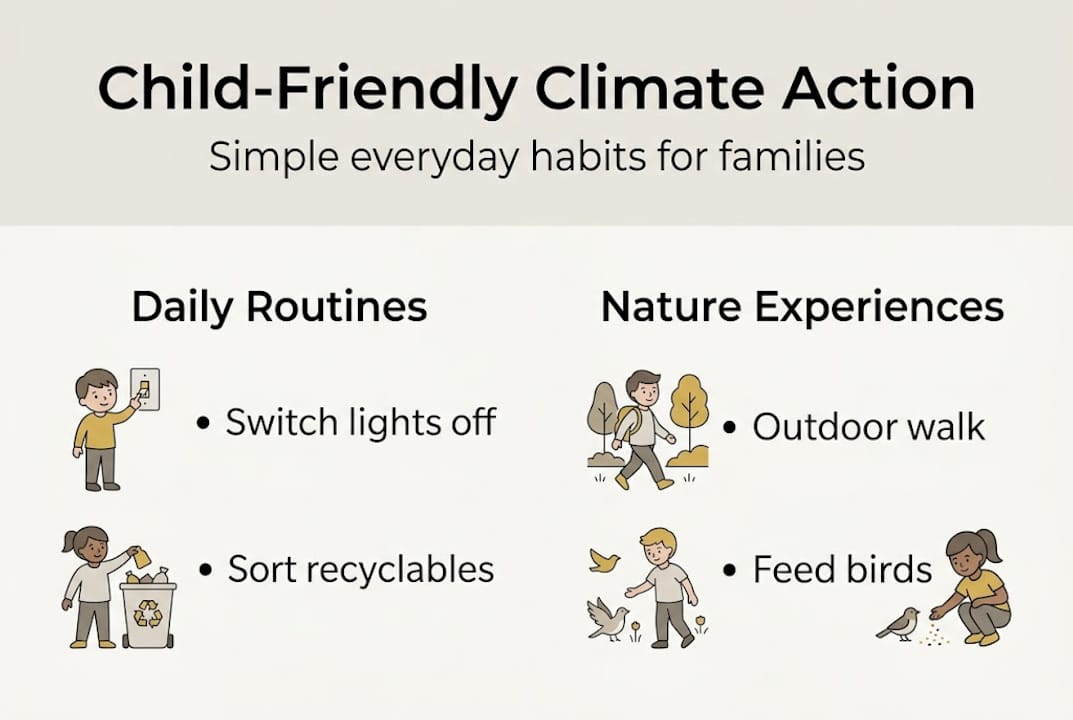
- Spotting insects or birds during a weekend walk
- Deciding which lights to switch off before bedtime
- Celebrating Earth Day activities for kids as a family
- Asking questions about why rivers matter
The CLARITY project draws on the latest European educational research to remind us that children’s voices are not just welcome in climate action: they are essential. Listening to what your child notices, fears, or wonders about in the natural world is itself an act of empowerment.
Turning climate anxiety into resilience and hope
Understanding risk is only half the battle. Next comes channelling all that worry into something constructive.
Climate anxiety is real, and it is showing up in children as young as five across Europe. When children absorb adult fear without any sense of agency, anxiety can harden into numbness or despair. The goal is not to hide difficult truths, but to frame them in a way that feels manageable and even motivating.
The CLARITY project’s toolbox offers activities specifically designed to move young learners from climate anxiety towards resilience and creativity. The approach leans on three core ideas: emotional regulation, simple rituals, and agency-first activities. In practice, this means giving children time to name what they are feeling, before immediately jumping to facts or solutions.
Both CLARITY and UNICEF emphasise emotional wellbeing as central to effective climate education for children. This is not softness. It is strategy. A child who feels emotionally safe is far more likely to take on new information and act on it.
Here are some simple ways to build this into daily life:
- Ask open questions: “What did you notice on our walk today?”
- Validate worry without amplifying it: “Yes, that is a real thing, and here is what we can do about it.”
- Create a small weekly ritual, such as checking on a plant or feeding birds, that gives children a sense of continuity and care
- Explore emotionally responsive nature connection as a way to blend feelings and action
- Celebrate small wins loudly and often
Pro Tip: When a child expresses worry about climate change, resist the urge to immediately reassure or lecture. Instead, say “Tell me more about that.” Giving them space to express the feeling first is what makes the subsequent action feel meaningful rather than imposed.
Hope is not the absence of difficulty. It is the belief that your actions matter. And that belief is built one small moment at a time.
Everyday routines: Agency-first activities for families
Now that we have covered the emotional ground, here is how to turn theory into actual hands-on habits.
The concept of “agency” simply means giving children real choices and real responsibility. When a child decides to turn off the tap while brushing their teeth, they are not just saving water. They are practising the identity of someone who cares for the planet. That identity compounds over time.
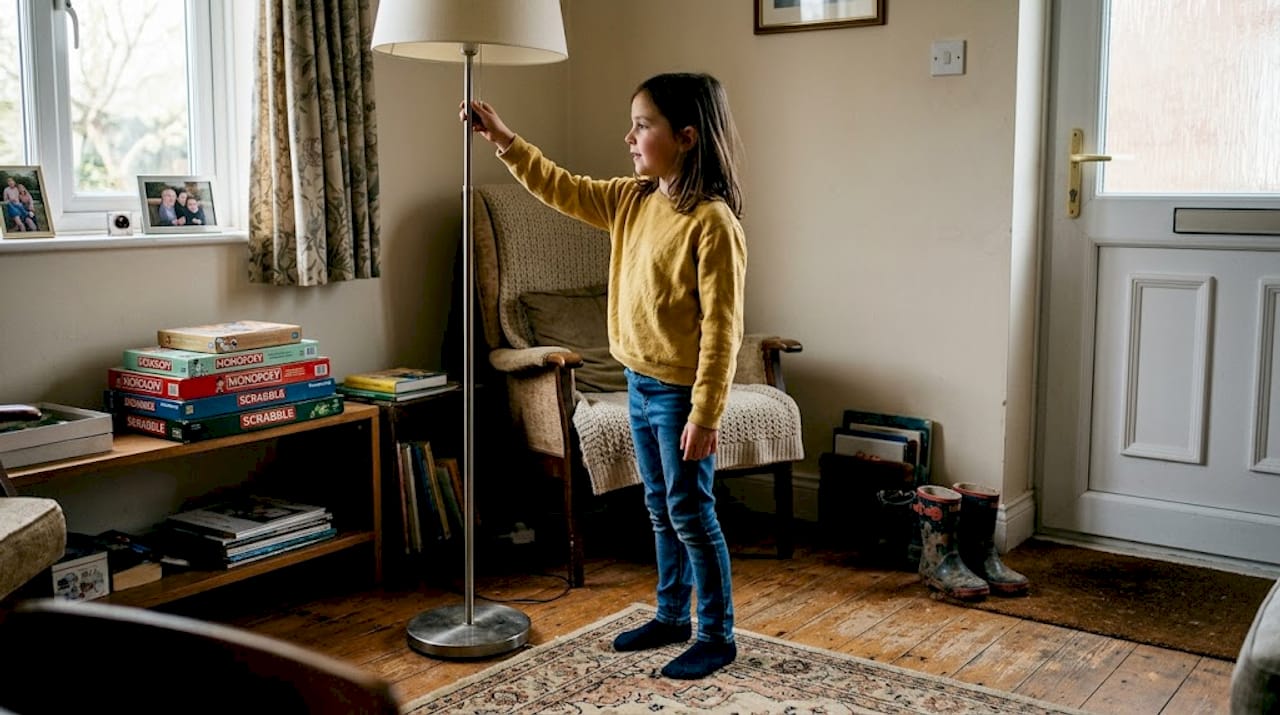
UNICEF’s guidance highlights several action areas that are perfectly suited to children: resource consumption, energy efficiency, waste management, water conservation, pollution awareness, and tree planting. Each of these can be woven into the routines your family already has.
| Daily routine | Child-led action area | Benefit for child |
|---|---|---|
| Morning wash | Water conservation | Develops responsibility |
| Breakfast | Reduce food waste | Builds mindfulness |
| School run | Pollution awareness | Connects local to global |
| After-school play | Nature observation | Grows curiosity |
| Evening wind-down | Energy efficiency | Reinforces agency |
Here is a simple sequence to introduce these habits without pressure:
- Start with one routine your child already enjoys, such as helping in the kitchen or going outside.
- Add one small action to that routine, such as composting fruit peel or looking for insects.
- Let your child lead the way, naming what they notice and deciding how to respond.
- Gradually introduce ecological photography for kids as a way to document their observations and build pride in what they see.
- Revisit their “findings” together at the end of the week to celebrate progress.
Pro Tip: Pair each new habit with a sensory moment outdoors, even if it is just two minutes in the garden or on a balcony. Feeling soil, smelling rain, or hearing birdsong anchors abstract eco-values in genuine sensory memory, making them stick far longer than any explanation.
Nature connection: The secret ingredient for long-term impact
Action and emotion go further when paired with moments in nature, and science says this makes a real difference.
Research from 2025 with preschool-aged children found that nature interaction in early childhood is directly linked to lasting environmental connectedness and pro-environmental behaviour. This is not correlation. It is a pathway. Children who regularly touch, observe, and care for living things develop a felt sense of belonging to the natural world, and that sense drives action long into adulthood.
A further PMC study on outdoor experiences confirms that both unstructured and planned outdoor activities help children develop eco-friendly feelings and habits. You do not need a national park or a perfectly organised activity. A patch of grass, a local pond, or a windowsill with a pot of herbs will do.
| Type of outdoor experience | Outcomes | Best for |
|---|---|---|
| Unstructured (free play in nature) | Curiosity, sensory connection, self-regulation | Under-7s, everyday time |
| Guided (nature walks, bug hunts) | Scientific thinking, language, observation skills | All ages, weekend activities |
Here are some family-friendly ideas to weave nature into ordinary life:
- Keep a simple nature journal with drawings or pressed leaves
- Try nature-based play ideas that suit your space and season
- Spend time discovering local animals together, using binoculars or a camera to get closer without disturbing wildlife
- Visit a Push Pull nature location if you want more structured outdoor learning inspiration
- Make a weekly habit of noticing one thing that has changed in your local outdoor space
The magic is in the repetition. One memorable nature walk is lovely. Fifty ordinary moments across a year is transformative.
What most parents miss about child-friendly climate action
With all this evidence in mind, here is what we genuinely believe after thinking carefully about how families actually live.
Most parents who care deeply about the environment fall into one of two traps. They either avoid the subject to protect their child from worry, or they overload them with information in the hope that knowledge will spark action. Neither approach works particularly well. What does work is far quieter and more ordinary than most people expect.
It is the consistent, daily micro-habit. It is the child who always checks the bird feeder before school, not because they were told to, but because it became their thing. It is the family that connects children to real-world eco values through small rituals rather than large lessons. Identity is built in repetition, not in revelation.
European families are busy. Time is tight. But that is precisely why the micro-habit approach is so powerful. It requires no extra schedule, no specialist equipment, no drama. Just a small moment of intentional attention, day after day. That is what builds the next generation of people who genuinely love and protect the natural world.
Keep your child’s climate journey inspired with The Zoofamily
If you are ready for more gentle, habit-based inspiration, here is where to find it.
At The Zoofamily, we believe that children who feel connected to nature grow up to protect it. That is why every camera we sell plants a tree, and why our blog is full of family-friendly eco guides, creative outdoor activities, and ideas rooted in real life rather than perfect conditions.
Whether you are just starting out or looking to go deeper, our resources on animal behaviour and children can help you find the next right step for your family. No pressure, no perfection. Just small, meaningful moments that add up to something lasting.
Frequently asked questions
What are simple climate actions children can take at home?
Children can lead small routines like saving water, sorting waste, and switching off lights. According to UNICEF’s child-friendly climate actions, these everyday habits build real environmental agency over time.
How does nature connection influence children’s climate behaviour?
Regular, positive time outdoors makes children more likely to adopt eco-friendly habits that last into adulthood. Research on preschool children shows a direct link between early nature interaction and long-term environmental connectedness.
What if my child feels anxious or scared about climate change?
Channel worry into hope by focusing on small actions and local nature routines. The CLARITY project’s resources combine emotional wellbeing with practical climate learning, giving children tools to feel capable rather than overwhelmed.