

The quickest way to save a rainy afternoon is a short, low-mess craft your toddler can mostly manage themselves, such as fingerprint painting on a contained tray or stamping with a toilet-roll tube. Pick one from a shortlist rather than starting from scratch, set a loose 15 to 30 minute window, and keep the tools familiar: paper, poster paint, cotton wool. Two-year-olds lose interest fast, so speed of setup matters more than ambition.
TL;DR:
- Most crafts can be set up in under 20 minutes using household items like cardboard, cotton wool, and washable markers, requiring minimal preparation.
- Safety precautions include using non-toxic materials, supervising scissors and small parts, and working on wipeable surfaces to simplify cleanup.
- Craft activities like fingerprint rain painting and no-mess balloon play are fast, sensory-rich, and easily adaptable to different skill levels and moods.
- Simplifying or extending crafts can be achieved by using larger stickers or counting raindrops, while narration enhances vocabulary development.
- When a craft fails to engage, switching to movement or quiet activities like dance, reading, or sensory bins provides productive alternatives.
Table of Contents
- Rainy day crafts for 2 year olds: a six-craft shortlist
- Materials, substitutions, and safety at a glance
- Step-by-step micro-recipes for six easy toddler crafts
- Adjusting crafts to your toddler’s mood and ability
- Low-mess setup tips that make crafting repeatable
- Quick switches when the craft isn’t landing
- Why crafts, nature, and curiosity belong together
- Where to find more rainy-day activity ideas
- Sources
Rainy day crafts for 2 year olds: a six-craft shortlist
Pick by mood, not by plan. Each of these suits short attention spans and needs almost nothing to set up.
- Paper plate umbrella (15 minutes) — decorating with markers or stickers builds fine motor control and gives an instant, satisfying result.
- Cotton-ball rain cloud (15 to 20 minutes) — sticking cotton wool onto card is sensory and forgiving of wobbly gluing.
- Fingerprint rain painting (10 to 20 minutes) — dabbing fingers in paint teaches colour and cause and effect with almost no instruction needed.
- No-mess paint-in-bag hot-air balloon — squishing paint sealed inside a bag gives full sensory play with zero cleanup.
- Toilet-roll animal stamps (15 minutes) — stamping shapes is a cause-and-effect win that toddlers repeat happily.
- Playdough storm sensory tray (20 to 30 minutes) — moulding and poking playdough offers the longest stretch of tactile exploration on this list.
This mix leans on themes Country Home Learning Center flags as toddler favourites: rain clouds, umbrellas, and storm-themed sensory play that teach a simple weather idea while keeping hands busy.
Materials, substitutions, and safety at a glance
You don’t need a craft cupboard. Cardboard, yoghurt pots, poster paint, washable markers, sticky tape, and cotton wool cover almost every project on this list, and household leftovers work just as well as anything bought specially.
- Basics: cardboard or paper plates, yoghurt pots, poster paint, washable markers, sticky tape, cotton wool, cotton buds.
- Substitutions: no poster paint? Food colouring mixed into a little water or yoghurt works for fingerprinting. No paper plates? Flattened cereal boxes do the job.
- Safety checklist: check paint and glue are labelled non-toxic, remove small loose parts like sequins or buttons before the session, and stay within arm’s reach whenever scissors or glue are out.
- Prep and cleanup: work on a tray or a wipeable mat, and set a kitchen timer for a two-minute tidy-up so the routine feels normal rather than punitive.
Recycling materials such as toilet rolls, egg cartons, and cardboard turn up constantly in toddler craft lists, and there’s a reason: they’re free, they’re safe, and children already recognise them. As MemphisMoms points out, that familiarity is exactly why the simplest projects tend to hold up best over repeated rainy afternoons.
Step-by-step micro-recipes for six easy toddler crafts
Here’s exactly how to run each one, without hunting for extra instructions mid-craft.
Paper plate umbrella
- Materials: paper plate, markers or stickers, a pipe-cleaner or lolly stick handle.
- Setup: tape the handle to the back of the plate before your toddler sits down.
- What they do: decorate the front with markers, then press on stickers.
- Age tweak: for a 2-year-old, offer three colours at a time rather than a full set. Cleanup takes seconds; wipe the table and cap the pens. Stay close if stickers are small enough to swallow.
Cotton-ball rain cloud
- Materials: grey or blue card, cotton wool, glue stick.
- Setup: draw a simple cloud outline in advance so your toddler just fills it in.
- What they do: dab glue inside the outline, then press cotton wool onto it.
- Age tweak: pre-tear the cotton wool into pieces small hands can grip. This one is naturally low-mess; a glue stick beats liquid glue for a two-year-old’s grip. Watch that cotton wool doesn’t end up in mouths.
Fingerprint rain painting
- Materials: poster paint in a shallow tray, paper, a damp cloth nearby.
- Setup: pour a small amount of paint directly into a tray rather than a pot that can tip.
- What they do: press fingers into the paint, then dab “raindrops” onto the paper.
- Age tweak: let them use their whole hand if fingers feel too fiddly. This is one of the fastest to run, at 10 to 20 minutes, and one of the messiest if the paint isn’t contained in a tray. Supervise hand-to-mouth moments closely.
No-mess paint-in-bag hot-air balloon
- Materials: a resealable freezer bag, two or three blobs of paint, tape.
- Setup: squeeze the paint into the bag, seal it, then tape it flat to a table or window.
- What they do: push and squish the bag to blend colours, then you cut out a balloon shape from the dried result later.
- Age tweak: tape all four edges down firmly so a curious toddler can’t peel the bag open. Parenting sources widely recommend this exact swap for parents who want full sensory play with genuinely no cleanup. There’s no glue or loose paint here, so the only supervision point is making sure the seal holds.
Toilet-roll animal stamps
- Materials: empty toilet roll, scissors (adult-only), poster paint in a shallow dish.
- Setup: cut small notches into one end of the tube to create a simple paw-print or petal shape.
- What they do: dip the notched end in paint, then stamp it onto paper repeatedly.
- Age tweak: hold the tube steady the first few times until they get the pressing motion. Keep scissors work entirely away from the child; this is prep, not play.
Playdough storm sensory tray
- Materials: playdough, a tray, small objects like buttons or twigs for “storm debris” (nothing smaller than a golf ball).
- Setup: spread playdough across the tray and scatter the safe objects on top.
- What they do: poke, squash, and press objects into the dough, then pull them back out.
- Age tweak: stick to two or three objects at a time to avoid overwhelm. This runs longest, at 20 to 30 minutes, because the tactile exploration rarely gets boring fast. Supervise closely if any pieces are small enough to be a choking risk.
Adjusting crafts to your toddler’s mood and ability
Some days call for less; others call for more. Knowing both directions in advance saves you improvising mid-meltdown.
- To simplify: pre-cut shapes, use bigger stickers, or thin the paint so it spreads with less effort.
- To extend: count raindrops together, name colours out loud, or turn the animal stamps into a short role-play game.
- Language building: narrate as you go, using words like “wet”, “soft”, and “splash” so the craft doubles as vocabulary practice.
- Second life for finished crafts: turn the umbrella into a puppet, or start an animal-stamp collection that grows each rainy week.
Pro Tip: Ask one open question per craft, like “what sound does rain make?” Toddlers often talk more when the question comes while their hands are busy.
Low-mess setup tips that make crafting repeatable
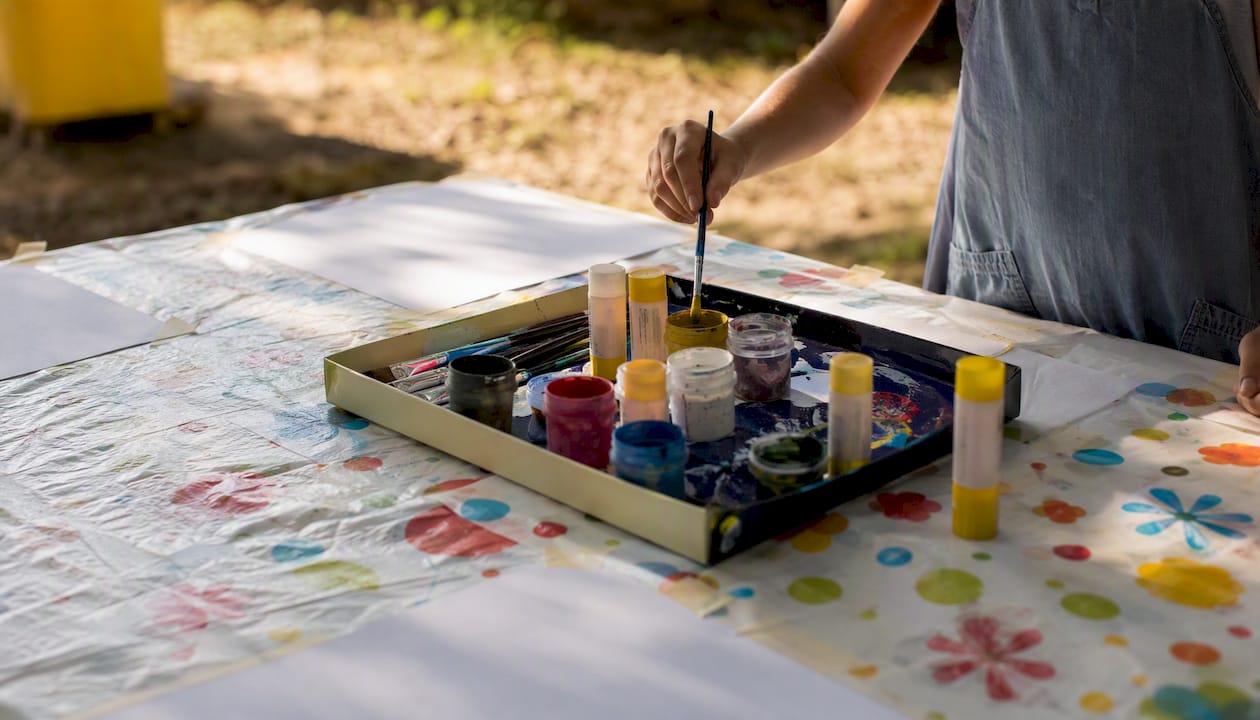
A shallow tray under any paint or glue activity catches drips before they hit the table, and taping paper down stops it sliding mid-stamp. Set up near a sink or doorway if you can, so a mucky hand is seconds from water.
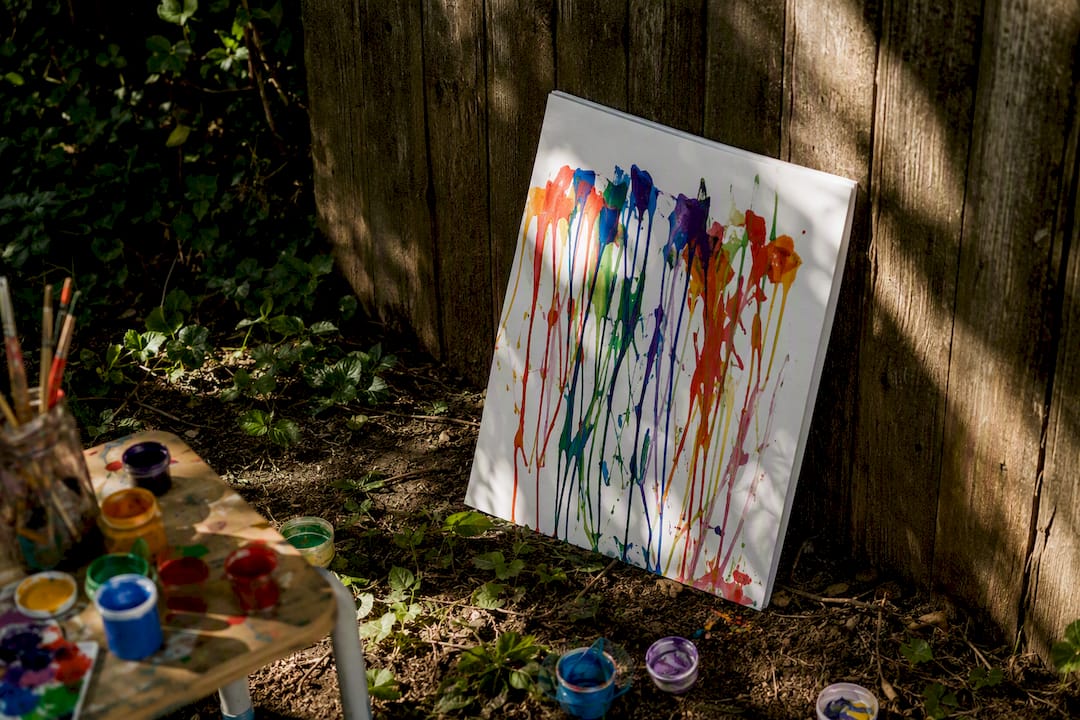
One tip worth borrowing: prop wet artwork upright, leaning against a wall or a bottle, rather than laying it flat. Gravity pulls the paint into unexpected streaks and blends, and toddlers are often more fascinated watching that happen than they were making the original mark.
Pro Tip: Keep a “half-finished” shoebox for playdough or unfinished paintings, so nothing has to be completed or binned in one sitting.
Quick switches when the craft isn’t landing
Not every craft lands, and that’s fine. Ideas that group activities by energy type make it easier to pivot fast, as The Lean Green Bean suggests when a toddler needs movement rather than stillness.
- Dance-cleanup song (5 minutes, light supervision) to burn off restlessness.
- Sticker scenes (10 minutes, minimal supervision) for a calmer reset.
- Cosy reading nook (10 to 15 minutes, low supervision) if energy has dropped.
- Sensory bin with safe fillers like dried pasta (15 minutes, close supervision).
- Indoor tape “laser” crawl (10 minutes, active supervision), a favourite for burning energy with painter’s tape.
- Simple matching games (10 minutes, light supervision) for quiet focus.
If two switches in a row fail, stop and try crafting again after a nap or snack.
Why crafts, nature, and curiosity belong together
Craft time works best when it feeds a child’s curiosity about the world, not just their fine motor skills. Thezoofamily builds animal-themed gear and rainy-day ideas around exactly that link between hands-on play and nature. Pair your toilet-roll animal stamps with a short picture book about the animal you’ve made.
— ALAIN
Where to find more rainy-day activity ideas
Running through six crafts in one afternoon is realistic; running through a whole rainy week takes a bigger stash of ideas. Thezoofamily keeps a growing set of indoor and outdoor activity guides built around the same low-mess, animal-curious approach used above, from recycled art projects to nature-themed keepsakes.
If your toddler enjoyed the animal stamps or the rain cloud, the 7 Fun Ideas for Rainy Days guide has more variations that scale up as they grow, and there’s a matching outdoor set ready for the moment the rain actually stops. Browse the current collection at Thezoofamily and bookmark whichever ideas suit your next wet afternoon.
Sources
- Easy Toddler Crafts for Rainy Days | Country Home Learning Center
- 20 Easy Toddler Crafts (For The Uncrafty) | MemphisMoms
- Indoor Activities For Toddlers | The Lean Green Bean