

Every European parent who values nature knows that handing a camera to a child is more than just a fun afternoon—it is an invitation to teach deeper values. With the rise of digital photography, children are encountering real ethical dilemmas around privacy, consent, and representation. By weaving in creative family activities, you can help your children understand the power of photography and develop empathy and respect for both people and wildlife, setting the foundation for responsible storytelling and conservation.
Table of Contents
- Photography Ethics And Young Learners
- Privacy, Consent And Child Protection
- Avoiding Stereotypes And Sensitive Imagery
- Respecting Nature Through Photography
- Promoting Eco-Friendly Photography Practices
- Common Pitfalls And How To Prevent Them
Key Takeaways
| Point | Details |
|---|---|
| Ethical Principles for Young Photographers | Young photographers should prioritise consent, privacy, and dignity while understanding the emotional impact of their images. |
| Child Protection in Photography | It is essential to engage children in discussions about their rights and the implications of their images, ensuring their autonomy is respected. |
| Cultural Sensitivity | Photographers must approach representation of diverse communities thoughtfully, seeking deeper understanding and avoiding stereotypes. |
| Environmental Responsibility | Embracing eco-friendly practices and understanding the environmental impact of photography is crucial for sustainable visual storytelling. |
Photography Ethics and Young Learners
Teaching photography ethics involves nurturing a deep sense of respect for nature and understanding the profound responsibility photographers have when capturing images. As we explore the intersection of photography and young learners, it becomes clear that ethical education is not just about technical skills, but about developing a mindful approach to visual storytelling.
Research has demonstrated that photography can be a powerful tool for engaging children meaningfully, particularly when approached with careful ethical considerations. Exploring children’s agency through photography offers a holistic approach to understanding social realities while respecting young participants’ rights and perspectives.
Key ethical principles for young photographers include:
- Obtaining clear consent before taking photographs
- Respecting subjects’ privacy and dignity
- Understanding the power and impact of visual representation
- Learning to ask permission before photographing people or wildlife
- Recognising the difference between observation and intrusion
Children need guidance to understand that photography is not just about capturing an image, but about creating a responsible narrative. This means teaching them to consider the emotional and environmental consequences of their photographic choices. Empathy and respect become just as important as technical skill.
Here is a summary table highlighting how ethical priorities shift for young photographers depending on the subject they capture:
| Photographing People | Photographing Wildlife | Photographing Places |
|---|---|---|
| Consent and privacy are paramount | Avoid disruption to natural habitats | Respect cultural or historical context |
| Protect subjects’ dignity and agency | Maintain distance and observe unobtrusively | Seek permission in sensitive locations |
| Consider emotional impact of images | Prioritise animal welfare over shot quality | Avoid reinforcing stereotypes or biases |
Pro tip: Practice creating a “photography ethics checklist” with your children, encouraging them to reflect on the impact of their images before pressing the shutter.
Privacy, Consent and Child Protection
Photography involving children requires an exceptionally nuanced and careful approach, prioritising their safety, dignity, and personal boundaries. Understanding the complex landscape of child protection in photography means recognising that young individuals are vulnerable and deserve comprehensive safeguards against potential misuse of their images.
Ethical implications of children’s digital identities have become increasingly critical in our technology-driven world. This means going beyond traditional consent models and developing comprehensive strategies that protect children’s rights and privacy across digital and physical platforms.
Key considerations for protecting children’s privacy in photography include:
- Obtaining explicit, age-appropriate consent
- Ensuring children understand how their images might be used
- Limiting image distribution and access
- Protecting digital and physical image storage
- Creating transparent communication about photographic intentions
- Implementing robust data protection mechanisms
Parents and educators must actively engage in discussions about photographic consent, helping children understand their right to say no and teaching them about personal boundaries. This involves creating a supportive environment where children feel empowered to express their comfort levels and understand the potential long-term implications of image sharing.
Consent is not a one-time transaction, but an ongoing dialogue that respects a child’s autonomy and evolving understanding of privacy.
Professional photographers and parents must remain vigilant about potential risks, including digital manipulation, online exploitation, and unintended image distribution. By establishing clear protocols and maintaining open communication, we can create safer photographic environments that prioritise children’s wellbeing.
Pro tip: Create a family consent protocol that involves discussing and reviewing photographic permissions together, ensuring children feel heard and protected.
Avoiding Stereotypes and Sensitive Imagery
Photography carries immense power in shaping perceptions, particularly when documenting diverse communities and cultural experiences. Young photographers must learn to approach visual storytelling with cultural sensitivity and a critical understanding of representation beyond surface-level imagery.
Challenging photographic representation norms requires deliberate, thoughtful strategies that move beyond simplistic or exploitative visual narratives. This means developing a nuanced approach that respects individual dignity and challenges historical patterns of misrepresentation.
Key principles for avoiding stereotypical imagery include:
- Seeking context and deeper understanding before photographing
- Prioritising individual stories over generalised representations
- Consulting community members about respectful representation
- Challenging internal biases and preconceived narratives
- Learning about historical visual power dynamics
- Recognising the complexity of cultural identities
Young photographers should develop critical skills that go beyond technical proficiency, focusing on empathy, respect, and genuine curiosity about the communities they document. This involves active listening, building trust, and understanding that every photograph carries potential cultural and emotional implications.
Authentic representation is not about capturing what you see, but understanding the deeper narratives behind the image.
Professional photographers and educators must create environments that encourage critical reflection, helping young learners understand how images can perpetuate or challenge existing social narratives. By teaching visual literacy alongside technical skills, we can nurture a generation of photographers committed to respectful, nuanced representation.
Pro tip: Before capturing any image, ask yourself: “Would the subjects feel fairly and authentically represented by this photograph?”
Respecting Nature Through Photography
Photography offers a powerful medium for connecting people with the natural world, transforming visual experiences into opportunities for environmental understanding and conservation. Young photographers must learn that their lens carries more than just aesthetic potential—it becomes a tool for ecological storytelling and environmental awareness.
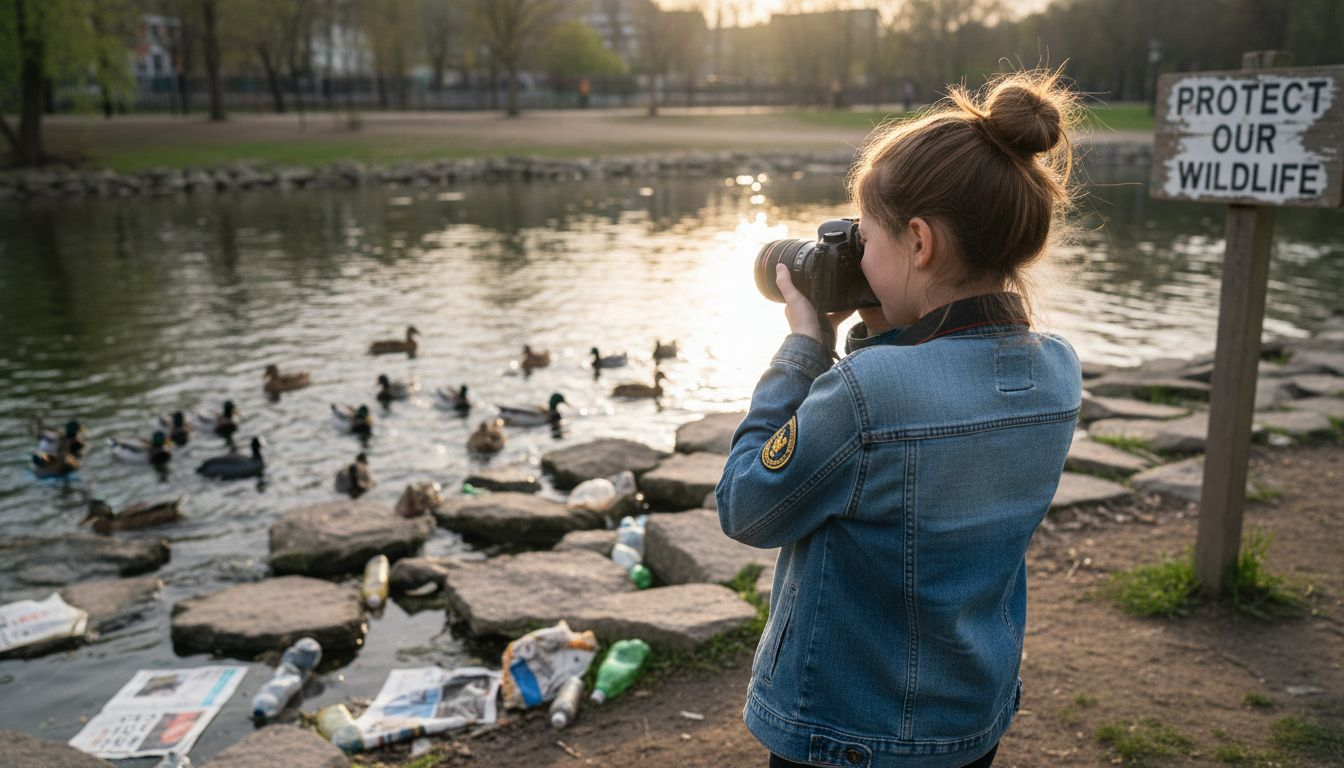
Ethical wildlife photography practices demand a profound commitment to minimising human impact while capturing nature’s intricate beauty. This approach requires photographers to prioritise the well-being of wildlife and their habitats over obtaining the perfect shot.
Key principles for respecting nature during photography include:
- Maintaining safe and respectful distances from wildlife
- Using zoom lenses to avoid direct habitat intrusion
- Never disturbing natural environments or animal behaviours
- Following local conservation guidelines and regulations
- Avoiding artificial baiting or manipulating wildlife scenes
- Prioritising animal welfare over photographic opportunities
- Documenting without interfering with natural processes
Professional photographers understand that responsible documentation means becoming an observer, not an interventionist. This requires developing keen observational skills, patience, and a deep sense of ecological empathy that sees beyond the immediate visual frame.
True nature photography is an act of reverence, not conquest.
Educators and parents play a crucial role in teaching young photographers that their images can serve broader conservation narratives. By emphasising ethical practices, we can cultivate a generation of photographers who see their craft as a form of environmental communication and respect.
Pro tip: Always research the specific ecosystem and wildlife behaviours before photographing, to ensure your presence minimally impacts the natural environment.
Promoting Eco-Friendly Photography Practices
Photography’s environmental impact extends far beyond the moment of capturing an image, encompassing equipment production, digital storage, and travel associated with creative pursuits. Young photographers must develop a holistic understanding of sustainable visual storytelling that minimises ecological footprints while maintaining creative integrity.
Sustainable photography practices require thoughtful consideration of equipment, workflow, and personal habits that collectively contribute to environmental responsibility. This approach transforms photography from a potential source of waste into a platform for ecological awareness.
Key strategies for eco-friendly photography include:
- Investing in pre-owned or refurbished photography equipment
- Choosing energy-efficient digital devices
- Minimising unnecessary printing
- Using rechargeable batteries
- Selecting local photography locations to reduce travel emissions
- Digital file management to reduce cloud storage energy consumption
- Adopting cloud services with renewable energy commitments
Professional photographers understand that environmental consciousness is not a limitation but an opportunity for innovation. By integrating sustainable practices, they demonstrate that creative expression and ecological responsibility can coexist harmoniously.
Sustainable photography is about making intentional choices that respect both your artistic vision and the planet’s wellbeing.
Parents and educators play a crucial role in teaching young photographers that their creative choices have broader environmental implications. By normalising eco-friendly practices, we can cultivate a generation of photographers who see sustainability as an integral part of their craft.
Pro tip: Calculate and offset your photography carbon footprint by supporting local conservation projects or investing in renewable energy credits.
Common Pitfalls and How to Prevent Them
Photography ethics requires constant vigilance and self-reflection, particularly for young learners navigating complex visual landscapes. Understanding potential ethical landmines helps photographers develop a nuanced approach that prioritises respect, consent, and responsible representation.
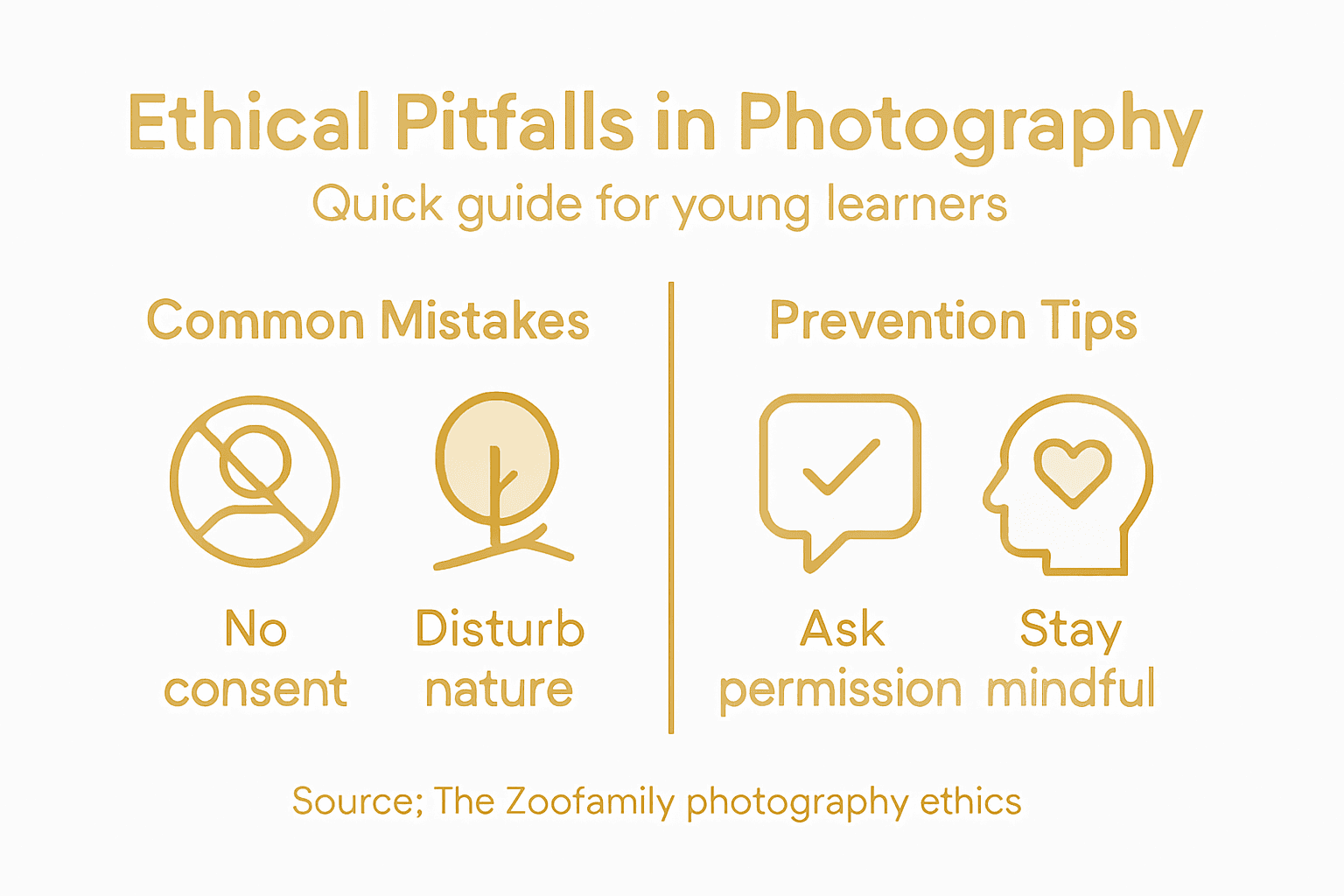
Navigating complex ethical challenges involves recognising that every photographic decision carries potential social and personal implications. By developing robust ethical literacy, photographers can transform potential pitfalls into opportunities for meaningful storytelling.
Common photography ethics pitfalls include:
- Capturing images without explicit consent
- Misrepresenting subjects or situations
- Exploiting vulnerable populations
- Reinforcing harmful cultural stereotypes
- Manipulating images without transparency
- Sharing photographs without considering long-term consequences
- Disregarding subjects’ emotional or cultural sensitivities
Prevention strategies require proactive, empathetic approaches. Professional photographers understand that ethical awareness is not a constraint but a fundamental aspect of responsible visual communication. This means consistently questioning one’s motivations, seeking understanding, and prioritising human dignity.
Ethical photography is less about technical perfection and more about genuine human connection.
Parents and educators play a crucial role in guiding young photographers towards understanding the profound responsibility that comes with wielding a camera. By fostering critical thinking and emotional intelligence, we can help the next generation develop a nuanced, compassionate approach to visual storytelling.
Compare the roles of parents, educators and professionals in nurturing ethical photography practices:
| Role | Main Responsibility | Unique Contribution |
|---|---|---|
| Parents | Model ethical behaviour at home | Foster open conversations about consent |
| Educators | Integrate visual literacy in lessons | Teach empathy and critical thinking |
| Professional Photographers | Lead by example in industry standards | Share real-world ethical challenges |
Pro tip: Before capturing any image, pause and ask yourself: “Would this photograph respect the subject’s dignity and agency?”
Inspire Ethical Photography Skills and Respect for Nature with The Zoofamily
The challenge of teaching photography ethics to young learners centres on nurturing respect for nature and understanding the responsibility that comes with visual storytelling. Children need tools that not only spark creativity but also instil empathy, consent awareness, and environmental mindfulness. By integrating concepts like ecological storytelling and consent into play, we help them develop a meaningful connection with the planet and the subjects they capture.

Discover how The Zoofamily supports ethical photography education through thoughtfully designed kids’ cameras that feature animal references to engage and educate. Every camera sold contributes to planting a tree, reinforcing the commitment to restore natural beauty for generations to come. Start instilling responsible photography habits in your children today by exploring our range of innovative products that encourage respectful nature appreciation and creative connections. Visit https://thezoofamily.com now and join a community that nurtures young photographers with purpose and care.
Frequently Asked Questions
What are the key ethical principles for young photographers?
The key ethical principles for young photographers include obtaining clear consent, respecting subjects’ privacy and dignity, understanding the impact of visual representation, asking permission before photographing people or wildlife, and recognising the difference between observation and intrusion.
How can educators teach children about photography ethics?
Educators can teach children about photography ethics by integrating visual literacy into lessons, fostering open discussions about consent, and encouraging students to consider the emotional and environmental consequences of their photographic choices.
Why is consent important in photography involving children?
Consent is crucial in photography involving children as it prioritises their safety, dignity, and personal boundaries. It ensures that children understand how their images might be used and empowers them to express their comfort levels regarding being photographed.
What practices promote eco-friendly photography among young photographers?
Eco-friendly photography practices include investing in pre-owned or refurbished equipment, using energy-efficient devices, minimising unnecessary printing, selecting local photography locations, and adopting cloud services committed to renewable energy.
Recommended
- 7 Tips for Exciting Photography Scavenger Hunts – The Zoofamily
- 7 idées goûter nature enfants pour éveiller leur curiosité – The Zoofamily
- 7 top livres enfants nature pour éveiller l’écologie – The Zoofamily
- Aventure Nocturne Nature : Éveiller L’écologie chez l’Enfant – The Zoofamily
- WEEE Waste and CSR What Can a Company Do? - Venture Waste