

Every parent faces the challenge of helping their children unplug from screens and reconnect with nature, especially in city life where green spaces can feel limited. Discovering creative outdoor gifts offers eco-conscious families in France, Germany, and Belgium a way to build meaningful memories and environmental awareness. By inspiring sensory exploration and hands-on engagement, these experiences nurture lifelong ecological values and make sustainability a joyful part of everyday play.
Table of Contents
- Connecting Children To Real World Explained
- Key Types Of Nature Engagement For Kids
- Benefits Of Outdoor Play And Real-World Connection
- Sustainable Parenting Techniques In Urban Settings
- Risks And Common Obstacles For City Families
Connecting Children to the Natural World
| Point | Details |
|---|---|
| Experiential Learning | Direct engagement with nature through sensory experiences cultivates a child’s ecological awareness and responsibility. |
| Diverse Engagement Strategies | Unstructured play, guided activities, and arts-based programmes offer unique pathways for children to connect with the environment. |
| Cognitive and Emotional Growth | Outdoor play enhances cognitive skills and emotional intelligence, fostering a deeper understanding of environmental stewardship. |
| Sustainable Urban Parenting | Creative techniques allow urban families to transform limited spaces into rich ecological learning environments. |
Connecting children to real world explained
Connecting children to the natural world is more than a passing educational trend - it’s a critical pathway to developing lifelong ecological awareness and environmental responsibility. Bush kinder programs demonstrate how experiential learning in outdoor contexts can fundamentally transform children’s relationship with nature.
These immersive experiences go far beyond traditional classroom learning by providing direct, sensory interactions with the environment. Children learn not through abstract concepts, but through tangible, memorable encounters that engage all their senses. Key approaches include:
- Unstructured play in natural settings
- Hands-on exploration of ecological systems
- Direct observation of wildlife and plant life
- Learning through physical interaction with landscapes
Crucial to this approach is moving beyond the typical human-nature dichotomy. Indigenous ecological knowledge integration offers profound insights by presenting nature not as something separate from humans, but as a living, interconnected system we are fundamentally part of.
By creating opportunities for direct engagement, we help children develop an intrinsic understanding of ecological principles. They learn that environmental stewardship isn’t about distant concepts, but about immediate, personal connection. This approach transforms environmental education from an academic exercise into a lived experience.
Pro tip: Start small by encouraging outdoor exploration in local parks, gardens, or even backyard spaces, allowing children to develop curiosity and connection with their immediate natural environment.
Key types of nature engagement for kids
Engaging children with nature involves a diverse range of experiences that go far beyond traditional outdoor education. Research highlights multiple pathways for meaningful environmental connection, each offering unique opportunities for learning and personal growth.
These engagement strategies can be broadly categorised into several key approaches:
- Unstructured Play: Spontaneous exploration of natural environments
- Guided Educational Activities: Structured learning experiences with ecological focus
- Community Involvement: Participatory environmental projects
- Family-Led Exploration: Nature-based experiences with parental guidance
Arts-based nature programmes offer another compelling approach to environmental engagement. Sustainable outdoor education initiatives increasingly integrate creative activities like drawing, storytelling, and music to deepen children’s connection with natural environments.
The most effective nature engagement strategies recognise that children learn through multisensory experiences. By providing diverse, interactive opportunities, we can help young people develop a genuine, lifelong appreciation for ecological systems and environmental stewardship.
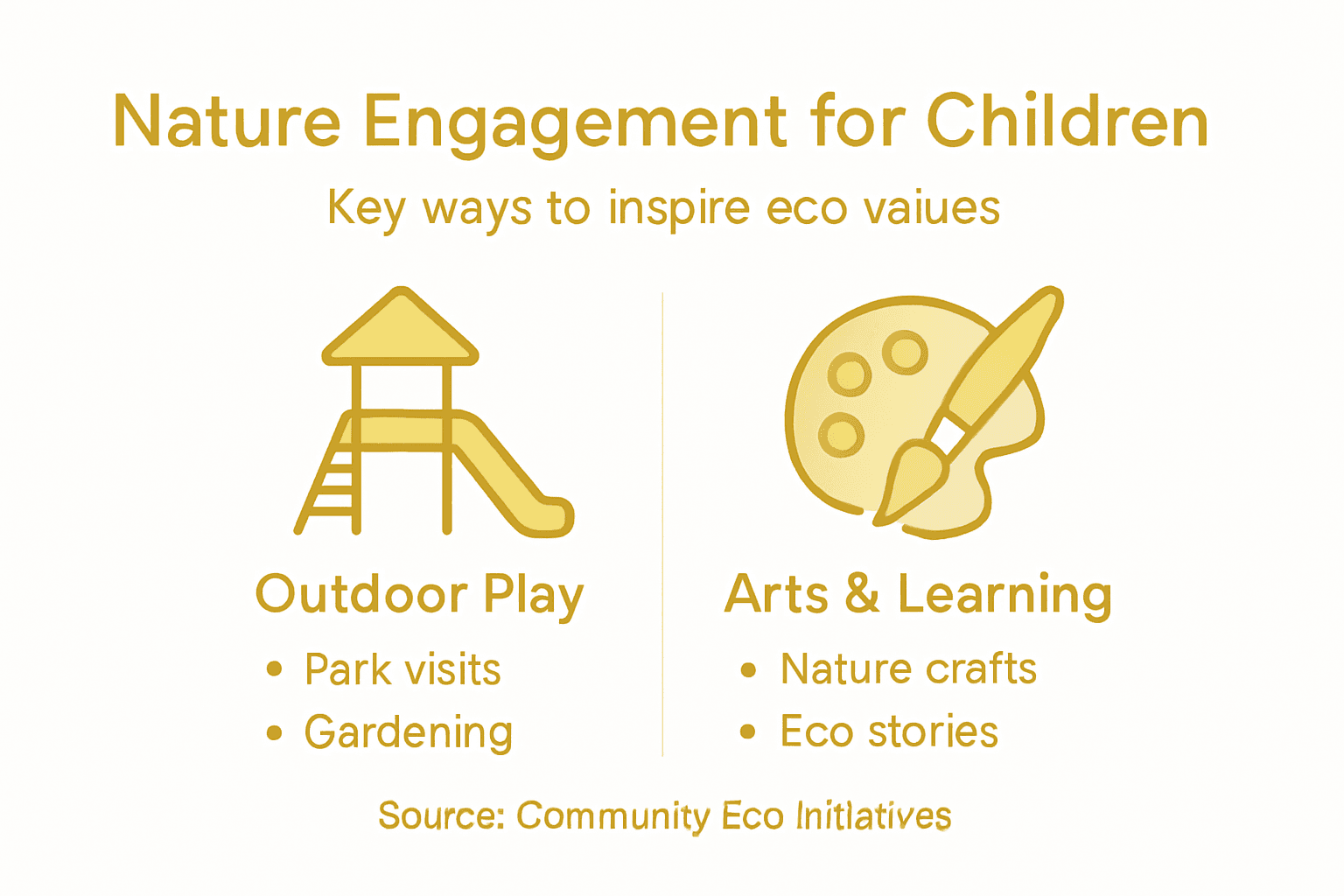
Here is a comparison of nature engagement strategies and the unique outcomes they encourage for children:
| Engagement Approach | Core Experience | Typical Setting | Promotes Development In |
|---|---|---|---|
| Unstructured Play | Free exploration and discovery | Parks, wild spaces | Creativity and independence |
| Guided Educational Activities | Teacher-led inquiry or projects | Schools, museums | Scientific knowledge |
| Family-Led Exploration | Parent-child nature experiences | Gardens, home areas | Emotional bonding |
| Community Involvement | Group environmental projects | Local communities | Social responsibility |
| Arts-Based Programmes | Creative nature expression | Outdoor arts spaces | Self-expression and empathy |
Pro tip: Create a weekly family nature challenge that rotates between different engagement styles, ensuring children experience varied and exciting ways of connecting with the natural world.
Benefits of outdoor play and real-world connection
Early childhood environmental education research reveals profound benefits of outdoor play that extend far beyond simple physical activity. Connecting children directly with natural environments supports their holistic development, nurturing critical cognitive, emotional, and social skills.
The key benefits of outdoor play and real-world connection include:
- Cognitive Development: Enhanced problem-solving and observational skills
- Emotional Intelligence: Improved self-regulation and empathy
Psychological Benefits
Mindful engagement with natural environments demonstrates remarkable impacts on children’s mental wellbeing. Research indicates that outdoor experiences significantly reduce negative emotional states while simultaneously boosting positive psychological markers.
Beyond individual growth, outdoor play cultivates broader ecological awareness. Children who regularly interact with natural settings develop a more profound understanding of environmental systems, building foundational knowledge that supports lifelong ecological stewardship. These experiences transform abstract environmental concepts into tangible, memorable learning opportunities.
Pro tip: Design regular outdoor exploration routines that mix structured learning with spontaneous discovery, allowing children to develop genuine curiosity about the natural world.
Sustainable parenting techniques in urban settings
Urban early learning strategies demonstrate innovative approaches to connecting children with nature despite city limitations. Sustainable parenting in urban environments requires creative thinking and intentional environmental engagement that transforms seemingly constrained spaces into rich learning opportunities.
Effective sustainable parenting techniques include:
- Micro-Nature Exploration: Utilising small urban spaces like balconies, windowsills, and local parks
- Community Garden Participation: Engaging children in shared green spaces
- Urban Wildlife Observation: Encouraging curiosity about city ecosystems
- Sustainable Home Practices: Integrating ecological learning into daily routines
Holistic Environmental Education
Indigenous ecological knowledge integration offers profound insights into nurturing children’s environmental consciousness. This approach transcends traditional educational models by fostering a reciprocal relationship with nature, teaching respect and interconnectedness even within urban landscapes.
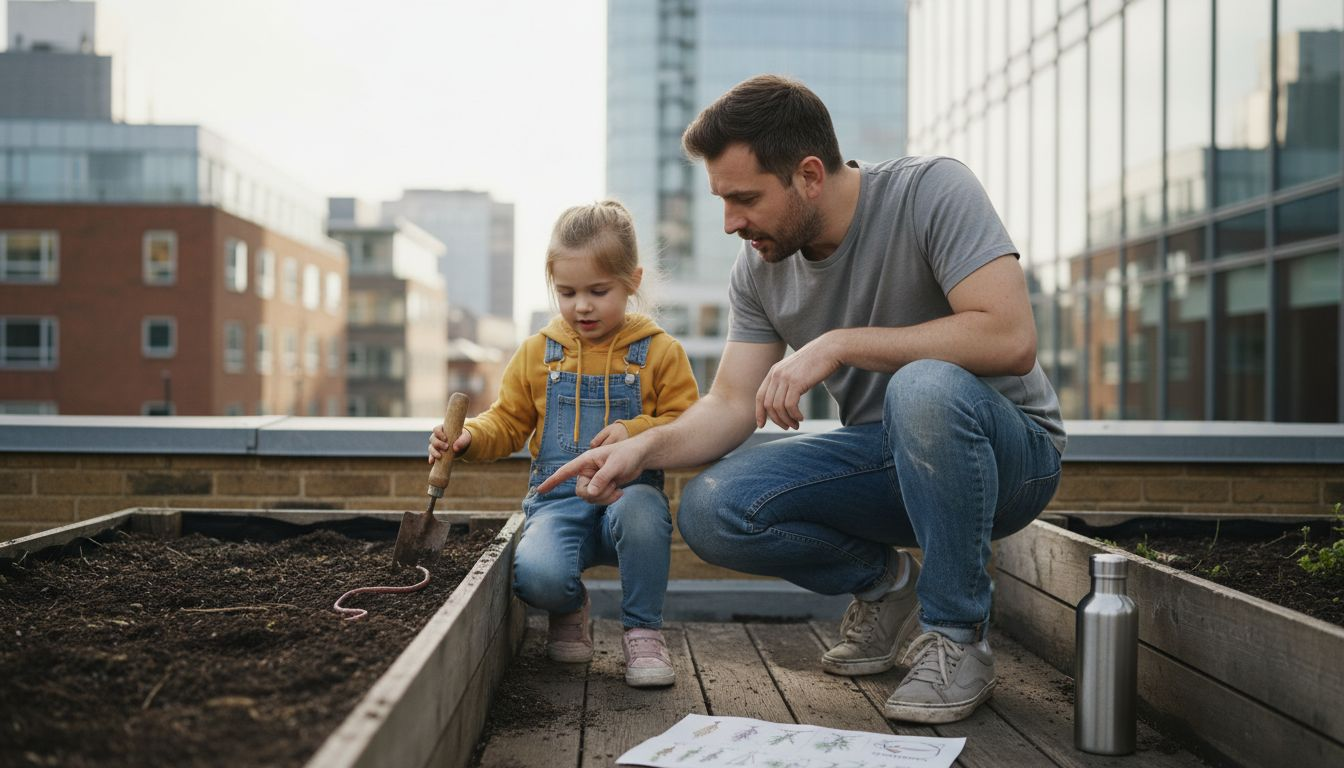
Urban parents can transform seemingly limited environments into powerful ecological classrooms. By creating intentional experiences that highlight natural systems, children develop a nuanced understanding of environmental stewardship that extends beyond physical boundaries.
Below is a summary of urban parenting techniques and how they foster sustainability in city environments:
| Technique | Example Setting | Learning Outcome | Sustainability Impact |
|---|---|---|---|
| Micro-Nature Exploration | Balconies, windowsills | Observing small ecosystems | Raises awareness in limited space |
| Community Garden Participation | Shared gardens | Hands-on group stewardship | Builds local green networks |
| Urban Wildlife Observation | City parks, streets | Noticing city biodiversity | Fosters appreciation of urban ecology |
| Sustainable Home Practices | Home routines | Practising energy efficiency | Instils lifelong eco-friendly habits |
Pro tip: Create a family nature journal documenting urban wildlife, plant growth, and seasonal changes to build consistent environmental awareness.
Risks and common obstacles for city families
Urban family nature engagement reveals significant challenges that prevent meaningful environmental connections in city settings. Parents and educators frequently encounter complex barriers that require innovative and strategic approaches to overcome.
Key obstacles urban families face include:
- Space Limitations: Restricted access to natural environments
- Safety Concerns: Perceived risks in outdoor exploration
- Time Constraints: Busy urban lifestyle challenges
- Educational Infrastructure: Limited school support for nature-based learning
- Resource Scarcity: Minimal funding for environmental programmes
Systemic Challenges
Multi-professional collaboration strategies highlight the complex ecosystem of challenges urban families navigate. These obstacles extend beyond individual family experiences, reflecting broader institutional and societal limitations in supporting children’s nature connection.
Addressing these challenges requires a holistic, community-driven approach that reimagines urban spaces as potential learning environments. By recognising and strategically addressing these obstacles, families can transform seemingly restrictive urban landscapes into opportunities for ecological engagement.
Pro tip: Create a neighbourhood nature network with other parents to share resources, experiences, and collaborative outdoor learning opportunities.
Inspire Your Child’s Connection with Nature Today
The article highlights the challenge many parents face in bridging their children’s experiences to the natural world while nurturing lifelong ecological values. With concerns such as limited access to outdoor spaces and the need for hands-on, multisensory learning, families seek solutions that spark curiosity and foster genuine environmental stewardship.
At The Zoofamily, we recognise these key needs by offering innovative kids’ cameras, walkie-talkies, and binoculars designed to stimulate creative connections with nature. Each product features animal references that captivate children’s imagination, encouraging real-world exploration and discovery despite urban or space limitations. Together with our commitment to sustainability, for every camera sold we plant a tree to help restore natural beauty for generations to come.
Engage your child with tools that transform learning into an exciting adventure.
Discover our range of nature-inspired devices at The Zoofamily and start fostering your child’s passion for the environment today. Take the step to connect your family with meaningful outdoor experiences and help nurture a future generation of eco-conscious explorers.
Frequently Asked Questions
What are the key benefits of connecting children with nature?
Connecting children with nature enhances their cognitive development, emotional intelligence, and psychological wellbeing. Outdoor play fosters problem-solving abilities, self-regulation, and empathy, while also nurturing ecological awareness necessary for lifelong stewardship.
How can parents encourage their children to engage with the natural world?
Parents can foster a connection to nature by promoting outdoor activities such as unstructured play in parks, family-led explorations, and community involvement in environmental projects. Creating regular nature challenges can also enhance curiosity and engagement.
What role does unstructured play have in a child’s development in natural settings?
Unstructured play allows children to explore and discover at their own pace, fostering creativity, independence, and a deeper understanding of ecological systems. This free exploration cultivates a strong personal connection with the environment.
How can families in urban areas connect children to nature despite limited space?
Urban families can engage children with nature using techniques such as micro-nature exploration in small urban spaces, participating in community gardens, and promoting sustainable home practices. Creating a family nature journal can also help document urban wildlife and seasonal changes.
Recommended
- Understanding Eco Friendly Routines for Modern Families – The Zoofamily
- 7 top livres enfants nature pour éveiller l’écologie – The Zoofamily
- Comment protéger la planète au quotidien avec ses enfants – The Zoofamily
- 7 idées goûter nature enfants pour éveiller leur curiosité – The Zoofamily
- Why cruise with family: Everything you need to know
- Why Provence Is Perfect For Family Holidays – The House In Provence Blog