

Many parents dream of their children exploring meadows, climbing trees and discovering wildlife, yet outdoor play is declining sharply across Europe. Safety fears, busy schedules and digital distractions create barriers that feel insurmountable. Research shows that nature contact in early childhood delivers profound cognitive, emotional and physical benefits, but translating that knowledge into daily life remains challenging. This guide unpacks the science behind nature-rich childhoods, addresses common safety concerns and offers practical strategies to help your family reconnect with the outdoors, even in urban settings.
Table of Contents
- Key takeaways
- The science behind a nature-rich childhood
- Balancing safety and freedom: encouraging risky outdoor play
- Practical ways to nurture a nature rich childhood in urban Europe
- Bring nature home with The Zoofamily
- Frequently asked questions about nature-rich childhood
Key Takeaways
| Point | Details |
|---|---|
| Outdoor time boosts development | Regular outdoor time supports cognitive, social and physical development in children. |
| Nature play reduces stress | Regular nature play reduces stress and improves mental health. |
| Risky play fosters resilience | Risky outdoor play fosters resilience and emotional regulation. |
| Urban nature connections | In urban settings, regular outdoor involvement helps families reconnect with nature and supports children’s wellbeing. |
| Practical outdoor routines | Daily outdoor routines and eco friendly gear can help families reconnect with nature in daily life. |
The science behind a nature-rich childhood
Growing evidence confirms that outdoor play shapes how children think, feel and develop. Studies tracking thousands of children reveal that outdoor time improves attentional control, prosocial behaviour and academic achievement. Children who spend more time outdoors in early childhood demonstrate stronger memory, better problem-solving abilities and enhanced social skills compared to peers with limited nature exposure.
Recent research shows that nature-rich childcare reduces stress hormones and gastrointestinal symptoms whilst boosting microbiota diversity in young children. The trial found that children attending nature-integrated daycare centres exhibited lower cortisol levels and fewer digestive complaints than those in conventional indoor settings. This suggests that regular contact with soil, plants and natural materials strengthens immune function and emotional regulation during critical developmental windows.
Physical activity guidelines reinforce these findings. UNICEF recommends that children aged 1-4 receive 3 hours of daily physical activity to improve health and focus. Outdoor environments naturally encourage movement, exploration and sensory stimulation that indoor spaces cannot replicate.
“Children who spent more time outdoors in early childhood showed significantly better attention, prosocial behaviour, and academic achievement years later, suggesting that nature exposure creates lasting cognitive advantages.”
The benefits extend across multiple domains:
- Cognitive: Enhanced attention span, improved memory consolidation, stronger executive function
- Emotional: Lower anxiety levels, better mood regulation, increased self-confidence
- Physical: Improved motor skills, stronger immunity, healthier gut microbiome
- Social: Greater empathy, enhanced cooperation, better conflict resolution
These findings challenge the assumption that structured indoor activities provide superior developmental outcomes. Child development outdoors follows different pathways, with unstructured nature play offering unique cognitive and emotional advantages that complement formal education.
Balancing safety and freedom: encouraging risky outdoor play
Parental anxiety about injuries, germs and strangers often limits children’s outdoor freedom. Yet experts distinguish between reckless behaviour and competence-appropriate risky play that builds essential life skills. Research demonstrates that risky outdoor play benefits executive function, emotional regulation and resilience, whilst nature-deficit links to obesity and mental health problems.
Risky play includes activities like climbing trees, exploring alone, playing near water or using tools. These experiences teach children to assess hazards, manage fear and recover from minor setbacks. When adults eliminate all risk, children miss opportunities to develop judgement and self-regulation. They may also seek riskier thrills in less supervised contexts as they grow older.
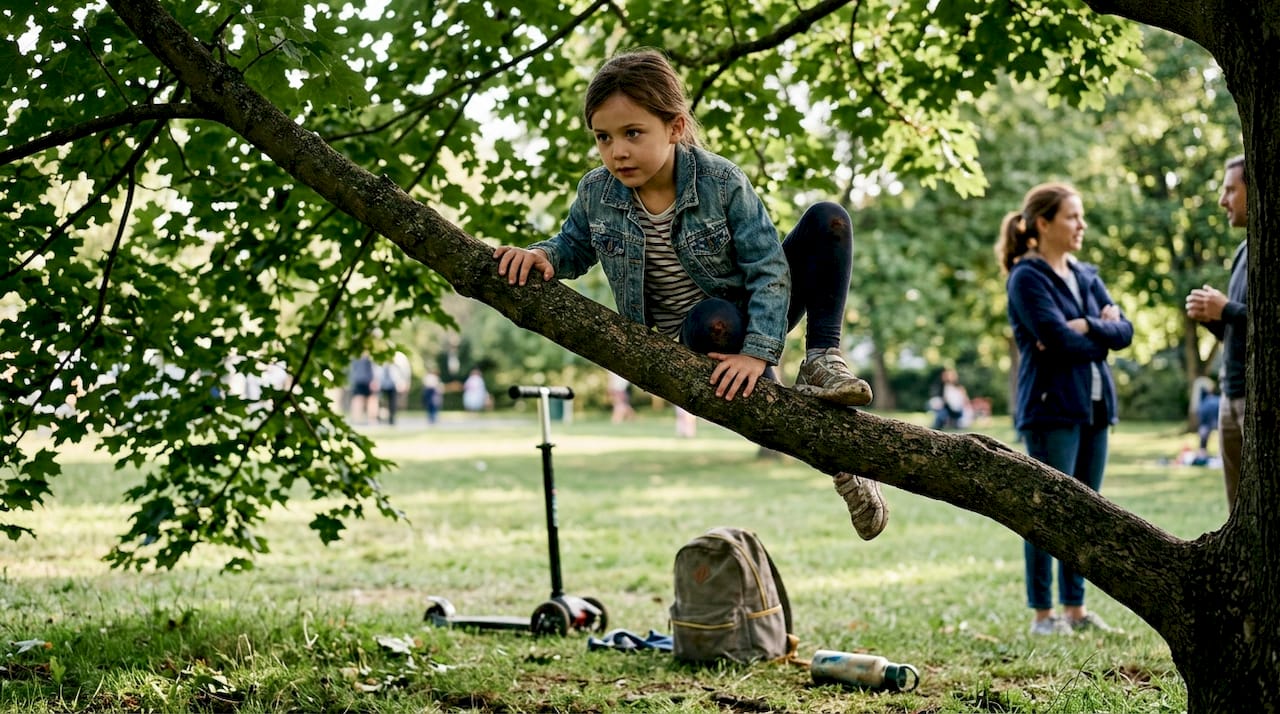
The evidence challenges common fears. Dirt exposure supports immune development rather than causing illness. Minor scrapes and bruises teach cause and effect. Getting lost briefly in a park builds spatial awareness and problem-solving skills. Experts recommend competence-appropriate challenges instead of strict age restrictions to foster safer risky play.
Practical strategies to balance freedom and supervision:
- Start small: Allow low-stakes risks like jumping from low walls or balancing on logs before progressing to higher challenges
- Teach skills explicitly: Show children how to test branch strength, assess water depth or use tools safely
- Create boundaries: Define clear physical limits (“stay within sight of the bench”) rather than hovering constantly
- Model calm responses: Avoid gasping or rushing in when children take calculated risks, which teaches anxiety rather than caution
- Debrief experiences: Discuss what went well and what they would do differently next time after minor incidents
Pro Tip: Observe your child’s competence level before intervening. If they are concentrating hard but managing, step back. If they look genuinely scared or overwhelmed, offer support without taking over the challenge entirely.
This approach builds what psychologists call “risk literacy”, the ability to evaluate and navigate uncertainty. Children who develop risk literacy through nature play activities demonstrate better emotional regulation and resilience in academic and social situations. They learn that setbacks are manageable rather than catastrophic, fostering a growth mindset that serves them throughout life.
Practical ways to nurture a nature rich childhood in urban Europe
Urban families face genuine obstacles to nature access. Limited green space, air pollution, traffic dangers and time constraints make daily outdoor play challenging. Yet creative adaptations allow even city-dwelling children to experience nature’s benefits regularly.
Five practical ways to integrate nature daily:
-
Transform your balcony or windowsill: Create a mini garden with herbs, flowers or vegetables that children can water, observe and harvest. Even a small planter box offers sensory experiences and teaches responsibility.
-
Adopt a local tree or park corner: Visit the same outdoor spot repeatedly so children notice seasonal changes, recognise plants and feel ownership over their nature space.
-
Incorporate nature into errands: Walk or cycle instead of driving when possible, pausing to examine interesting leaves, insects or clouds along the way.
-
Schedule weekly nature adventures: Dedicate one morning or afternoon each week to exploring a new park, forest or nature reserve within reasonable travel distance.
-
Bring nature indoors: Collect natural materials like pinecones, shells or interesting stones for sensory play, art projects or science investigations at home.
Research shows that urban parents overcome barriers using balconies, parks and child-led play methods like Forest Schools and Montessori sensory walks. These approaches emphasise observation, curiosity and hands-on exploration rather than structured lessons.
| Setting | Nature connection opportunity | Time investment | Accessibility |
|---|---|---|---|
| Home balcony/garden | Daily plant care, weather observation, insect watching | 10-15 minutes | High |
| Local park | Seasonal changes, risky play, social interaction | 30-60 minutes | Medium to high |
| Nature reserve | Biodiversity, extended exploration, forest bathing | Half day | Medium |
| Forest School programme | Structured nature education, tool use, fire building | Weekly sessions | Low to medium |
Eco-friendly products support engagement without overwhelming families. Bug kits, nature backpacks and quiet books encourage observation and documentation. Binoculars designed for small hands help children spot birds and distant details. Cameras allow them to capture discoveries and review them later, extending the learning experience.
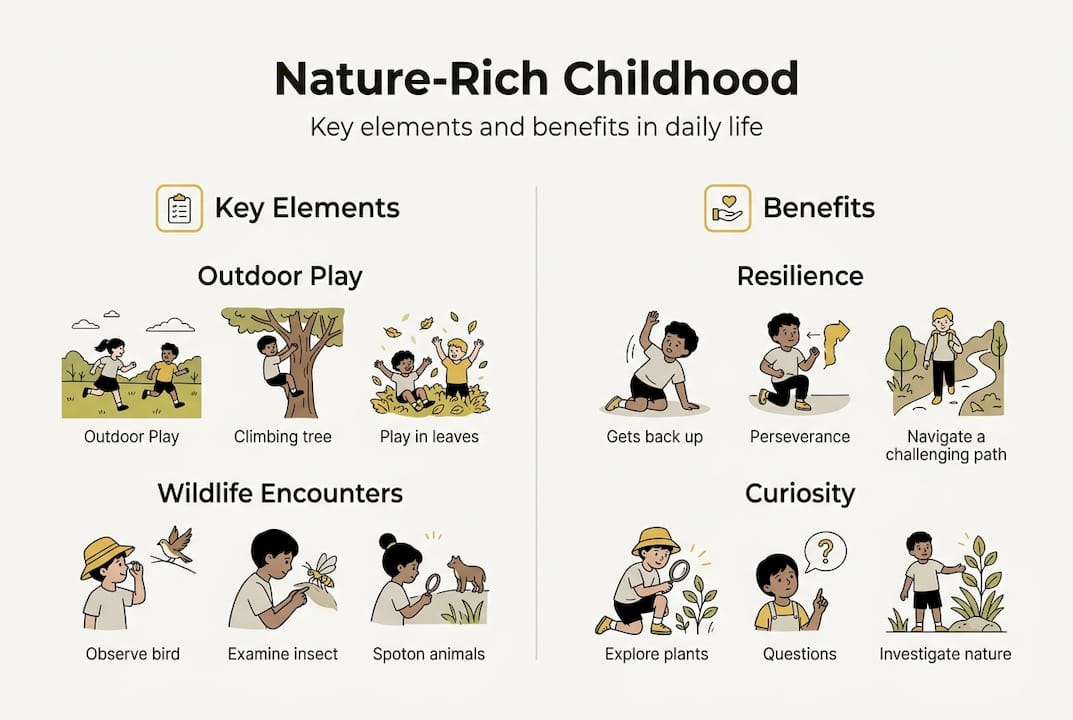
Pro Tip: Start with just 20 minutes outdoors daily rather than attempting ambitious weekend excursions. Consistency matters more than duration for building nature connection and establishing routines that stick.
Urban nature play requires creativity but delivers comparable benefits to rural experiences. Outdoor play in urban areas focuses on maximising available green space and integrating nature into existing routines. Children develop observation skills, curiosity and environmental awareness regardless of setting when adults prioritise regular outdoor time.
Seasonal variations offer different opportunities. Autumn leaf collection, winter ice observations, spring flower identification and summer insect watching ensure year-round engagement. Outdoor creative activities adapt to weather and available resources, making nature play accessible even during challenging conditions.
Bring nature home with The Zoofamily
Cultivating a nature-rich childhood requires both intention and practical support. The Zoofamily offers carefully curated eco-friendly products and resources designed to make outdoor exploration accessible, engaging and sustainable for European families.
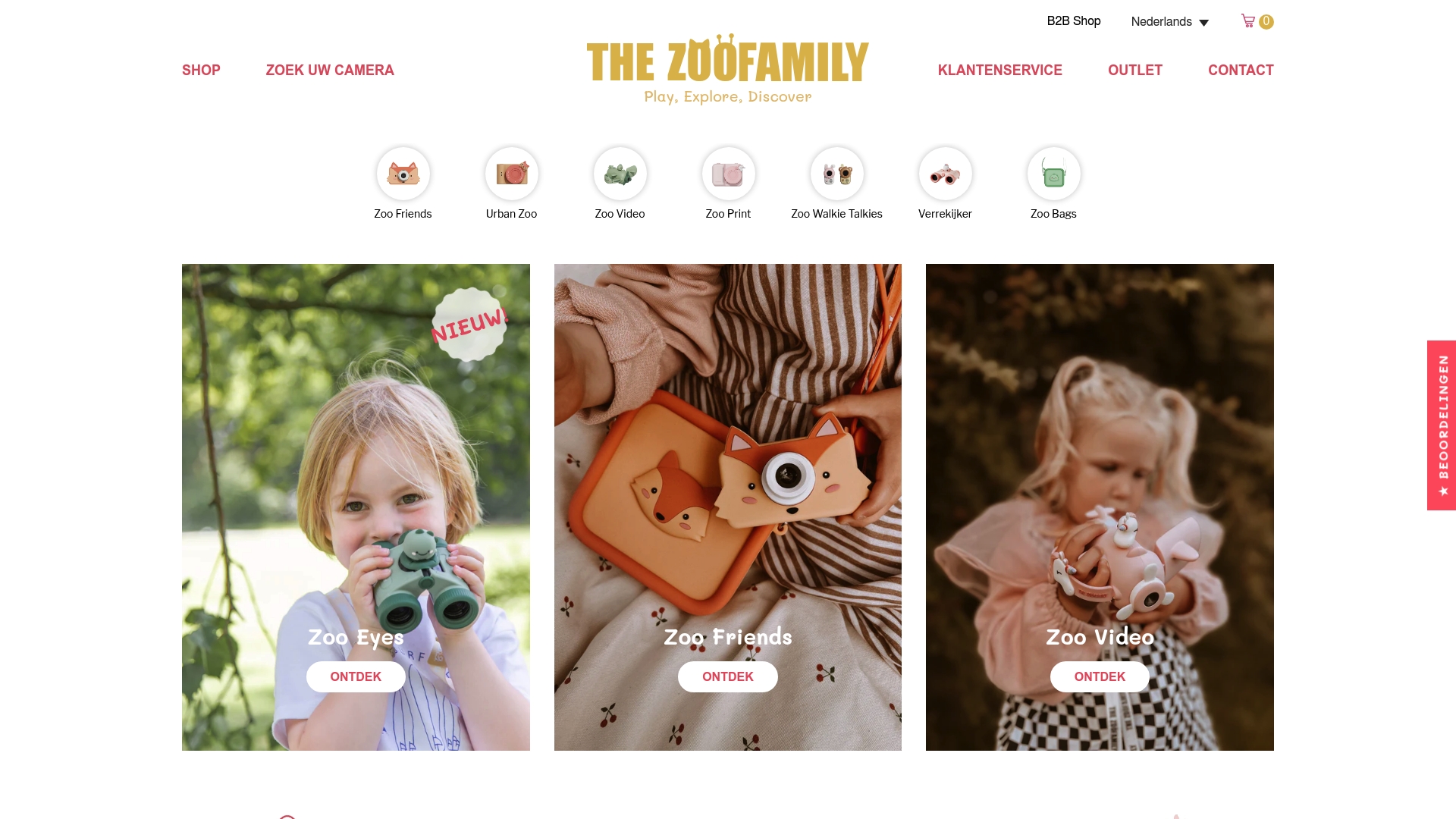
Our collection includes child-sized binoculars, cameras and walkie-talkies with animal designs that spark curiosity about wildlife whilst supporting creative outdoor play. Each product purchase plants one tree, teaching children that their choices impact the planet positively. Explore our nature play guides and product range at The Zoofamily to discover tools that transform ordinary outings into memorable adventures whilst nurturing the environmental stewardship your family values.
Frequently asked questions about nature-rich childhood
How much daily outdoor time is ideal for young children?
UNICEF recommends 3 hours of physical activity for children aged 1-4, with much of this ideally outdoors. However, research shows that even 20 minutes of nature exposure reduces stress and improves concentration. Start with achievable goals and gradually increase duration as routines become established.
What should I do if I live in a city with limited green space?
Urban families can maximise balconies, windowsills and small parks for daily nature contact. Visit the same local green space repeatedly so children notice seasonal changes and develop familiarity. Weekend trips to larger nature reserves complement daily micro-doses of outdoor time. Even observing weather, clouds and urban wildlife provides valuable nature connection.
How do I balance child safety with their need for exploration?
Focus on competence-appropriate challenges rather than eliminating all risk. Teach specific skills like testing branch strength or assessing terrain before allowing independent exploration. Define clear boundaries and step back when children are managing challenges successfully. Minor scrapes teach cause and effect whilst building resilience and risk literacy.
At what age should I start nature-rich activities?
Nature connection begins in infancy. Babies benefit from outdoor sounds, light variations and fresh air. Toddlers explore textures, collect natural materials and observe insects. Preschoolers engage in more complex activities like identifying plants, using tools and navigating trails. The child development outdoors guide offers age-specific suggestions for maximising outdoor learning at each developmental stage.
Which eco-friendly products help beginners start nature exploration?
Start with simple tools that enhance observation without overwhelming your child. Child-sized binoculars encourage bird watching and distant observation. Small backpacks allow children to collect and transport natural treasures. Magnifying glasses reveal details invisible to the naked eye. Nature journals or cameras help document discoveries. Choose durable, sustainably made products that grow with your child’s developing interests and skills.