

Many parents reach for toys with bright age labels, trusting that “3+” or “5+” guarantees the perfect fit for their child. Yet these labels primarily reflect safety regulations, not whether a toy will spark creativity, connect your child with nature, or align with sustainable values. Understanding what age labels truly mean and how developmental stages, materials, and design influence play helps you choose toys that genuinely enrich your child’s growth. This guide reveals how to select toys that foster imaginative play, respect the environment, and support your child’s unique developmental journey.
Table of Contents
- Key takeaways
- Understanding toy safety and age labelling standards
- Matching toys to developmental stages and creativity
- Choosing sustainable wooden toys that engage nature
- Navigating toy preferences and avoiding common pitfalls
- Discover more on sustainable and creative toys at The Zoofamily
- Frequently asked questions about choosing age-appropriate toys
Key Takeaways
| Point | Details |
|---|---|
| Age labels mislead | Age labels primarily reflect safety requirements and do not guarantee creative fit or developmental suitability. |
| Open ended wooden toys | Open ended wooden toys invite imaginative play and support sustainable, flexible use of materials. |
| Developmental stages guide complexity | Understanding developmental stages helps match toy complexity to a child’s current abilities and supports growth. |
| Safety marks and eco credentials | Choose CE or UKCA marking and FSC certification to ensure safety compliance and environmental responsibility. |
Understanding toy safety and age labelling standards
Age labels on toy packaging serve a critical legal purpose. The EU Toy Safety Directive requires strict safety for under 36 months including mechanical and chemical limits designed to prevent choking, toxicity, and other hazards. Toys intended for children under three years must pass rigorous tests for small parts, sharp edges, and harmful substances. You’ll often see warnings like “Not suitable for children under 36 months” accompanied by a choking hazard symbol. These labels protect your child from immediate physical dangers.
However, age labels don’t tell the whole story. They indicate minimum safety thresholds, not whether a toy will engage your child’s imagination or suit their developmental abilities. A toy labelled “3+” might be perfectly safe for a three-year-old but too simplistic for a curious four-year-old or too complex for a cautious two-and-a-half-year-old. The label reflects compliance with mechanical testing and chemical composition standards, not cognitive readiness or creative potential.
When you shop for toys in Europe, look for the CE marking or UKCA marking in the UK. These symbols confirm the manufacturer has assessed the product against applicable safety directives. Key safety considerations include:
- Small parts that could cause choking in children under three
- Toxic substances like lead, phthalates, or certain flame retardants
- Mechanical hazards such as sharp points, unstable structures, or pinch points
- Electrical safety for battery-operated or powered toys
“Age labelling is a vital safeguard, but parents must look beyond the number to assess whether a toy truly matches their child’s interests, abilities, and the values they wish to nurture.”
Understanding these frameworks empowers you to select toys that meet legal safety standards whilst also considering developmental appropriateness, creative potential, and environmental impact. The label is your starting point, not your final decision.
Matching toys to developmental stages and creativity
Developmental psychology offers a powerful lens for choosing toys that genuinely engage your child. The zone of proximal development describes the sweet spot where a toy challenges your child just enough to promote learning without causing frustration. Toys that are too easy bore quickly; toys that are too hard discourage play. Observing your child’s current skills and selecting toys that gently stretch those abilities maximises both engagement and growth.
Open-ended toys are your best allies in fostering creativity. Unlike toys with fixed functions or electronic scripts, open-ended toys invite children to decide how to play. A set of wooden blocks can become a castle, a zoo, a bridge, or a spaceship. This flexibility encourages problem-solving, narrative building, and fine motor skill development. Developmental stages guide toy complexity: sensory stacking for one to three years, complex building from age four onwards.
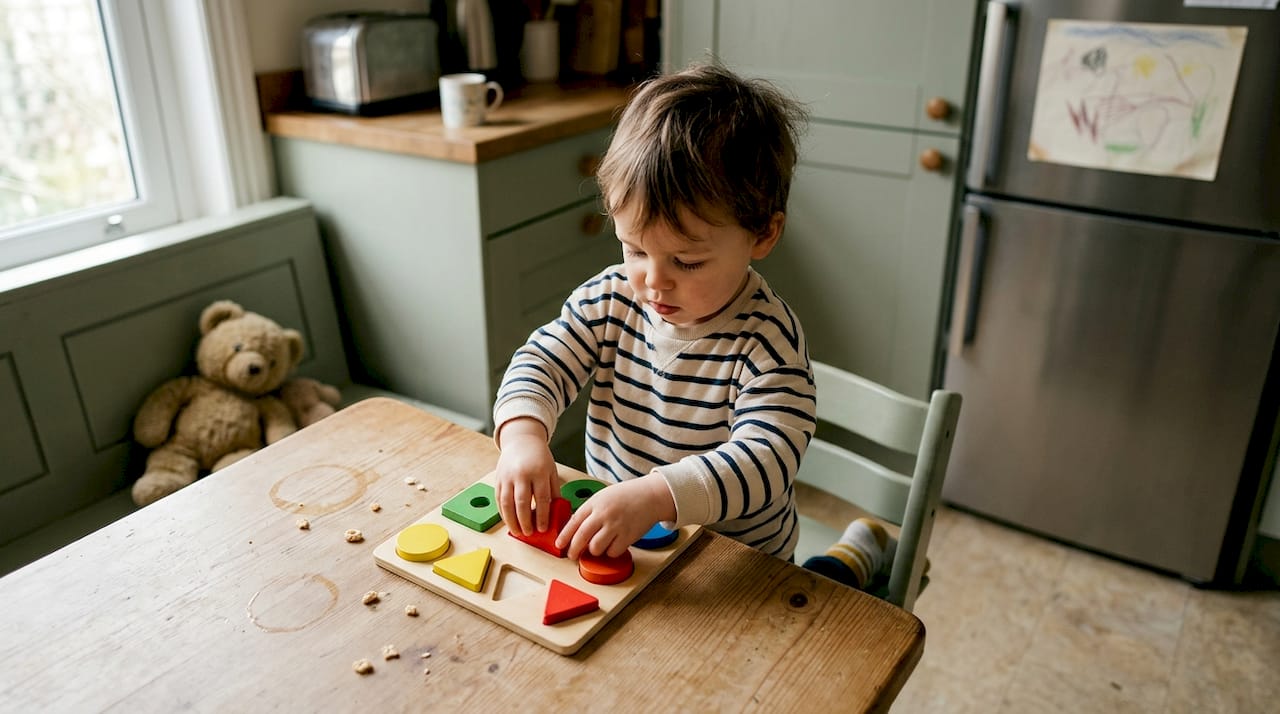
For toddlers aged one to three, prioritise sensory and tactile experiences. Toys that stack, nest, or sort by colour and shape support hand-eye coordination and spatial reasoning. Natural materials like wood offer varied textures and weights that plastic cannot replicate. A simple wooden stacking toy or a set of rainbow rings provides endless opportunities for exploration. At this stage, children learn through repetition and sensory feedback, so durable, simple designs work best.
As children reach four years and beyond, their cognitive abilities expand rapidly. They begin to understand cause and effect, plan sequences, and engage in cooperative play. Building sets with increasing complexity, construction kits, and nature-inspired figurines support these emerging skills. Toys that mimic natural environments, such as wooden trees, animals, or landscapes, encourage outdoor exploration and curiosity about the world. Open-ended play at this age often involves storytelling, role-playing, and collaborative projects.
Pro Tip: Rotate toys every few weeks to maintain novelty and interest. Store half your child’s toys out of sight, then swap them periodically. This simple strategy refreshes engagement without purchasing new items, supporting both creativity and sustainability.
Choosing toys aligned with developmental stages doesn’t mean rigidly adhering to age labels. Instead, observe your child’s interests and abilities, then select toys that invite exploration and growth. For more ideas on fostering sensory engagement, explore our natural sensory play guide.
Choosing sustainable wooden toys that engage nature
Wooden toys certified by the Forest Stewardship Council ensure that the timber comes from responsibly managed forests, balancing ecological health with economic viability. FSC certification guarantees that the wood is harvested sustainably, protecting biodiversity and supporting local communities. When you choose FSC-certified toys, you invest in products designed to last, reducing the cycle of consumption and waste that characterises many plastic alternatives.
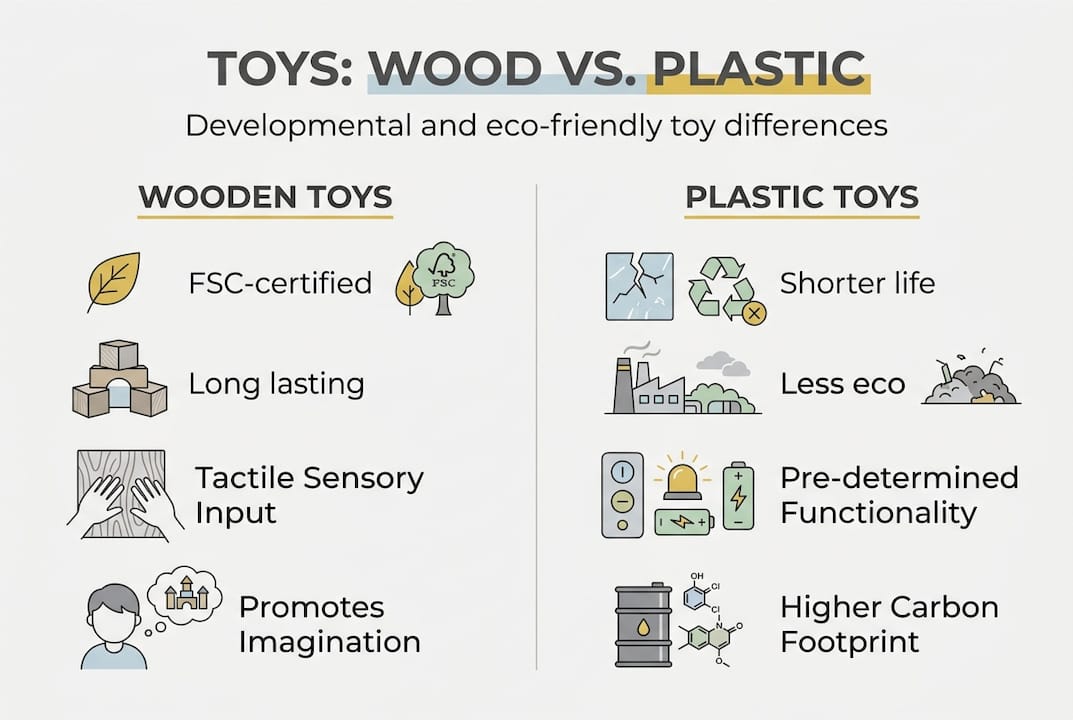
Compared to plastic, wooden toys offer distinct developmental and environmental advantages. FSC-certified wooden toys enhance cognitive skills, reduce waste, and align with Montessori principles that emphasise natural materials and child-led exploration. Wood’s natural weight and texture provide sensory feedback that supports motor skill development. Wooden toys also tend to be quieter and calmer, creating a play environment that encourages focus and creativity rather than overstimulation.
Nature-inspired designs amplify these benefits. Toys shaped like trees, animals, or natural landscapes trigger curiosity about the outdoors and foster a connection with the environment. A wooden forest set or a bamboo stacking toy can spark conversations about ecosystems, seasons, and conservation. This early engagement with nature themes builds environmental awareness and respect, values that grow with your child.
Sustainability matters to European parents. Over 70% of British parents prioritise sustainability when choosing toys, reflecting a broader cultural shift towards eco-conscious consumption. Wooden toys support this shift by offering durability and timelessness. A well-made wooden toy can pass from sibling to sibling, or even generation to generation, reducing the environmental footprint per use. This longevity contrasts sharply with plastic toys that often break quickly or lose appeal.
| Feature | Wooden toys (FSC-certified) | Plastic toys |
|---|---|---|
| Durability | High, often multi-generational | Variable, many break easily |
| Environmental impact | Low, renewable and biodegradable | High, petroleum-based and persistent waste |
| Sensory feedback | Rich textures, natural weight | Uniform, often lightweight |
| Creative potential | High, open-ended designs | Variable, many have fixed functions |
| Safety certifications | FSC, CE/UKCA | CE/UKCA |
Open-ended wooden toys also resist gender stereotypes. By focusing on creativity and problem-solving rather than predefined roles, they allow children to explore interests freely. A set of wooden blocks or a nature-themed construction kit appeals to all children, regardless of gender, encouraging diverse play patterns and skills.
Pro Tip: When selecting wooden toys, check for smooth finishes and non-toxic paints or stains. Natural, unfinished wood or water-based finishes are safest for young children who explore with their mouths.
For curated selections of sustainable wooden toys, visit our environmentally friendly toys guide and explore eco-friendly children’s toys that prioritise both developmental value and environmental responsibility.
Navigating toy preferences and avoiding common pitfalls
Every child has a unique temperament that influences how they play. Some children are bold explorers, diving into new toys with enthusiasm. Others are cautious observers, preferring familiar objects and gradual introductions. Aligning toys with child temperament increases use and durability, as demonstrated by the ToyMatch study. When toys match your child’s natural inclinations, they engage more deeply and sustain interest longer, reducing waste and maximising value.
Recognising and accommodating natural preferences doesn’t mean limiting your child’s experiences. Instead, offer a diverse range of open-ended toys that respect their temperament whilst gently expanding their comfort zone. A cautious child might appreciate a simple wooden puzzle before tackling a complex construction set. An energetic child might thrive with building blocks that allow rapid assembly and creative destruction. Observing how your child interacts with different toys guides future selections.
Gendered toy preferences persist but sustainable open-ended toys help challenge stereotypes by emphasising creativity over predefined roles. Research shows that whilst some preferences emerge early, offering a variety of toys that focus on skills rather than gender norms broadens your child’s developmental opportunities. Wooden blocks, nature-themed sets, and creative building kits appeal across gender lines, encouraging diverse play patterns.
Beware of common pitfalls that undermine sustainable and creative play:
- Excessive electronics or feature-heavy toys that script play and limit imagination
- Toys with fixed functions that offer little room for creative adaptation
- Overbuying, which overwhelms children and reduces engagement with individual toys
- Ignoring safety certifications like CE/UKCA or environmental certifications like FSC
Electronic toys with flashing lights and preset sounds can entertain briefly but often discourage open-ended exploration. Children quickly exhaust the programmed responses and move on, leaving the toy unused. In contrast, a simple wooden toy invites ongoing creativity and adaptation, sustaining interest over months or years.
“The best toys are those that do less, allowing children to do more. When a toy’s possibilities are endless, a child’s imagination becomes the engine of play.”
Prioritise quality over quantity. A few well-chosen, durable toys provide richer play experiences than a room full of disposable plastic items. This approach not only supports sustainability but also helps children develop deeper focus and creativity. For insights on reducing environmental impact, explore our eco-friendly infant toys carbon guide and discover temperament-aligned toy strategies that respect your child’s unique personality.
Discover more on sustainable and creative toys at The Zoofamily
You’ve learned how to navigate age labels, match toys to developmental stages, and prioritise sustainable materials. Now it’s time to put that knowledge into action. At The Zoofamily, we curate a wide range of FSC-certified, creative wooden toys designed to spark imagination, connect children with nature, and support eco-conscious values. Every product we offer meets rigorous safety standards whilst fostering the kind of open-ended play that nurtures creativity and environmental awareness.
Our collections include nature-inspired cameras, walkie-talkies, and binoculars that encourage outdoor exploration and creative storytelling. Each purchase supports our commitment to restoring natural beauty: for every camera sold, we plant one tree. Beyond products, our blog offers expert articles on eco-friendly toy selection, natural sensory play, and sustainable parenting practices. You’ll find practical tips, research-backed insights, and a community of parents who share your values.
Join us in creating a world where children’s play connects them to the planet and to each other. Explore our environmentally friendly toys guide for curated recommendations, or browse our full range to find the perfect sustainable toy for your child.
Pro Tip: Subscribe to our updates to receive seasonal toy suggestions, exclusive offers, and the latest insights on sustainable play. Stay informed and inspired as your child grows.
Frequently asked questions about choosing age-appropriate toys
What does the CE or UKCA marking on toys mean?
The CE marking indicates that a toy complies with European safety standards, including mechanical and chemical requirements. The UKCA marking serves the same purpose for the UK market. Both confirm the manufacturer has assessed the product against applicable directives, ensuring it is safe for the specified age group.
How can I know if a toy truly suits my child’s developmental stage?
Observe your child’s current abilities and interests closely. Choose toys that challenge them slightly beyond their comfort zone without causing frustration. Open-ended toys that adapt to different skill levels work best, allowing your child to grow with the toy over time.
Are wooden toys always safer and more sustainable than plastic ones?
Generally yes, especially when FSC-certified and finished with non-toxic paints or stains. Wooden toys offer superior durability, biodegradability, and lower environmental impact compared to petroleum-based plastics. However, always verify safety certifications and finishes to ensure quality.
How do I balance my child’s toy preferences with sustainability?
Offer a variety of open-ended, eco-friendly toys that align with your child’s temperament and interests. Respect their natural preferences whilst gently introducing sustainable alternatives to plastics and electronics. Focus on quality over quantity, choosing durable toys that sustain engagement.
Where can I find trusted age-appropriate and sustainable toys in Europe?
Speciality retailers like The Zoofamily curate selections that prioritise safety, developmental value, and eco-conscious principles. Look for shops that emphasise FSC certification, CE/UKCA compliance, and nature-inspired designs that foster creativity and environmental awareness.