

Nature-inspired family rituals are regular, emotionally meaningful activities that build deep bonds among family members and cultivate a lifelong connection to the natural world. Unlike routines, which focus on getting things done, the Gottman Institute defines rituals as emotionally charged, predictable interactions that help every family member feel seen, safe, and valued. When those rituals happen outdoors or draw on the natural world, they engage children and adults across multiple dimensions at once: sensory, emotional, cognitive, and ethical. The result is something far more powerful than a pleasant afternoon walk. It is a shared identity, built one repeated experience at a time.
1. What makes nature-inspired family rituals truly work?
The most effective outdoor family traditions are simple, emotionally present, and consistent. Research from the Gottman Institute confirms that small, repeated interactions strengthen family relationships more reliably than elaborate, infrequent events. A ten-minute sit spot in the garden every Sunday morning outperforms an annual camping trip if the Sunday ritual carries genuine attention and warmth.
Nature connectedness itself is multidimensional by definition, spanning sensory experience, emotional affinity, cognitive understanding, and a stewardship ethic. Rituals that touch all four layers create the richest bonds. A walk where you only count steps engages the body but little else. A walk where you name what you smell, ask why the leaves changed colour, and pick up litter together engages the whole child.
Three features separate lasting rituals from activities that fade after a fortnight:
- Emotional presence. Screens off, attention on each other and the natural world around you.
- Predictability. Same time, same place, or same seasonal trigger. Children’s sense of security grows from knowing what comes next.
- Developmental flexibility. A ritual that works for a four-year-old must be able to grow with a twelve-year-old. Build in room to evolve.
Pro Tip: Start every new ritual with a short opening phrase your family repeats together, such as “We notice, we wonder, we care.” This verbal anchor signals that the ritual has begun and shifts attention away from the day’s noise.
2. The sit spot ritual
The sit spot is the single most researched childhood nature ritual available to families. The practice is straightforward: choose one outdoor spot, return to it regularly, and sit quietly for a set period. A Rocha recommends building time gradually, prioritising wonder and independent discovery over correct answers. The repeated return is what makes it powerful. Children begin to notice what has changed since last time, which transforms passive observation into genuine ecological literacy.

Starting small is not a compromise. It is the method. Sit spotting can begin with thirty seconds and one prompt: “Draw or write one thing you notice.” That single, winnable task removes resistance and builds the habit. Over weeks, children begin arriving at the spot with their own questions, which is the moment the ritual becomes self-sustaining.
3. The weekly family nature walk
A weekly walk is the most accessible of all outdoor family traditions, and its power lies entirely in how you conduct it, not how far you go. Child-led observation is the key variable. When children choose what to stop and examine, parents report richer conversations and greater child engagement with environmental detail than when adults set the agenda.
Give each family member one question to carry on the walk. “What is the oldest living thing we can find?” or “What sounds can we hear that aren’t made by humans?” These prompts shift the walk from exercise to enquiry. Over time, the questions themselves become part of the ritual, and children begin generating their own before you even leave the house.
Pro Tip: Keep a small shared notebook in your coat pocket during walks. Jot down one observation per person at the end. After a year, reading back through it becomes its own ritual.
4. Seasonal nature craft projects
Seasonal crafts anchor the family calendar to the natural world rather than the commercial one. Collecting conkers in autumn, pressing spring flowers, building a winter bird feeder from pinecones and seed: each project marks time through nature’s own rhythm. This is one of the most straightforward nature-themed family activities to sustain because the seasons provide the structure for you.
The craft itself matters less than the collecting that precedes it. Foraging for materials together, deciding what is worth keeping, and discussing where each item came from builds the cognitive and sensory dimensions of nature connectedness that a pre-packaged craft kit cannot replicate. The finished object becomes a physical memory of time spent together outdoors.
5. Family stewardship activities
Stewardship rituals are the category most families overlook, and they are arguably the most formative. Caring for a vegetable patch, maintaining a bird feeding station through winter, or joining a monthly local litter pick teaches children that their actions have consequences for the living world around them. This is the ethical dimension of multidimensional nature connectedness, and it is the layer most directly linked to lifelong environmental behaviour.
HealthyChildren.org recommends predictable, integral family rituals as a foundation for communication and bonding. A monthly family clean-up of a local park or nature reserve fits this model precisely. It is predictable, it is shared, and it produces a visible result that children can point to with pride.
6. Nature journalling and storytelling circles
A nature journal is a private record of a child’s relationship with the natural world, and a storytelling circle turns those private observations into shared family meaning. The format is simple: after any outdoor activity, each person shares one thing they noticed and one thing they felt. Child-led storytelling after nature activities is one of the strongest catalysts for family engagement and meaning-making identified in recent research.
You do not need artistic skill to keep a nature journal. Pressed leaves, pencil rubbings of bark, and single-sentence observations all count. What matters is the habit of recording, which trains children to pay attention in anticipation of having something worth writing down. That anticipation is itself a form of nature connectedness.
7. Mindfulness-based nature appreciation
Mindfulness in a nature context means deliberate, non-judgemental attention to sensory experience outdoors. A review published in Ambio found that mindful attention in nature builds compassion and presence toward the living world, and can encourage sustainable behaviours over time. For families, this translates into practices as simple as lying on the grass and naming five things you can hear, or cupping water from a stream and watching what moves in it.
The ritual structure here is the pause itself. In a family context, agreeing to stop, breathe, and attend together for two minutes creates a shared experience of stillness that most children rarely encounter. Over time, children begin requesting these pauses on their own, which is a reliable sign that the ritual has taken root.
8. Seasonal celebration and transition rituals
Marking seasonal transitions with a family ritual ties the household to the ecological calendar in a way that no other activity achieves. A seasonal celebration for Earth Day, a winter solstice fire, a first-of-spring picnic in the same spot each year: these events create the shared stories and place-based memories that define family identity across generations.
The Gottman Institute notes that rituals provide emotional glue during transitions, conflict, and stress. A seasonal ritual does this twice over: it marks the passage of time and it anchors the family to something larger than itself. Children who grow up with these traditions carry a felt sense of belonging to both their family and the natural world.
9. Adapting rituals as your family grows
The most common reason families abandon outdoor traditions is that the ritual stops fitting the children. A sit spot that captivated a six-year-old may bore a ten-year-old unless the complexity grows with them. The solution is not to abandon the ritual but to renegotiate it together.
Involve children directly in shaping how a ritual evolves. Ask what they would add, change, or drop. This co-creation builds ownership, which is the strongest predictor of continued participation. Seasonal shifts offer a natural framework for refreshing rituals without abandoning them: the same walk in a different season is a genuinely different experience, and naming that difference keeps the practice alive.
Consider these practical adjustments as children move through developmental stages:
- Ages 3 to 6: Keep rituals under fifteen minutes. Use one sensory prompt. Prioritise repetition over novelty.
- Ages 7 to 11: Introduce journalling, simple identification guides, and child-led questions. Extend duration gradually.
- Ages 12 and above: Give teenagers a role, such as photographer, navigator, or storyteller. Shared responsibility replaces passive participation.
How nature rituals compare with other family bonding activities
Not all family bonding activities are equal. The table below compares nature-inspired rituals with other common approaches across the dimensions that matter most for long-term family connection and child development.
| Activity type | Sensory engagement | Emotional depth | Stewardship mindset | Adaptability across ages |
|---|---|---|---|---|
| Nature-inspired rituals | High | High | High | High |
| Board game nights | Low | Medium | None | Medium |
| Screen-based family time | Low | Low | None | High |
| Sports and physical activity | Medium | Medium | Low | Medium |
| Creative arts at home | Medium | High | Low | High |
Nature-inspired rituals are the only category that scores consistently across all four dimensions. The stewardship column is the most telling. Mental well-being and a stewardship ethic develop together through repeated, meaningful contact with the natural world. No other family bonding category builds that particular combination.
Key takeaways
Nature-inspired family rituals work because they combine emotional presence, sensory engagement, and consistent repetition in a way that no indoor activity can replicate.
| Point | Details |
|---|---|
| Simplicity over complexity | Small, consistent rituals build stronger bonds than elaborate, infrequent events. |
| Multidimensional engagement | The best rituals touch sensory, emotional, cognitive, and stewardship dimensions together. |
| Start with sit spots | Begin with thirty seconds and one prompt to build the habit without resistance. |
| Seasonal structure helps | Use the natural calendar to refresh rituals and maintain relevance as children grow. |
| Co-create with children | Involving children in shaping rituals builds ownership and sustains participation long-term. |
What I have learned from years of watching families in nature
By Alain
The families I have seen build the most lasting connections with nature are not the ones with the most gear or the most ambitious plans. They are the ones who kept showing up to the same spot, week after week, with genuine curiosity and no agenda beyond being together.
The hardest thing to convince parents of is that imperfection is not a problem. A sit spot where the child fidgets and asks to go home after four minutes is still a sit spot. The ritual happened. The return is what matters, not the performance. Over time, I have watched children who initially resisted these practices become the ones who remind their parents it is time to go.
Adult modelling is the variable that most articles underestimate. Children do not connect with nature because they are told to. They connect because they watch a trusted adult do it with genuine interest. When you crouch down to look at a beetle and say “I wonder what it eats,” you are doing more for your child’s nature relationship than any structured programme could achieve.
My honest advice: pick one ritual from this list, commit to it for six weeks, and resist the urge to add more until the first one feels effortless. The family traditions that endure are never the ones that were most ambitious at the start. They are the ones that were small enough to actually happen.
— ALAIN
Gear that makes outdoor rituals easier for families
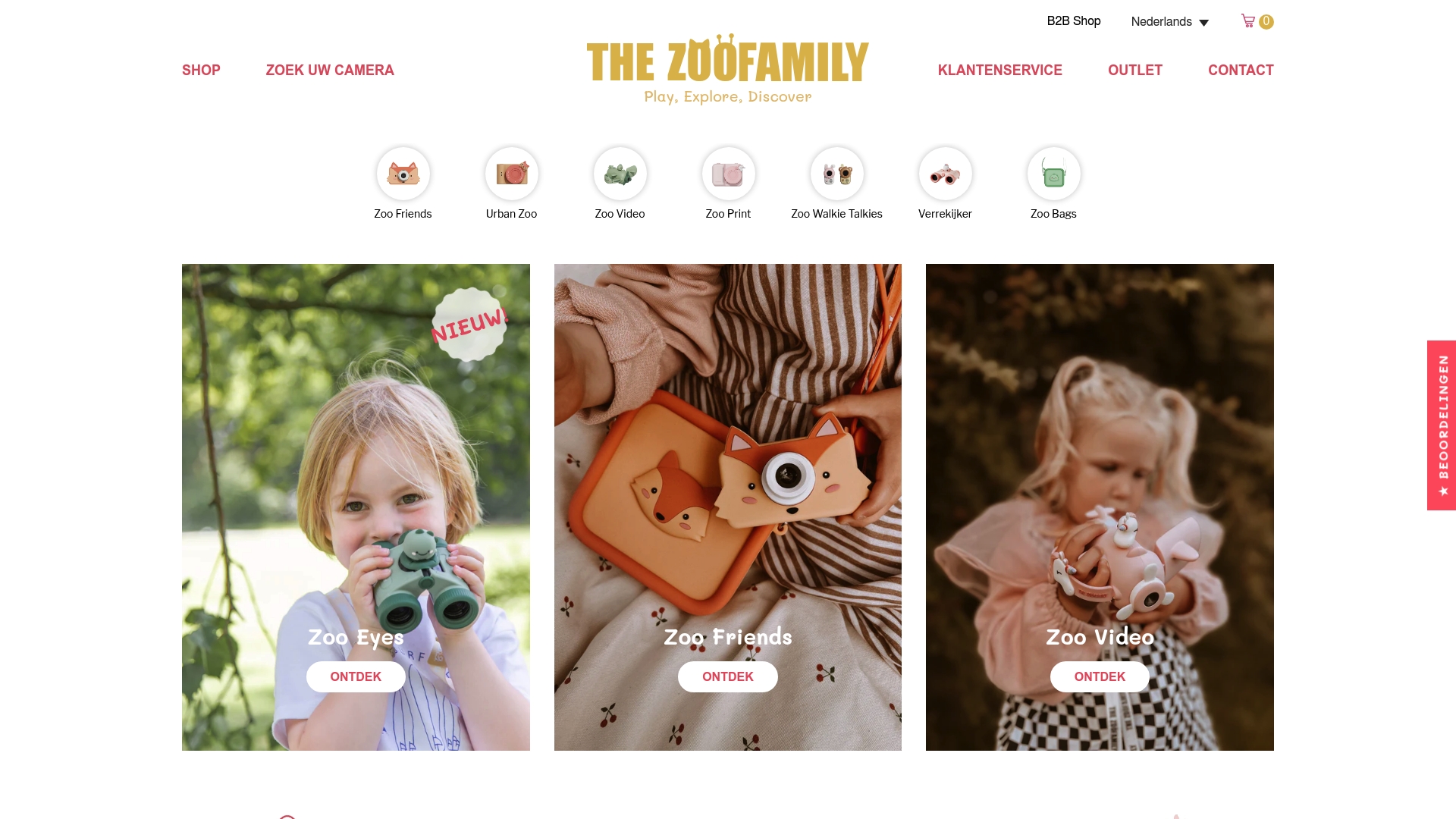
At Thezoofamily, we designed our kids’ cameras, binoculars, and walkie-talkies specifically to give children the tools to lead their own nature discoveries. A child who can zoom in on a bird with their own binoculars for kids or photograph a mushroom with their own camera is a child who owns the experience, not just participates in it. Every camera sold plants one tree, so your family’s outdoor rituals contribute directly to restoring the natural world your children are learning to love. Browse our full range at Thezoofamily and find the right tool to bring your next outdoor tradition to life.
FAQ
What is the difference between a routine and a ritual?
A routine is task-focused, such as brushing teeth or packing a school bag. A ritual, as defined by the Gottman Institute, is emotionally meaningful and relationship-focused, designed to help family members feel seen and connected.
How long should a family nature ritual last?
Duration matters far less than consistency. Sit spots can begin with thirty seconds for young children. Most effective rituals run between ten and thirty minutes, with emotional presence counting more than time spent.
How do I get reluctant children to join nature rituals?
Start with a “winnable” ritual: very short, with one simple prompt and no pressure to perform. Research on sit spotting shows that resistance drops sharply when children experience early success and feel no obligation to stay longer than they choose.
Can nature rituals work in urban settings?
Yes. A park bench, a balcony plant, or a pavement crack with weeds growing through it all qualify as nature. The ritual is about attention and repetition, not wilderness access.
How do nature rituals support children’s mental well-being?
Multidimensional nature connectedness, including the sensory and emotional engagement that rituals provide, is directly linked to psychological well-being and resilience in children, according to research published in Frontiers in Psychology.