

Family nature scrapbooks are crafted collections of outdoor memories that combine photographs, pressed leaves, handwritten notes, and creative artwork into a lasting keepsake every family member can contribute to. Unlike standard photo albums, these books capture the full sensory experience of time spent outdoors, from the smell of pine needles to the texture of bark rubbings. They sit within the broader craft tradition of nature journalling, a practice that prioritises noticing and connection over scientific precision. Whether you prefer a traditional handmade album or a digital photo book, this guide gives you the practical tools, layout ideas, and family strategies to get started today.
1. What are family nature scrapbooks and why do they matter?
Family nature scrapbooks are memory books built around outdoor adventures, combining photos, natural finds, and personal stories in one place. They differ from a standard diary because every page is a visual and tactile record of a real moment in nature. A muddy boot print, a pressed wildflower, or a child’s pencil sketch of a robin all carry more emotional weight than a caption alone. These books become family heirlooms that grow richer with every season.
The practice also builds mindfulness. Successful family nature journals prioritise noticing and connection over scientific identification, which means no family member ever feels out of their depth. That low barrier to entry is exactly what keeps the habit alive long term.
2. Essential materials and tools to get started
The right supplies make the difference between a project that stalls and one that fills a shelf. Start with the basics before adding anything decorative.
Core supplies you need:
- Albums and paper: A 12x12 inch album gives you room to breathe. Use acid-free cardstock to prevent yellowing over time.
- Adhesives: Double-sided tape and photo-safe glue dots hold items flat without warping pages.
- Cutting tools: A craft knife, a bone folder, and a corner rounder punch give pages a clean finish.
- Journalling pens: Pigment-ink pens in black and earthy tones resist fading and suit outdoor themes.
- Natural embellishments: Pressed leaves, dried flowers, seed pods, and feathers add texture and authenticity.
Nature scrapbooking kits include earthy colours, organic patterns, and thematic embellishments suited to camping and hiking memories. They are a strong starting point if you want to skip the sourcing stage. Workshop kits typically support 3–8 pages per session, which means one afternoon can produce a meaningful chunk of your album.
Pro Tip: Press leaves and coat natural items to preserve their colour and prevent decay. Keep everything lightweight. Heavy twigs or stones will warp your pages within months.
3. Creative layout ideas that tell a real story
A great scrapbook page does not just display photos. It recreates a moment. The layout choices you make determine whether a page feels alive or flat.
Themed pages are the simplest way to add structure. Organise by season, by location, or by wildlife spotted. A “Spring in the Woods” spread feels more cohesive than a random mix of March and October shots. Hike highlight pages work especially well because they have a natural narrative arc: the trailhead, the view, the picnic, the tired feet.
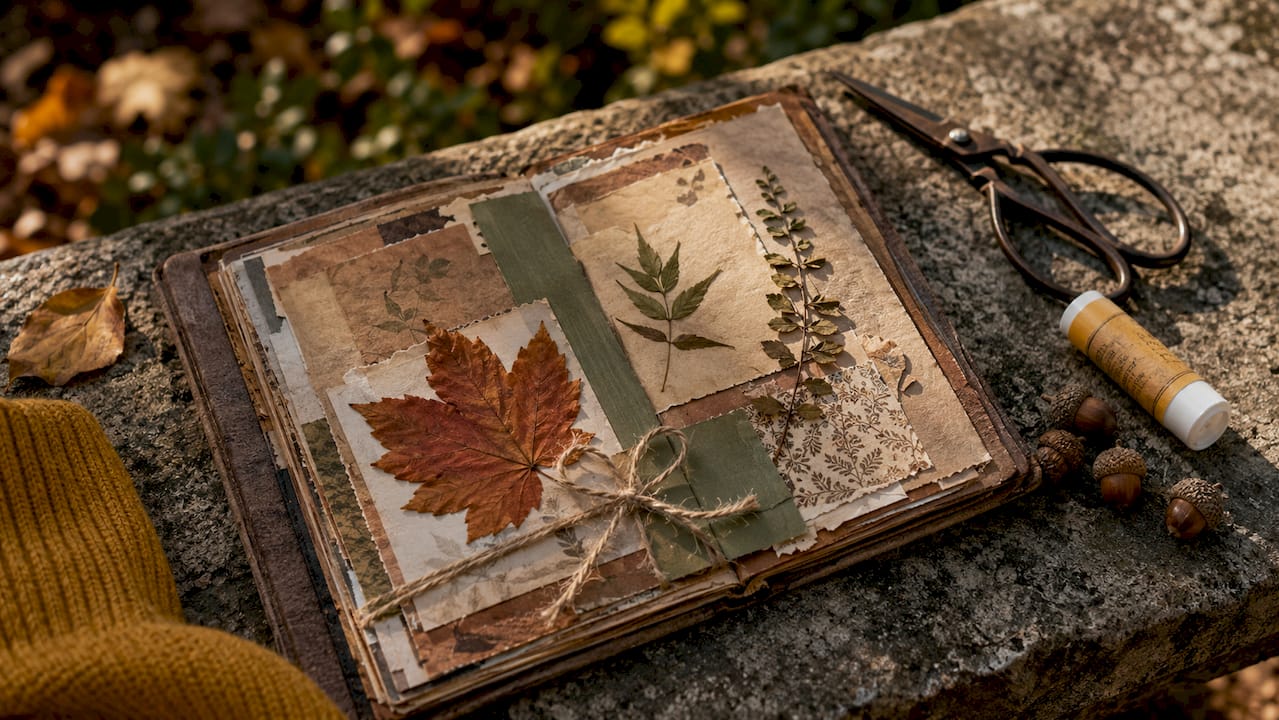
Sensory collage techniques take pages further. Layer torn paper, fabric scraps, and bark rubbings behind your photos to create depth. Combine these with handwritten notes or a favourite quote from the walk. Children’s drawings placed alongside adult photography create a contrast that is genuinely charming.
Nature scrapbooks benefit from organic, imperfect styles because nature itself is irregular. A slightly wonky border or an uneven photo crop mirrors the world you are documenting. Resist the urge to make every page symmetrical. The imperfection is the point.
Pro Tip: Give younger children a sheet of stickers and a blank corner of the page. Their contribution makes the layout more interesting and gives them genuine ownership of the memory.
4. How to involve every family member
The best family outdoor memory books are built by the whole family, not assembled by one parent after bedtime. Shared ownership is what turns a craft project into a family tradition.
- Start with one shared journal. A single book with no individual ownership pressure is the lowest-friction starting point. Begin with a shared family nature journal to build momentum. Younger children participate through stickers and collage art rather than writing.
- Assign age-appropriate roles. Children aged 3–7 can choose stickers, stamp shapes, and glue photos. Children aged 8 and above can write captions, sketch observations, and select layouts. Adults handle cutting, preservation, and final assembly.
- Build a weekly habit. A daily commitment of just one minute is enough to keep a nature journal active for families with children aged 3 and above. That figure shows how little friction is needed to maintain the habit. A Sunday evening review of the week’s nature finds keeps the project moving without pressure.
- Add voice notes. Record a child describing what they saw on a walk, then transcribe a favourite line into the scrapbook. This bridges spoken memory with the physical page in a way that photos alone cannot.
- Create a family nature tradition. Decide on one annual outing, such as a bluebell walk in april or a beach day in september, that always generates a new scrapbook spread. Repetition over years turns a single page into a series that shows children growing up against the same backdrop.
5. Traditional scrapbooks vs digital photo books: which suits your family?
Families documenting outdoor adventures have two main formats to choose from. Each has genuine strengths, and the right choice depends on how your family actually works.
| Feature | Traditional scrapbook | Digital photo book |
|---|---|---|
| Tactile experience | High. Includes real textures and natural items | None. Screen or print only |
| Capacity | Limited by physical size | Up to 400 pages per book |
| Editing flexibility | Low. Changes require physical rework | High. Edit anytime before printing |
| Cost | Variable. Kits and materials add up | Predictable. Pay per book printed |
| Durability | Depends on materials used | Print quality is consistent |
| Creative freedom | Very high. Fully customisable | Moderate. Template-based |
| Child involvement | High. Hands-on throughout | Lower. Mostly adult-led |
Digital photo books use backgrounds inspired by natural textures such as bark, leaves, and river stones, which means the nature theme carries through even without physical embellishments. Services like Mixbook offer nature-themed templates starting at 20 pages. That makes them a practical choice for families with large photo libraries from multiple trips.
Traditional scrapbooking nature adventures, by contrast, produce something no digital file can replicate. The pressed flower from a specific walk, the child’s fingerprint in ink, the handwritten note in a grandparent’s script. These details make a physical book irreplaceable.
A hybrid approach works well for many families. Build a traditional scrapbook for one or two landmark trips per year, then use a digital photo book to archive the everyday outdoor moments. You get the emotional depth of the handmade book and the convenience of digital storage.
Key takeaways
Family nature scrapbooks work best when they combine physical materials, shared roles, and a consistent habit that every family member can contribute to at their own level.
| Point | Details |
|---|---|
| Start with a shared journal | One book with no individual ownership removes pressure and builds momentum for the whole family. |
| Use lightweight natural items | Press leaves and coat finds to preserve colour; avoid heavy materials that warp pages. |
| Embrace imperfection | Irregular layouts and children’s contributions make pages more authentic and emotionally resonant. |
| Choose the right format | Traditional books suit landmark trips; digital photo books suit large everyday photo libraries. |
| Build a repeating tradition | One annual outing that always generates a new spread turns a project into a lasting family record. |
Why I think most families are doing this backwards
Most parents I speak to start with the supplies. They buy the kit, the stickers, the album. Then they wait for a big trip to justify opening it. The book sits in a drawer for six months and the habit never forms.
The families who actually fill their books start with the habit, not the materials. They go outside, they notice something, and they record it the same day. The scrapbook becomes the container for an existing practice rather than the motivation to start one. That shift in thinking changes everything.
Nature scrapbooks that embrace imperfection produce more authentic keepsakes than polished ones. I have seen beautifully designed albums that feel cold and lifeless next to a chaotic, crayon-covered book made by a six-year-old. The second book is the one families actually pick up and look through together.
My honest advice: start with a single shared notebook, go outside this weekend, and stick one thing in it. The collage art using recycled materials approach is a brilliant way to lower the barrier further. You do not need to buy anything. You need to go outside and pay attention.
— ALAIN
Start your family’s nature scrapbook with Thezoofamily
Thezoofamily exists to connect children with the natural world through creative play and hands-on exploration. If this article has given you the spark to start your own family outdoor memory book, Thezoofamily has the resources to keep that momentum going.
From DIY nature ornaments that double as scrapbook embellishments to family nature photo albums designed to inspire children’s curiosity, the Thezoofamily blog is packed with practical ideas for every season. Every camera sold plants one tree, so your family’s creativity directly supports the natural world you are documenting. Visit Thezoofamily to explore craft ideas, product picks, and nature activities built for families who want to make memories that last.
FAQ
What goes inside a family nature scrapbook?
Family nature scrapbooks typically include photographs, pressed leaves and flowers, hand-drawn sketches, written notes, and natural finds such as feathers or seed pods. The goal is to capture the full sensory experience of an outdoor adventure, not just the visual record.
How do I get young children involved in scrapbooking nature adventures?
Children aged 3 and above can contribute through stickers, collage, and stamping rather than writing. Starting with a shared journal removes individual pressure and makes participation feel natural for all ages.
Are digital photo books a good alternative to traditional nature scrapbooks?
Digital photo books hold up to 400 pages and use nature-themed templates, making them practical for large photo libraries. They lack the tactile quality of a handmade book but suit families who prefer a low-maintenance format.
How do I preserve natural items in a scrapbook without them decaying?
Press leaves flat and allow them to dry fully before mounting. Coat delicate items with a clear resin or mod podge to lock in colour and prevent decay. Keep all natural additions lightweight to avoid warping the album pages over time.
How often should families add to their nature scrapbook?
A one-minute daily commitment is enough to maintain an active nature journal. A weekly review session where the family selects photos and adds finds from the week is a practical rhythm for most households.