

Three good starter projects for children are the pinecone feeder, the toilet-roll feeder, and the plastic bottle feeder. All use recycled or household items and can be completed quickly with no specialist tools. Pinecones suit ages 3 and up (rolling and pressing is safe for small hands). Toilet rolls work well for ages 4 and up (simple spreading and seed-rolling). Plastic bottles are recommended for children aged around 7 and older, with an adult responsible for all cutting.
Quick-start guide by age:
- Ages 3–5: Pinecone feeder — no cutting, no heat, just rolling in fat and seeds.
- Ages 4–7: Toilet-roll feeder — spread, roll, hang. Done in ten minutes.
- Ages 7+: Plastic bottle feeder — an adult cuts the holes; children fill and decorate.
All three projects attract common UK garden birds including blue tits, great tits, house sparrows, and robins. Scouts UK confirms that recycled containers and simple materials are all you need for child-friendly feeder activities with adult supervision.
Key takeaways
Start with a safe, recycled-material project, feed birds the right foods, and clean feeders regularly — those three steps cover most of what children and families need to run a successful, eco-friendly feeding station.
| Point | Details |
|---|---|
| Start with simple projects | Pinecone, toilet-roll, and plastic bottle feeders use recycled items and need no specialist tools. |
| Safety comes first | Adults handle all cutting and hot fat; smooth every plastic edge before children touch the feeder. |
| Feed the right foods | Sunflower hearts, mixed seed, and plain suet are safe; avoid bread, salted foods, and whole peanuts in spring. |
| Clean on a schedule | Wash feeders every 1–2 weeks and replace plastic bottle feeders every 4–6 weeks to prevent disease. |
| Thezoofamily cameras and binoculars | Extend feeder observation into an ongoing nature study — and each camera sold plants one tree. |
Table of Contents
- What you need and key safety checks before you start
- Six step-by-step feeder projects to make at home
- What to feed garden birds — and what to avoid
- Where to hang feeders and how long until birds arrive
- How to clean feeders and keep birds healthy
- Fixes for soggy seed, sharp edges, squirrels, and other problems
- Sources
What you need and key safety checks before you start
Materials
Most of what you need is already at home. Collect these before you begin:
- Empty plastic bottles (500 ml or 2-litre), juice cartons, or cardboard tubes
- Pinecones gathered from a local park or garden
- String, twine, or garden wire (for hanging)
- Suet or lard (plain, unsalted)
- Mixed bird seed, sunflower hearts, or nyjer seed
- A blunt butter knife or lolly stick (for spreading with younger children)
- A sharp craft knife or scissors (adults only)
- A hole punch or skewer (adults only)
- A baking tray lined with greaseproof paper
For a longer-lasting wooden feeder, the Woodland Trust recommends rot-resistant timber such as cedar, plus basic woodworking tools handled by adults only.
Safety checklist
Before any session with children, run through this list: Cut all plastic or card before children join the table. Smooth every cut edge with a nail file or fold tape over it. Keep nuts away from children with allergies — use sunflower butter as a substitute for peanut butter. Supervise string lengths; loops longer than 30 cm are a strangulation risk for small children. Wash hands thoroughly after handling suet, seeds, or used feeders. Place finished feeders out of reach of cats before children go outside to hang them.
Adult tasks: all cutting, hole-making, boiling water (for suet melting), and hanging at height.
Child tasks: spreading, rolling, filling, decorating with stickers or non-toxic paint, and choosing where to hang.
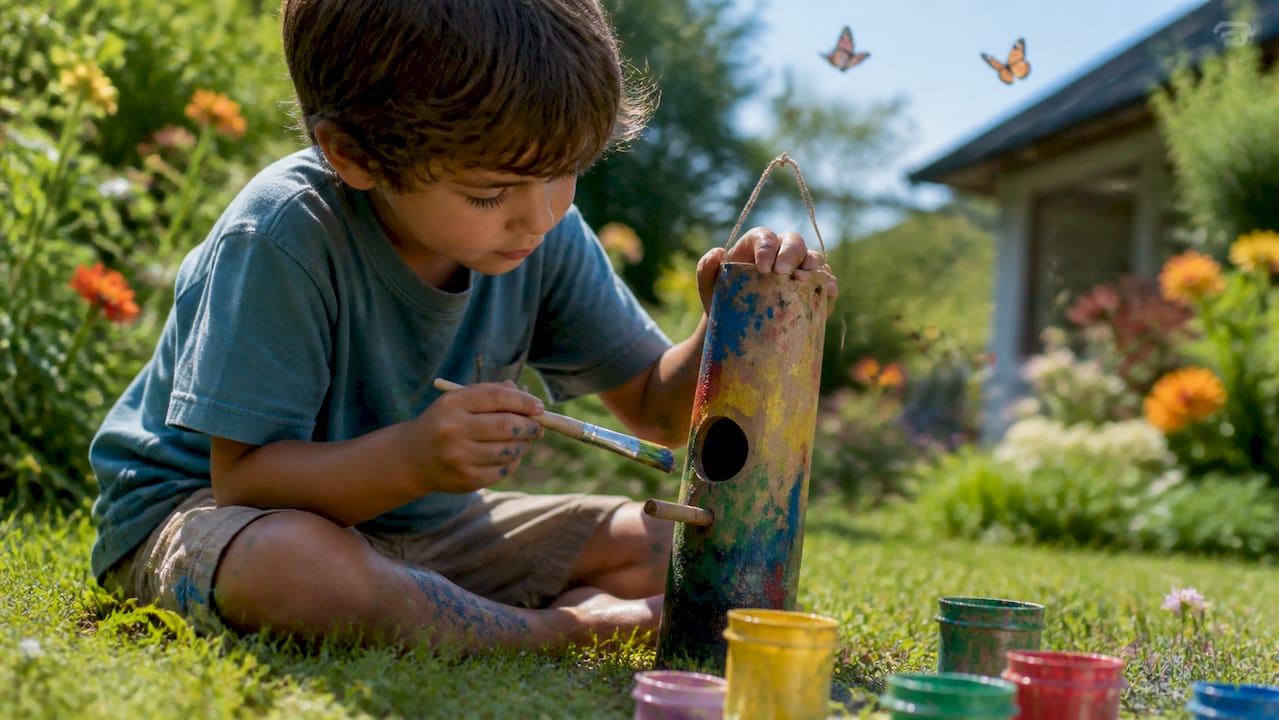
Pro Tip: Run a nail file or a strip of masking tape along every cut plastic edge before children touch the feeder. Sharp burrs can cut fingers and, once a feeder is outside, can damage bird feathers and cause infections.
For families using recycled materials, Thezoofamily’s guide to creative ways to recycle naturally with children has practical advice on sourcing and preparing containers safely.
Six step-by-step feeder projects to make at home
Project 1: Pinecone feeder
Materials: Large pinecone, lard or suet (softened), mixed seed, string. Time: 10 minutes. Difficulty: Very easy (ages 3+).
- Tie a 40 cm length of string tightly around the top of the pinecone.
- Soften lard or suet at room temperature (do not melt — it becomes too runny for small hands).
- Press the fat into the pinecone scales using fingers or a lolly stick.
- Roll the coated pinecone in a tray of mixed seed.
- Press gently so seeds stick into the fat.
- Hang from a branch or hook at least 1.5 m from the ground.
Birds attracted: Blue tits, great tits, coal tits, and house sparrows. Safety note: Use plain lard only. Avoid salted butter or cooking fats.
BBC CBeebies shows this exact method as a safe, preschool-appropriate activity using pantry items.
Project 2: Toilet-roll feeder
Materials: Cardboard tube, sunflower butter or plain suet, mixed seed, string. Time: 10 minutes. Difficulty: Very easy (ages 4+).
- Thread string through the tube and tie a loop at the top.
- Spread sunflower butter or softened suet over the outside of the tube.
- Roll the tube in a tray of mixed seed until fully coated.
- Hang from a branch.
- Replace after rain or when the tube becomes soggy (usually within a week).
Birds attracted: Tits, sparrows, and robins if placed low. Safety note: Sunflower butter is a nut-free alternative suitable for allergy-aware households.
Project 3: Plastic bottle feeder
Materials: Clean 2-litre plastic bottle, mixed seed, two wooden dowels or pencils, string. Time: 20–30 minutes. Difficulty: Moderate (adult cutting required; children ages 7+).
- Wash and dry the bottle thoroughly.
- Adult: Pierce two small holes opposite each other, about 5 cm from the base, using a skewer.
- Adult: Cut feeding holes roughly the size of a 5p coin, just above each perch hole. The Natural History Museum specifies this size to allow birds to reach seed without the hole becoming so large that seed spills.
- Adult: Pierce small drainage holes in the base to prevent seed rotting.
- Slide dowels or pencils through the perch holes to create perches.
- Adult: Smooth all cut edges with a nail file.
- Fill the bottle with mixed seed or sunflower hearts.
- Replace the cap and tie string around the neck.
- Hang in a sheltered spot.
Birds attracted: Blue tits, great tits, greenfinches, and house sparrows. Safety note: Replace the bottle every few weeks. Plastic scratches over time and harbours bacteria.
Project 4: Juice carton feeder
Materials: Clean 1-litre juice carton, mixed seed, string, waterproof tape. Time: 20 minutes. Difficulty: Easy (adult cutting required; children ages 5+).
- Wash and dry the carton completely.
- Adult: Cut a large rectangular opening on one side, leaving a 3 cm lip at the bottom to hold seed.
- Adult: Pierce a hole through the top for hanging string.
- Thread string through and knot it securely.
- Seal any rough edges with waterproof tape.
- Fill with seed and hang.
Birds attracted: Sparrows, tits, and chaffinches.
Scouts UK’s family feeder activities include the juice carton as a core project for child participation.
Project 5: Fat balls (suet balls)
Materials: Lard or suet (plain), mixed seed, dried mealworms, raisins (unsulphured), string, a muffin tin or yoghurt pots. Time: 20 minutes plus 2 hours chilling. Difficulty: Easy (adult handles melting; children ages 5+).
- Melt lard gently in a saucepan — adult only.
- Remove from heat and stir in seed, mealworms, and raisins at a ratio of roughly one part fat to two parts dry mix.
- Allow to cool until the mixture is thick but still pliable.
- Children spoon the mixture into muffin tins or yoghurt pots.
- Press a loop of string into the centre of each ball.
- Refrigerate for at least 2 hours until firm.
- Hang or place in a wire fat-ball holder.
Birds attracted: Starlings, tits, sparrows, robins, and wrens. Safety note: Never use polyunsaturated spreads or salted fats — these are harmful to birds.
Project 6: Log feeder
Materials: A short section of untreated log (10–15 cm diameter), a drill (adult only), suet or peanut butter substitute, string. Time: 30 minutes. Difficulty: Moderate (adult drilling required; children ages 6+).
- Adult: Drill several 2–3 cm diameter holes around the log at different heights.
- Adult: Drill a smaller hole through the top for hanging string.
- Thread and knot the string.
- Children pack suet or sunflower butter into the holes using a lolly stick.
- Hang from a sturdy branch.
Birds attracted: Woodpeckers (if you have them locally), nuthatches, treecreepers, and tits.
The Woodland Trust’s wooden feeder guide recommends placing feeders near cover such as shrubs or hedges to give birds a safe escape route.
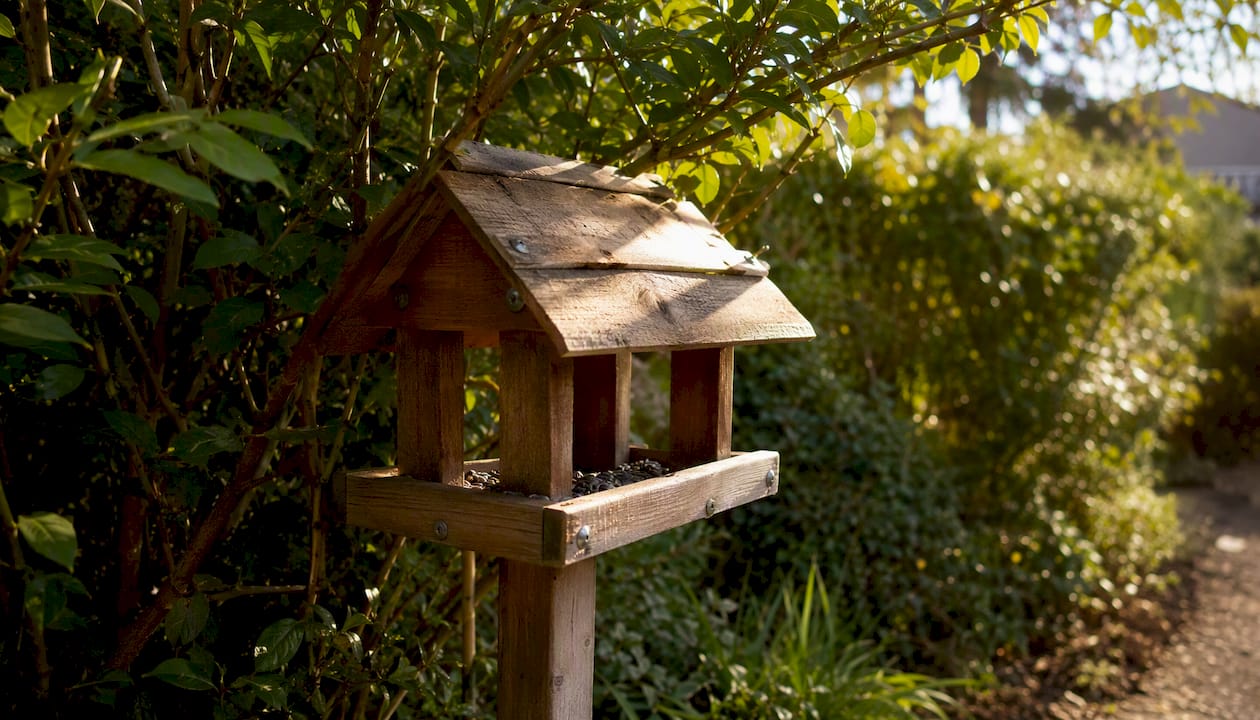
Quick materials reference
| Project | Key materials | Adult tasks | Age guide |
|---|---|---|---|
| Pinecone | Pinecone, lard, seed, string | None required | 3+ |
| Toilet roll | Cardboard tube, suet/butter, seed | None required | 4+ |
| Plastic bottle | Bottle, seed, dowels | Cutting, smoothing edges | 7+ |
| Juice carton | Carton, seed, tape | Cutting | 5+ |
| Fat balls | Lard, seed, mealworms | Melting fat | 5+ |
| Log feeder | Log, suet | Drilling | 6+ |
What to feed garden birds — and what to avoid
Sunflower hearts are one of the most reliable choices for UK garden birds. They are high in fat and protein, have no husk (so no mess beneath the feeder), and suit a wide range of species. Mixed seed blends containing millet, sunflower, and flaked maize attract sparrows, finches, and tits. Nyjer seed is small and oil-rich, and specifically draws goldfinches and siskins.
Suet and lard (plain, unsalted) provide concentrated energy, which is especially useful in cold weather. Dried mealworms are excellent for robins and song thrushes. Unsulphured raisins and grated mild cheese are also safe in small quantities.
Foods to avoid: Bread fills birds up without providing nutrition and can cause a condition called ‘angel wing’ in waterfowl. Salted or roasted nuts, salted fat, and sweetened foods are toxic to birds. Whole peanuts should not be offered during spring and summer when parent birds may carry them to nestlings, as they are a choking risk for chicks. Desiccated coconut expands in the stomach and can be fatal. Cooked porridge oats become sticky and can mat feathers.
Seasonal notes: In winter, prioritise high-energy foods — suet, sunflower hearts, and fat balls. Birds need extra calories to maintain body temperature. In summer, switch to smaller seed portions and add a shallow dish of fresh water. Parent birds feeding chicks benefit most from live or dried mealworms rather than large seeds. The RSPB’s feeding guidance explains how feeder type and food choice directly influence which species visit your garden.
Common myth: Coffee grounds, cooked potato, and raw rice are sometimes suggested as bird food online. Coffee grounds contain caffeine, which is harmful to birds. Plain cooked rice is safe in very small amounts, but it offers no nutritional value and quickly goes mouldy. Stick to recognised bird foods.
Where to hang feeders and how long until birds arrive
Placement makes a significant difference to how quickly birds find a new feeder and how safe they feel using it. The Natural History Museum advises that it can take a few days to two weeks for local birds to discover a new feeder, so patience is part of the process.
Placement checklist:
- Hang feeders at least 1.5 m from the ground to reduce cat access.
- Position within 2–3 m of a shrub, hedge, or tree so birds have a quick escape route.
- Keep feeders visible from a window so children can observe without disturbing visitors.
- Avoid placing directly above a path or seating area (droppings and seed husks fall below).
- Keep feeders away from dense cover where cats can hide undetected.
- Space multiple feeders at least 2 m apart to reduce crowding and the spread of disease.
The first visitors are usually the boldest species: blue tits and house sparrows tend to find new feeders first. Robins often prefer ground-level food or low trays rather than hanging feeders. For a robin-specific project, Thezoofamily’s guide to making a robin-friendly feeder covers ground-feeding options in detail.
Pro Tip: Offer two or three different food types in separate feeders rather than mixing everything into one. Tits prefer hanging feeders with sunflower hearts; sparrows favour open trays with mixed seed; robins respond best to mealworms placed at or near ground level. Variety in feeder design and food brings a wider range of species.
For broader advice on creating a garden that supports feeder visitors year-round, Thezoofamily’s guide to sustainable gardening tips, composting & home growing ideas covers planting and habitat tips that complement feeder projects.
How to clean feeders and keep birds healthy
Dirty feeders spread disease. Finch trichomonosis and salmonellosis are both linked to contaminated feeders and seed trays. Regular cleaning is not optional.
Cleaning method (children can assist with steps 1–3):
- Empty any remaining seed into a bin bag (do not compost used seed).
- Rinse the feeder with cold water to remove loose debris.
- Wash in warm, soapy water using a dedicated brush (keep this brush separate from kitchen brushes).
- Adult: Scrub any rough or cracked edges where bacteria collect.
- Rinse thoroughly with clean water.
- Leave to dry completely before refilling — damp feeders cause seed to clump and mould.
The Natural History Museum recommends replacing plastic-bottle feeders regularly to avoid rotting food and bacterial build-up. Plastic scratches over time, and those scratches harbour bacteria that warm soapy water cannot fully remove. Treat plastic bottle feeders as temporary and replace them every few weeks.
Maintenance schedule:
| Feeder type | Clean how often | Replace when |
|---|---|---|
| Pinecone / toilet roll | After each use (single use) | Every session |
| Plastic bottle | Every 1–2 weeks | Every 4–6 weeks |
| Juice carton | Every 1–2 weeks | When card softens or tears |
| Fat ball holder (wire) | Every 2 weeks | When wire corrodes |
| Wooden tray / platform | Weekly | When wood rots or splinters |
| Log feeder | Monthly | When wood shows mould or decay |
Signs of a problem: Seed that smells sour, a sticky residue inside the feeder, or dead birds found near the feeding area all indicate a hygiene issue. Remove and discard the feeder, clean the area beneath it, and pause feeding for two weeks before introducing a clean replacement.
Fixes for soggy seed, sharp edges, squirrels, and other problems
Common problems have straightforward solutions. Work through this list before retiring a feeder entirely.
- Soggy or mouldy seed: Add drainage holes to the base of bottle and carton feeders. The Natural History Museum specifies small holes in the base of plastic-bottle feeders for exactly this reason. Empty and clean feeders after heavy rain.
- Seed not being eaten: Check the seed is fresh (sniff it — stale seed smells musty). Try a different food type. Move the feeder closer to cover.
- Squirrels emptying feeders: Raise feeders higher on a smooth pole with a baffle (a dome-shaped guard below the feeder). Offer nyjer seed in a dedicated nyjer feeder — squirrels rarely bother with it.
- Jagged plastic edges: File smooth immediately or retire the feeder. A sharp edge that cuts a bird’s foot or feathers can lead to infection. Never patch a cracked plastic feeder with tape and continue using it.
- Cats ambushing birds: Move feeders to an open spot with clear sightlines. A smooth metal pole with no nearby furniture makes it harder for cats to reach.
- Feeder swinging in wind: Use a shorter string or hang from a bracket fixed to a fence post for stability.
- No birds after two weeks: Check for nearby disturbance (building work, a new cat in the area). Try a different food. Be patient — some gardens take longer to attract regular visitors.
Pro Tip: Selective seed choice is one of the most effective low-cost deterrents. Sunflower hearts and nyjer seed leave almost no waste beneath the feeder, which means fewer ground-feeding pests such as rats. Avoid cheap mixed seed blends that contain a high proportion of wheat — most garden birds discard it, and it attracts unwanted visitors.
How making feeders helps children learn
Building and watching a bird feeder delivers several clear learning outcomes that parents and teachers can observe and build on.
Observable outcomes by age:
- Ages 3–5: Fine motor skills (pressing, rolling, spreading), colour recognition (identifying birds by plumage), and simple counting (how many birds today?).
- Ages 5–8: Species identification using a field guide or the RSPB’s bird identifier, recording visits in a tally chart, and understanding seasonal change.
- Ages 8–12: Comparing which foods attract which species, graphing visit frequency over a week, and contributing to citizen-science projects such as the RSPB’s Big Garden Birdwatch (held each January).
The RSPB’s Big Garden Birdwatch is the world’s largest garden wildlife survey, with hundreds of thousands of households taking part each year. Families count birds for one hour and submit results online — a straightforward way to connect a home feeder project to real conservation data.
A simple week-long tally sheet (species, time of day, weather) gives children a concrete record to compare week on week. Thezoofamily binoculars and cameras make observation more engaging — children can photograph visitors and build a personal species log without disturbing the birds.
Pro Tip: Ask children to draw or photograph each new species before looking it up. The act of observing closely enough to draw a bird — its beak shape, leg colour, tail length — builds identification skills far more effectively than simply showing a picture in a book.
A note from the author on doing this with children
A typical feeder session with children runs about 45 minutes from setup to hanging. The first ten minutes are preparation — laying out materials, washing hands, and assigning jobs. Children who feel they have a clear role (chief seed-roller, official decorator) stay engaged longer. Adults need to stay at the table throughout when cutting tools or hot fat are involved; stepping away for even a moment changes the risk level.
For very young children (under 4), simplify to the pinecone project only and skip the string entirely — press the coated pinecone into a mesh onion bag and tie the bag closed instead. For children with limited grip strength or fine motor challenges, a lolly stick or small spatula makes spreading fat much easier than using fingers.
Celebrate small successes. The first bird to visit a feeder a child made is a genuinely memorable moment. Point it out calmly rather than rushing to the window — sudden movement frightens birds away and teaches children that patience is part of the process.
Extend the activity with Thezoofamily
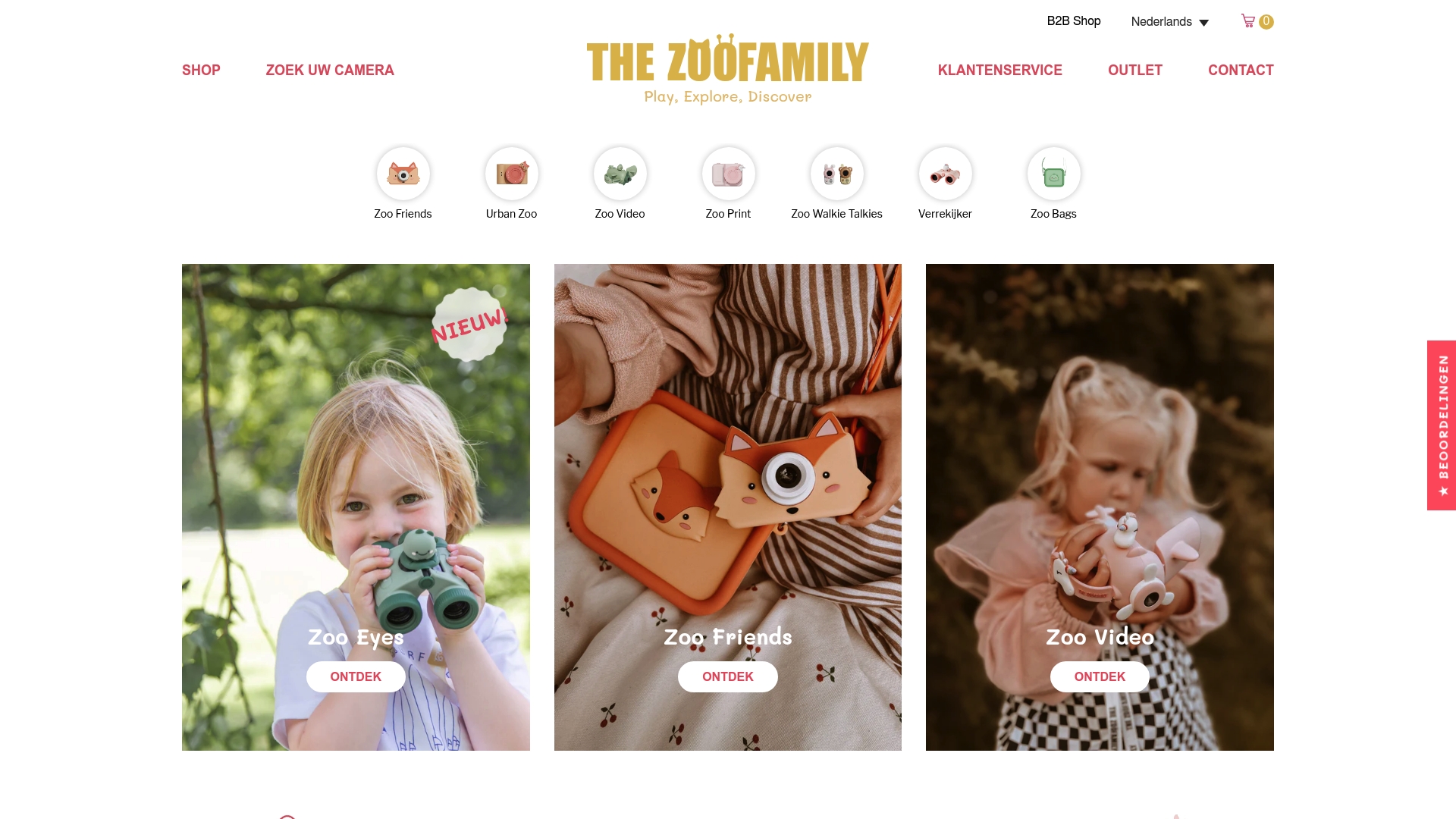
Once the feeders are up, the next step is watching what arrives. Thezoofamily’s children’s cameras and binoculars are designed for exactly this kind of outdoor observation — compact, durable, and built around animal-themed designs that keep children interested in nature. A child with a camera at the window can build a personal photo record of every species that visits, turning a one-afternoon craft project into an ongoing nature study.
Thezoofamily also plants one tree for every camera sold, so the purchase directly supports the natural habitats that garden birds depend on. Visit Thezoofamily to see the full range of cameras, binoculars, and kits suited to young nature observers.
Sources
These UK-focused resources are the most reliable starting points for families and teachers:
- How to make a bird feeder | Natural History Museum
- Make your own bird feeder
- Make brilliant bird feeders | Activities
- Make a bird feeder - CBeebies
- How to Make a DIY Wooden Bird Feeder
Recommended
- 7 idées cadeaux maison éco responsable pour connecter à la nature – The Zoofamily
- 7 Creative Ideas for Celebrating Earth Day with Kids – The Zoofamily
- 7 Creative Ways to Recycle Naturally With Your Children – The Zoofamily
- 7 idées bricolages nature écologique pour éveiller les enfants – The Zoofamily