

TL;DR:
- Young environmental heroes are driven by curiosity, persistence, and community action.
- Inspiring stories of children making a difference motivate kids to engage in eco-activities.
- Connecting children to nature and practical projects fosters lifelong environmental responsibility.
Greta Thunberg was just 15 when she sat outside the Swedish parliament with a handmade sign, refusing to go to school until politicians acted on climate change. That single act of quiet defiance grew into a global movement with over four million participants in the 2019 Fridays for Future strikes. If one teenager could do that, imagine what your child could do with the right encouragement, tools, and stories to spark their curiosity. This guide is for parents who want to nurture that spark, whether through inspiring real-life examples, practical daily steps, or thoughtful eco-friendly gifts that connect children to the natural world.
Table of Contents
- What makes a kids’ environmental hero?
- Inspiring real-life stories: young heroes making waves
- How children can become eco-heroes in everyday life
- Gift ideas to nurture future environmental heroes
- What most guides miss about nurturing kids’ eco-activism
- Nurture your family’s eco-journey with The Zoofamily
- Frequently asked questions
Key Takeaways
| Point | Details |
|---|---|
| Kids drive real change | Young people can spark environmental action locally and globally with support from adults. |
| Practical steps matter | Small daily actions and projects develop eco-awareness over time. |
| Inspiration fuels action | Stories of young heroes help children believe their actions have genuine impact. |
| Choosing thoughtful gifts | Eco-friendly presents can nurture curiosity and a sense of responsibility towards nature. |
What makes a kids’ environmental hero?
The word “hero” can feel big and distant. We picture famous faces on billboards, not children in muddy wellies pulling litter from a riverbank. But that is exactly where most environmental heroes begin: with a small, personal action driven by something they genuinely care about.
A child does not need to address the United Nations to qualify. What sets young eco-heroes apart is a combination of curiosity, persistence, and a willingness to act even when the problem feels enormous. These qualities are not rare. Most children already have them in abundance. What they often lack is a framework and an adult who believes in their potential.
Here are the qualities that tend to show up across every young environmental hero we admire:
- Curiosity about the natural world: They ask questions. Why is the river brown? Where have all the bees gone? What is that plastic thing in the bird’s nest?
- Persistence through setbacks: Real change takes time, and young heroes keep going even when progress is slow.
- Creative thinking: Whether through art, science, swimming, photography, or social media, they find their own unique way to spread the message.
- Community mindset: They rarely act alone for long. They recruit friends, parents, classmates, and eventually strangers to their cause.
- Openness to learning: They combine passion with knowledge, making their actions more effective over time.
“The most powerful thing a child can do for the environment is take one small, genuine action and then tell someone about it. That story travels further than any lecture.”
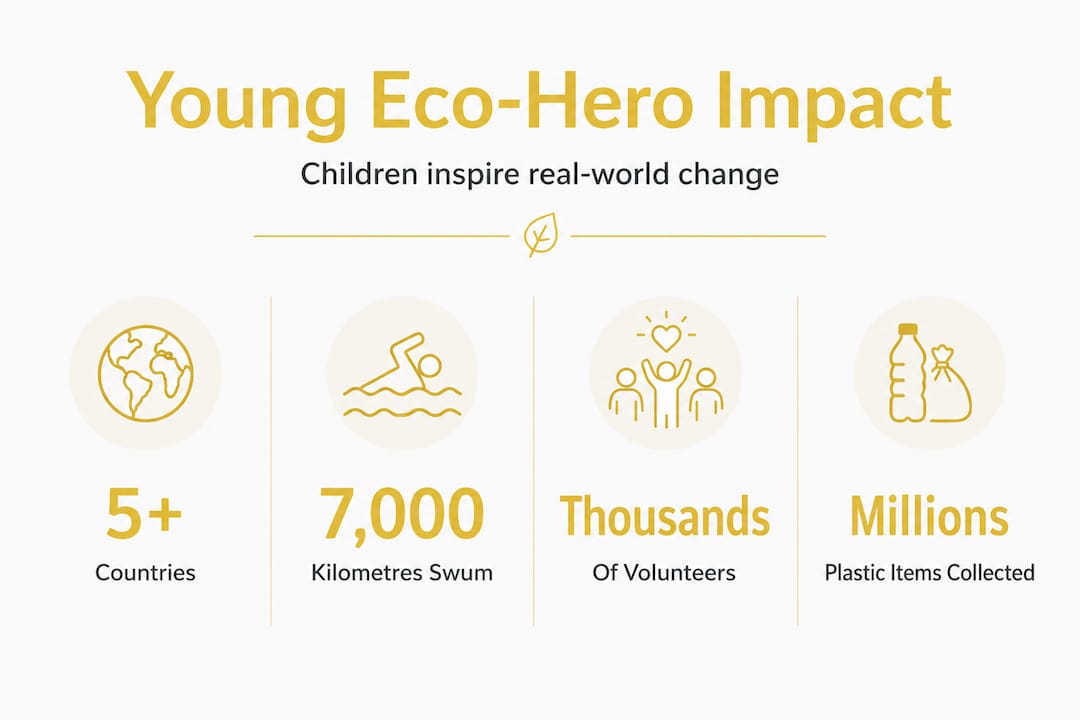
Young heroes employ an impressive range of methodologies. Some, like Greta, lead school strikes and campaigns that shift political discourse. Others plant trees, sue governments, clean beaches, swim across channels, or use social media to educate their peers. The empirical impact is staggering: millions of participants in marches, millions of trees planted, and millions in government funding unlocked. The point is not to copy one hero’s exact approach. The point is that instilling environmental responsibility in children starts with showing them that their chosen approach is valid, whatever it looks like.
Inspiring real-life stories: young heroes making waves
Nothing motivates a child quite like seeing another child achieve something remarkable. These real stories are not just feel-good moments. They are proof that age is not a barrier to meaningful environmental action.
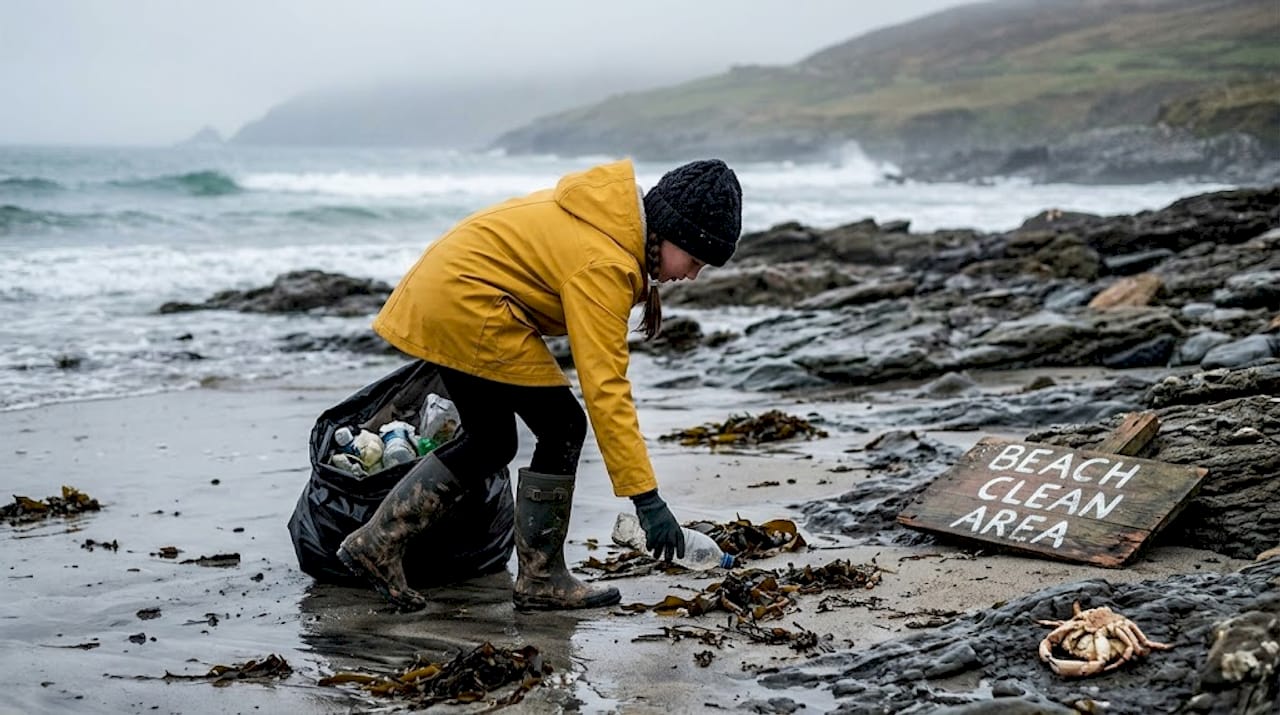
Flossie Donnelly began organising beach cleanups in Ireland at just 11 years old. She founded Flossie & the Beach Cleaners, raised €4,000 to purchase two seabins capable of removing up to 83,000 plastic bags per year, and transformed a personal frustration about ocean plastic into a community movement that continues to grow.
Penelope Lea from Norway joined the Eco-Agents programme at age 8, became the youngest UNICEF ambassador at 15 in 2019, spoke at COP25 in Madrid, and donated her award prize money directly to a Greenpeace lawsuit challenging government climate policy.
Anuna De Wever from Belgium helped lead the Belgian branch of Fridays for Future at 17, organising nationwide strikes and receiving the Amnesty International Ambassador of Conscience Award for her efforts to hold institutions accountable.
Stella Bowles, a Canadian girl aged 11 at the time, used a basic science project to test her local LaHave River. What she discovered shocked her community: raw sewage was flowing directly into the water. Her findings ultimately led to $15.7 million in government funding for a proper clean-up, and she became the youngest ever recipient of the Order of Nova Scotia.
Liam Daly, an 11-year-old from Malta, swam 7 kilometres across the Gozo channel in 2026 to raise €3,000 for Nature Trust and draw attention to plastic pollution in Mediterranean waters.
Here is a quick overview of each hero’s impact:
| Name | Country | Age at start | Action | Impact |
|---|---|---|---|---|
| Flossie Donnelly | Ireland | 11 | Beach cleanups, seabins | €4,000 raised, 83,000 bags/year removed |
| Penelope Lea | Norway | 8 | Eco-Agents, advocacy | Youngest UNICEF ambassador, COP25 speaker |
| Anuna De Wever | Belgium | 17 | Fridays for Future | National strikes, Amnesty award |
| Stella Bowles | Canada | 11 | River science project | $15.7M government clean-up funding |
| Liam Daly | Malta | 11 | Channel swim | €3,000 raised, Mediterranean awareness |
What ties all these stories together is not talent or privilege. It is a parent, teacher, or community that took a child’s concern seriously. You can do the same. Consider sharing these stories with your child over dinner, or on the way to celebrating Earth Day with kids this year. Seeing real peers achieve real things is one of the most powerful motivators available to a young person.
How children can become eco-heroes in everyday life
Inspiration without action is just a nice feeling. The real work is in translating that motivation into habits and projects that grow alongside your child. The good news is that genuine environmental heroes have started as young as 7 or 8, meaning your child is never too young to begin.
Here is a practical, step-by-step approach to building eco-heroism at home:
- Start with what they already love. A child obsessed with fish is a natural candidate for ocean clean-up campaigns. A child who loves drawing could create environmental awareness posters for their school. A child who enjoys walking in the woods could begin tree planting with children as a weekend activity.
- Make one small pledge together. Commit to a single, specific action: collecting litter from your local park once a month, refusing single-use plastic bags for a week, or starting a compost bin. Small wins build confidence.
- Connect them to local groups. Many European cities have youth environmental clubs, school eco-councils, or community garden projects. These give children a peer group that shares their values, which is enormously motivating during the teenage years.
- Introduce citizen science. Apps and programmes exist throughout Europe that allow children to log wildlife sightings, track air quality, or test local water. Combining real scientific data with personal curiosity is exactly what Stella Bowles did to make her case.
- Create a wildlife-friendly garden. Even a small balcony with a bee hotel and some native plants counts. Children who watch insects, birds, and hedgehogs thrive in a space they helped create develop a deep, lasting connection with the natural world.
- Celebrate every step. Do not wait for a €15 million government grant to celebrate. Acknowledge the effort it takes to pick up litter when friends are not doing it, to speak up about eco-issues at school, or to choose the more sustainable option at the supermarket.
Pro Tip: If your child loves photography, use it as an environmental tool. Encourage them to document changes in their local environment over time, from seasonal shifts in wildlife to before-and-after images of a clean-up. This builds both observation skills and a visual record of their impact, creating a powerful personal narrative they can share.
Gift ideas to nurture future environmental heroes
Choosing a gift with genuine environmental purpose sends a message to your child: your passion matters, and adults are taking it seriously. The best eco-gifts do not just sit on a shelf. They spark ongoing curiosity, enable real action, and deepen a child’s connection to the natural world.
Youth activism, when properly channelled, genuinely inspires policy shifts. Research shows that campaigns similar to Fridays for Future have influenced discussions around the EU Green Deal and national climate strategies across Europe. The right gift can be the tool that helps your child find their own version of that influence.
Here is a comparison of gift types, ranked by engagement and educational value:
| Gift type | Best age | Engagement level | Environmental impact |
|---|---|---|---|
| Seed planting kit | 4 to 10 | High | Teaches growing and biodiversity |
| Wildlife adoption | 5 to 14 | Medium | Funds conservation directly |
| Nature guide books | 6 to 14 | Medium | Builds knowledge and identification skills |
| Science experiment set | 8 to 14 | Very high | Develops critical thinking and testing |
| Charity donation in child’s name | 10 and up | High | Direct environmental funding |
| Kids’ camera or binoculars | 5 to 14 | Very high | Encourages outdoor observation |
| Beach or park clean-up kit | 7 and up | Very high | Direct local environmental action |
Some specific gift ideas worth considering:
- Seed kits with native wildflowers: Perfect for balconies and gardens, and deeply satisfying for younger children who love watching things grow.
- A wildlife adoption certificate: Many European conservation organisations offer symbolic adoptions of wolves, otters, or eagles, complete with updates on the animal’s welfare.
- A beach clean-up kit: A mesh bag, reusable gloves, and a litter picker make a practical and meaningful gift for ocean-loving children.
- A donation to a children’s environmental charity: In your child’s name and with their involvement in choosing the cause, this teaches values as much as it helps the planet.
- Photography tools and nature guides: Supporting nurturing eco-awareness through animal behaviour and photography for nature appreciation gives children a lasting skill set alongside their environmental passion.
When you make choices that support sustainability across your household, you also model the behaviour you want your children to absorb. Children notice what adults actually do, not just what they say.
What most guides miss about nurturing kids’ eco-activism
Most articles about raising eco-conscious children focus on information. They tell you which documentaries to watch, which facts to share, and which charities to support. That information is genuinely useful. But it misses something important.
Children do not need more reasons to feel anxious about the planet. Many already feel that anxiety deeply, and without the right framing, eco-education can become eco-anxiety very quickly. The most powerful thing you can give a child is not a list of facts about deforestation. It is the genuine experience of joy in nature, the feeling that they belong to something living and beautiful and worth protecting.
At The Zoofamily, we have seen this play out repeatedly. A child who spends an afternoon watching a hedgehog navigate a garden is not thinking about carbon footprints. They are experiencing wonder. That wonder is what drives lifelong environmental care, far more reliably than fear or guilt. This is why we believe every eco-gift should connect a child to nature first, and to environmental problems second.
We also think guides underestimate the importance of failure. Flossie’s first beach clean-up was not a polished campaign. Stella’s first water test results were dismissed by adults before they were taken seriously. Every real eco-hero faced moments when nothing seemed to be working. Letting your child experience that frustration, and then watching them decide to continue anyway, is one of the most formative things that can happen. Your role is not to smooth every obstacle but to be present when they hit one.
Finally, a mum’s guide to environmental care will tell you that parental modelling matters enormously. Children who see their parents genuinely engaged with environmental issues, not just sharing content online but actually doing something, are far more likely to develop lasting eco-habits themselves. You do not need to be an activist. You just need to be honest, consistent, and enthusiastic about the natural world you share with your child.
Nurture your family’s eco-journey with The Zoofamily
Every child has the potential to become a genuine environmental hero in their own way. Sometimes all they need is the right tool to notice the world more closely.
At The Zoofamily, our kids’ cameras, binoculars, and walkie-talkies are designed with animals and nature at their heart, sparking real curiosity about the wild world around us. Every camera sold plants a tree, because we believe nurturing nature should be built into every purchase. Visit The Zoofamily to explore our full range of eco-conscious gifts that help children look closer, go further, and fall in love with the planet they are already working so hard to protect.
Frequently asked questions
What age can children start environmental activism?
Children as young as 7 or 8 can effectively participate in environmental action with age-appropriate roles and encouragement from adults around them.
How can parents support kids in local eco-projects?
Parents can help by finding community clean-up events, providing safe materials and practical guidance, and connecting their children with local environmental groups or school eco-councils where like-minded peers gather.
Which eco-friendly gifts best encourage environmental awareness?
Gifts like wildlife adoption kits, seed planting sets, science experiment packs, and donations to green charities inspire children to stay engaged with environmental issues over the long term rather than just on a single occasion.
Have young activists actually changed real-world policy?
Yes. Stella Bowles exposed river pollution that led to $15.7 million in government clean-up funding, while other young activists have shaped national strikes, influenced EU climate policy discussions, and raised hundreds of thousands for conservation organisations.