

Despite living in the smartphone era, walkie talkies remain wildly popular among families with young children. These clever devices use radio frequency technology to deliver instant, reliable voice communication without cellular networks. This guide explains walkie talkie technology in simple terms, helping you understand why they’re perfect educational tools and safety aids for outdoor adventures with kids aged 5 to 12.
Table of Contents
- Introduction To Walkie Talkies
- Basic Principles Of Walkie Talkies
- How Push-To-Talk Communication Works
- Frequency Modulation And Signal Encoding
- Factors Affecting Range And Signal Strength
- Common Misconceptions About Walkie Talkies
- Safety And Suitability For Children
- Why Walkie Talkies Remain Useful Today
- Explore Expert-Recommended Kids’ Outdoor Toys
- Frequently Asked Questions
Key Takeaways
| Point | Details |
|---|---|
| Radio Wave Technology | Walkie talkies transmit voice using radio frequency waves and frequency modulation for clear audio. |
| Push-to-Talk System | Half-duplex communication means only one person talks at a time by pressing a button. |
| Range Variables | Effective distance depends on power output, antenna quality, and environmental obstacles like buildings or trees. |
| Network Independence | These devices operate on dedicated radio frequencies without cellular or internet connections. |
| Child Safety Design | Kids’ models feature simple controls, durable builds, and comply with power regulations for safe outdoor play. |
Introduction to Walkie Talkies
Walkie talkies are portable two-way radios that enable instant voice communication between users. They’re particularly valuable for families with children aged 5 to 12 during outdoor activities, ensuring safety while fostering creativity and independence. Walkie talkies remain popular because they provide instant communication without cellular networks, making them ideal for remote locations where smartphones fail.
Their ongoing relevance stems from several practical advantages:
- Work anywhere without cellular coverage or WiFi
- Provide instant communication with simple push-to-talk operation
- Require no monthly fees or service contracts
- Offer rugged durability suited for children’s outdoor play
- Foster educational experiences teaching radio technology basics
These devices create memorable family bonding moments during camping trips, park visits, or backyard adventures. Children gain confidence using real communication technology while parents maintain peace of mind knowing their kids can reach them instantly. The simple technology makes walkie talkies accessible teaching tools that introduce radio science concepts in hands-on ways.
Basic Principles of Walkie Talkies
Walkie talkies transform voice into electromagnetic energy that travels through air as radio waves. These devices use radio waves transmitted and received via antennas on VHF (30 to 300 MHz) or UHF (300 MHz to 3 GHz) frequency bands. Understanding these scientific basics helps you choose the right devices for your family’s needs.
The fundamental components work together seamlessly:
- Antenna: Converts electrical signals into electromagnetic waves for transmission and captures incoming radio waves for reception
- Transmitter: Generates radio frequency signals carrying voice information
- Receiver: Captures incoming radio signals and converts them back to audio
- Speaker and Microphone: Handle voice input and output
Frequency band selection significantly impacts performance. VHF waves travel farther and penetrate buildings better but require longer antennas. UHF signals work better in urban environments with many obstacles but have shorter maximum range in open areas. Most children’s walkie talkies use UHF bands because smaller antennas suit compact, kid-friendly designs.
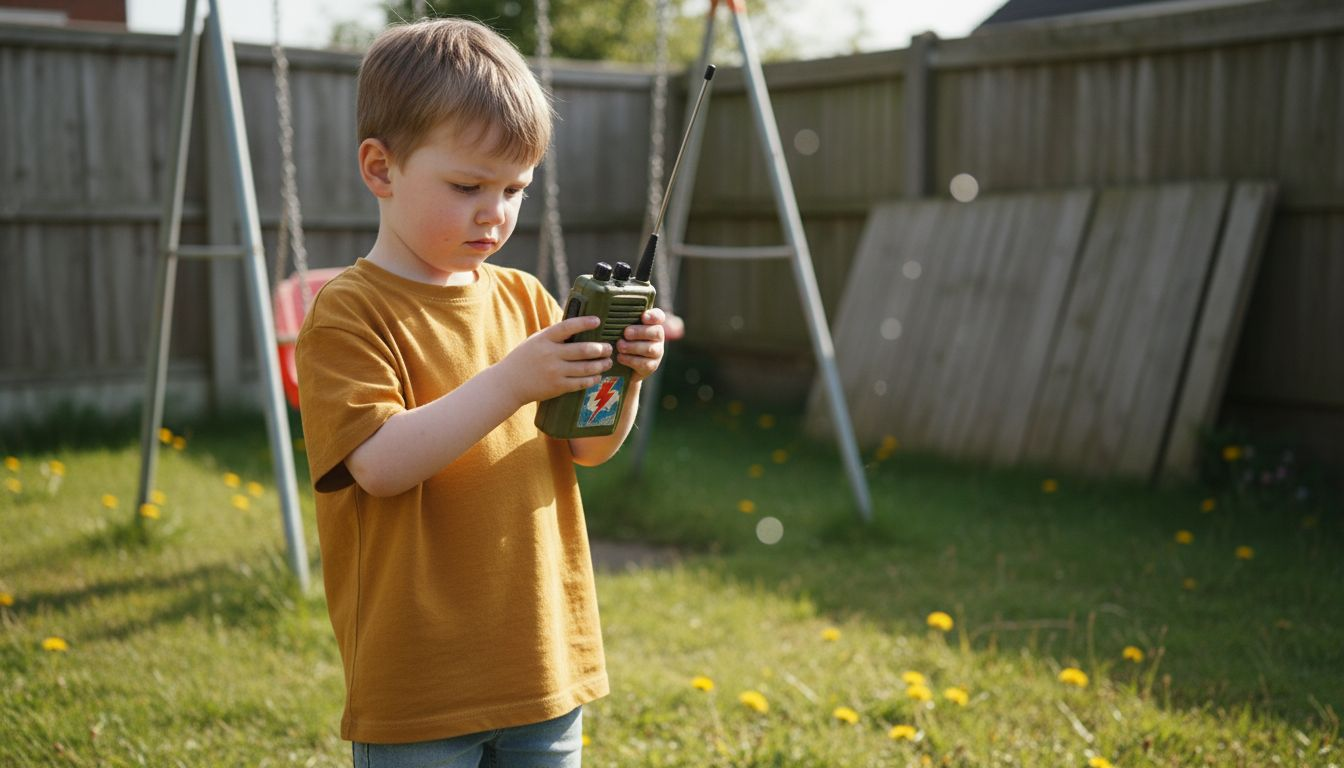
Pro Tip: Antenna position matters tremendously. Keep the antenna vertical and fully extended during use. Teaching children this simple habit dramatically improves communication quality and range, especially when exploring understanding walkie talkie basics becomes part of outdoor education.
Power output directly affects transmission strength and distance. Children’s models typically output 0.5 to 2 watts, providing safe operation while delivering sufficient range for playground or park use. Higher power requires larger batteries and generates more heat, making lower-power designs more suitable for young users.
How Push-to-Talk Communication Works
The defining feature of walkie talkies is their half-duplex communication system. Walkie talkies operate on half-duplex communication where users take turns talking via the push-to-talk button. This differs fundamentally from telephone conversations where both parties can speak simultaneously.
Here’s the communication sequence:
- Press and hold the push-to-talk (PTT) button to activate transmission mode
- Speak clearly into the microphone while keeping the button pressed
- Release the button when finished speaking to switch to receive mode
- Listen for the other person’s response without pressing any buttons
- Wait until they finish before pressing PTT to reply
Users cannot speak and listen simultaneously; proper etiquette requires taking turns. This system conserves battery power by only transmitting when necessary. It also prevents feedback loops and signal interference that would occur if devices tried broadcasting and receiving simultaneously on the same frequency.
Teaching children proper communication etiquette builds valuable social skills:
- Say “over” when finished speaking to signal your turn is complete
- Keep messages brief and clear
- Wait for silence before beginning your transmission
- Speak at normal volume directly into the microphone
Pro Tip: Practice push-to-talk communication at home before outdoor adventures. Set up a simple treasure hunt where kids must use proper radio etiquette to receive the next clue. This builds confidence and ensures they’ll communicate effectively when it matters.
The half-duplex system actually enhances children’s listening skills and patience. Kids learn to wait their turn, organize thoughts before speaking, and communicate concisely. These are transferable communication skills valuable far beyond walkie talkie use.
Frequency Modulation and Signal Encoding
Your voice doesn’t travel through air as sound waves during walkie talkie communication. Instead, a fascinating transformation occurs. The microphone converts voice to electrical signals modulated via FM onto carrier wave for clearer voice transmission.
The encoding process happens in milliseconds:
- Sound waves from your voice vibrate the microphone diaphragm
- These vibrations generate varying electrical current matching voice patterns
- The transmitter uses Frequency Modulation to encode this audio signal
- FM slightly varies the carrier wave frequency according to voice characteristics
- The antenna broadcasts this modulated radio wave through the air
Frequency Modulation offers significant advantages over older amplitude modulation methods. FM provides clearer audio quality with better resistance to electrical interference from power lines, motors, or other electronic devices. This clarity is especially important for children’s safety, ensuring urgent messages come through clearly even in challenging environments.
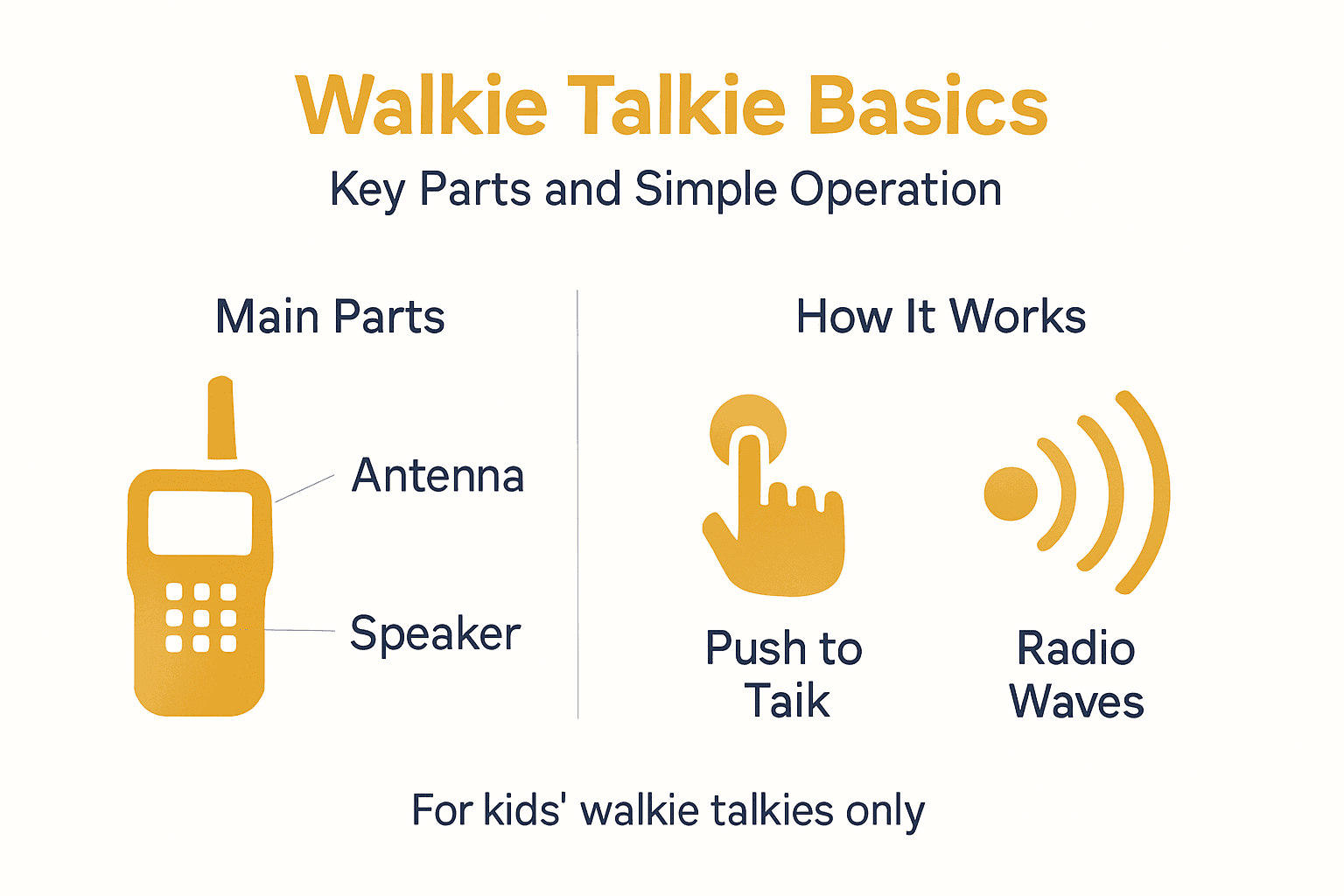
The receiving walkie talkie performs the reverse process. Its antenna captures the incoming radio wave. The receiver circuit isolates the desired frequency while filtering out other signals. Demodulation extracts the original audio information from the carrier wave. Finally, the speaker converts electrical signals back into sound waves you hear.
This entire journey from speaker to listener happens nearly instantaneously. The slight delay you might notice comes from processing time and the push-to-talk switching mechanism, not from the radio transmission itself which travels at the speed of light. Understanding frequency modulation helps you appreciate the sophisticated technology packed into kid-friendly devices.
Factors Affecting Range and Signal Strength
Advertised range specifications rarely match real-world performance. Range depends on power, antenna size, frequency band, and obstacles like buildings and forests. Understanding these factors helps set realistic expectations and maximize device effectiveness during family outings.
| Environment Type | Typical Range | Key Limiting Factors |
|---|---|---|
| Open outdoor spaces | 1 to 3 miles | Minimal obstacles, terrain curvature |
| Urban areas | 0.25 to 1 mile | Buildings, electrical interference |
| Inside buildings | 100 to 500 feet | Walls, metal structures, concrete |
| Forests and hills | 0.5 to 1.5 miles | Trees, terrain elevation changes |
Physical obstacles dramatically reduce effective communication distance. Radio waves cannot bend around solid objects easily. Dense materials like concrete, metal, and stone absorb or reflect signals, creating dead zones. Even thick forest canopy weakens transmission as water in leaves absorbs radio energy.
Several factors determine actual performance:
- Transmitter Power: Higher wattage pushes signals farther but drains batteries faster
- Antenna Quality: Longer, properly tuned antennas capture and transmit more effectively
- Frequency Band: UHF penetrates obstacles better; VHF travels farther in open areas
- Terrain: Valleys and hills block line-of-sight transmission paths
- Weather: Heavy rain or snow can slightly degrade signal strength
Pro Tip: Gain elevation advantage whenever possible. Standing on a small hill or even climbing playground equipment can double effective range by clearing obstacles that block ground-level transmission. Teach children this principle through games that demonstrate walkie talkie range factors in action.
Children’s walkie talkies typically output 0.5 to 2 watts with compact antennas, limiting range to several hundred yards in typical use. This limitation actually benefits safety. Kids remain within reasonable supervision distance while gaining independence. The devices work perfectly for park visits, camping within a campground, or backyard adventures where walkie talkies for kids benefits include safety and educational value without encouraging children to wander dangerously far.
Common Misconceptions About Walkie Talkies
Several persistent myths confuse parents shopping for children’s communication devices. Clearing these misunderstandings ensures you choose appropriate products and set realistic expectations for performance and capabilities.
Major misconceptions include:
- Myth: Walkie talkies work like phone calls with simultaneous conversation
- Reality: Half-duplex operation requires taking turns speaking and listening
- Myth: These devices connect to smartphones or cellular networks
- Reality: Walkie talkies use dedicated radio frequencies completely separate from phone systems
- Myth: Advertised range applies in all environments
- Reality: Maximum range occurs only in perfect conditions with clear line of sight
- Myth: More channels mean better performance
- Reality: Channels simply provide privacy from nearby users, not improved quality
The cellular network confusion causes particular frustration. Walkie talkies cannot call phones or send text messages. They communicate only with other walkie talkies tuned to the same frequency channel. This isolation from phone networks is actually an advantage, teaching children focused communication skills without digital distractions like notifications, apps, or internet access.
Indoor versus outdoor range differences surprise many first-time users. The same devices delivering a mile range in an open park might barely work across a large house. Building materials, especially metal and concrete, dramatically attenuate radio signals. Set expectations accordingly when planning indoor hide-and-seek games versus outdoor adventures.
Common user errors compound misconceptions. Forgetting to press the push-to-talk button, selecting different channels on each device, or expecting communication through thick walls leads to perceived device failure when the technology actually works as designed. Taking time to understand proper operation prevents disappointment.
Safety and Suitability for Children
Walkie talkies designed for children incorporate specific safety features and regulatory compliance making them appropriate educational toys. Understanding these protections helps you confidently select devices supporting outdoor play while minimizing any concerns about radio frequency exposure.
Child-specific design elements include:
- Low power output (typically 0.5 to 2 watts) limits radio frequency exposure to safe levels
- Rugged, impact-resistant housings withstand drops and rough handling
- Large, simple buttons accommodate small hands and limited dexterity
- Bright colors and fun animal designs appeal to young users
- Lightweight construction prevents fatigue during extended use
Regulatory bodies like the FCC carefully control walkie talkie specifications. Children’s devices operate on Family Radio Service (FRS) frequencies that require no license and limit power output. These restrictions ensure safe operation while providing sufficient range for supervised outdoor activities. The kids walkie talkie benefits extend beyond safety to educational value.
Radio frequency energy from walkie talkies poses minimal health concerns at the power levels used in consumer devices. The antenna directs most energy away from the user’s body. Brief transmission times during push-to-talk operation further limit exposure. Reputable manufacturers comply with international safety standards rigorously tested for child safety.
Educational benefits often outweigh parents’ initial concerns. Children learn practical radio technology concepts, develop communication skills, and gain confidence using real tools rather than toys. Walkie talkies encourage outdoor exploration while maintaining safety through constant parent-child communication capability. This balance between independence and supervision supports healthy development during ages 5 to 12.
Durability matters enormously for children’s devices. Quality models withstand the inevitable drops, water splashes, and general rough treatment that accompanies outdoor play. Look for walkie talkies safe for kids featuring sturdy construction, water-resistant seals, and secure battery compartments preventing accidental ingestion of small parts.
Why Walkie Talkies Remain Useful Today
Smartphones dominate modern communication, yet walkie talkies maintain strong relevance for specific applications where their unique characteristics provide distinct advantages. Walkie talkies are still widely used by police, military, event organizers, and families for instant communication, especially where cellular coverage is unavailable.
Their continued popularity stems from practical benefits:
- Zero dependence on cellular infrastructure or internet connectivity
- Instant communication without dialing, unlocking, or navigating apps
- No monthly service fees or data charges
- Rugged durability exceeding typical smartphone resilience
- Group communication allowing multiple users on one channel
Families venturing into remote areas particularly value independence from cellular networks. National parks, mountain trails, and rural camping locations often lack phone coverage. Walkie talkies work reliably in these environments, providing crucial safety communication when smartphones become expensive paperweights. This reliability offers genuine peace of mind during outdoor adventures with children.
“The simplicity of push-to-talk communication makes walkie talkies ideal for young children who aren’t ready for smartphone responsibility but need reliable ways to contact parents during outdoor play.”
Affordability represents another significant advantage. Quality children’s walkie talkie sets cost less than a single month of cellular service. No activation fees, no contracts, no surprise charges. Buy once and use indefinitely without ongoing expenses. This economic efficiency appeals to budget-conscious families seeking communication solutions for occasional outdoor use.
The devices actively encourage outdoor activity and creative play. Unlike smartphones that tether children to screens, walkie talkies facilitate active games like treasure hunts, nature exploration, and imaginative adventures. Kids develop social skills through direct voice communication rather than text messaging. Parents appreciate technology that supports rather than replaces face-to-face interaction and physical activity.
Explore Expert-Recommended Kids’ Outdoor Toys
Equipping your children with quality communication tools enhances outdoor adventures while supporting creativity and environmental awareness. Selecting the right devices might feel overwhelming given countless options claiming superiority. We’ve created comprehensive guides comparing top products specifically for families with children aged 5 to 12.

Our detailed walkie talkies for kids comparison evaluates range, durability, and ease of use. Discover how The Zoofamily’s animal-themed designs spark children’s interest in nature while providing reliable communication during outdoor play. Each device sold plants one tree, teaching environmental responsibility alongside radio technology. Beyond walkie talkies, explore our benefits of walkie talkies guide explaining why these tools matter for child development and safety. Pair communication devices with our kids camera gift guide for complete outdoor adventure kits fostering creativity, observation skills, and memorable family experiences.
Frequently Asked Questions
Can walkie talkies be used like smartphones to talk and listen at the same time?
No, walkie talkies use half-duplex push-to-talk communication allowing only one-way conversation at a time. Users must press the push-to-talk button to speak and release it to listen. This differs fundamentally from telephone calls where both parties can speak simultaneously. The system prevents feedback and conserves battery power.
Do walkie talkies communicate directly with smartphones?
No, walkie talkies use specific radio frequencies unrelated to cellular networks. They cannot directly communicate with smartphones without special hardware or apps. These devices operate on dedicated frequency bands like FRS or GMRS, completely separate from cellular or WiFi systems. This independence actually provides advantages in areas without phone coverage.
What affects the walkie talkie range when used outdoors with children?
Range depends on transmitter power, antenna quality, and environmental obstacles like trees or buildings. Open spaces provide better range compared to urban or forested areas. Elevation significantly impacts performance, as higher positions clear obstacles blocking ground-level signals. Understanding these walkie talkie range factors helps set realistic expectations.
Are walkie talkies safe for children aged 5 to 12?
Yes, children’s walkie talkies comply with power and frequency regulations limiting exposure to safe levels. They are designed to be user-friendly and durable for safe outdoor use. Low power output, rugged construction, and simple controls make these devices appropriate educational tools. Reputable manufacturers follow strict safe walkie talkies for kids safety standards rigorously tested internationally.