

Over half of british parents underestimate the true impact of play on their children’s development. Play is not just about having fun, it serves as a powerful way for children to build cognitive, emotional, and social skills that last a lifetime. Discover how everyday playful moments shape a child’s confidence, problem-solving, and ability to thrive in different environments, unlocking benefits many families overlook.
Table of Contents
- How Play Facilitates Child Development
- Major Types of Play For Children
- Learning And Social Skills Gained Through Play
- Encouraging Nature-Inspired Play At Home
- Common Misconceptions About Learning Through Play
Key Takeaways
| Point | Details |
|---|---|
| Play is Essential for Development | Play facilitates critical cognitive, social, and emotional skills, making it a fundamental aspect of child growth. |
| Types of Play Matter | Engaging in various play types—social, object, pretend, and physical—offers unique benefits and supports diverse learning experiences. |
| Nature-Inspired Play Enhances Learning | Encouraging outdoor and nature-based play fosters curiosity, environmental awareness, and hands-on learning opportunities for children. |
| Play is a Serious Learning Tool | Misunderstandings about play’s value can limit children’s development; recognising it as a vital educational process enhances holistic growth. |
How Play Facilitates Child Development
Play is far more than simple entertainment for children. It represents a fundamental mechanism through which youngsters develop critical cognitive, social, and emotional capabilities. Research from child development experts reveals that play enables children to explore, understand, and interact with their environment in deeply meaningful ways.
Children learn essential life skills through playful interactions. By engaging in imaginative scenarios, constructing makeshift worlds, and navigating social dynamics during play, they develop emotional intelligence, problem-solving abilities, and social communication skills. Unstructured play allows youngsters to experiment, take risks, and learn from their experiences without fear of significant consequences. This process helps build resilience and confidence, teaching them how to adapt and respond to different challenges.
Physical play additionally supports motor skill development and overall bodily coordination. When children climb, run, jump, and manipulate objects during play, they are simultaneously strengthening neural pathways and improving spatial awareness. Engaging activities that encourage movement can transform learning into an exciting, dynamic experience that feels more like adventure than instruction. Through these playful interactions, children gradually construct their understanding of the world, developing critical thinking skills and creative problem-solving approaches that will serve them throughout their lives.
Major Types of Play for Children
Children engage in diverse play styles that contribute uniquely to their developmental journey. Research identifies four primary play categories that help shape cognitive, social, and physical skills: social play, object play, pretend play, and physical play. Each type serves as a critical mechanism for learning and growth, enabling children to explore their world through different interactive approaches.
Social play involves interactions with peers and helps children develop crucial communication and collaboration skills. Object play, which includes manipulating toys and exploring physical items, enhances fine motor skills and problem-solving abilities. Imaginative play allows children to construct fictional scenarios, encouraging creativity and emotional understanding by enabling them to explore different perspectives and roles.
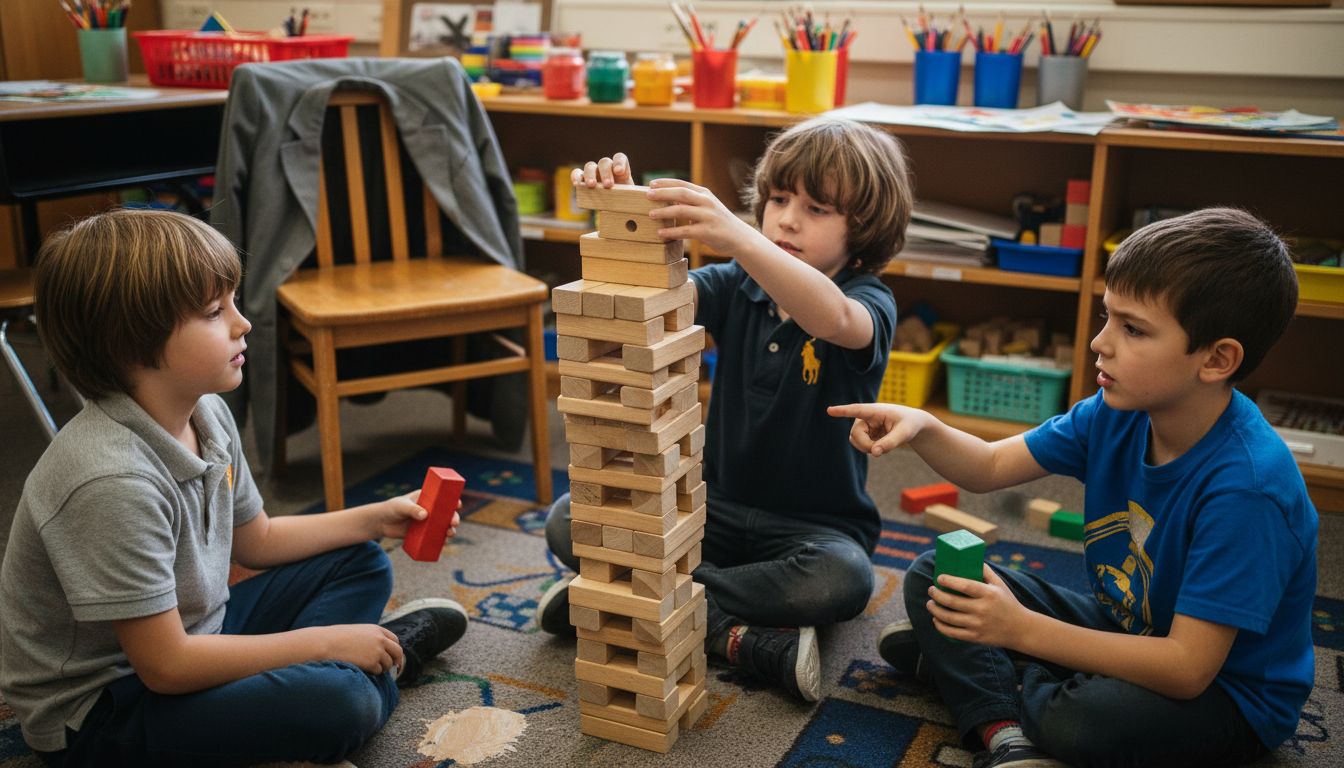
Mildred Parten’s developmental framework further illuminates the progression of play interactions. Her research outlines six distinct stages, from unoccupied and solitary play to more complex cooperative play. These stages demonstrate how children gradually transition from independent exploration to collaborative engagement, reflecting their evolving social competencies. Physical play remains particularly important, supporting gross motor skill development and providing essential opportunities for children to understand spatial relationships, build strength, and develop coordination through active movement and exploration.
Learning and Social Skills Gained Through Play
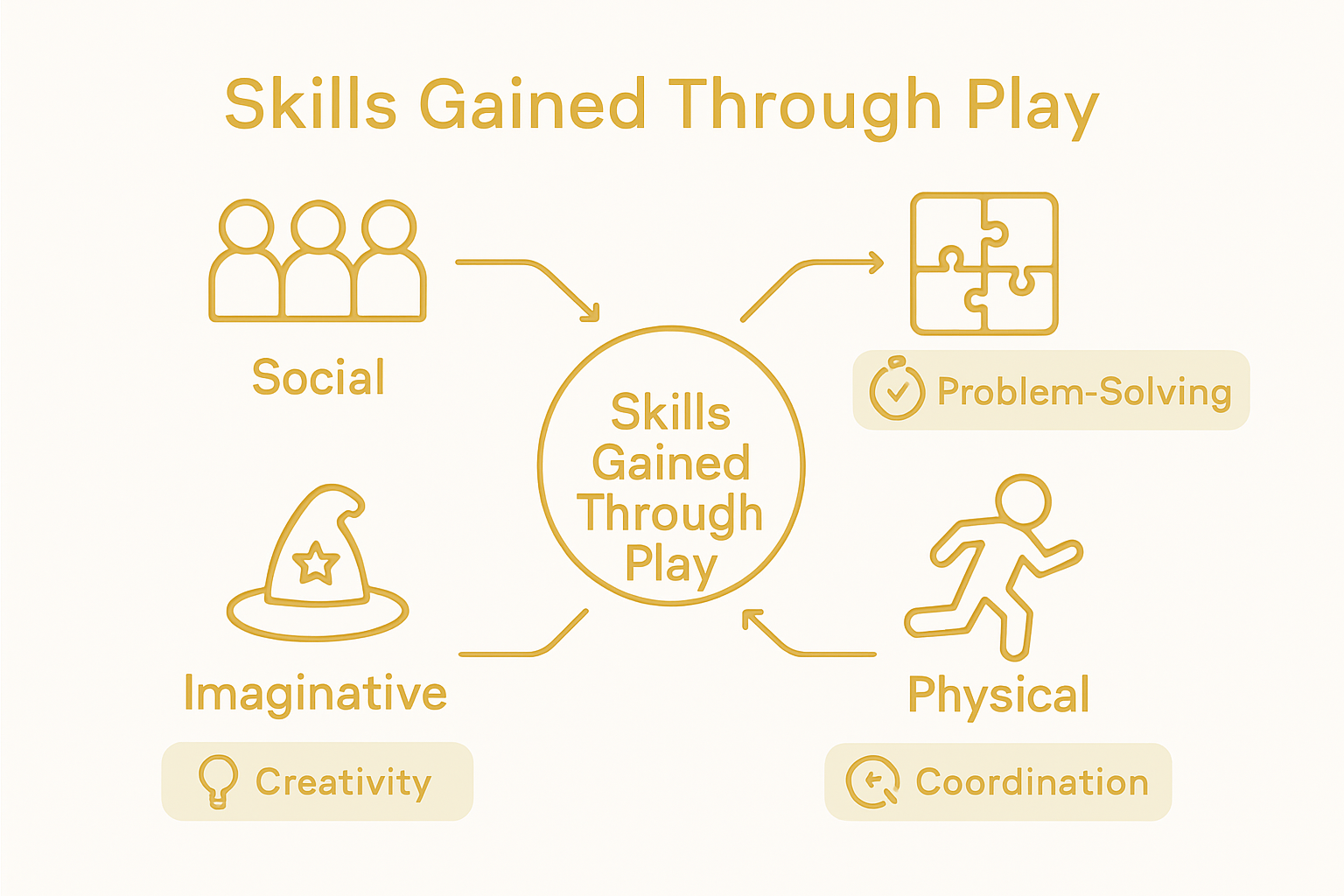
Research demonstrates that play is a fundamental mechanism for developing critical social and cognitive skills. Through interactive experiences, children learn complex interpersonal abilities that extend far beyond simple entertainment. Group activities and imaginative scenarios enable youngsters to explore communication, understand emotional nuances, and develop crucial relationship-building techniques.
Children acquire profound social competencies during play interactions. Engaging in collaborative games helps them learn negotiation, turn-taking, and conflict resolution. Pretend play scenarios allow children to experiment with different social roles, developing empathy and emotional intelligence by understanding perspectives beyond their own immediate experience. These playful interactions teach youngsters how to read social cues, communicate effectively, and navigate complex interpersonal dynamics.
Cognitive development flourishes through varied play experiences. Strategic games enhance problem-solving skills, while imaginative scenarios stimulate creative thinking and abstract reasoning. By encountering challenges, experimenting with solutions, and learning from both success and failure, children build resilience and adaptability. Physical play further supports cognitive growth by developing spatial awareness, coordination, and understanding of cause-and-effect relationships, creating a holistic approach to learning that engages multiple developmental domains simultaneously.
Encouraging Nature-Inspired Play at Home
Outdoor play experiences represent a transformative opportunity for children to engage with their natural environment. By creating intentional spaces and opportunities for nature exploration, parents can support critical developmental processes that extend far beyond traditional indoor learning. Sensory-rich experiences in outdoor settings stimulate children’s curiosity, encouraging them to observe, interact, and learn through direct engagement with the natural world.
Making learning fun through nature-based activities can transform ordinary moments into extraordinary learning opportunities. Simple backyard explorations like collecting leaves, observing insects, or creating small garden patches can teach children about ecosystems, life cycles, and environmental responsibility. Parents can design engaging scenarios that prompt children to use all their senses - feeling different textures, listening to bird sounds, watching plant growth, and understanding the intricate connections within natural environments.
Encouraging nature play requires thoughtful parental guidance and creating safe, stimulating spaces. Practical approaches include establishing small garden areas where children can plant seeds, designing nature scavenger hunts, creating bug observation stations, and providing tools that help them interact meaningfully with their surroundings. These activities not only support physical development but also nurture environmental awareness, teaching children to appreciate and respect the delicate balance of natural systems. By integrating playful exploration with learning, parents can help children develop a lifelong connection with the natural world.
Common Misconceptions About Learning Through Play
Research demonstrates that play is a sophisticated learning mechanism, far more nuanced than many parents initially understand. A prevalent misconception is that play is merely a recreational activity disconnected from serious learning. In reality, unstructured play represents a complex developmental process where children actively construct knowledge, test hypotheses, and develop critical cognitive and social skills through seemingly spontaneous interactions.
Childhood brain development reveals that parents often mistakenly believe learning occurs only through structured, adult-directed activities. This narrow perspective overlooks the profound educational value of child-led play. Children naturally engage in exploratory behaviours that stimulate neural connections, problem-solving abilities, and emotional intelligence. When adults continuously intervene or overly structure play experiences, they can inadvertently limit children’s intrinsic motivation and creative problem-solving capacities.
Another significant misconception is that play is a luxury rather than a fundamental developmental necessity. In truth, play represents a critical mechanism through which children process information, develop social skills, and build resilience. Different play styles - from imaginative scenarios to physical exploration - contribute uniquely to cognitive and emotional growth. By recognising play as a serious learning modality rather than a frivolous activity, parents can create environments that support holistic child development, allowing children to learn through their most natural and engaging form of exploration.
Inspire Your Child’s Curiosity Through Nature and Play
The challenge many parents face is finding engaging tools that nurture their child’s natural curiosity and support development through play. This article highlights the power of unstructured, nature-inspired play to build emotional intelligence, social skills, and problem-solving abilities. At The Zoofamily, we recognise these vital needs and have designed innovative kids’ cameras, walkie-talkies, and binoculars that do much more than entertain. Our products are crafted to connect children with the outdoors, encouraging exploration and hands-on learning about the environment.
Start your child’s adventure today by choosing gear that sparks imagination and fosters a deep bond with the natural world. Every item is paired with animal references that deepen engagement and inspire respect for nature. Best of all, for every camera sold, we plant a tree to help restore our planet for future generations. Discover how play can become a powerful learning journey at The Zoofamily and explore our collection designed for young explorers eager to learn through play and nature.
Frequently Asked Questions
What are the benefits of play for child development?
Play enhances cognitive, social, and emotional skills in children. It promotes problem-solving abilities, emotional intelligence, and resilience through unstructured interactions.
How does outdoor play influence children’s learning?
Outdoor play fosters sensory-rich experiences that stimulate curiosity and engagement with the environment. It teaches children about ecosystems and encourages hands-on learning through exploration.
What are the different types of play that aid in child learning?
The major types of play include social play, object play, pretend play, and physical play. Each type contributes uniquely to cognitive and social development by offering varied interactive experiences.
How can parents encourage play that supports learning?
Parents can create engaging spaces for play, such as nature explorations, garden activities, and imaginative scenarios, allowing children to explore and interact with their environment safely.