

Friendship through outdoor play is defined as the process by which children form genuine social bonds through shared, unstructured time in natural or open-air environments. Developmental psychologist Peter Gray has documented how mixed-age, free outdoor play allows friendships to form naturally, even across language barriers, with minimal adult intervention. University of Exeter research shows that each extra day of outdoor play per week during the preschool years improves long-term mental health by 6–14%. The 1000 Hours Outside initiative reinforces this: nature does not just calm children down, it brings them together. The most effective thing you can do as a parent is give children space, time, and a good outdoor setting.
1. Why friendship through outdoor play works better than structured playdates
Unstructured outdoor play is the most reliable environment for genuine friendship formation in children. When adults over-engineer social time, they disrupt the very process they are trying to support. Over-scheduling playdates removes the spontaneity that teaches children to negotiate, compromise, and connect on their own terms.
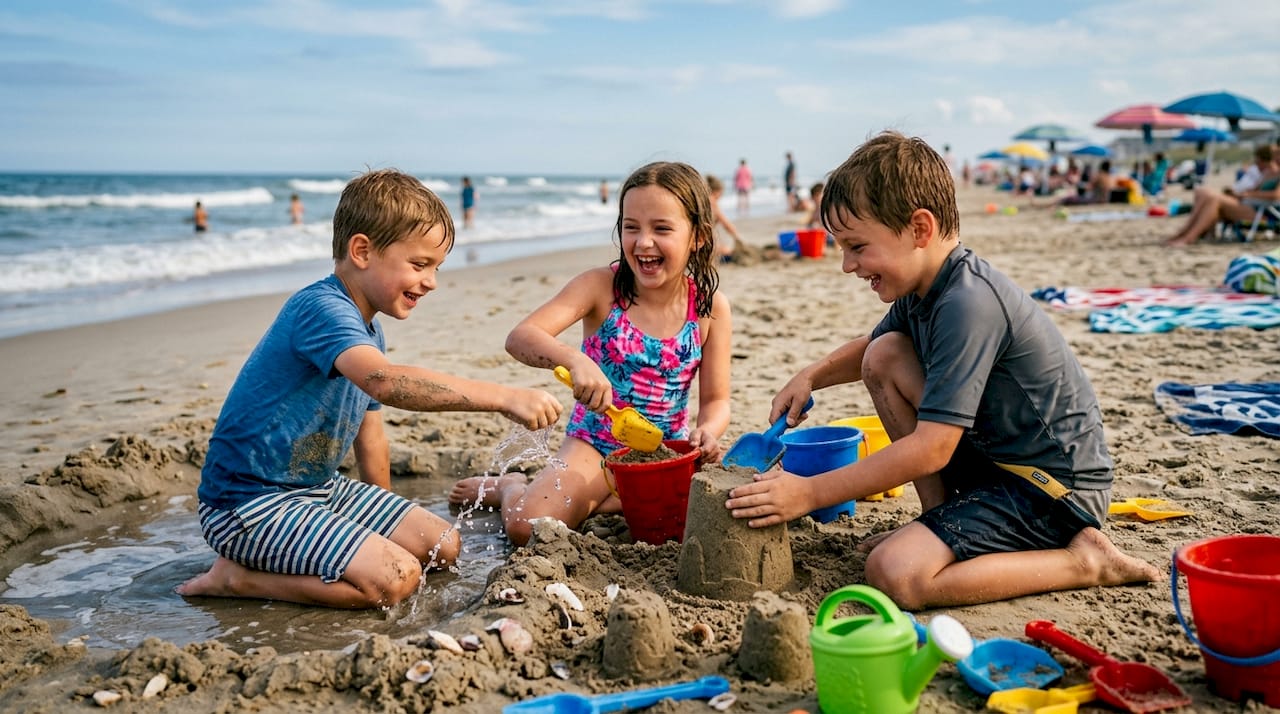
Peter Gray’s research includes a striking example: two children, different ages and speaking different languages, became close friends through consistent, unstructured outdoor time together. No adult arranged their friendship. Proximity and freedom did the work. That outcome is nearly impossible to replicate in a supervised, activity-led session.
The contrast with managed play is stark. Scheduled playdates often place children in face-to-face, performance-style settings where social anxiety rises. Outdoor free play removes that pressure entirely.
- Proximity without pressure: Place children near each other outdoors and step back. Friendship follows.
- Mixed ages: Older children model social skills; younger ones learn by watching and joining in.
- No agenda: The absence of a structured goal is itself the goal. Children invent their own shared purpose.
- Repeated contact: The same outdoor space, visited regularly, builds familiarity faster than occasional formal visits.
Pro Tip: If you are hosting a playdate, take it outside and give the children a loose starting point, such as a pile of sticks or a ball, then walk away. Resist the urge to direct.
2. Outdoor activities that build real friendships
Specific outdoor activities create the conditions for cooperation, communication, and bonding. The best ones share a common feature: they require children to interact with each other, not just with an adult or a screen.
Scooting and shared equipment
Scooting naturally prompts social interaction through phrases like “Can I have a turn?” or “Want to race?” These micro-negotiations teach sharing, turn-taking, and boundary-setting. They are the building blocks of friendship, practised dozens of times in a single afternoon.
Classic outdoor games
Tag, hide-and-seek, and capture the flag all require children to work together or against each other within agreed rules. These games build friendship through play because they demand communication, trust, and a shared emotional experience, whether that is laughter, mild frustration, or triumph.
Nature walks and exploration
A walk through a park or woodland gives children a shared focus that is not each other. That matters. Side-by-side attention on something external, a bug, a stream, a bird, lowers the social stakes and opens conversation naturally.
Camping and shared challenges
Camping accelerates friendship depth through communal tasks: setting up a tent, sharing food, navigating a trail together. These shared challenges build trust in a way that a supervised craft session simply cannot. Even a single overnight trip creates a bond that lasts.
Backyard play areas
A well-designed backyard space encourages repeated, daily interaction between neighbouring children. You do not need expensive equipment. A safe nature spot with loose materials, a sandpit, or a simple climbing frame gives children a reason to return and a shared territory to call their own.
Pro Tip: Introduce a simple nature-based game, such as a scavenger hunt using Thezoofamily binoculars, to give a group of children a shared mission. A common goal pulls strangers together faster than any icebreaker.
3. How the outdoors supports social and emotional growth
The outdoors works as a social environment in ways that indoor settings cannot replicate. The key mechanism is side-by-side interaction. Nature reduces social anxiety by shifting children away from direct face-to-face pressure. When two children watch the same beetle cross a path, neither is performing for the other. That shared, low-stakes attention makes communication easier and more natural.
This matters especially for children who find direct social interaction difficult, including those with shyness, social anxiety, or communication differences. The outdoor environment levels the playing field. A child who struggles in a noisy classroom can thrive in a garden or a park, where the rules are looser and the pressure is lower.
Outdoor play correlates strongly with improved social behaviours including sharing, cooperation, and positive peer interaction. The same research notes that rough-and-tumble play in mixed-gender groups can occasionally present social risks, so light parental awareness remains useful even in unstructured settings.
| Social benefit | How outdoor play delivers it |
|---|---|
| Reduced social anxiety | Side-by-side focus on nature removes face-to-face performance pressure |
| Improved cooperation | Shared tasks like building dens or navigating trails require teamwork |
| Better communication | Spontaneous conversation arises naturally around shared discoveries |
| Emotional regulation | Physical activity and open space reduce stress and frustration |
| Stronger peer bonds | Repeated shared experiences build familiarity and trust over time |
Simple outdoor activities like bike rides, campfires, and walks create emotional bonds through real, uncurated interaction. Children do not need to be entertained. They need to be present together.
4. Practical tips for parents to support outdoor friendships
Your role as a parent is to create the conditions for friendship, not to manage the friendship itself. The distinction matters. Children who are left to sort out their own social dynamics outdoors develop stronger social skills than those whose interactions are constantly mediated by adults.
- Create a welcoming outdoor space at home. A backyard natural playground with loose parts, digging areas, or simple climbing structures gives children a reason to gather and return. Familiarity with a space builds confidence.
- Invite other families regularly. Repeated contact is the single most reliable predictor of friendship formation. One visit rarely produces a lasting bond. Five visits to the same park with the same children almost always does.
- Offer equipment, not instructions. A scooter, a set of binoculars, or a ball gives children a starting point without dictating what they do with it. Thezoofamily’s kids’ cameras and walkie-talkies work particularly well here: they give children a shared mission and a reason to communicate.
- Stay nearby but out of the way. Your presence provides safety. Your distance provides freedom. Both are necessary.
- Recognise inclusive play. Watch for children who are being left out and gently create opportunities for them to join, such as introducing a game that needs one more player, rather than intervening directly in the social dynamic.
- Use the 1000 Hours Outside principle as a loose target. More time outdoors means more opportunities for the kind of spontaneous, repeated interaction that builds lasting friendships.
Pro Tip: Prepare a simple outdoor kit for your child: a magnifying glass, a small notebook, and a Thezoofamily camera. Children who have tools for exploring nature attract curious peers naturally. You do not need to arrange the introduction.
Check out Thezoofamily’s practical parent’s guide for more on setting up outdoor play that works for your family.
Key takeaways
Friendship through outdoor play forms most reliably when children have unstructured time, repeated contact, and a natural environment that removes social performance pressure.
| Point | Details |
|---|---|
| Unstructured play builds deeper bonds | Free outdoor time outperforms scheduled playdates for genuine friendship formation. |
| Side-by-side nature reduces anxiety | Shared focus on the natural world lowers social pressure and opens communication. |
| Repeated contact is the key variable | Regular visits to the same outdoor space with the same children build lasting friendships. |
| Shared challenges accelerate bonding | Camping, trail navigation, and group games build trust faster than passive social settings. |
| Parents facilitate best by stepping back | Proximity and space, not direction, are the most effective parental tools for friendship support. |
Why I think we underestimate what children can do socially outdoors
I have watched children who could not share a sentence in the same language become inseparable after a few afternoons in the same park. No adult arranged it. No structured activity made it happen. A pile of sticks and a shared curiosity about a frog did.
The conventional wisdom tells parents to arrange playdates, plan activities, and manage social time carefully. I think that advice is largely wrong. Children are extraordinarily capable social beings when you give them the right environment and then leave them to it. The outdoor setting does the heavy lifting. Your job is to show up, bring the snacks, and resist the urge to narrate.
What I have also noticed is that the children who struggle most socially indoors often thrive outdoors. The child who is overwhelmed in a classroom can be a natural leader on a trail. The outdoors strips away the hierarchies that indoor settings create and replaces them with something more honest: shared experience and mutual need.
The child development research backs this up, but honestly, you do not need a study to see it. Take a group of children outside, give them space, and watch what happens. It is one of the most quietly remarkable things you will ever observe as a parent.
— ALAIN
Thezoofamily: tools that bring children together outdoors
Children who have the right tools for outdoor exploration attract curious peers naturally. Thezoofamily designs kids’ cameras, walkie-talkies, and binoculars with animal-inspired details that spark children’s interest in nature and in each other.
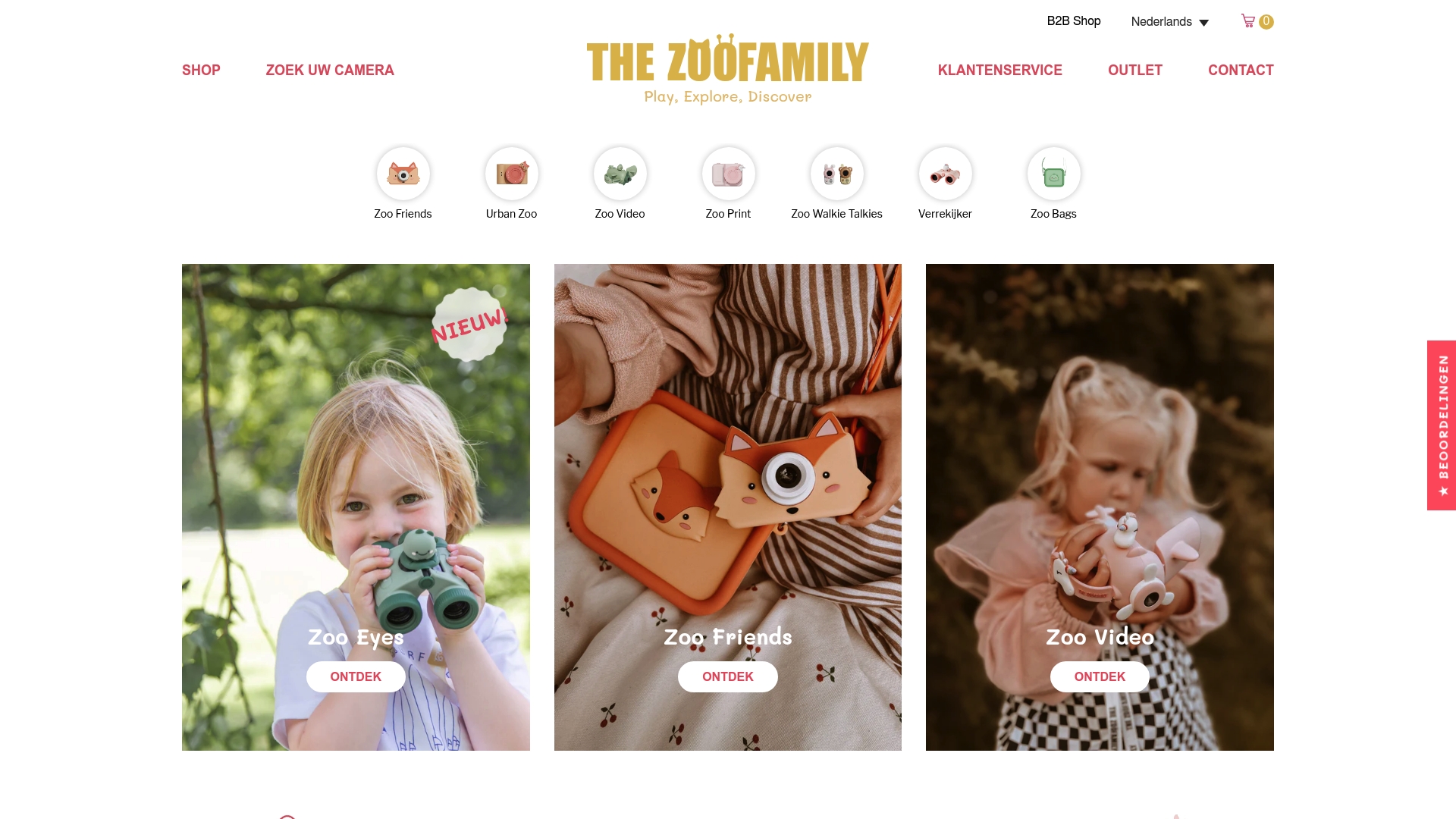
Every camera sold plants one tree, so the play your child enjoys today contributes to the natural world they will grow up in. Whether you are setting up a backyard play space or planning a first camping trip with friends, Thezoofamily’s gear gives children a shared mission and a reason to communicate. Visit thezoofamily.com to find tools that turn outdoor time into genuine connection.
FAQ
Why is outdoor play better for friendship than indoor play?
Outdoor play creates side-by-side, low-pressure interaction that reduces social anxiety and encourages natural communication. Indoor settings often place children in face-to-face, performance-style situations that raise the social stakes.
What outdoor activities are best for making friends?
Scooting, tag, hide-and-seek, nature walks, and camping all build friendship through shared goals, negotiation, and repeated interaction. Activities that require children to communicate or cooperate work best.
How much outdoor play do children need for social benefits?
University of Exeter research shows that each additional day of outdoor play per week during the preschool years improves long-term mental health by 6–14%. More frequent outdoor time means more opportunities for the repeated contact that builds lasting friendships.
Should parents organise playdates or let friendships form naturally?
Unstructured proximity outdoors is more effective than heavily scheduled playdates. Offer children a shared space and simple equipment, then step back and allow the social dynamic to develop on its own terms.
At what age does outdoor play start building friendships?
Children begin forming social bonds through play from as young as two years old. Mixed-age outdoor settings are particularly effective because younger children learn social skills by observing and joining older peers.