

“Ecos cleaner” here means ecosystem restoration — the practical work of cleaning up and caring for local natural places, from litter picks to tree planting, that children can join safely. You can start this week with one of these steps:
- Plan a short supervised litter pick at a local park or nature reserve for a duration suitable for younger children.
- Book a free taster session with your local Wildlife Trust branch — most county trusts run family-friendly conservation days throughout the year.
- Organise a pond-dipping session at a local pond or stream under adult supervision, using nets and identification sheets.
- Check Thezoofamily’s resources for family nature activities and session ideas to get started.
If you are searching for eco-friendly household cleaning products rather than outdoor restoration projects, the Thezoofamily family guide to eco-friendly cleaners covers that topic separately.
Key takeaways
Hands-on ecosystem restoration — litter picks, tree planting, pond dipping — builds children’s connection to nature, improves focus, and creates measurable local ecological benefit when sessions are planned safely with the right partners.
| Point | Details |
|---|---|
| Start this week | Plan a 45-minute supervised litter pick at a local park and contact your county Wildlife Trust for a taster session. |
| Plan a term project | Use the five-stage full-cycle model (site assessment → seed collection → nursery → planting → monitoring) to fit outdoor learning into your school term. |
| Join a partner group | The Wildlife Trusts, North York Moors Explorer Volunteers and Deer Wood Trust provide equipment, training and insurance for family and school groups. |
| Safety and permissions first | Get landowner permission, parental consent and insurance confirmation before any session; keep adult:child ratios within guidance (1:4 by age). |
| Thezoofamily | Thezoofamily’s outdoor kit supports species spotting and site photography during sessions; visit thezoofamily.com for activity resources. |
Table of Contents
- Why hands-on ecosystem work benefits children
- Starter activities by age: what to do and what to bring
- How to plan and run a safe conservation session
- Full-cycle projects that teach children the whole ecological story
- Where to find UK projects, partner organisations and taster sessions
- Simple ways to measure impact and keep children engaged
- Making sessions inclusive and accessible for all children
- Permits, seasonal rules and biosecurity: what to check before you start
- Why small, regular actions add up
- Thezoofamily: tools and resources to help children connect with nature
- Sources
Why hands-on ecosystem work benefits children
Children who take part in practical conservation work gain more than a tidy park. UK environmental education experts quoted by the BBC say hands-on ecosystem activities build long-term connection to nature and can improve children’s focus and resilience compared with classroom-only learning.
Three benefits stand out for parents and teachers:
- Nature immersion and wellbeing. Time outdoors doing purposeful work reduces stress and improves mood. Children who take part in regular conservation sessions often show better concentration in class.
- Practical ecology learning. Children see the full cause-and-effect chain: litter removed from a riverbank means less plastic entering the water; a tree planted in autumn becomes a habitat by spring. That full-cycle understanding sticks.
- Civic stewardship. Taking responsibility for a local place builds confidence and a sense of agency. Wildlife Trust youth programmes offer practical habitat work, monitoring and advocacy roles so young people can find a conservation pathway that suits them.
Local restoration projects also show measurable ecological results. A hands-on school visit to the Honiton Habitat Bank in East Devon, for example, linked pupil restoration activities to returning wildlife, including beaver activity and new species records.
Starter activities by age: what to do and what to bring
The best first choice depends on age. Below is a quick guide, followed by a kit checklist.
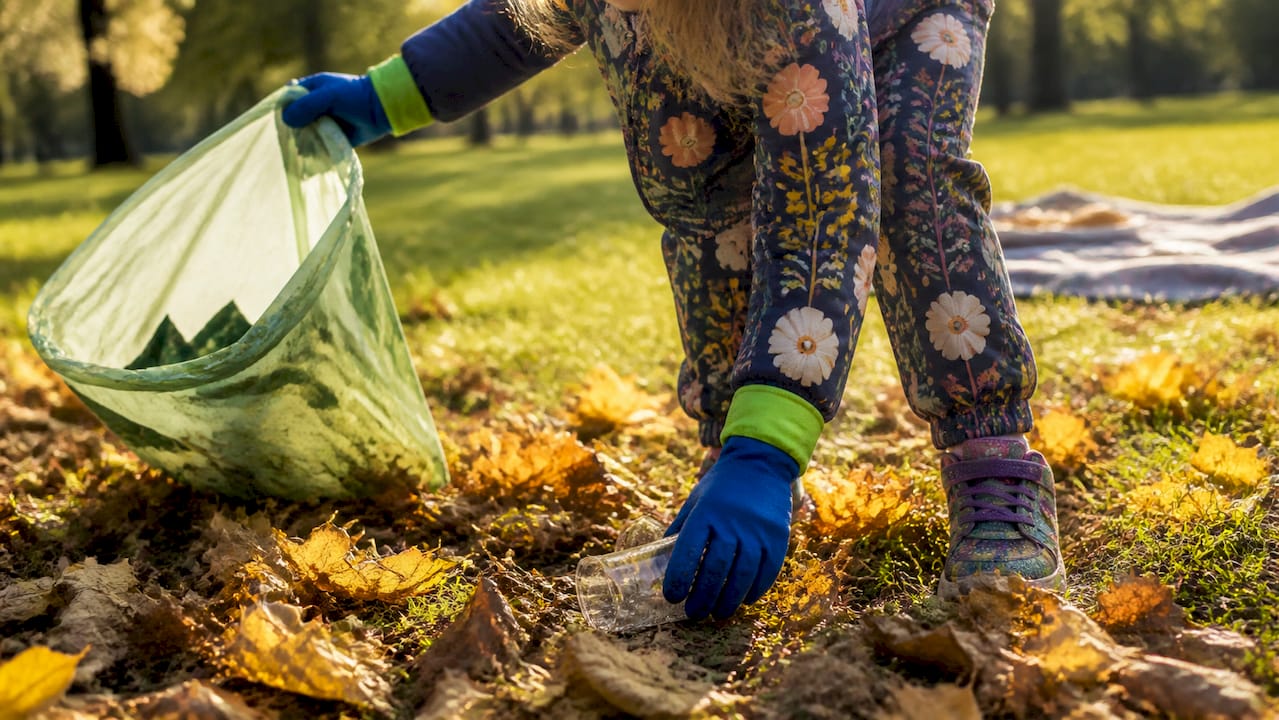
Supervision ratios draw on Bolton Council’s litter-pick health and safety guidance and Keep Britain Tidy’s LitterHeroes guide. Bolton’s guidance recommends no more than eight children per adult for older groups; Keep Britain Tidy suggests four children per adult in some settings.
Equipment checklist:
- Disposable or reusable gloves (one pair per child)
- Litter grabbers (one per child for picks)
- Hi-viz vests or bibs
- Pond nets and white trays (for pond dipping)
- First-aid kit carried by a named adult
- Bin bags and a plan for collection or disposal
- Identification sheets (birds, invertebrates, plants)
Impact note per activity: a litter pick reduces plastic reaching waterways; pond dipping builds a species baseline for future monitoring; tree planting creates long-term carbon storage and habitat.
Pro Tip: Turn litter picks into a simple competition — count items by category (plastic, glass, metal) and tally results at the end. Children stay engaged, and the data becomes a citizen-science record.
How to plan and run a safe conservation session
A safe session follows a clear sequence: sort permissions and paperwork first, then run a time-boxed activity, then debrief.
Pre-session checklist:
- Get written permission from the landowner or site manager.
- Collect signed parental consent forms for all children.
- Confirm your group’s public liability insurance (your school, council, or volunteer group may already hold this — check before the event).
- Identify a named first-aider and carry a first-aid kit.
- Arrange litter-bag collection with your local council in advance. Newark & Sherwood District Council’s guidance is a useful template for contacting your own council.
- Share emergency contact details with all adults.
Risk-assessment prompts (walk the site before children arrive):
- Trip hazards: uneven ground, tree roots, broken glass
- Water proximity: rivers, ponds, ditches — establish a clear exclusion zone
- Dog mess: identify affected areas and avoid or cordon off
- Thorny scrub: note bramble or hawthorn patches; assign adult-only clearance
- Tool safety: brief children on grabber and tool use before starting
Earthwatch’s pond-restoration project with Wood Farm Primary School shows how even non-experts can run a structured site assessment using a simple checklist.
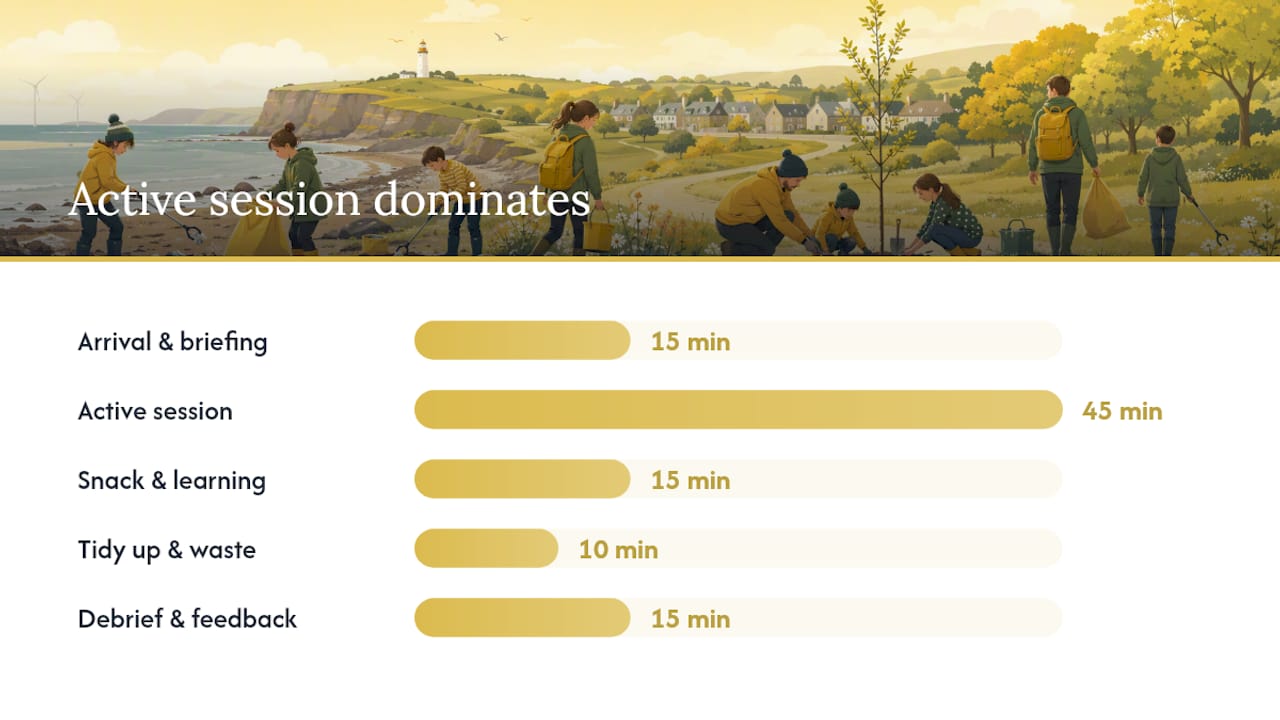
Sample 90-minute timetable:
- Arrival and briefing (15 minutes): safety rules, roles, equipment hand-out
- Active session (45 minutes): litter pick, planting, or pond dipping
- Snack and learning slot (15 minutes): species ID, count sheets, group discussion
- Tidy up and waste disposal (10 minutes)
- Debrief and feedback (15 minutes): what did we find? What changes?
Safeguarding reminders: never leave children unsupervised, keep hi-viz on throughout, and ensure all adults have been DBS-checked if required by your school or organisation.
Pro Tip: During the snack slot, ask children to count how many different species they spotted. A simple tally sheet doubles as a citizen-science record and keeps attention focused.
Full-cycle projects that teach children the whole ecological story
Short sessions are a good start, but term-long or year-long projects produce deeper learning. The Deer Wood Trust describes teaching the full ecological cycle — seed collection through planting and maintenance — as a method that shifts children from passive observers to active stewards.
A practical full-cycle project runs in five stages:
- Site assessment (Week 1–2): pupils survey the site, record existing species and identify gaps.
- Seed collection (Autumn): collect seeds from local native plants; label and store correctly.
- Nursery care (Autumn–Winter): pot seeds, water and monitor growth in a school greenhouse or cold frame.
- Planting day (Late Winter–Spring): transplant seedlings to the prepared site with community support.
- Monitoring (Ongoing): record growth, returning wildlife and any problems; update a class log.
For a term-long version, compress stages 1–3 into the first half-term and run planting day before the holiday. A year-long version allows full seed-to-landscape tracking and suits secondary schools with science or citizenship curriculum links.
The North York Moors Explorer Volunteers run family sessions covering litter picking, hedge pruning and tree planting — a ready-made model for schools wanting an off-site planting day with equipment and training provided. The Severn Rivers Trust’s Kyre Brook project is another example of a structured community restoration programme that schools can join or use as a case study.
Where to find UK projects, partner organisations and taster sessions
Join an established group and you get training, equipment and a safe framework from day one. Here are the main UK options:
- The Wildlife Trusts (county branches): run family volunteering days, school visits and youth programmes across England, Wales and Scotland. Contact your county branch directly for age policies and kit provision.
- Severn Rivers Trust: focuses on river and catchment restoration; runs community planting and clean-up events that schools can join.
- North York Moors Explorer Volunteers: family-friendly sessions with tasks from litter picking to tree planting; equipment and training provided; young children welcome when accompanied by an adult.
- Environment Bank: works with landowners on habitat creation; contact them for school partnership opportunities linked to local biodiversity net gain projects.
- Deer Wood Trust: woodland horticulture for children, including nursery and planting programmes with a full-cycle learning approach.
- Local council volunteer schemes (example: Bolton Council): many councils supply litter-pick kits, arrange bag collection and can connect you with local volunteer groups.
- LUCT conservation club: runs monthly youth volunteering with on-site plant nurseries and planting days; parental accompaniment rules vary by age — check directly.
Pro Tip: When contacting any group, ask three questions: What is the minimum age? Do you provide equipment? Is your group insured for child volunteers? Most established organisations answer yes to all three.
Simple ways to measure impact and keep children engaged
Track a few clear metrics and children can see the difference they are making.
Metric checklist (photocopy for each session):
- Number of bags of litter collected and approximate weight
- Number of trees or plants planted
- Species recorded (birds, invertebrates, plants) — use a tally sheet
- Before-and-after photographs of the site
- Pupil reflection cards (one sentence: “Today I noticed…”)
| Metric | How to record | Citizen-science use |
|---|---|---|
| Species seen | Tally sheet or app (iRecord) | Submit to local Wildlife Trust recording scheme |
| Litter collected | Bag count and category list | Share with council or Keep Britain Tidy |
| Plants/trees planted | Running class log | Report to Deer Wood Trust or school tree register |
Submitting species records to your local Wildlife Trust’s recording scheme or to iRecord keeps children connected between sessions and contributes to national biodiversity data.
Making sessions inclusive and accessible for all children
Almost all activities can be adapted. The key is to plan roles and routes before the session, not on the day.
- Shorter routes: map a compact loop so children with mobility needs cover the same ground as the group.
- Seated tasks: nest-box building, seed sorting and identification work suit children who cannot walk rough terrain.
- Sensory alternatives: scented seeds (lavender, sweet cicely), textured bark and tactile soil work engage children with visual impairments or sensory processing differences.
- Quiet zones: designate a calm area away from the main group for children who need a break from noise.
- Visual timetables: post a simple picture schedule at the start so children with additional learning needs know what comes next.
- Involving families: invite grandparents and carers to join — multi-generation groups naturally create a range of roles and paces.
Pro Tip: Assign every child a specific “buddy” role or micro-task (chief bag-holder, species counter, photographer). Named jobs reduce anxiety and keep every child actively involved.
Permits, seasonal rules and biosecurity: what to check before you start
Check nesting season and landowner permission before any work. For tree planting, autumn and early winter are the best windows; avoid scrub clearance between March and August when most birds are nesting.
Seasonal calendar guidance:
- October–February: best for tree and hedge planting, scrub clearance (outside nesting season), seed collection (late autumn).
- March–July: avoid cutting vegetation; focus on monitoring, pond dipping and litter picks instead.
- August–September: seed collection begins; site surveys and planning for autumn planting.
Check your local Wildlife Trust’s event calendar and your council’s guidance for site-specific rules — these vary by region.
Biosecurity checklist:
- Clean boots and tools between sites to avoid spreading invasive species or disease.
- Do not move soil between catchments.
- Leave natural habitats (logs, stones, leaf litter) in place unless a qualified ecologist advises otherwise.
- Do not handle wildlife unless trained to do so.
Permissions checklist:
- Written landowner permission for any planting or clearance work.
- Council notification for large public events (check your local authority’s threshold).
- Follow your volunteer group’s own rules and insurance conditions.
Contact your local Wildlife Trust or council for site-specific advice rather than relying on general guidance alone. Earthwatch’s school pond project shows how a structured site assessment — even by non-experts — can flag the key risks before children arrive.
Why small, regular actions add up
Small, regular community projects create real ecological and learning benefits and build lasting stewardship in children. One litter pick does not restore a river, but a class that picks litter every term, plants trees each autumn and submits species records to a local trust builds a genuine relationship with a place over years.
Thezoofamily’s tree-planting pledge — one tree planted for every camera sold — reflects the same principle: consistent, modest commitments accumulate into measurable change. A school that commits to one outdoor session per half-term, linked to a local Wildlife Trust or council scheme, will see both the site and the children change over a year.
The most durable projects are not the grandest. They are the ones with a clear calendar, a named contact at a partner organisation, and a class log that children can look back at in Year 6 and see what they built.
Thezoofamily: tools and resources to help children connect with nature
Thezoofamily’s kids’ binoculars, cameras and walkie-talkies are practical tools for outdoor sessions — children use them to spot species, photograph before-and-after sites and communicate across a litter-pick zone. They are aids to engagement, not substitutes for adult supervision, landowner permission or a proper risk assessment.
For session checklists, activity ideas and further resources, visit Thezoofamily’s nature activity hub. You can also contact your local Wildlife Trust directly to book a taster session. All tools are designed to support, not replace, the trained volunteers and educators who run safe, effective conservation sessions.