

Choosing photography projects that genuinely engage children with nature whilst building creative skills presents a real challenge for families. Many workshops promise outdoor exploration, yet few deliver structured activities that balance accessibility, skill development, and authentic nature connection for children aged 5 to 12. Research demonstrates that photography workshops improve wellbeing and nature connection in young participants, making project selection crucial. This article examines evidence-backed photography initiatives across Europe, comparing features, benefits, and practical considerations to help families identify projects that foster both creativity and environmental awareness in their children.
Table of Contents
- Criteria For Choosing Family Photography Projects
- Top Photography Projects For Families In Europe
- Comparing Family Photography Projects: Features And Benefits
- Recommendations For Selecting The Right Family Photography Project
- Explore Family-Friendly Photography Activities And Workshops
- Frequently Asked Questions
Key takeaways
| Point | Details |
|---|---|
| Photography fosters nature exploration | Children actively observe environments, developing creativity and environmental awareness through camera work. |
| Ridgeway50 demonstrates measurable benefits | Nearly 390 children showed improved wellbeing and repeated nature visits through participatory photography. |
| European projects suit varied interests | Workshops range from wildlife tracking to landscape composition, accommodating ages 5 to 16. |
| Minimal equipment ensures accessibility | Most projects accept smartphones, removing financial barriers whilst maintaining creative quality. |
| Public exhibitions deepen engagement | Displaying children’s work builds confidence and strengthens emotional connections to photographed locations. |
Criteria for choosing family photography projects
Selecting appropriate photography projects requires evaluating several critical factors that determine whether activities genuinely engage children whilst building nature connections. Age-appropriate complexity ensures children aged 5 to 12 remain challenged without frustration, balancing technical instruction with creative freedom. Safety considerations matter equally, particularly for outdoor locations involving wildlife observation or challenging terrain that younger participants might encounter.
Location accessibility directly influences participation frequency and family convenience. Projects situated near public transport or within reasonable driving distances enable regular attendance, whilst those highlighting local ecosystems help children develop familiarity with nearby natural spaces. The Ridgeway50 initiative showed benefits including wellbeing improvements and repeated visits when children photographed accessible trails, demonstrating how proximity strengthens nature bonds.
Skill development forms another essential criterion. Quality projects teach camera operation fundamentals, nature observation techniques, and compositional principles without overwhelming young learners. Initiating children into ecological photography requires balancing technical instruction with creative exploration, allowing personal expression whilst building competence.
Equipment requirements significantly impact accessibility. Projects demanding expensive cameras exclude many families, whilst those accepting smartphones democratise participation. Most successful initiatives prioritise creativity over gear, recognising that children benefit more from frequent practice with simple tools than occasional access to professional equipment.
Sharing opportunities complete the selection criteria. Projects incorporating exhibitions, online galleries, or community presentations motivate children by validating their work publicly. This recognition builds confidence whilst deepening emotional investment in photographed subjects and locations.
Pro Tip: Start with projects offering trial sessions or single-day workshops before committing to multi-week programmes, allowing children to explore photography interests without pressure.
Top photography projects for families in Europe
Several standout initiatives across Europe demonstrate how structured photography projects successfully engage children with nature whilst building creative skills. These programmes vary in approach, duration, and focus, yet share commitments to accessibility and authentic outdoor exploration.
The Ridgeway50 Project stands as a landmark participatory initiative. Nearly 390 children aged approximately 5 to 11 participated in workshops uniting professional photographers with young learners along England’s ancient Ridgeway trail. Children captured landscapes, wildlife, and trail details without photo editing, preserving authentic perspectives. The project culminated in public exhibitions displaying participants’ work, fostering pride whilst strengthening connections to photographed locations.
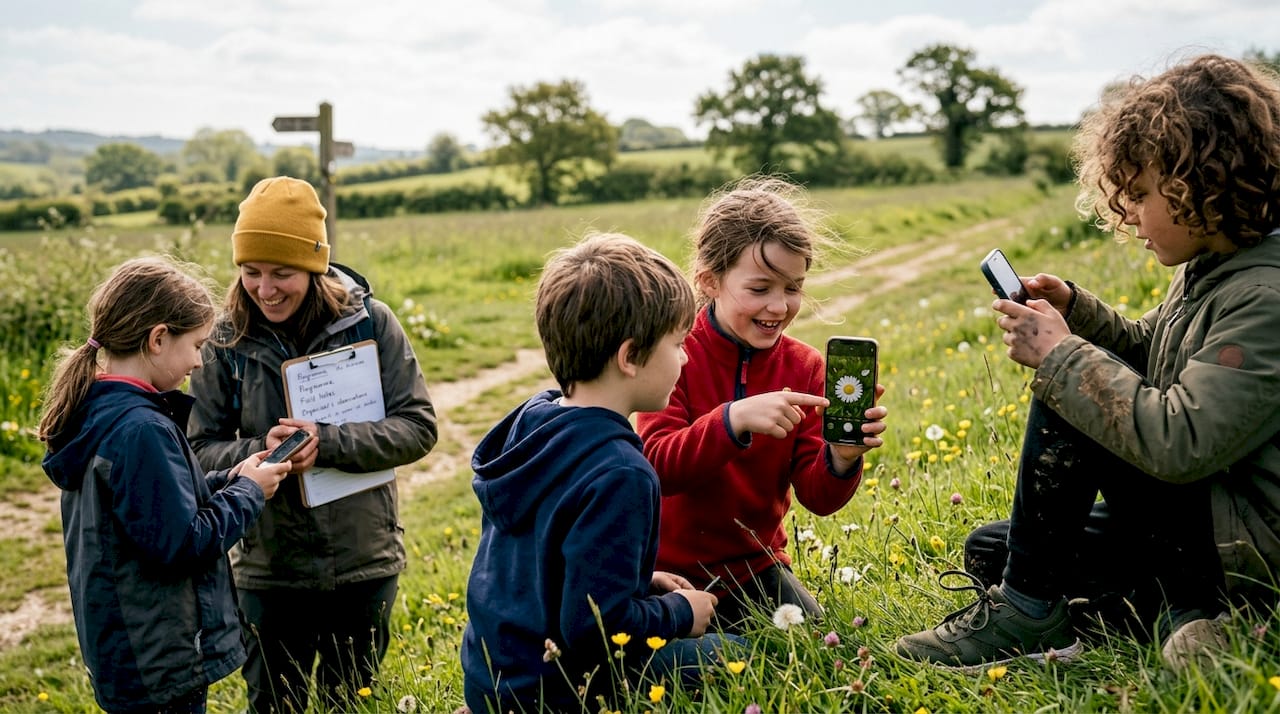
UK Kids Wildlife Photography workshops focus specifically on animal behaviour and compositional techniques. These programmes engage children aged 6 to 16 in observing local wildlife, teaching patience and timing essential for capturing natural moments. Instructors emphasise ethical photography practices, ensuring children learn to observe without disturbing habitats. Sessions often incorporate nature challenges that spark curiosity about animal behaviours and ecological relationships.
Germany’s Naturfotografie-Workshop programmes take a smartphone-first approach, recognising that most families already possess capable cameras. These forest-based workshops teach children to photograph woodland ecosystems, fungi, insects, and seasonal changes using devices they know. This accessibility removes equipment barriers whilst maintaining creative quality, demonstrating that compelling nature photography requires observation skills more than expensive gear.
Vienna’s Outdoor Photography Workshop offers natural light portraiture sessions where children photograph family members and peers against park and garden settings. This approach combines technical skill development with social interaction, helping children understand how light, background, and composition affect portraits. The programme particularly suits families wanting photography activities that balance nature exploration with interpersonal creativity.
Key features across top projects:
- Professional mentorship from experienced nature photographers
- Emphasis on observation skills over technical complexity
- Outdoor locations showcasing accessible natural environments
- Opportunities for peer learning and creative exchange
- Public sharing through exhibitions or online galleries
These projects demonstrate varied approaches to combining photography education with nature exploration. Families benefit from understanding how each programme’s focus, location, and structure align with children’s interests and developmental stages. Photography scavenger hunts often complement formal workshops, extending learning through playful challenges that maintain engagement between structured sessions.
Comparing family photography projects: features and benefits
Understanding how European photography projects differ helps families identify programmes matching their children’s needs, interests, and available resources. The following comparison examines key features across leading initiatives.
| Project | Age Range | Equipment | Duration | Key Benefit | Exhibition |
|---|---|---|---|---|---|
| Ridgeway50 | 5-11 years | Any camera | Multi-week | Wellbeing & nature connection | Public display |
| UK Wildlife Photography | 6-16 years | DSLR/smartphone | Weekend workshops | Animal behaviour skills | Online gallery |
| Naturfotografie-Workshop | 7-14 years | Smartphone | Single day | Accessibility & forest ecology | Participant sharing |
| Vienna Outdoor Workshop | 8-16 years | Any camera | Half-day sessions | Natural light portraiture | Optional showcase |
Age ranges reveal how projects target different developmental stages. Ridgeway50’s younger focus (5 to 11 years) emphasises exploration and creative freedom over technical precision, whilst Vienna’s programme (8 to 16 years) incorporates more sophisticated compositional concepts suitable for older children. This variation allows families to match projects with children’s maturity and attention spans.
Equipment flexibility significantly impacts accessibility. Projects accepting smartphones remove financial barriers whilst teaching that observation matters more than gear quality. Germany’s smartphone-focused approach particularly benefits families hesitant to invest in cameras before confirming children’s sustained interest. Conversely, programmes welcoming DSLRs accommodate families with existing equipment or children showing serious photography commitment.
Duration differences affect scheduling and engagement depth. Multi-week programmes like Ridgeway50 allow gradual skill development and repeated nature exposure, whilst single-day workshops provide intensive introductions without long-term commitment. Half-day sessions suit younger children with shorter attention spans, maintaining enthusiasm without fatigue.
Core benefits vary by programme focus. Ridgeway50’s emphasis on wellbeing and nature connection addresses families prioritising emotional development and environmental awareness. Wildlife photography workshops build patience and ecological knowledge through animal observation. Portraiture-focused programmes develop interpersonal skills alongside technical abilities, offering social dimensions absent from landscape-only projects.
Public exhibitions enhance pride and deepen nature connections by validating children’s creative work. Programmes incorporating formal displays provide powerful motivation, whilst those offering optional sharing respect families preferring privacy. Online galleries extend reach beyond local communities, allowing distant relatives to appreciate children’s achievements.
Pro Tip: Consider projects offering both structured instruction and free exploration time, allowing children to apply learned techniques whilst developing personal creative voices.
Professional mentorship quality varies across programmes. Initiatives pairing children with experienced nature photographers provide invaluable learning opportunities, whilst peer-focused workshops emphasise collaborative discovery. Families should evaluate whether children benefit more from expert guidance or social learning with similarly aged participants. Easy photo guides designed for children complement formal workshops by reinforcing concepts through accessible explanations. Additional resources like family photography workshops extend learning beyond single programmes, supporting continued development.
Recommendations for selecting the right family photography project
Matching photography projects to family circumstances requires evaluating practical considerations alongside children’s interests and developmental readiness. These recommendations help families navigate selection decisions effectively.
Consider programme regularity and location convenience first. Weekly sessions near home support habit formation better than monthly workshops requiring extensive travel. Children benefit from consistent nature exposure, with research showing repeated visits strengthen environmental connections developed through photography activities. Local projects also reduce logistical stress, making participation sustainable long-term.
Align project themes with demonstrated interests. Children fascinated by animals thrive in wildlife photography workshops teaching tracking and behaviour observation. Those drawn to landscapes benefit from programmes emphasising composition and seasonal changes. Portraiture-focused initiatives suit socially oriented children who enjoy photographing people and capturing interpersonal moments.
Equipment considerations:
- Start with smartphone-compatible projects to minimise initial investment
- Upgrade to dedicated cameras only after confirming sustained interest
- Prioritise projects teaching compositional skills transferable across devices
- Avoid programmes requiring expensive gear as participation prerequisites
Balance equipment requirements with family resources realistically. Smartphone-first programmes democratise access whilst teaching that creativity matters more than technology. Families already owning cameras can seek projects accommodating existing gear, avoiding unnecessary purchases. Remember that children often care more about creative freedom than equipment sophistication.
Look for sharing or exhibition opportunities that motivate continued participation. Public displays validate children’s work, building confidence whilst deepening emotional connections to photographed subjects. Projects incorporating exhibitions or online galleries provide concrete goals that maintain engagement between sessions. This recognition helps children view themselves as legitimate creators rather than casual hobbyists.
Starting strategies:
- Begin with short workshops or single-day events to assess interest
- Explore free community photography challenges before paid programmes
- Combine formal instruction with outdoor autumn activities that reinforce learning
- Review participant galleries to evaluate programme quality and output
- Discuss expectations with children to ensure genuine interest rather than parental imposition
Consider seasonal timing when selecting projects. Spring and summer programmes maximise outdoor comfort and wildlife activity, whilst autumn initiatives showcase dramatic colour changes and seasonal transitions. Winter workshops teach adaptation to challenging light conditions, though shorter days and cold temperatures may discourage younger participants.
Evaluate instructor qualifications and teaching approaches. Experienced nature photographers bring technical expertise, whilst educators specialising in children understand developmental needs and engagement strategies. The ideal combination offers both photographic competence and age-appropriate instruction methods that maintain enthusiasm without overwhelming young learners.
Explore family-friendly photography activities and workshops
Discovering photography resources designed specifically for families helps extend learning beyond formal workshops whilst building nature connections through creative exploration. Our platform offers comprehensive guides helping parents initiate children into ecological photography without requiring expensive equipment or advanced technical knowledge. These accessible resources break down compositional principles, camera operation basics, and nature observation techniques into child-friendly explanations that build confidence progressively.
Creative challenges available through our nature activities boost outdoor engagement by transforming photography into playful exploration. These structured activities guide children through specific photographic missions, from capturing insect details to documenting seasonal changes, maintaining interest through achievable goals. Our community connects families sharing interests in ecological photography for children, offering inspiration, technical tips, and encouragement that support continued creative development. Explore family photography resources designed to make nature exploration accessible, engaging, and educationally valuable for children aged 5 to 12 across Europe.
Frequently asked questions
What equipment is best for children starting photography projects?
Simple cameras or smartphones prove ideal for children beginning photography projects, prioritising creativity and observation over technical complexity. Most successful programmes accept any device capable of capturing images, recognising that compositional skills and nature awareness matter more than equipment sophistication. Minimal editing is recommended to preserve children’s authentic perspectives and prevent frustration with complex software.
How can photography projects enhance children’s connection to nature?
Photography engages children in actively observing their environment rather than passively experiencing outdoor spaces. This mindful approach improves nature connection and wellbeing by encouraging detailed attention to colours, patterns, behaviours, and seasonal changes. Repeated visits to photograph specific locations build emotional bonds with natural spaces, transforming casual outdoor time into purposeful exploration that children remember and value.
Are there family photography workshops suitable for all skill levels?
Most European workshops are designed for beginners and children from 5 years upwards, requiring no previous photography experience. These programmes accommodate varied ages and camera types, including smartphone use, making participation inclusive regardless of technical background or equipment ownership. Instructors adapt teaching approaches to individual skill levels, ensuring all participants gain confidence whilst learning at appropriate paces.
What are the benefits of exhibiting children’s photography work publicly?
Public exhibitions encourage children’s pride in their creative accomplishments whilst sustaining long-term interest in photography and nature exploration. Displaying children’s photos deepens nature connections by validating their perspectives and observations as worthy of community appreciation. These showcases also foster broader awareness of how children perceive natural environments, often revealing details and beauty that adults overlook in familiar landscapes.