

Choosing the right outdoor playground ideas for your children can feel overwhelming when you want more than just swings and slides. You’re looking for spaces that genuinely connect your kids with nature, encourage physical activity, and foster environmental awareness from an early age. The challenge lies in identifying which natural playground elements truly engage children whilst fitting your available space, budget, and family values. This article provides concrete criteria for evaluating nature-focused playground options, presents creative ideas backed by research showing children playing on natural playgrounds are more active, and offers practical guidance to help you create an outdoor play environment that inspires lasting connections with the natural world.
Table of Contents
- Criteria For Choosing Nature-Focused Outdoor Playgrounds
- Creative Outdoor Playground Ideas To Reconnect Children With Nature
- Comparing Popular Natural Playground Designs: Benefits And Considerations
- Tailoring Outdoor Playground Choices To Your Family’s Space And Values
- Explore Inspiring Playground Products And Ideas At The Zoofamily
Key takeaways
| Point | Details |
|---|---|
| Natural materials boost activity | Research confirms children are significantly more active on playgrounds featuring natural elements compared to traditional equipment |
| Sensory elements foster connection | Incorporating plants, textures, and water features helps children develop environmental awareness through hands-on exploration |
| DIY projects work brilliantly | Creative backyard projects using logs, reclaimed wood, and loose natural materials can safely enhance play whilst respecting nature |
| Space adaptation matters | Natural playground designs can be tailored to suit any garden size, from compact urban spaces to larger suburban gardens |
Criteria for choosing nature-focused outdoor playgrounds
Before diving into specific playground ideas, understanding the essential criteria helps you evaluate which options genuinely promote your children’s connection to nature whilst ensuring safe, engaging play. These criteria serve as your foundation for making informed decisions that align with both your family’s needs and environmental values.
Safety paired with natural materials forms the cornerstone of effective nature-focused playgrounds. Look for untreated wood with smooth, rounded edges that prevent splinters whilst maintaining the authentic feel of natural elements. The materials should be durable enough to withstand weather and active play without requiring toxic treatments or synthetic coatings.
Variety in sensory and physical challenges keeps children engaged whilst supporting their developmental needs. Effective natural playgrounds offer multiple ways to climb, balance, explore textures, and engage different senses. This diversity encourages children playing on natural playgrounds to be more active compared to conventional equipment that often limits movement patterns.
Consider these essential criteria when evaluating playground options:
- Inclusion of living elements like plants, herbs, or small trees that children can observe and care for
- Water features or sand areas that allow for creative, unstructured play
- Loose natural materials such as pinecones, smooth stones, or logs that children can move and arrange
- Adaptable designs that grow with your children’s changing interests and abilities
- Maintenance requirements that fit realistically within your available time and resources
Space adaptability ensures your chosen playground ideas work within your specific garden dimensions. Whether you have a compact urban courtyard or a spacious suburban garden, natural playground elements can be scaled and configured to maximise engagement without overwhelming your available area. For inspiration on adapting ideas to various spaces, explore DIY backyard play ideas that prioritise safety and nature connection.
Creative outdoor playground ideas to reconnect children with nature
Transforming your outdoor space into a nature-connected playground doesn’t require elaborate equipment or massive budgets. These creative ideas use natural elements to promote physical activity, sensory exploration, and environmental awareness whilst fitting various garden sizes and family preferences.
Balancing logs and tree stumps create dynamic climbing and coordination challenges that increase children’s physical activity whilst connecting them directly with natural materials. Arrange logs of varying heights and diameters to form stepping paths, balance beams, or climbing obstacles. Secure larger stumps firmly in the ground to create natural seats or platforms where children can pause during imaginative play.
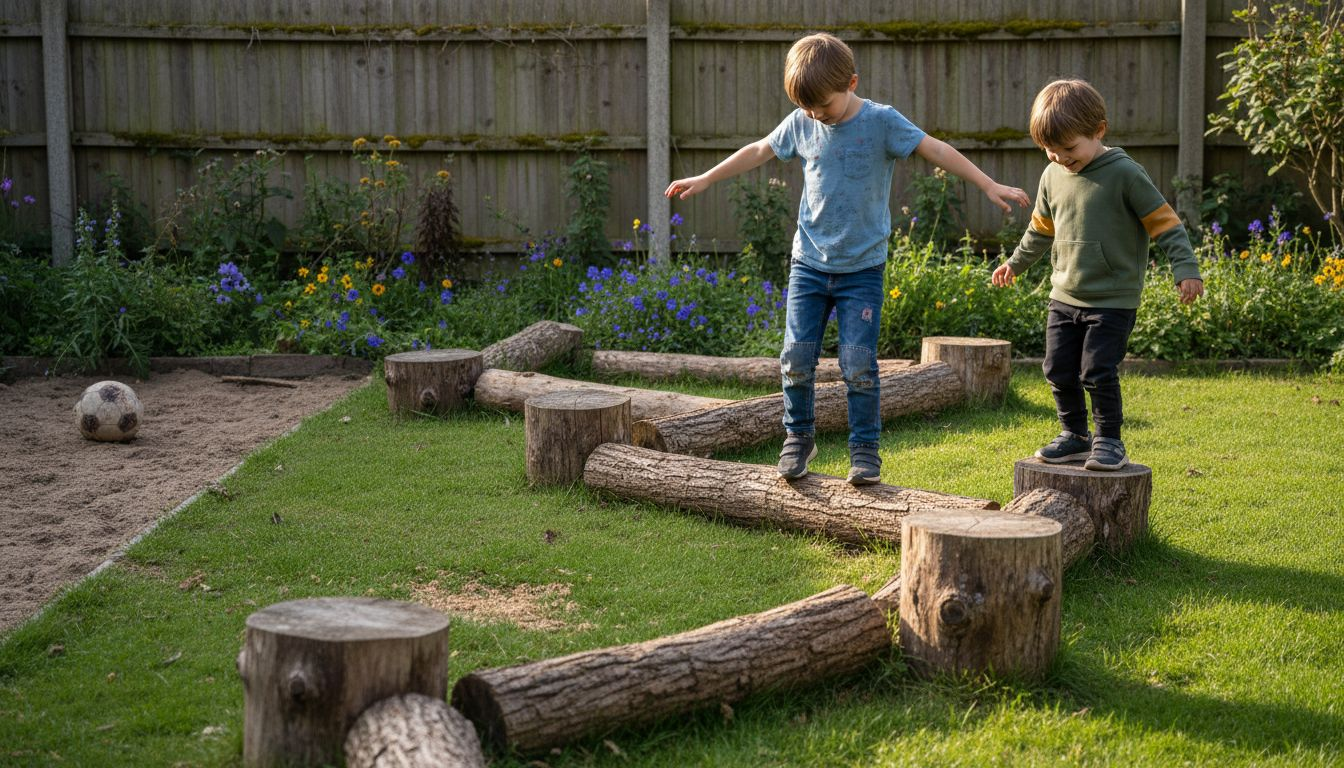
Sensory gardens featuring herbs, flowers, and textured plants engage multiple senses simultaneously whilst teaching children about plant life cycles and biodiversity. Design dedicated beds or containers filled with lavender for scent, lamb’s ear for touch, sunflowers for visual impact, and mint for taste exploration. Children learn to identify plants, understand seasonal changes, and develop respect for living things through regular interaction.
Water features ranging from small safe ponds to simple fountains or water tables add another dimension to nature play. Even a shallow basin where children can float leaves, observe reflections, or water plants creates opportunities for scientific observation and creative experimentation. Ensure any water feature includes appropriate safety measures like shallow depths, non-slip surfaces, and adult supervision guidelines.
Natural playhouses built from reclaimed wood or living willow structures offer sheltered spaces for imaginative play whilst demonstrating sustainable building practices. These structures can incorporate windows for birdwatching, shelves for displaying natural treasures, or small planting boxes attached to walls. For detailed guidance, review DIY outdoor playhouse ideas with eco-friendly approaches.
Loose natural materials provide endless creative possibilities:
- Sand pits for digging, moulding, and construction play
- Pinecones, acorns, and seed pods for sorting and counting activities
- Smooth river stones for stacking and pattern making
- Fallen leaves and twigs for building nests or creating nature art
- Bark chips or wood rounds for pathways and ground cover
Pro Tip: Rotate loose materials seasonally to maintain novelty and reflect natural changes. Spring might feature flower petals and fresh grass clippings, whilst autumn brings colourful leaves and interesting seed heads.
These ideas can be implemented individually or combined to create rich, multifaceted play environments. Find additional DIY playground ideas focused on outdoor creativity that complement these nature-focused approaches.
Comparing popular natural playground designs: benefits and considerations
Understanding how different natural playground elements compare helps you select options that best match your family’s priorities, available space, and maintenance capacity. This comparison highlights key benefits alongside practical considerations for four popular nature-focused playground designs.
| Playground Type | Primary Benefits | Key Challenges | Ideal Context |
|---|---|---|---|
| Climbing logs & stumps | Develops balance and coordination; encourages active movement; minimal ongoing costs | Requires secure installation; wood maintenance; potential splinter risks | Gardens with moderate space; families prioritising physical development |
| Sensory gardens | Engages multiple senses; teaches plant care; supports environmental education | Needs regular watering and seasonal maintenance; plant replacement costs | Any size garden; families valuing educational opportunities |
| Water features | Facilitates scientific observation; cooling in summer; attracts wildlife | Safety supervision essential; cleaning requirements; potential mosquito issues | Supervised play areas; families comfortable with water play |
| Natural playhouses | Provides shelter for imaginative play; demonstrates sustainable building; long-lasting | Higher initial construction effort; larger footprint; periodic repairs needed | Larger gardens; families with DIY skills or budget for construction |
The research consistently shows children are more active on natural playgrounds regardless of which specific elements you choose, suggesting that any incorporation of natural materials yields benefits. The key lies in selecting combinations that align with your specific circumstances.
Consider these factors when comparing options:
- Initial setup time and costs versus long-term value and durability
- Supervision requirements based on your children’s ages and your daily routines
- Seasonal usability and how elements perform across different weather conditions
- Educational opportunities each option provides for environmental learning
- Aesthetic integration with your existing garden design and landscaping
Pro Tip: Create modular designs that allow you to start with one or two elements and expand over time. Begin with a sensory garden and balancing logs, then add water features or playhouses as your budget and children’s interests evolve. This approach spreads costs whilst letting you assess what truly engages your family.
For comprehensive inspiration combining multiple natural elements, explore backyard natural playground ideas for creative play that demonstrate successful integration of various components.
Tailoring outdoor playground choices to your family’s space and values
Selecting the right natural playground elements requires honest assessment of your unique situation, from physical garden dimensions to your family’s environmental priorities and your children’s developmental stages. This personalised approach ensures you create a play space that genuinely serves your family rather than following generic templates.
Follow these steps to match playground ideas to your specific context:
- Measure your available outdoor space accurately, noting sunny versus shaded areas, existing features like trees or slopes, and proximity to supervision points like kitchen windows.
- Assess your children’s current developmental stages and interests, considering whether they prefer active climbing, quiet observation, creative building, or sensory exploration.
- Identify your family’s environmental values and sustainability goals, determining whether you prioritise native plants, water conservation, wildlife support, or educational opportunities about ecosystems.
- Evaluate your realistic maintenance capacity, honestly considering the time you can dedicate weekly to watering, cleaning, safety checks, and seasonal adjustments.
- Set a phased implementation plan that allows you to start small, observe what engages your children most, and expand based on actual usage patterns rather than assumptions.
Space limitations need not restrict nature connection. Even compact urban gardens can incorporate container sensory gardens, wall-mounted planters with herbs, small water tables, or a single balancing log. The research showing increased activity on natural playgrounds applies regardless of scale, meaning even modest natural elements deliver benefits.
Children’s developmental stages significantly influence which elements prove most engaging. Toddlers thrive with sensory gardens at their eye level and simple stepping stumps, whilst older children appreciate more complex climbing structures and opportunities for independent nature observation. Consider how elements can adapt as your children grow rather than requiring complete replacement.
Your environmental values shape material choices and design approaches. Families prioritising sustainability might emphasise reclaimed materials, native plant species, and wildlife-friendly features like bird feeders or insect hotels integrated into play structures. Others might focus on educational signage that helps children identify plants and understand ecological relationships.
Pro Tip: Plan seasonal activity rotations to maintain year-round engagement with your natural playground. Spring might focus on planting and observing growth, summer on water play and shade activities, autumn on collecting and sorting natural materials, and winter on identifying animal tracks or creating outdoor art with frost and ice.
For guidance on creating safe, nature-focused play areas tailored to your specific space, review DIY outdoor play area ideas for safe nature spots that address various garden configurations.
Explore inspiring playground products and ideas at The Zoofamily
Creating outdoor spaces that genuinely connect children with nature whilst promoting active play requires both inspiration and practical guidance. The Zoofamily offers comprehensive resources designed specifically for families seeking to build meaningful environmental connections through creative outdoor play.
Discover detailed DIY playground guides that balance safety considerations with authentic nature engagement, helping you implement the ideas discussed throughout this article with confidence. From eco-friendly playhouse construction plans to backyard project tutorials featuring natural materials, The Zoofamily provides step-by-step support tailored to various skill levels and garden sizes. Explore safer, nature-connected backyard play ideas for 2026 alongside creative outdoor playground projects that transform ordinary gardens into engaging natural learning environments. Beyond playground construction, find products like kids’ cameras, binoculars, and nature exploration tools that extend outdoor engagement and support environmental awareness, all whilst contributing to global reforestation through our one camera, one tree commitment.
Frequently asked questions
What natural materials are safest to include in outdoor playgrounds?
Untreated wood with smooth, rounded edges provides the safest natural material for playground structures, avoiding toxic chemicals whilst preventing splinters through proper finishing. Select non-toxic plants without thorns, poisonous berries, or skin irritants, researching each species before planting in play areas. Regular maintenance checks for damaged wood, protruding nails, or sharp edges keep natural playgrounds safe as materials weather over time. For comprehensive safety guidance, review DIY backyard play safety tips that address material selection and ongoing maintenance.
How can I encourage my child to respect nature whilst using the playground?
Involve children directly in planting, watering, and caring for the play garden, giving them ownership and responsibility for living elements. Create simple educational signage identifying plants and animals, or develop storytelling routines about the creatures that visit your garden. Model respectful behaviour yourself by demonstrating gentle handling of plants, explaining why we avoid picking flowers unnecessarily, and celebrating wildlife sightings with quiet observation rather than disruption.
Can natural playground elements suit small urban gardens?
Absolutely, natural playground elements adapt brilliantly to compact urban spaces through creative scaling and vertical designs. Container sensory gardens, wall-mounted planters with herbs, small water tables, and single balancing logs deliver nature connection without requiring extensive square footage. Focus on multi-functional elements that serve several purposes, like a raised planting bed with wide edges that double as seating or balancing surfaces. Explore DIY outdoor play ideas for small gardens that maximise limited space.
What maintenance is needed for natural playground features?
Conduct monthly safety inspections checking for damaged wood, loose fixtures, tripping hazards, or sharp edges that develop as natural materials weather. Water features require weekly cleaning to prevent algae growth and mosquito breeding, whilst plant elements need regular watering, seasonal pruning, and occasional replacement. Apply natural wood sealant annually to extend the life of wooden structures, and refresh loose materials like bark chips or sand as they decompose or disperse. Schedule seasonal deep cleans removing accumulated leaves, checking drainage, and preparing elements for weather changes.