

Try active games, creative crafts, sensory challenges and no-prep ideas to keep children entertained and moving when you can’t get outside. These indoor play activities work across ages and spaces, from a cramped flat hallway to a full playroom, and most need nothing more than what’s already in the house.
TL;DR:
- Active indoor activities like obstacle courses and laser mazes are scalable to different ages and space constraints, with minimal setup and cleanup required.
- Quiet activities such as crafts, storytelling, Lego mazes, and scavenger hunts effectively develop skills while needing little supervision and lasting 20 to 40 minutes.
- Short, no-prep games like I-spy or balloon volleyball are suitable for quick engagement, adaptable for mixed ages by increasing difficulty for older children.
- When visiting venues, check for rules on grip socks, supervision ratios, and capacity, and pack essentials like snacks, extra clothes, and protection for hygiene.
- For children aged 1 to 8, activities should match age and available time, blending quick active bursts with longer quiet play for effective daily routines.
Table of Contents
- How to pick the right indoor play activities for your space and time
- Active play ideas to burn energy indoors
- Creative and quiet play ideas: art, stories and role play
- Sensory, STEM and learning-through-play activities
- Low-prep and zero-cost activities you can set up in five minutes
- Indoor venues and what to expect when you go out
- Quick safety, space and setup checklist
- Choosing activities by age and time available
- Why we think indoors is the best time to spark curiosity about nature
- Turning a scavenger hunt into a proper observation game
- Where these ideas come from
- Sources
How to pick the right indoor play activities for your space and time
Match the activity to what you’ve actually got, not what looks best in a photo. A hallway suits a tape maze or bowling lane. A living room with the sofa pushed back can host an obstacle course. A small flat still has room for card games, magnet play or a sensory tray on the kitchen table.
Time matters just as much as space. Some days you need five minutes to buy yourself a phone call; other days you’ve got a whole rainy afternoon to fill. Sort your options roughly like this:
- 5 to 10 minutes: I-spy, torch tag, freeze dance
- 15 to 30 minutes: tape laser maze, LEGO building challenge, sensory tray
- 30 to 60 minutes: story-led obstacle course, craft projects, baking
Energy levels decide the type. If children are bouncing off the walls, start with something active to burn it off before moving to quiet play. If they’re already tired or it’s close to bedtime, skip straight to creative or sensory activities that wind them down rather than up.
Active play ideas to burn energy indoors
Active play is the category most parents reach for first, and for good reason. The NHS points to free indoor activities such as dance routines and movement games as an easy way to help children hit their daily activity targets without leaving the house.
- Indoor obstacle course. Set up 4 to 6 stations using cushions to crawl over, a chair tunnel, a laundry basket to jump into, and a string to step over. Clear the fall zone around each station first. A story-led version turns the course into a bear cave, a river crossing or a dragon’s lair, which holds toddlers’ attention longer than movement alone. Expect a short play session, longer if you add a “treasure” at the end.
- Tape laser maze. Criss-cross painter’s tape across a hallway doorway at different heights. Younger children go under and over; older ones army-crawl through without touching a strand. It’s a genuinely fast setup that scales by age just by adjusting the gaps, and it tends to buy a substantial amount of play with almost no mess to clear up afterwards.
- Pillow path. Lay cushions across the floor as “stepping stones” over an imaginary river.
- Freeze dance. Music on, dancing; music off, statues.
- Hallway bowling. Empty bottles as pins, a soft ball to roll.
With mixed ages in the room, give the older child a harder version of the same task rather than a separate game, and keep an adult within arm’s reach whenever furniture is being climbed on.
Pro Tip: Add sound effects to a story-led obstacle course (drumming for “crossing the bridge”, a growl for “the cave”). It costs nothing and roughly doubles how long younger children stay engaged.
Creative and quiet play ideas: art, stories and role play
Quiet doesn’t mean boring. Creative play builds fine motor skills and imagination, and most of it costs nothing beyond what’s in the recycling bin.
- Recycled crafts: cereal box binoculars, toilet-roll animals, egg-box caterpillars. Keep templates simple for under-5s and let older children design their own.
- Story walks and role play: turn the living room into a shop, a vet’s surgery or a jungle using a few props and let the story drive the play rather than a script.
- LEGO or DUPLO mazes: building a simple maze and rolling a marble through it supports spatial awareness, and LEGO’s own activity guides suggest it works well as a short, self-contained session for preschoolers.
- Magnet stories: use fridge magnets or a magnetic board to retell a familiar story, moving pieces as the plot unfolds.
- Scavenger hunts: give children a list of colours, shapes or textures to find around the house rather than specific objects, which turns a search into an observation task.
Most of these run for 20 to 40 minutes and need almost no supervision once set up, which makes them useful when you need a genuinely quiet stretch rather than constant refereeing.
Sensory, STEM and learning-through-play activities
Learning-through-play activities work because children don’t notice they’re practising anything. The marshmallow-and-toothpick tower challenge is the clearest example: give a handful of mini marshmallows and toothpicks and ask for the tallest freestanding tower. It teaches basic engineering concepts (balance, base width, load) and works for ages 4 upwards, with older children able to add constraints like “must hold a small toy on top.”
Other reliable options:
- Sensory trays: dried rice, pasta or oats with scoops and small toys hidden inside
- Freezer-bag science: mixing baking soda and vinegar in a sealed bag to watch it inflate
- Simple cooking projects: measuring, pouring and stirring while baking together
- Counting and sorting games: sorting toys by colour or size, or counting steps between rooms
Educational resource hubs, including Twinkl’s free activity pages, publish ready-made templates for map-making and early STEM tasks that need no printer ink beyond a single sheet. For older children, raise the difficulty by adding a rule, a time limit, or a “no talking” constraint to the same basic game rather than inventing something new.
Low-prep and zero-cost activities you can set up in five minutes
Some days you just need something now. These need no shopping and almost no setup:
- I-spy, using colours or letters depending on age
- Simon says
- Torch tag in a darkened room
- A 5-minute scavenger hunt for three household objects
- Balloon volleyball over a string
- “Statues” freeze game
- Sock sorting race against the clock
- Paper aeroplane distance contest
Cardboard tubes, wooden spoons and old socks all double as safe play props with a bit of imagination. For siblings of different ages, give the older one a harder rule within the same game (spell the word instead of naming the colour) rather than running two separate activities.
Indoor venues and what to expect when you go out
Soft play centres, discovery centres, indoor parks and museum play zones each suit slightly different ages, so it’s worth checking before you book. Soft play tends to suit toddlers to age 8; discovery centres and museum play zones often work better for slightly older, more curious children.
Expect a few common rules wherever you go:
- Grip socks: many shoeless play venues require grip socks for hygiene and safety, sold on site if you forget
- Adult supervision ratios: most venues expect one adult per one or two children, particularly in soft play
- Capacity and booking: busy venues often cap numbers, so booking ahead avoids a wasted trip
- Pack for the day: spare socks, a change of clothes, snacks and water bottles cover most eventualities
Quick safety, space and setup checklist
Before any activity starts, walk the space once. Clear the fall zone around obstacle courses, secure any tunnel or den so it can’t collapse, and remove sharp edges or trip hazards like loose rugs. Stay within arm’s reach for climbing or balance games with under-5s; older children can play with supervision from across the room. At venues, follow posted grip-sock and capacity rules. They exist because shoeless play areas pick up bacteria fast and crowded rooms increase collision risk.
Choosing activities by age and time available
- Ages 1 to 3: sensory trays, pillow paths, simple freeze dance; keep sessions to 10 to 15 minutes
- Ages 3 to 5: tape maze, LEGO DUPLO building, story-led obstacle courses; 15 to 30 minutes
- Ages 5 to 8+: marshmallow towers, scavenger hunts with observation tasks, longer craft projects; 30 minutes or more
Mix a short active burst with a longer quiet activity to manage attention span across a full afternoon rather than running one long session of either.
Why we think indoors is the best time to spark curiosity about nature
Rainy days indoors don’t have to mean a break from noticing the natural world. An indoor “bird-spotting” game using a child’s camera or a pair of binoculars turns a scavenger hunt into genuine observation practice, spotting a spider on the windowsill, watching birds from behind glass, photographing houseplants like a tiny expedition. Props built for small hands make that kind of looking feel like an activity in its own right, not a consolation prize for staying in. It’s a small shift, but it’s the one we’d make first.
— ALAIN
Turning a scavenger hunt into a proper observation game
A cardboard tube works as makeshift binoculars for exactly one afternoon. A durable kids’ camera or a real pair of children’s binoculars works for every rainy day after that, and it changes what a scavenger hunt actually asks of a child: not just finding an object, but looking closely enough to photograph it or focus in on it.
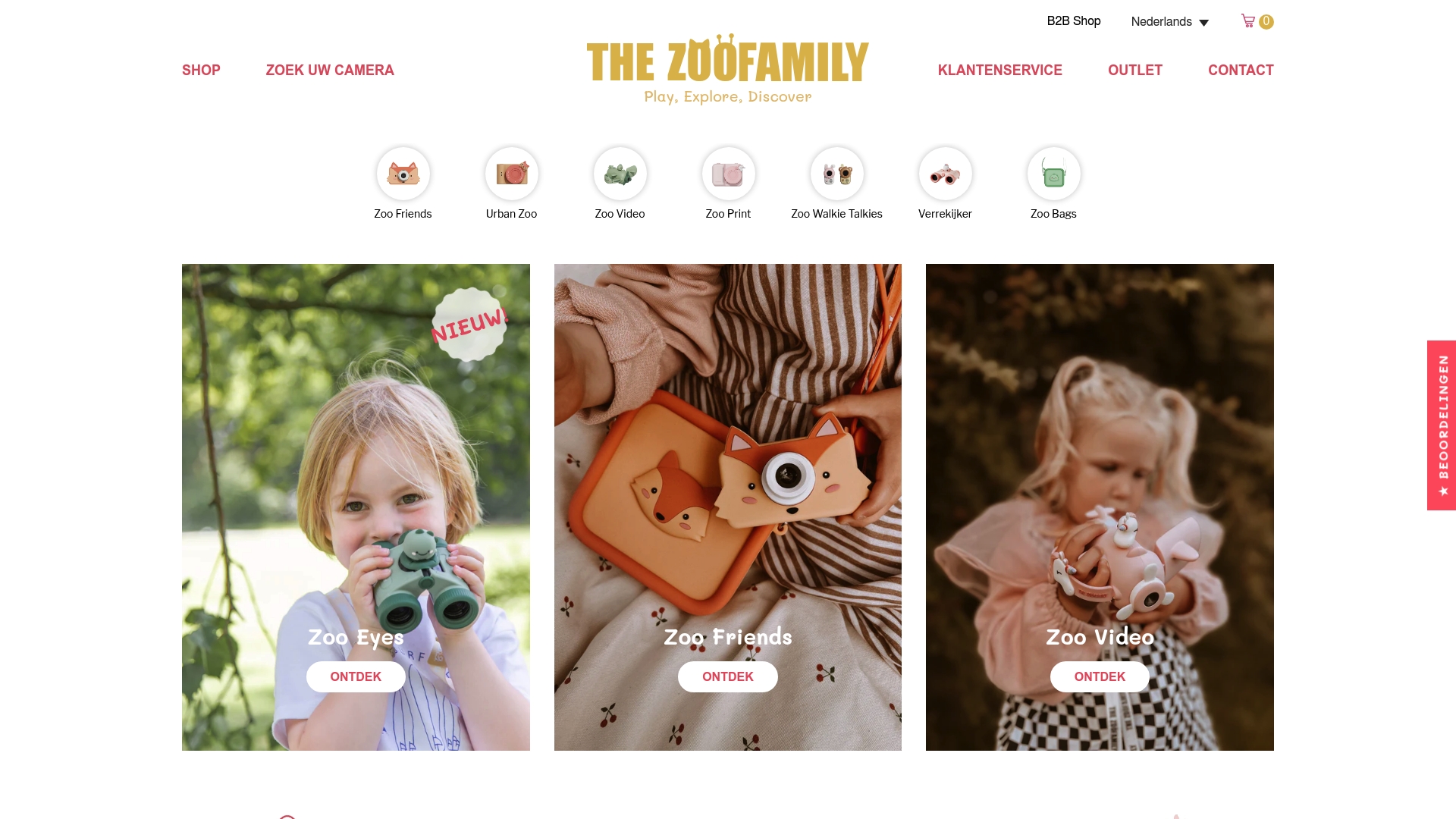
Animal-themed cameras, walkie-talkies and binoculars designed for young children aged 3 and up can support bird-spotting games or indoor “expeditions” that children can mostly manage themselves. Keep supervision nearby for the youngest users, as with any small device, and let older children run the observation game solo. If you like the idea of adding a proper prop to your indoor play routine, browse the current range and see which one suits your child’s age.
Where these ideas come from
The NHS’s indoor activity guidance and Oldham Family Hubs’ rainy day list cover free, low-cost games. Step-by-step tutorials for the obstacle course story walk and tape laser maze informed the active play section above.
Sources
- Free indoor activities for kids – Healthier Families
- Play ideas for a rainy day - Oldham Family Hubs
- Obstacle course story walk — TinyStepper
- Tape laser maze for kids — It’s Goodbye Twenties
- Mandai Curiosity Cove (venue guidance example)