

TL;DR:
- Open-ended toys foster imagination and creativity but may not engage all children equally.
- Using natural and recycled loose parts encourages environmental awareness alongside cognitive development.
- Adult support and thoughtful environment setup enhance the benefits of open-ended play for children.
Open-ended toys are widely celebrated as the gold standard of child development, yet a closer look at the research reveals a more nuanced story. Preference for open-ended toys is genuinely linked to richer imagination in children, but that same evidence shows that building blocks, one of the most iconic open-ended toys, can actually be among the least preferred options for many children. This matters enormously for parents choosing gifts that spark real engagement. This guide walks you through the science, the practicalities, and the environmental angle, so you can make confident, thoughtful choices for your family.
Table of Contents
- What are open-ended toys and how do they support creativity?
- The science: How open-ended play boosts cognitive and STEM skills
- Beyond toys: Loose parts play and building an eco-friendly mindset
- Supporting children’s play: Why guidance and context matter
- A fresh perspective: The overlooked balance in open-ended play
- Find the right open-ended toys and ideas with The Zoofamily
- Frequently asked questions
Key Takeaways
| Point | Details |
|---|---|
| Open-ended toys foster creativity | Toys with no fixed purpose let children invent stories and games, developing imagination and flexible thinking. |
| STEM skills grow through playful exploration | Loose parts and open materials encourage building, experimenting, and problem-solving during play. |
| Environmental awareness starts with play | Recycled and found materials as toys teach children to reuse and think sustainably from an early age. |
| Parental support makes the difference | Children benefit most when adults participate, encourage, and scaffold open-ended play experiences. |
What are open-ended toys and how do they support creativity?
Having set the stage for why not every open-ended toy is instantly engaging, let’s define what qualifies as open-ended play and why it matters for your child’s development.
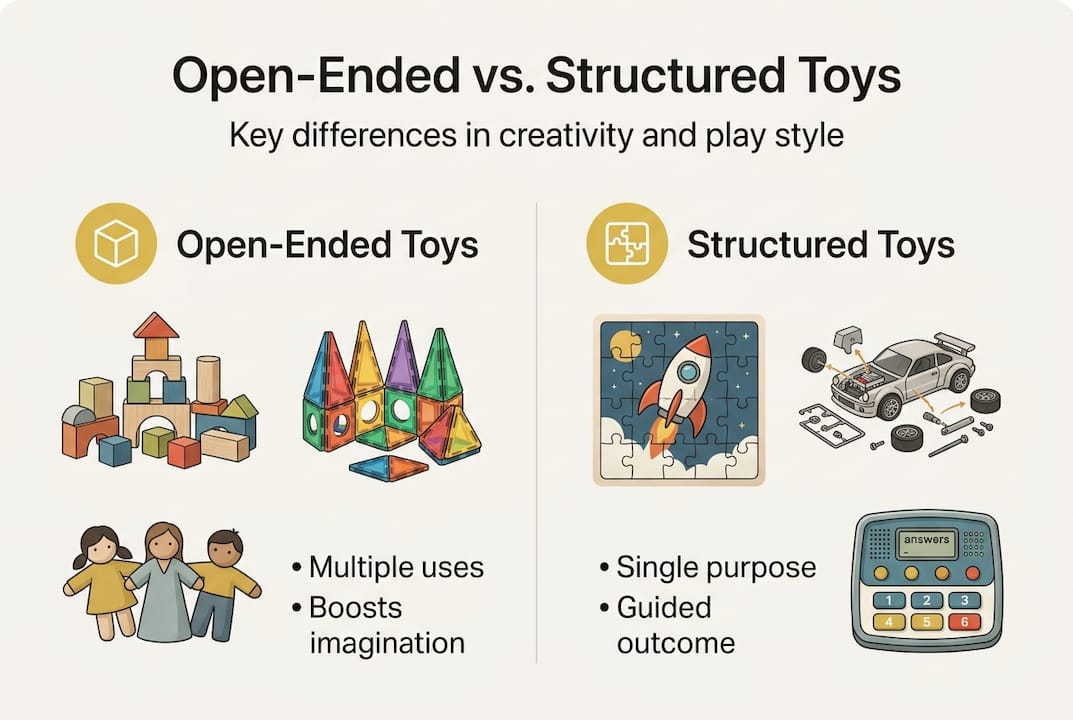
An open-ended toy is simply one with no fixed outcome. There is no right answer, no single correct way to play, and no built-in endpoint. A child can return to it again and again and find something new each time. This is the defining feature that separates open-ended toys from closed toys, which typically have one intended function and become repetitive quickly.
Think about the difference between a single-purpose electronic toy that produces a sound when you press a button versus a handful of smooth wooden pieces in different shapes. The wooden pieces can become a house, a spaceship, a forest, or a simple arrangement on the floor. They invite storytelling, problem-solving, and collaboration between siblings or friends. The electronic toy, by contrast, offers the same response every single time.
Common examples of open-ended toys and materials include:
- Wooden blocks and loose wooden shapes
- Scarves and lengths of fabric in various colours and textures
- Loose parts such as pine cones, shells, pebbles, buttons, and bottle tops
- Clay, sand, and water
- Binoculars, cameras, and magnifying tools that encourage exploration of the real world
- Recycled containers, cardboard tubes, and fabric offcuts
These materials encourage benefits of imaginative play such as storytelling, flexible thinking, and emotional regulation. When children create their own narratives using objects that have no prescribed role, they practise the kind of thinking that helps them solve unfamiliar problems later in life.
“Open-ended play materials support more original and detailed imaginative scenarios than toys with fixed functions, giving children genuine creative latitude during unstructured time.”
However, a critical point is easy to miss: not every child instantly connects with every open-ended material. Research confirms that blocks can be least preferred by many children, despite being championed by educators and toy designers alike. This does not mean blocks are wrong for your child. It means that without some adult modelling or a moment of shared play, even the most well-designed open-ended toy can sit untouched on the shelf. The toy is only half the story.
Social skills also grow through open-ended play. When children play together with loose parts or fabric, they must negotiate roles, share materials, and build shared narratives. These conversations, sometimes small and sometimes elaborate, are exactly the kind of interpersonal practice that no screen or single-use toy can replicate.
The science: How open-ended play boosts cognitive and STEM skills
With a clear picture of what open-ended toys are, let’s turn to what modern research says about their developmental impact, particularly in the areas of cognitive growth and early STEM thinking.
The evidence is genuinely encouraging, though it is important to read it carefully rather than take it at face value. Studies show that loose parts produce more STEM behaviours during children’s unstructured play than limited-function control toys, with measurable, statistically significant differences. This means that when researchers compare children playing with open-ended materials to those playing with single-purpose toys, the open-ended group consistently shows more behaviours associated with science, technology, engineering, and mathematics, such as building, testing, sorting, predicting, and experimenting.
| Play material type | STEM behaviours observed | Creative narrative play | Structured outcomes |
|---|---|---|---|
| Open-ended loose parts | High | High | Low |
| Limited-function toys | Low | Moderate | High |
| Digital/electronic toys | Low | Low | High |
| Natural found materials | High | High | Very low |
This is powerful information for parents who want to give their children an academic advantage through play, without resorting to flashcards or structured lessons. Simply replacing some fixed-function toys with open-ended alternatives during free play can meaningfully shift how a child thinks and explores.
However, the picture is not entirely straightforward. Indoor loose parts play shows a mixed evidence base: positive associations appear in many studies, but the relationship to specific cognitive outcomes and the conditions under which benefits occur remain uncertain. In plain terms, we know open-ended play tends to help, but we do not yet know precisely which cognitive skills benefit most, or which children benefit most in which circumstances.
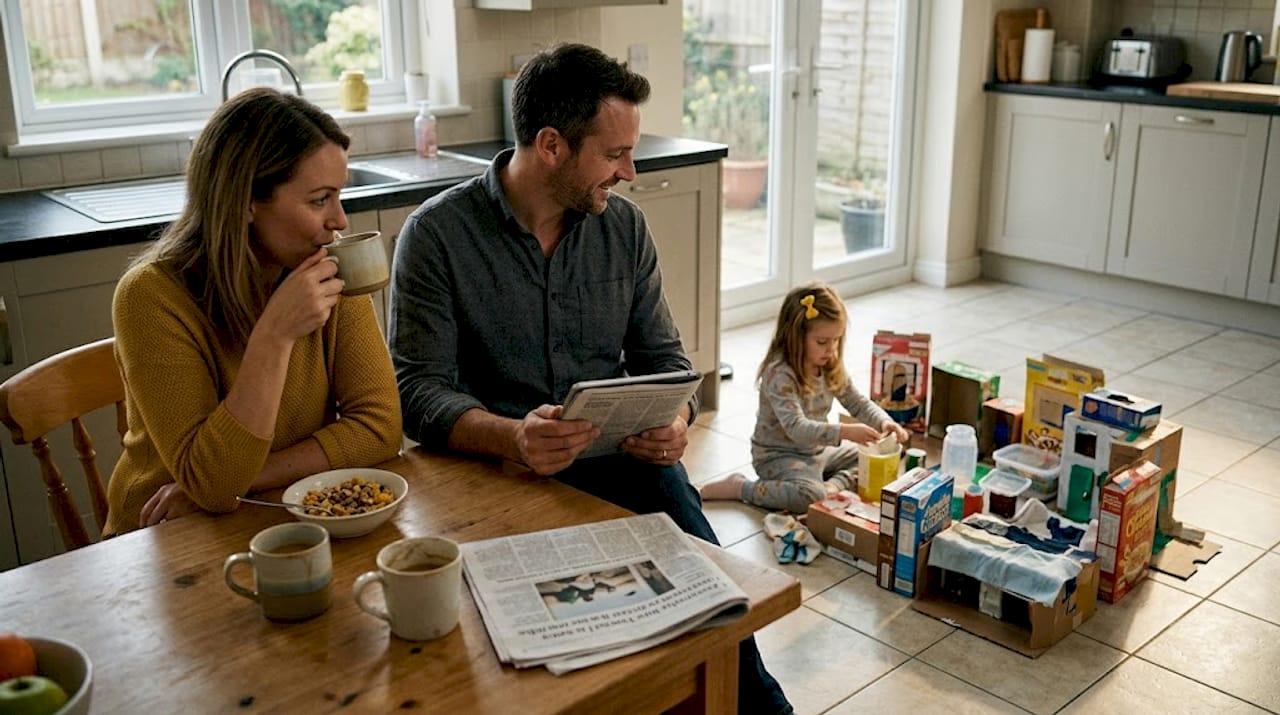
What does this mean for you as a parent? It means that choosing open-ended toys is a sound, evidence-based decision, but it works best when you also pay attention to your child’s temperament, your home environment, and how play unfolds. A shy child who struggles with unstructured time may need a little more support to get going. A naturally curious child may dive straight in. Both responses are completely normal.
Pro Tip: Rotate your child’s open-ended materials every few weeks rather than leaving the same items out indefinitely. Fresh combinations reignite curiosity and encourage new kinds of creative play for children, especially when you mix natural objects with simple tools like child-friendly binoculars or cameras.
Encouraging early STEM thinking at home does not require expensive kits or structured activities. Offering a bowl of mixed objects, some small and some large, some smooth and some rough, gives children the raw material for sorting, stacking, grouping, and counting. These spontaneous investigations are the foundation of scientific thinking, and they can happen in any living room. For more structured but still playful approaches, exploring engaging play activities can offer useful starting points.
Beyond toys: Loose parts play and building an eco-friendly mindset
Scientific studies highlight the learning gains, but what if you are looking for more than shop-bought toys? What if sustainability, creativity, and environmental awareness matter as much as cognitive development in your family?
Loose parts play, in its purest form, costs very little and produces very little waste. The concept is rooted in a broader playwork methodology, where objects with undetermined functions are used to enrich play environments, even in settings where toys are deliberately restricted. This approach is well established in Scandinavian early years settings and in many UK forest school programmes, but it is entirely achievable at home with materials you already have.
Loose parts can be almost anything safe and clean:
- Bottle tops and jar lids in different sizes and colours
- Fabric offcuts, ribbons, and scarves
- Pine cones, smooth pebbles, and dried seed pods from the garden
- Cardboard tubes from kitchen roll or wrapping paper
- Wooden pegs, corks, and small boxes
- Old keys, large buttons, and curtain rings
What makes this approach genuinely exciting is that it builds environmental awareness naturally. When children play with a pine cone or arrange pebbles into patterns, they begin to form a relationship with the natural world. They notice texture, weight, and colour in ways that plastic toys rarely prompt. Over time, this curiosity becomes care, and that is a foundation for environmental consciousness that lasts far beyond childhood.
| Option | Cost | Environmental impact | Creative potential | Durability |
|---|---|---|---|---|
| Commercial open-ended toys (wood) | Moderate | Low (sustainable materials) | High | Very high |
| Recycled home materials | Very low | Very low (repurposed) | High | Variable |
| Plastic loose parts (bought) | Low | High (production waste) | Moderate | High |
| Natural found materials | Free | Negligible | Very high | Low |
When choosing sustainable toys, it helps to think in terms of longevity, adaptability, and origin. A beautiful set of wooden animals or a quality pair of children’s binoculars made from recycled materials will outlast dozens of plastic novelties and continue to inspire imaginative play for years. The environmental footprint of one well-chosen, durable toy is far smaller than ten single-use alternatives.
Introducing loose parts into your family routine can be as simple as keeping a small basket near the back door where your children can add interesting finds from walks. A smooth stone, an autumn leaf, a fallen feather. Over time, this collection becomes a self-curated play resource that connects your child to the seasons, to your local environment, and to the pleasure of noticing small things.
Supporting children’s play: Why guidance and context matter
Whether toys are bought, found, or recycled, one factor links the best outcomes across all the research: thoughtful support from adults, not just the materials themselves.
This is one of the most important and most overlooked insights in the open-ended play literature. Many parents and even educators assume that placing open-ended materials in front of a child is enough. Sometimes it is. But research into play-based learning guidance emphasises that open-ended materials work best when paired with appropriate scaffolding, rather than assuming children will automatically translate materials into higher-level play.
Scaffolding does not mean directing or controlling the play. It means creating the conditions for richer play to emerge. Here are practical ways to do this at home:
- Sit nearby and play alongside your child without taking over. Your presence signals that this activity matters and that it is worth investing in.
- Ask open questions such as “What could this become?” or “What would happen if you added this?” rather than suggesting specific outcomes.
- Model play behaviours by picking up a loose part and exploring it yourself, showing curiosity and delight in the material.
- Set up an inviting play space with materials arranged in an appealing way. A thoughtfully presented tray of mixed materials is more inviting than a pile in a box.
- Follow your child’s lead and resist the urge to correct, tidy, or direct. The process matters far more than any product.
Environmental context matters enormously too. A cluttered, noisy space works against focused play, while a calm, accessible play corner encourages children to settle and explore. Outdoor settings often produce the richest play because natural environments are inherently full of loose parts and sensory stimulation. If you need fresh inspiration for getting children outside, exploring creative outdoor play ideas can be a brilliant starting point.
A child’s mood, energy level, and current interests also shape how they engage. A tired child after school may need a quieter invitation, perhaps just a small tray of interesting objects, rather than a full-scale activity. Knowing your child and reading the moment is as important as any toy you choose.
Pro Tip: Keep a small “wonder box” in your kitchen or living room, filled with safe, interesting objects your child can explore freely. Rotate the contents monthly and include items from nature, the kitchen, and craft supplies. This simple habit makes open-ended play a natural part of daily life rather than a special occasion.
A fresh perspective: The overlooked balance in open-ended play
Here is something that the enthusiasm around open-ended toys sometimes misses: the toy itself is almost never the most important variable. It is the relationship between the child, the material, and the environment, with an adult who notices and responds, that produces the outcomes we all hope for.
At The Zoofamily, we have seen parents invest in beautifully crafted open-ended toys, only to feel deflated when their child shows little interest. This is not a failure of the toy or the child. It is an invitation to pay closer attention. What does this child find genuinely captivating? What materials light them up? What role does nature play in their everyday imagination?
The evidence on cognitive outcomes is genuinely promising but not definitive. Systematic reviews point to methodological gaps and uncertainty about which specific cognitive skills benefit most and under what conditions. This is not a reason to abandon open-ended play. It is a reason to stay curious and observant rather than following any single prescription.
We also believe strongly that eco-consciousness and creativity are deeply connected. When children play with natural materials, they develop a felt sense of the world beyond their doorstep. That is why we design our products with animal references and natural textures, and why creative play for children is at the heart of everything we do. No toy replaces active involvement, but the right toy, chosen thoughtfully, can open a door.
Find the right open-ended toys and ideas with The Zoofamily
If you’d like to go further on your family’s creative and eco-friendly play journey, here’s where to start.
At The Zoofamily, we bring together playful resources at The Zoofamily to help families like yours make meaningful choices. Whether you are looking for imaginative play guidance to understand how different materials support different children, or browsing for age-appropriate and sustainable toys that will last and inspire for years, you will find it here.
Every camera we sell funds the planting of one tree, because we believe a love of nature starts in childhood. Our products are designed to spark curiosity about the natural world, connecting children to the planet while they play, explore, and imagine. Start exploring today and find the gift that opens a door to something bigger.
Frequently asked questions
What are some easy ways to introduce open-ended play at home?
Start by offering safe everyday items such as boxes, scarves, or stones as play materials, and invite your child to use their imagination alongside shop-bought toys. This approach draws on playwork methodology that has been used successfully in early years settings across Europe.
Can open-ended toys improve my child’s STEM skills?
Research shows children engage in more STEM behaviours such as building, problem-solving, and experimenting when using open-ended materials. Studies confirm that loose parts produce significantly more STEM-related behaviours than limited-function toys during unstructured play.
Do all children benefit equally from open-ended toys?
Not every child finds the same open-ended toys engaging; some may prefer more structure or need adult support to enjoy these materials. Evidence shows that blocks can be least preferred by many children despite their reputation as ideal open-ended toys.
How can I make play more environmentally friendly at home?
Use clean, safe recycled materials and natural objects as loose parts, which encourages creativity while reducing reliance on single-use products. This strategy, rooted in broader playwork principles, is both cost-effective and environmentally responsible.