

TL;DR:
- Children as young as three can develop eco consciousness through playful, everyday experiences.
- Early eco education fosters empathy, responsibility, and critical thinking about the environment.
- Parents and communities play a vital role in nurturing lifelong environmental values through consistent, hands-on activities.
Many parents assume that environmental topics are simply too abstract for toddlers and young children to grasp. Yet research consistently shows the opposite. Children as young as three can develop genuine care for the natural world when learning is playful, sensory, and woven into everyday family life. This guide walks you through what eco consciousness actually means for young children, which proven frameworks exist across Europe, and how you can bring these values to life at home without needing a forest school or a specialist curriculum.
Table of Contents
- Understanding eco consciousness in childhood
- Key frameworks and methods for teaching eco consciousness
- Nature-based activities and real-world learning
- The role of parents, community, and culture
- Encouraging creativity and tackling dilemmas
- Why most eco education misses the mark: Our perspective
- Empower your family’s eco journey
- Frequently asked questions
Key Takeaways
| Point | Details |
|---|---|
| Start early | Introducing eco values in early childhood has lasting impacts on attitudes and habits. |
| Use hands-on learning | Activities like gardening, recycling, and nature play are effective for building eco consciousness. |
| Family influence matters | Parental involvement and consistent home practices reinforce what children learn about the environment. |
| Balance structure and creativity | Open-ended exploration combined with clear values supports both care and curiosity. |
Understanding eco consciousness in childhood
Eco consciousness in early childhood is not about reciting facts on climate change. It means a child noticing a worm after rain, choosing not to trample a flower, or feeling genuine sadness when a bird’s nest is disturbed. These small moments of awareness and empathy are the seeds of lifelong environmental stewardship.
Research-led curricula confirm that early years are the ideal window for planting those seeds. Finland’s national curriculum includes sustainability and emotional development as core competences from the very start of formal education, treating eco values not as an add-on but as central to a child’s growth. The Eco-Schools programme uses a seven-step sustainability approach that integrates environmental thinking into every part of nursery life, from how waste is managed to how children discuss living things.
The benefits extend well beyond environmental knowledge. Children who engage with eco-integrated learning develop stronger empathy, sharper problem-solving skills, and a sense of personal agency. They learn that their choices matter, which is a powerful lesson at any age.
| Traditional early childhood education | Eco-integrated early childhood education |
|---|---|
| Nature as a backdrop for play | Nature as an active participant in learning |
| Sustainability mentioned occasionally | Sustainability woven into daily routines |
| Focus on academic readiness | Focus on values, empathy, and stewardship |
| Outdoor time as free play | Outdoor time as structured and reflective |
Key benefits of early eco education include:
- Empathy: Children learn to consider the needs of living things beyond themselves.
- Responsibility: Simple tasks like watering plants build a habit of care.
- Critical thinking: Discussing why we recycle or compost encourages reasoning.
- Resilience: Time in nature supports emotional regulation and wellbeing.
Our environmental responsibility guide explores these benefits in more depth, and the evidence is clear: starting early is not ambitious, it is simply wise. Just as sustainable consumer choices shape broader habits over time, early eco habits in children compound into lasting values.
Key frameworks and methods for teaching eco consciousness
Knowing that eco education works is one thing. Knowing how to do it at home is another. Fortunately, several well-tested frameworks offer parents clear, practical inspiration.
The Eco-Schools seven-step process guides settings through environmental review, action planning, monitoring, and curriculum integration. While designed for nurseries, the underlying logic translates beautifully to family life: assess what you use, set a simple goal, take action, and reflect together.
The Green Pedagogy course developed for European educators uses hands-on workshops and non-formal, outdoor learning methods to build environmental awareness. The emphasis is on experience before explanation, letting children touch, smell, and observe before any adult introduces a concept.
The ECE sustainability toolkit provides pedagogies including directed play and values-based indicators, giving educators and parents concrete ways to measure whether a child is developing genuine eco awareness rather than just parroting phrases.
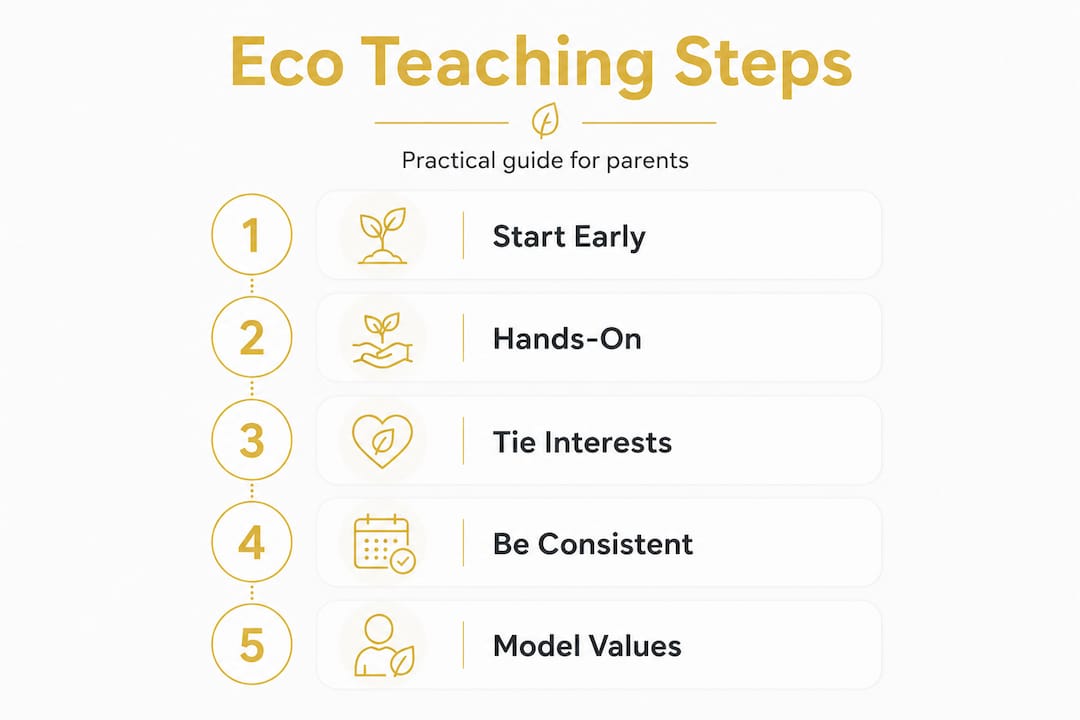
Here is a simple sequence for starting eco projects at home:
- Choose one focus area such as water, food waste, or local wildlife.
- Explore together through a walk, a book, or a simple experiment.
- Take one small action such as setting up a compost bin or a bird feeder.
- Reflect as a family by asking what your child noticed and felt.
- Celebrate progress rather than demanding perfection.
Pro Tip: Tie eco projects to your child’s existing interests. A child who loves animals will engage far more deeply with a bug hotel project than with an abstract lesson on biodiversity.
You will find plenty of starting points in our collection of ways to instil environmental responsibility and our Earth Day activities for kids. Both are full of age-appropriate ideas that require no specialist equipment. Much like thinking about upcycled ingredients for sustainability in other contexts, the principle is the same: small, creative choices build a bigger picture of care.
Nature-based activities and real-world learning
Frameworks are useful, but children learn most deeply through hands-on experiences. Here are activities that foster eco consciousness right in your garden, kitchen, or community.
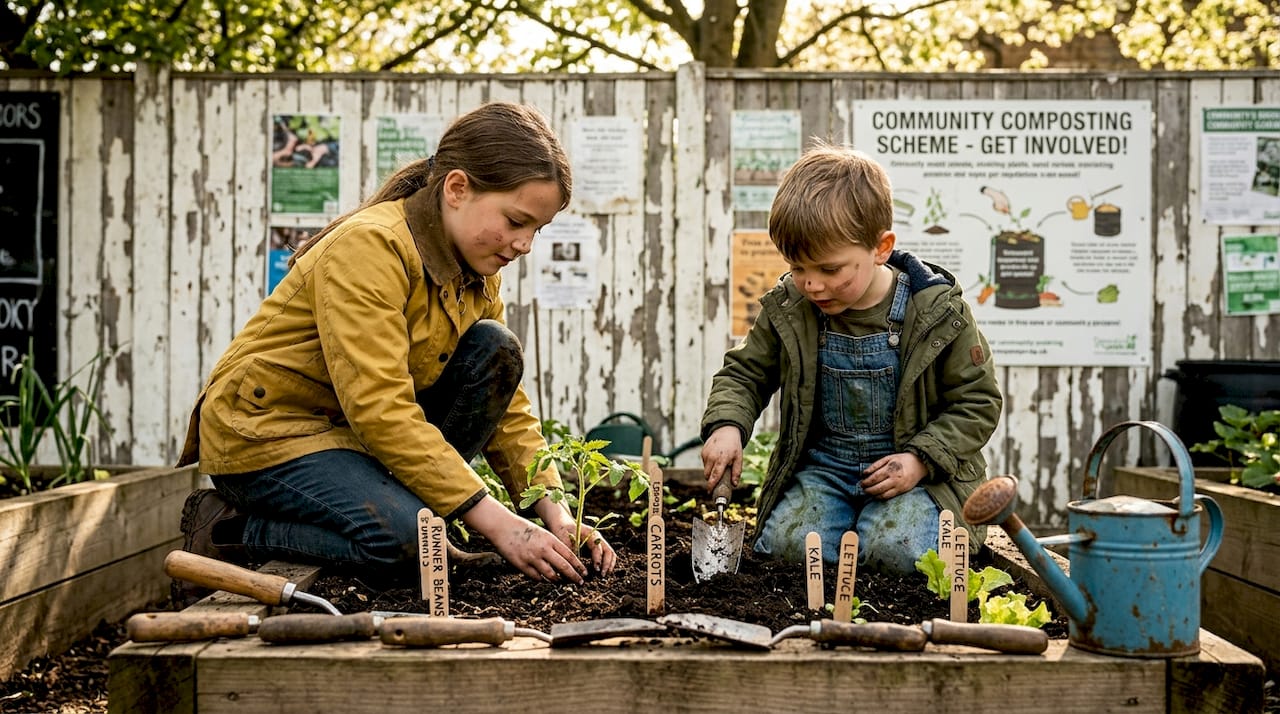
Nature-based activities such as school gardens, composting, sensory play, and bug hunts are proven to instil environmental care in children from the earliest years. The key is that these activities engage the senses and generate genuine curiosity, not just compliance.
Some of the most effective options include:
- Sensory nature trays: Fill a tray with soil, leaves, bark, and stones. Let your child explore freely before guiding a conversation about where each item came from.
- Bug hunts: Lift rocks and logs together. Name what you find, observe how it moves, and replace everything carefully. This simple act teaches respect.
- Kitchen composting: Give your child ownership of the compost bin. Deciding what goes in and watching it transform over weeks builds a real understanding of cycles.
- Seed growing: Plant sunflowers or herbs on a windowsill. Responsibility for a living thing is one of the most powerful eco lessons available.
- Puddle and weather observation: Noticing seasonal changes builds the long-term relationship with nature that underpins genuine stewardship.
“Children do not need grand gestures or expensive equipment. They need time, attention, and an adult who shows them that the natural world is worth caring about.”
Connect these activities with values by naming the emotions involved. When a child feels proud that their compost helped the garden, or sad that litter spoiled a walk, those feelings become anchors for lasting values. Our guide to wildlife garden activities is a brilliant starting point, and our recycled art projects for kids show how creativity and eco thinking go hand in hand.
Pro Tip: Make one eco activity a weekly family ritual. Consistency matters far more than intensity. A short, regular composting check or a Sunday nature walk builds habit and identity over time. Ideas from sustainable pet care remind us that small, repeated choices are what create genuinely sustainable households.
The role of parents, community, and culture
Beyond individual activities, ongoing eco awareness thrives where parents and community reinforce these lessons daily. Children’s values around nature are shaped not just by what they do, but by what they see and hear at home, at school, and in their neighbourhood.
A whole-school approach integrates sustainability across curriculum, operations, culture, and family involvement. This research confirms what most parents instinctively know: a lesson at school means little if the message is contradicted at home.
Research from Slovenia adds further weight. Slovenian kindergartens with dedicated eco programmes show better outcomes across ecological, social, and economic dimensions, demonstrating that intentional eco education creates measurable, broad benefits for children.
Families can amplify eco learning by:
- Sharing your own childhood memories of nature, both joyful and concerning.
- Involving children in household eco decisions, such as choosing less packaging at the supermarket.
- Connecting with local nature groups, community gardens, or conservation volunteering.
- Limiting screen time in favour of outdoor exploration, especially at weekends.
- Modelling the language of care: “Let’s leave that for the birds” or “We don’t need to buy that today.”
“Your child watches everything you do. The most powerful eco education happens not in a classroom but at the kitchen table, on a walk, or at the checkout.”
Explore how nurturing eco-awareness in children connects to understanding animal behaviour, and discover how eco photography with kids can turn a family walk into a meaningful creative and environmental experience.
Encouraging creativity and tackling dilemmas
True eco consciousness is more than following rules. It is the ability to think critically, feel deeply, and navigate genuine tensions. Creative learning is where this deeper understanding develops.
Research on wild pedagogies in early childhood education in Denmark highlights a productive tension between a child’s freedom to explore and the need for structured environmental care. This tension, rather than being a problem, enables radical and creative learning. Children who are allowed to dig, build, and even make small mistakes in nature develop a richer, more honest relationship with the environment than those who only follow prescribed activities.
Ways to support open-ended but mindful learning at home:
- Offer materials, not instructions: Provide sticks, stones, and leaves and see what your child creates.
- Ask open questions: “What do you think will happen if we water this every day?” invites reasoning.
- Allow mess and imperfection: A muddy child is usually a learning child.
- Introduce gentle limits: “We can pick up three stones to look at, then we put them back” teaches care without stifling curiosity.
- Reflect together: After outdoor play, a short conversation about what was noticed builds metacognitive habits.
Pro Tip: Celebrate small acts of curiosity alongside acts of care. When your child notices a spider web or asks why leaves change colour, treat that as equal in value to remembering to recycle. Curiosity is the engine of lifelong environmental engagement.
Our collection of nature eco crafts for children offers creative, open-ended projects that balance freedom with gentle environmental mindfulness.
Why most eco education misses the mark: Our perspective
After years of observing how families engage with environmental learning, one pattern stands out. Most eco education treats sustainability as a subject rather than a way of seeing the world. Schools schedule an Earth Day activity, nurseries display a recycling poster, and families buy one reusable water bottle. Then life continues as before.
Real eco consciousness does not grow from events. It grows from instilling environmental responsibility through the texture of daily life. It is the parent who pauses on a walk to watch a bee. It is the family that discusses where food comes from at dinner. It is the child who feels genuinely sad about a dead bird and is allowed to sit with that feeling rather than being hurried along.
The uncomfortable truth is that children absorb values far more readily than facts. You can teach a child every fact about deforestation and they will forget most of it. But if they have spent hours in a garden they love, they will carry that attachment into adulthood and make choices accordingly. Eco consciousness is not a curriculum outcome. It is an identity, and identities are built through repetition, emotion, and belonging.
The most effective eco parents we have encountered are not the ones with the most sustainable households. They are the ones who are present in nature with their children, curious alongside them, and honest about the challenges. Progress, not perfection, is what builds lasting stewardship.
Empower your family’s eco journey
Raising eco-conscious children is one of the most meaningful things a family can do, and you do not have to navigate it alone.
At The Zoofamily, we design tools and share resources specifically to spark children’s curiosity about the natural world. From kids’ cameras that encourage eco photography to binoculars that bring wildlife up close, every product we create is built around one idea: that children who connect with nature will grow up to protect it. For every camera sold, we plant a tree. Our blog is filled with practical, family-tested ideas, and our Earth Day inspiration is a great place to start your next eco adventure together.
Frequently asked questions
How early should I start teaching eco consciousness to my child?
You can begin from the toddler years, as Finland’s national curriculum includes sustainability as a core competence from the very start of early education, confirming that even the youngest children can engage meaningfully with environmental care.
What are easy first steps for eco education at home?
Simple actions like composting food scraps or exploring garden wildlife are excellent entry points, as nature-based activities are proven to encourage stewardship even in early childhood.
Does every school in Europe teach environmental responsibility?
Not every school has integrated eco consciousness, but programmes like Eco-Schools and national curricula such as Finland’s lead by example and offer models that families can draw on at home.
How can I encourage creativity and responsibility simultaneously?
Offer structured yet open-ended activities such as nature crafts with gentle guidelines, which allow children to explore freely while learning care, reflecting the balance that wild pedagogies research identifies as essential for deeper environmental learning.
Can eco-consciousness develop without outdoor activities?
Outdoor play is highly beneficial but not the only path; values and habits can also grow through daily routines, stories, recycled art projects, and creative indoor play that connects children to the natural world.
Recommended
- Practical ways to instil environmental responsibility in kids – The Zoofamily
- 7 Creative Ideas for Celebrating Earth Day with Kids – The Zoofamily
- Understanding Taking Care of the Environment: A Mum’s Guide – The Zoofamily
- Teaching Sustainability at Home: Inspiring Eco-Friendly Families – The Zoofamily
- Understanding Eco Friendly Home Cleaning: Key Concepts
- Eco-conscious shopping: Guide to sustainable style in 2026 – The Cork Store