

The best creative recycling bin ideas share one trait: the child helps make the bin. A child who painted, labelled or built the bin wants to use it. Add a spot within easy reach and clear pictures of what goes inside, and sorting becomes a routine instead of a chore. This guide gives you ideas for kids’ bins, small-space stations, safe materials and games, plus a way to link it all to nature. The ideas suit children from about 3 and up, with an adult handling anything sharp or hot.
TL;DR
- Let your child decorate and label the bin. Planet Aid suggests that children are keener to recycle at a station they helped create.
- Put small bins where the waste is made: a paper box in the bedroom, a small container in the bathroom for toilet roll tubes.
- Short on space? Use a multi-compartment bin, stackable bins, a drawer under the sink or a wall-mounted bag system.
- Rinse and dry everything before crafting, keep small parts away from under-threes, and keep knives and hot glue on the adult side of the table.
- Turn sorting into a game: matching, relay races and goal charts keep it fun.
Table of Contents
- Why the child should help make the bin
- Five kid-made bin ideas
- Put the bins where the waste happens
- Neat recycling bins for a small home
- Colour, labels and charts that keep the habit going
- Make it a game
- From the recycling bin to a craft box
- Safety checks before you craft
- Our view: a bin is the first lesson in nature
- A gift to go with the recycling project
- FAQ
- Sources
Why the child should help make the bin
A bin bought in a shop is a bin for the adults. A bin the child decorated belongs to the child. That small shift is the whole idea behind most kid-friendly recycling set-ups.
The research points the same way. Planet Aid suggests setting up several bins or boxes for different materials and letting children decorate and label them with paint, markers, crayons or paper. Everymum adds that accessibility and location are key, and that even two-year-olds can play a matching game choosing which items go into the green or blue bin.
So the plan has three parts: a bin the child owns, a place the child can reach, and a picture that tells the child what goes in.

Five kid-made bin ideas
1. The painted bin
Take a plain bin and let your child design it. Toddler Approved describes a bin that a 4-year-old designed and painted with oil-based paint markers, followed by a recycling toss game where the family throws recyclables into it. Choose paints and pens labelled non-toxic and suitable for children, and let the bin dry fully before use.
2. The picture-label bin
Young children read pictures long before words. Everymum suggests decorating each bin with images of what goes inside as a reminder. Cut pictures from packaging, or draw a bottle, a tin and a newspaper. Stick them on the front and the bin explains itself.
For labels you can change as your local rules change, a dry-erase surface is handy. These dry-erase labelling ideas show how to label drawers, bins and shelves so the writing can be wiped off and redone.
3. The cardboard box bin
This is the cheapest version. The Kid’s Recycling Tool Kit gives three steps:
- Fold the flaps of a clean cardboard box inwards.
- Make or draw a recycling sign on it.
- Put it next to the kitchen bin. When it is full, empty it into your main recycling container.
Your child can colour the box and add the sign. The box is light enough for a small child to carry to the outside bin.
4. The paper bin sorting game
This works on a rainy afternoon. Recology’s DIY Sorting Game has families print blank bin templates and sorting tiles, then cut, fold and glue or tape the paper bins together. Children decorate them, with blue for the blue bin and googly eyes or stickers if they like. Then they sort tiles such as a paperboard box, a plastic bottle, a glass jar and a piece of broccoli into the right bin. It teaches the categories before any real rubbish is involved.

Note that the game was made for a US scheme, so use the idea and match the bins to your own council’s streams.
5. The cardboard bin with a lever
For older children who like building, the Instructables cardboard bin is a small engineering project. You glue six cardboard squares into the main bin and five into an inner basket, then assemble a pivoting T-lever from wire and a straw. Colored paper finishes the outside. It needs wire, scissors and a hot glue gun, so an adult should do the cutting and gluing.
Put the bins where the waste happens
A beautiful bin in the garage will not be used. Everymum recommends a small paper-recycling box in your child’s bedroom and a small container in the bathroom for toilet roll tubes. Small bins in bathrooms and home offices also feature in the advice reported by Homebuilding, together with a dedicated station that keeps bins, liners and cleaning supplies together.
A simple routine helps:
- Bedroom: paper and card.
- Bathroom: tubes and cardboard packaging.
- Kitchen: the main sorting station.
- Hall or utility room: the outside-bound collection point.
Children can then empty the small bins into the main one on a set day. Older siblings can show younger ones how, which Everymum also recommends.
Neat recycling bins for a small home
Many UK homes have little kitchen floor space. Here are the layouts the research describes, from the simplest to the most creative.
| Idea | How it works | Best for |
|---|---|---|
| Multi-compartment bin | One bin, several streams. Step N’ Sort UK advises one multi-compartment bin over several separate ones for a single clean footprint | Kitchens with one free corner |
| Stackable bins | Binopolis recommends them for small kitchens because vertical storage saves floor space | Narrow kitchens |
| Shoe cabinet hack | Netmums describes four small lidded caddies in a shoe cabinet, one per stream, in thin bags that lift straight out | Hiding bins in tiny homes |
| Drawer under the sink | A drawer frame holds the bins out of sight, as Homebuilding describes | Families who dislike visible bins |
| Wall bags | IKEA Hackers shows three boards on the wall with hooks holding labelled washable bags that can be lifted off and carried down | Flats with no cupboard space |
Three practical tips cut across all of these:
- Measure first. Step N’ Sort UK advises measuring the bin spot and the clearance before you buy or build.
- Give more room to the stream that fills fastest. The neatest set-up is the one that matches how your household lives, not the most symmetrical one.
- Flatten what you can. YouTooCanRecycle notes that flattening boxes, plastic containers and cans makes more room.
If you have a removable inner bucket, let your child carry it to the outside bin. Step N’ Sort UK also mentions removable inner buckets, labels and liner colours as a way for children to join in easily.
Colour, labels and charts that keep the habit going
The first week is easy. The sixth week is the test. Three tools keep a bin station in use:
- Colour coding. Use the same colour for the bin and its picture label, as in the paper sorting game above.
- Sticker labels. Homebuilding recommends them to help people remember what goes where, and clear categories for each bin.
- A goal chart. Everymum suggests adding a chart above each bin to track how much the family recycles in a week. Your child puts a sticker on it each time the box is emptied.
Check your own council’s list before you label anything. Rules differ between areas, and England’s household collections are changing. The research here does not replace your council’s guidance on what goes in which bin, so use its page as the final word for your labels.
Make it a game
Children repeat what is fun. These games come straight from the research:
- Matching game. Everymum describes a game for toddlers: pick which items go in the green or blue bin.
- Recycling relay. Earth911 suggests teams racing to put items in the correct bin, with non-recyclable items added as a challenge and a compost bucket as an extra station.
- Toss game. Throw clean, soft items into the bin from a distance. YouTooCanRecycle suggests using bins as basketball hoops, except the glass bin.
- Who recycles most. A weekly competition between siblings, scored on the goal chart.
Keep the toss game for clean items only, and never throw anything breakable or sharp.
From the recycling bin to a craft box
Once your child sorts well, some items can have a second life before they go in the bin. Planet Aid suggests a guitar from an empty tissue box and a paper towel tube, a desk organiser from old cans, or a bird feeder from plastic bottles. Everymum recommends encouraging ‘process’ over ‘product’, with robots, castles, kitchens or dens built from cardboard boxes, and egg cartons used for sorting, cutting and growing cress.
For more projects, we have written two guides: recycled art and craft ideas with a nature link, and crafts from waste material that are safe and low cost for parents. If your child likes sculpture, recycled art sculptures are a good next step.
Safety checks before you craft
Recycled materials are free, but they need a little care. The checklist from Decovive is a good one:
- Rinse cartons, pots and bottles in warm soapy water and dry them fully.
- Leave out anything that held medicine or chemicals.
- Check food-tin rims for sharp edges.
- Have an adult cut plastic bottles, tin rims, blister trays and thick card with a craft knife on a mat, and trim or tape every cut edge.
- Choose non-toxic glues and paints labelled for children.
- Use a low-temperature glue gun kept on the adult side of the table.
- Keep bottle caps, buttons, beads and coins away from children under three.
On small parts, Decovive notes that a swallowed button battery can burn a child’s throat within a couple of hours, and that battery doors should need a screwdriver to open. If you think your child has swallowed a button battery, go to A&E or call 999 straight away.
Our view: a bin is the first lesson in nature
At The Zoofamily we think children care for nature when it feels close and personal. A recycling bin is a good place to begin. It is where a child first sees that what we throw away goes somewhere.
We designed our products with animal references to spark children’s interest in nature. The same idea works at home: give the bin a face, a name or an animal, and the child looks after it. A fox bin for paper, a frog bin for bottles. The animal gives the child a reason to keep sorting.
Interest in nature also grows outdoors. A child who sorts the bins on Monday might photograph a bird or a leaf at the weekend. For each camera we sell we plant one tree, so what a child sees through the lens helps restore what they are looking at.
Start small. One box, one picture, one chart. Add the next bin when the first one is used every day.
ALAIN
A gift to go with the recycling project
If your child enjoys the bin project, a first camera lets them record it: the painted bin, the finished craft, the garden creatures they find afterwards. Our Zoo Friends digital camera costs €69.95. Our Zoo Print instant print camera costs €109.95. Our Zoo Walkie-Talkie costs €54.95. They are designed for children aged 3 and up, with animal designs, and one tree is planted for every camera sold.
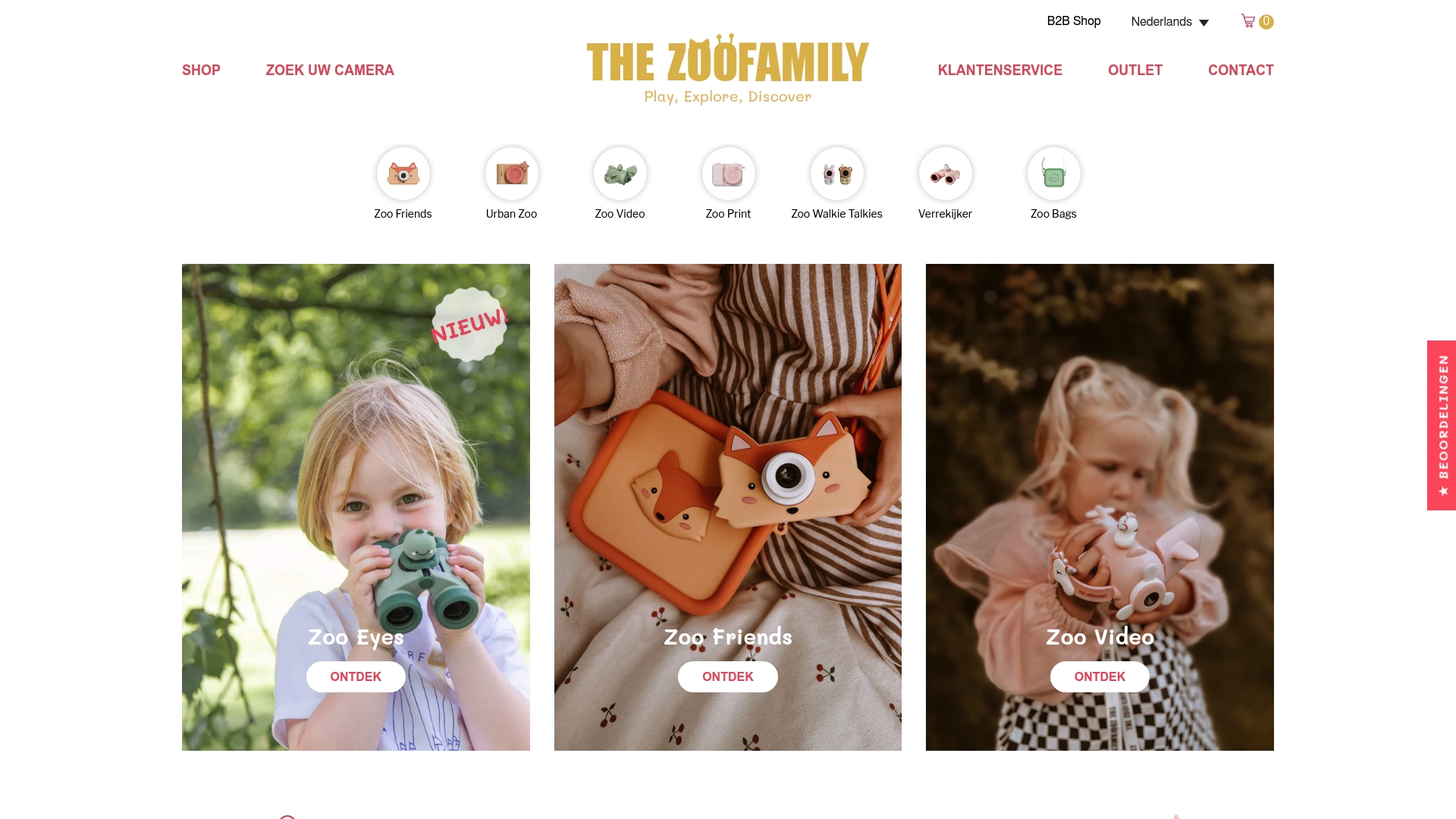
See the full range on The Zoofamily, including the Zoo light night light at €39.95, zoo eyes binoculars at €39.95 and zoo bags at €19.95.
FAQ
What is the easiest recycling bin idea for a young child?
A clean cardboard box with the flaps folded in, a drawn sign and a spot next to the kitchen bin. Your child can colour it, and it is light enough to carry. Empty it into your main recycling container when it is full.
How do I fit several recycling bins into a small kitchen?
Measure the space, then choose a multi-compartment bin, stackable bins or a drawer under the sink. A wall-mounted system with labelled bags frees up floor and cupboard space. Give the most room to the waste stream that fills fastest.
How can I get my child to keep using the bins?
Let them decorate and label the bins, place a small bin in their own room, and add a weekly goal chart. Games such as matching, relays and who-recycles-most keep it fun. Older children can show younger ones how.
Is it safe for children to make crafts from recycled items?
Yes, with a few checks. Wash and dry every item, avoid anything that held medicine or chemicals, tape sharp edges and let an adult do the cutting and hot gluing. Keep small parts such as caps, buttons and coins away from children under three.
Sources
- Planet Aid: Start Early, 5 Tips for Teaching Kids about Recycling
- Everymum: How to Teach Your Child to Have Fun with Recycling
- Toddler Approved: Kid-Made Recycling Bin
- Kid’s Recycling Tool Kit
- Recology: DIY Sorting Game
- Instructables: Recycling Bin for Kids Made From Recycled Cardboard
- Homebuilding: How to organise multiple bins
- Step N’ Sort UK: How to Fit Recycling Bins Neatly at Home
- Binopolis: Small Kitchen Bin Ideas
- Netmums: IKEA TRONES shoe cabinet hack
- IKEA Hackers: Home recycling bins and stations
- YouTooCanRecycle: Create a Recycle System at Home
- Earth911: Teaching Kids to Recycle
- Decovive: Recycling Projects for Kids
- Alpha QuickFind: Dry Erase Labeling Ideas