

Building nature play kits are creative, eco-friendly collections of natural and sustainable materials designed to encourage children’s outdoor play, learning, and connection with the environment. The term “nature play kit” is widely used by parents and educators, though child development specialists often refer to the broader practice as nature-based play, a recognised approach to supporting cognitive, social, and emotional growth outdoors. Whether you buy a ready-made set or assemble your own, building nature play kits gives children the tools to explore, create, and develop skills that no classroom can replicate.
1. What are the best nature play kits to build at home?
The strongest outdoor play kits share three qualities: they use natural or sustainably sourced materials, they include elements children can rearrange freely, and they grow with the child’s interests. The options below cover a range of ages, budgets, and outdoor spaces.
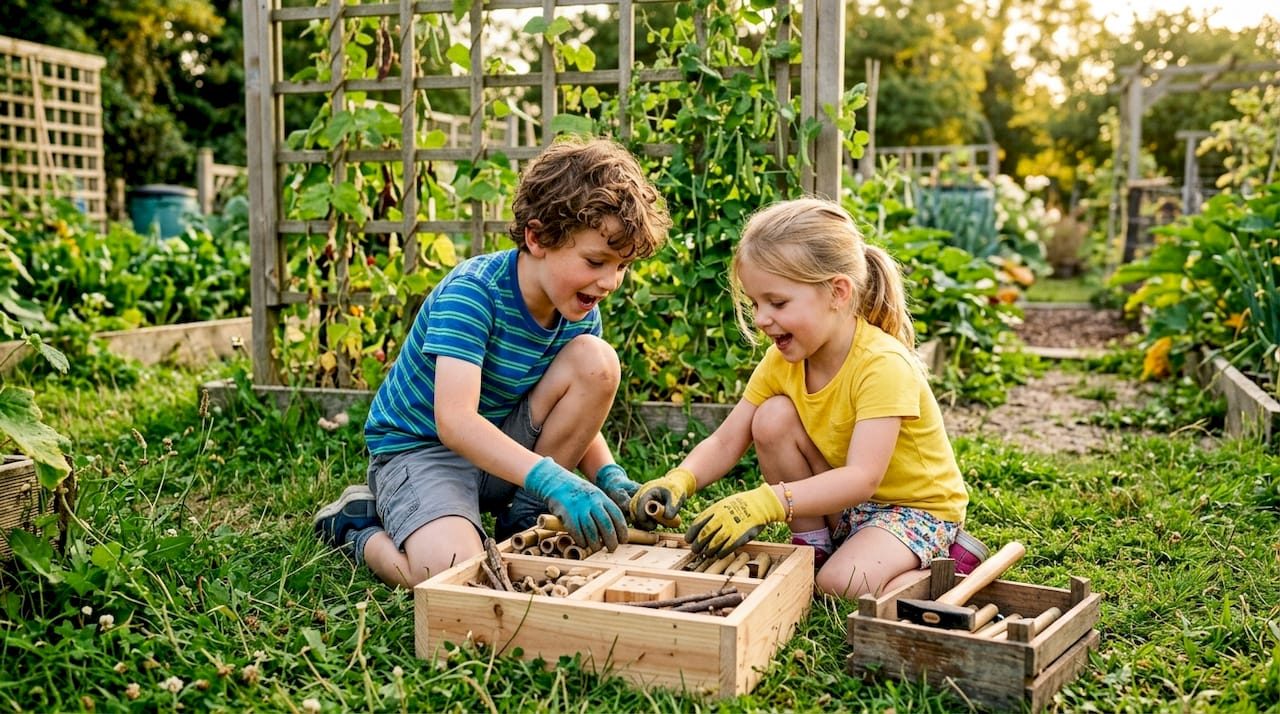
Insect hotel kits
Insect hotel kits are suitable for children aged 5 and older, providing step-by-step building guidance and encouraging environmental stewardship. Children gather twigs, leaves, pine cones, and bark to fill the structure, which means the kit itself is just the starting point. The real learning happens when your child starts noticing which insects move in and why.
Nature gardening sets
Themed nature gardening sets often include around 38–39 sustainable pieces designed specifically for cognitive and fine motor development. The best versions use reclaimed rubberwood and organic pigments, so there are no harsh chemicals near small hands. These sets teach planting sequences, patience, and cause-and-effect thinking in a way that feels like play rather than a lesson.
Modular balancing trails
Outdoor modular nature trails and balancing play equipment must meet safety certifications and withstand climatic variation across seasons. They support multiple users at once, which makes them ideal for siblings or small groups. Robinia wood is the material of choice here because it resists rot without chemical treatment.
Loose parts collections
Loose parts are the unsung heroes of any outdoor play kit. Stones, shells, seed pods, lengths of rope, and wooden offcuts give children total creative control. Flexible loose parts allow children to adapt their play environment, supporting creativity far better than fixed structures do. That adaptability also keeps children engaged for longer, because the possibilities never run out.
Pro Tip: Start your loose parts collection by asking a local timber yard for offcuts. You will get a variety of shapes and textures for free, and children find the irregularity far more interesting than uniform toy pieces.
2. How do sustainable materials enhance nature play kits?
The materials inside a kit determine its safety, its lifespan, and its environmental footprint. Choosing well here is not just an ethical decision. It is a practical one.
Wood that does not need chemicals
Robinia and Acacia woods do not require chemical treatments and are safe for direct contact with children. Both species are naturally dense and resistant to moisture, which means they hold up through British winters without warping or rotting. Acacia in particular has a tight grain that resists splintering, making it a strong choice for kits that young children handle daily.
Non-toxic finishes and pigments
Organic pigments and non-toxic glues are the standard for quality nature play equipment. Reclaimed rubberwood sets, for example, use plant-based dyes that pass child safety standards without sacrificing colour vibrancy. Avoid kits that list “lacquer” or “solvent-based paint” without specifying non-toxic certification, as these can off-gas in warm weather.
Weather-resistant hardware
Non-toxic polyamide fixings resist UV degradation, maintaining structural integrity even after years outdoors. Stainless steel screws and galvanised bolts are the next best option for DIY builds. Check fixings every spring as part of a routine safety inspection.
Pro Tip: When building your own kit, sand all wooden edges to 120-grit before assembly. This single step removes the most common source of splinters and takes less than ten minutes per piece.
The environmental benefit of sustainable materials compounds over time. A kit built from Robinia or Acacia will outlast a plastic equivalent by years, reducing the total waste your family generates from outdoor toys.
3. What skills do children develop through nature play kits?
Nature-based play delivers measurable developmental gains across multiple domains. The evidence is consistent and the mechanisms are well understood.
Fine motor skills
Handling small natural objects, threading rope through holes in an insect hotel, and pressing seeds into soil all build fine motor control. These are the same hand muscles children use for writing, drawing, and self-care tasks. Kits that include a variety of textures and sizes give children more varied practice than any single-material toy.
Social and emotional growth
“Nature-based play serves as an ‘equigenic’ intervention that improves social-emotional and academic performance, especially in disadvantaged children. Playing in nature supports restorative mental health benefits and reduces mental fatigue.”
That finding matters because it applies across income levels and backgrounds. When children build and explore together, they negotiate, share, and solve problems without adult direction. Those are social skills that transfer directly into school and family life.
Restorative mental health benefits
Nature interaction reduces mental fatigue in children, which is particularly relevant given the amount of screen time most children now accumulate. A 30-minute session with a nature kit outdoors resets attention and mood in ways that indoor play does not. Outdoor learning outcomes commonly translate to improved social-emotional regulation at home, which parents notice quickly.
- Fine motor control through handling varied natural objects
- Cooperative play skills through shared building tasks
- Attention restoration through time spent in natural settings
- Environmental curiosity and early scientific thinking
- Confidence from completing hands-on building challenges
4. How can parents keep children engaged with nature play kits?
The biggest mistake parents make is treating a nature kit as a finished product. The kits that hold children’s attention longest are the ones that keep changing.
Involve children in collecting materials
Co-creation deepens children’s ownership and curiosity about local ecosystems. Take your child on a material-gathering walk before you build anything. Let them choose which sticks go into the insect hotel or which stones line the balancing trail. That sense of authorship makes the finished kit feel genuinely theirs.
Rotate and refresh loose parts
Swap out loose parts with the seasons. Autumn brings conkers, acorns, and dried leaves. Spring adds fresh bark, blossom, and new growth. Rotating materials keeps the play environment feeling new without buying anything extra. Flexible play elements that can be rearranged support longer-lasting engagement and a wider range of imaginative play.
Integrate kits into family activities
Nature kits work best when they connect to wider family life. Use a gardening set as part of a weekend planting project. Turn an insect hotel into a wildlife observation station and keep a simple notebook nearby for recording visitors. Nature-based learning benefits extend beyond the child to the entire family, building shared routines and conversation.
- Walk the local area together to collect seasonal natural materials.
- Let your child lead the building process, even if it takes longer.
- Set up a simple observation journal near the kit for wildlife records.
- Schedule a monthly “refresh” to swap out worn or seasonal loose parts.
- Photograph the kit’s progress over time to show children how it evolves.
Pro Tip: Photograph your child’s kit every few weeks and create a simple photo book at the end of the year. Children love seeing how their outdoor space has changed, and it builds a genuine sense of pride in what they have made.
Safety checks and maintenance
Inspect wooden elements every three months for splinters, cracks, or loose fixings. Tighten any bolts that have worked loose and sand any rough edges that have appeared. A well-maintained kit stays safe and continues to look inviting, which matters more than parents often expect. A neglected kit gets ignored.
Key takeaways
Building nature play kits works best when they combine sustainable materials, loose parts, and active co-creation, giving children the ownership and variety they need to stay genuinely engaged outdoors.
| Point | Details |
|---|---|
| Choose sustainable materials | Robinia and Acacia woods are rot-resistant, chemical-free, and safe for daily child contact. |
| Include loose parts | Flexible, rearrangeable elements sustain engagement far longer than fixed structures do. |
| Involve children in building | Co-creation deepens curiosity and gives children a sense of ownership over their play space. |
| Rotate materials seasonally | Swapping natural items with the seasons keeps the kit feeling fresh without extra cost. |
| Check safety regularly | Inspect fixings and wooden surfaces every three months to maintain structural integrity. |
Why nature play kits changed how I think about outdoor time
I used to assume that a good outdoor play area needed expensive equipment. A climbing frame, a sandpit, a swing set. The works. What I found, watching children interact with nature kits over time, is that the opposite is true. The simpler the starting point, the richer the play.
A child given a bag of conkers, a length of rope, and a few wooden offcuts will invent games that no toy designer has thought of. A child given a fixed plastic playset will exhaust its possibilities in a week. The insect hotel is the perfect example. The kit provides the frame, but the child fills it. That act of filling, of choosing, of deciding which twig goes where, is where the real development happens.
What surprised me most was the effect on family dynamics. Parents who build kits alongside their children report conversations that simply do not happen indoors. There is something about working with your hands in the open air that lowers everyone’s guard. Children ask questions. Parents slow down. The kit becomes a shared project rather than a piece of equipment.
My honest advice: start smaller than you think you need to. One insect hotel and a loose parts basket will teach you more about what your child actually enjoys than any catalogue of nature play equipment. Build from there, literally and figuratively.
— ALAIN
Thezoofamily and the nature play kits your family will love
Thezoofamily was built on the belief that children connect with nature best when they have the right tools in their hands. From kids’ nature exploration tools like binoculars and cameras to practical guides for building outdoor play spaces, Thezoofamily supports parents at every stage of creating a nature-rich childhood.
If you are ready to take the first step, the Thezoofamily blog offers practical, parent-tested advice on everything from building a safe nature spot in your garden to making your first insect hotel with your children. Every camera sold plants one tree, so your family’s play directly supports the natural world your children are learning to love.
FAQ
What age is best for starting nature play kits?
Insect hotel kits are suitable from age 5 upwards, while loose parts collections and gardening sets work well from age 3. Match the kit complexity to your child’s current fine motor ability.
Are DIY nature play kits as good as bought ones?
DIY kits can be equally effective, provided you use non-toxic materials and check fixings regularly. Co-creating the kit with your child adds developmental value that pre-assembled sets cannot replicate.
What materials are safest for outdoor nature kits?
Robinia and Acacia woods are the safest choices because they resist rot without chemical treatment. Pair them with non-toxic polyamide fixings and organic pigments for a fully child-safe kit.
How do I keep my child interested in a nature kit long-term?
Rotate loose parts with the seasons and involve your child in collecting new natural materials regularly. Flexible play elements that can be rearranged sustain engagement far longer than fixed structures.
Do nature play kits support school readiness?
Nature-based play improves social-emotional regulation and academic performance, particularly for children facing social disadvantages. The fine motor and cooperative skills children build outdoors transfer directly into classroom settings.