

The best simple eco projects for families use things you already have at home: an old t-shirt, a milk carton, an egg box, a clear cup and a handful of seeds. Each takes 10 to 30 minutes, needs no special kit and gives children something to see, make or watch grow. Below you will find twelve projects, what each one needs, where it goes wrong, and which ages suit it. At the end, we explain how we connect the same idea to the gifts we make.
TL;DR
- Start with one project, not twelve. A reusable bag, a bird feeder or a cup of seeds is enough for a first afternoon.
- Most ideas use rubbish you would bin anyway: cartons, tubes, egg boxes, tins and old clothes.
- Younger children (3 and up) do the pouring, sticking and watching. An adult does the cutting and any hot glue.
- Projects that last (a plant, a bug hotel, a nature journal) teach more than one-off crafts, because children come back to them.
- Link each project to one small habit, such as one less plastic bag or one new plant, so the lesson stays with the child.
Table of Contents
- Before you start: a small “maker bin”
- Projects with recycled materials
- Projects that grow
- Projects that help wildlife
- Which project for which age?
- Keeping it safe
- Make the lesson stick
- Where our cameras and binoculars fit
- Our view: children protect what they know
- FAQ
- Sources
Before you start: a small “maker bin”
The easiest way to make eco projects routine is to keep a box of clean rubbish. Think cardboard tubes, boxes, egg cartons, cleaned plastic containers, paper and packing materials. Think Earth suggests an upcycling bin filled with exactly these, with scissors, tape, glue and markers alongside. Children then turn the contents into art, toys and games whenever they feel like it.
Two rules keep the bin useful:
- Clean everything first. Rinse bottles and cartons and let them dry. Otherwise the bin smells and nothing gets used.
- Check edges. DiscoverE’s repurposing challenge asks for materials that can be cleaned and have no sharp edges. Skip tins with jagged lids and anything you cannot make safe.
Put the bin where children can reach it. The less you have to organise, the more often it gets used.
Projects with recycled materials
1. T-shirt reusable bag (ages 6 and up, with help)
The National Environmental Education Foundation (NEEF) describes a five-step way to turn an old t-shirt into a reusable bag using only scissors, a safety pin and the shirt itself. Reusing the shirt keeps it out of landfill. An adult should make the first cuts. Children can then help with knotting or threading.
Where it goes wrong: thin, worn fabric tears under weight. Pick a sturdy cotton shirt. Let your child decorate the finished bag and use it for the next shop, so the bag has a job.
2. Carton bird feeder (ages 5 and up, adult supervision required)
NEEF’s milk- or juice-carton feeder uses a carton, scissors, a pen or marker, a paper clip, sticks or dowels, string, paint, glue and birdseed. Adult supervision is required because of the cutting. The adult cuts the opening. The child paints, decorates, adds the perch and fills it.
Hang it where you can see it from a window. Birds can take a few days to find a new feeder, so be patient. This is the project that gets children watching wildlife every morning.
3. Toilet-roll binoculars (ages 3 and up)
Two cardboard tubes, tape and some string or ribbon make a pair of binoculars in about ten minutes. PBS KIDS for Parents lists DIY Binoculars among its upcycling activities, alongside toilet-roll maracas and paper-bag owl puppets. Decorate them with paint or stickers, then go on a garden or park “safari” and tick off what you spot.
This works well as the start of a nature walk, because it gives a small child a job to do outside.
4. Bottle terrarium or kite (ages 5 and up)
The US National Oceanic and Atmospheric Administration’s Marine Debris Program lists kids’ crafts from household waste. They include a plastic-bottle terrarium, a kite from a large plastic bag, a bottle piggy bank and placemats from discarded plastic bags. Plastic that gets a second life is plastic that is not littering a beach.
For a terrarium, an adult cuts the bottle. The child adds soil and a small plant, then waters it lightly.
5. Egg-box garden critters and planters (ages 3 and up)
Egg cartons make plant starters, caterpillars and tiny animals. Cut the carton into sections, fill with soil, add seeds, then move seedlings to a bigger pot once they are large enough. For a craft-only version, paint the cups and add pipe-cleaner legs. Both versions are quick and cost nothing.

Projects that grow
Growing something is the most reliable way to give a young child patience and a feel for how nature works. These need almost no equipment.
6. Seeds in a clear cup (ages 2 and up)
Put soil in a clear plastic cup, add a large seed such as a bean or sunflower, and water it lightly. Clear sides let children see the roots. TeachToddler’s guide says bean seeds typically sprout in 5 to 7 days. For an 18-month-old, you fill the cup and they drop in the seed and spray the water. Two-year-olds can do every step. Three-year-olds can draw a picture of the plant each day.
A small watering can helps. The same guide suggests about half a litre, filled halfway so a toddler can lift it, and a morning check: touch the soil and water only if it feels dry.
7. Radish kid (ages 3 to 5)
California State University, Chico describes a “Radish Kid” activity for ages 3 to 5. Poke a hole in the bottom of a clear plastic cup and decorate it with a paper face. Fill it three-quarters full of soil, then add four radish seeds covered with half an inch of soil. Over a few weeks the radish root shows like hair.
The hole matters: it lets water drain, so seeds do not rot.
8. Plant people with grass hair (ages 3 and up)
The University of Arizona Cooperative Extension suggests decorating terracotta or plastic planters with faces and planting grass seed so the “hair” grows. It also suggests watching seeds sprout in clear cups with paper towels and a zip-top bag, which starts to sprout in about a week. Children enjoy giving the pot a haircut when the grass grows.
9. Nature journal (all ages)
A blank notebook and some pencils are all you need. Children draw what they see in the garden or park, add simple notes about weather and plants, and return to the same place regularly to compare. Organic BackYards suggests that younger children may only need to draw, while older ones can add dates, measurements, questions and predictions.
A journal turns every other project in this article into a story with a beginning, middle and end.
Projects that help wildlife
10. Bug hotel (ages 3 and up)
A mini bug hotel can be built in a sturdy terracotta pot or similar container. Fill it with sticks, twigs, pine cones, bark and dry leaves, leaving gaps. Organic BackYards describes five steps: choose a sheltered spot, fill the container leaving gaps, make sure it is stable, leave it alone, and check back occasionally.

The hardest step for children is the one where you leave it alone. Explain that the hotel is for the creatures, not for picking up.
In the UK, the RSPCA lists a hedgehog house, bug hotel and eco bird feeder among its wildlife-friendly garden ideas. It also advises avoiding pesticides and weed killer, which protects wildlife, pets and children. If you want more ideas for the garden, we have written about wildlife-friendly gardens for children.
11. Bamboo bee house (ages 5 and up)
Mark W. LaSalle describes a bee house made from short bamboo pieces at least 5 to 6 inches long (about 13 to 15 cm), with a diameter between a quarter and half an inch. Tie 5 to 10 pieces together with twine and put the bundle in a secure spot where children can watch from a distance. He notes most solitary bees and wasps are not as aggressive as social bees. Even so, keep the bundle away from play areas and teach children to look, not poke.
12. Family litter patrol and waste audit (ages 5 and up)
Environment America’s 50-activity checklist includes a family litter patrol using gloves or pick-up tools, a kitchen compost bin, plantable seed paper and seed bombs for pollinators. Gloves are the key safety point: children never pick up litter with bare hands.
For a calmer project, try a waste audit. Organic BackYards suggests that your child keeps track of items that would normally become household waste on one ordinary day, records the results, and chooses one realistic change for the following week. This treats waste as a puzzle to solve rather than a failure to feel guilty about.
Which project for which age?
| Age | Good first projects | What the adult does |
|---|---|---|
| 2 to 3 | Seeds in a cup, toilet-roll binoculars, bug hotel | Fills cups, helps with every step |
| 4 to 5 | Radish kid, plant people, egg-box critters, nature journal | Cuts, supervises watering, supports drawing |
| 6 to 8 | Carton bird feeder, t-shirt bag, bottle terrarium, litter patrol | Makes the first cuts, handles glue guns |
| 9 and up | Bamboo bee house, waste audit, compost bin | Sets the task, then steps back |
These age bands are a rough guide for planning. You know your child best. Environment America designed its Greener Together summer camp at home for ages 5 to 12, with about one hour of activity a day. That is a useful size for a family routine: short, daily, not a big weekend event.
Keeping it safe
- Cutting and hot glue are for adults. Children use blunt scissors and glue sticks.
- Clean and check materials. Rinse containers and avoid sharp edges.
- Garden safety. The University of Arizona Cooperative Extension advises asking parents about allergies, requiring closed-toe shoes, planning adequate supervision, avoiding toxic plants and chemicals, and keeping sharp tools away from children.
- Wash hands after handling soil, compost or litter.
- Watch toddlers around water, small seeds and small parts.
Make the lesson stick
Children remember what they do repeatedly. The same Arizona guide recommends mixing free exploration with guided tasks. Once children know how to water or weed, let them do it alone. Guide closely when they plant seedlings or pick ripe vegetables. It also suggests weekly roles such as Waterer, Weeder or Garden Progress Reporter, which gives each child responsibility.
A few ways to connect projects to the bigger picture:
- After the t-shirt bag, ask: “How many plastic bags did we not use this week?”
- After the bird feeder, count the visitors in your journal.
- After the waste audit, pick one change together and try it for a week.
Keep the tone curious, not anxious. A child who enjoys looking after one plant is more likely to care about nature than one who has only heard about problems.
Where our cameras and binoculars fit
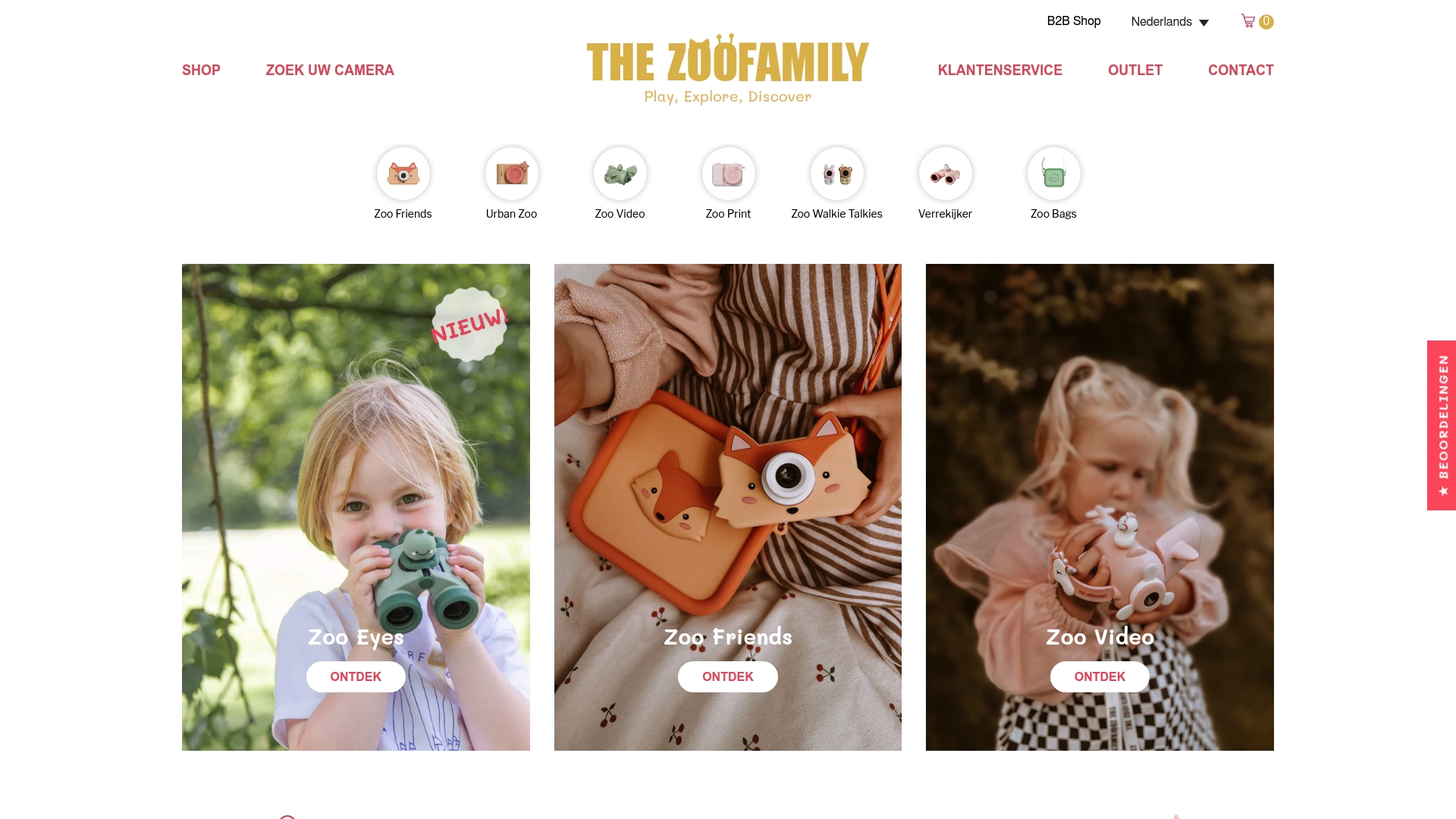
Several projects above are about looking closely: the safari, the bug hotel, the journal. That is the idea behind what we make. Our kids’ cameras, binoculars and walkie-talkies are designed for children aged 3 and up, with animal designs meant to spark an interest in nature. For each camera sold, we plant one tree.
Our range includes Zoo Friends at €69.95, Urban Zoo at €89.95, Zoo Video at €79.95 and Zoo Print, an instant print camera, at €109.95. Zoo Eyes binoculars cost €39.95 and the Zoo Walkie-Talkie costs €54.95. Zoo Light is €39.95, zoo bags are €19.95 and zoo sleeves are €9.95. Prices are as published on our site.
If you are choosing a gift, take a look at our kids’ cameras. For a child who likes to print what they find, see Zoo Print.
Want more craft ideas first? Read our recycled art projects for kids and outdoor science activities.
Our view: children protect what they know
We designed The Zoofamily around one belief: a child who looks closely at an animal starts to care about it.
That is why our products carry animal references, and why we plant one tree for every camera sold. A small action, such as a tree, a plant in a cup or a feeder on the window, shows children that what they do has an effect.
Our advice to parents is simple. Pick one project, do it together and keep it going. Add a camera or binoculars when your child wants to record what they find. The habit matters more than the equipment.
ALAIN
FAQ
What is the easiest eco project for a 3-year-old?
Planting a large seed, such as a bean or sunflower, in a clear plastic cup is the easiest. Your child can drop in the seed and water it with a spray bottle, and bean seeds typically sprout in 5 to 7 days. Toilet-roll binoculars are a close second.
How long do these projects take?
Most craft projects take 10 to 30 minutes. Growing projects take a few minutes to set up and then a few weeks of daily checks. A short, regular routine works better than one long session.
Do I need to buy anything?
Not for most projects. Scissors, tape, glue, markers, soil and seeds, plus items from your recycling, cover almost everything above. Keep a clean maker bin so materials are always to hand.
Are these projects safe for young children?
They are, with sensible rules. Adults do the cutting and any hot glue. Clean all containers and check edges. Wear gloves for litter picking, wash hands after handling soil and supervise every garden task.
How do I explain why it matters?
Keep it concrete. Count the bags you did not use, the birds that visited the feeder or the plants that grew. A one-week waste audit with one realistic change gives children a clear sense of cause and effect.
Sources
- NEEF: At-Home Upcycle Projects
- Think Earth: 6 Projects for Kids to Upcycle Trash Into Treasure
- DiscoverE: Repurpose Your Trash
- PBS KIDS for Parents: DIY Upcycling Activities
- NOAA Marine Debris Program: Crafts
- TeachToddler: Gardening Ideas for Toddlers
- CSU Chico: Radish Kids
- University of Arizona Cooperative Extension: Gardening with Children
- Organic BackYards: 6 Simple Eco-Friendly Projects for Kids
- RSPCA: Wildlife Friendly Gardening
- Make a Bee House
- Environment America: 50 Environment Activities Kids Can Do at Home
- Environment America: Greener Together Summer Camp at Home