

A successful nursery playground mixes sensory micro-zones, loose parts and nature, giving children daily chances to climb, explore and create, even on a tight budget. The best outdoor spaces combine sand, water, mud, movement and quiet corners so every child finds something that fits their mood. None of it needs to cost much. The ideas below cover exactly how to build that mix, phase by phase, without waiting for a big capital grant.
TL;DR:
- A phased approach focusing on low-cost, portable features like sensory paths, loose parts, and simple structures allows for gradual playground development without large investments.
- Safety relies mainly on proper surfacing, clear sightlines, and staged climbing challenges, promoting manageable risk that builds children’s confidence over time.
- Vertical and small-space adaptations, such as fence-mounted panels and stackable planters, maximize utility in courtyards and rooftops with limited floor area.
- Incorporating natural elements like bug hotels, planting beds, and wildlife features enhances biodiversity while teaching children about ecosystems and stewardship.
- Regular maintenance routines and seasonal adjustments extend the playground’s usability throughout the year, ensuring ongoing safety and engagement.
Table of Contents
- 20 nursery playground ideas that earn their space
- How to roll these ideas out without a big budget
- Safety and accessibility checks that actually matter
- Small-space adaptations for courtyards and rooftops
- Nature and biodiversity features that teach as they grow
- Materials and surfaces that hold up over time
- Keeping the playground working all year
- What I would build first
- Bring binoculars and cameras into your nature activities
- Sources
20 nursery playground ideas that earn their space
Good outdoor play design does not chase novelty. It layers a few reliable elements so children move between calm and active, wet and dry, structured and free. Design guidance for early years settings treats free-flow access, varied surfaces and nature-based play as the backbone of a well-designed site, not extras bolted on afterwards. The list below follows that logic.
- Sand pit. Builds fine motor skills and early maths through scooping, pouring and comparing volumes. A low-cost version uses a repurposed paddling pool or raised tyre filled with washed play sand.
- Water play station. Guttering, tubs and old pipes teach cause and effect and support language as children narrate what flows where. Wall-mounted guttering saves floor space and suits smaller sites.
- Den-building and loose parts area. Crates, fabric, logs and planks build problem-solving and cooperative play. Ask parents to donate offcuts rather than buying a kit.
- Sensory pathway. Different textures underfoot (bark, pebbles, artificial turf, rubber matting) develop balance and sensory processing. A metre-wide strip along a fence line is enough to start.
- Role-play corner: mud kitchen or market stall. Encourages language, social turn-taking and imaginative play. An old pallet plus mismatched pans from a charity shop does the job.
- Music wall. Pots, pans and pipes fixed to a fence turn sound exploration into a permanent, weatherproof feature that costs almost nothing beyond fixings.
- Climbing and balance trail. Tree stumps, low beams and a slight incline build gross motor confidence. Reclaimed scaffold boards laid flat work as a first balance beam.
- Obstacle course. Tyres, cones and a rope line combine crawling, jumping and stepping. Rotate the layout weekly so it reads as new without buying anything.
- Scavenger and minibeast hunts. Simple checklists sharpen vocabulary and observation. Laminated cards with photos of woodlice, snails and beetles cost pennies and last years.
- Planting beds. Raised beds with herbs and vegetables link to counting, science vocabulary and patience. Old tyres stacked two high make an instant, no-build raised bed.
- Bug hotel. Stacked pallets filled with bark, pinecones and hollow canes teach stewardship and give minibeast hunts something to find.
- Outdoor reading nook. A canopy, some cushions and a crate of weatherproof books create a calm zone for children who need a break from noise.
- Outdoor easels. Clipboards or an old whiteboard fixed to a fence support fine motor control and mark-making outdoors, where the mess matters less.
- Bike and scooter loop. A painted or chalked circuit teaches spatial awareness and turn-taking. Chalk works as well as paint for testing a layout before committing.
- Shady quiet zone. A pop-up gazebo or planted willow arch gives children somewhere to withdraw, which matters as much as the active zones.
- Textured pathway. Different materials in short sections either side of a walking route add sensory input to everyday movement between zones.
- Discovery boxes. Shells, pinecones, fabric scraps and buttons sorted into labelled crates support classification and fine motor skills, and cost nothing if collected over a term.
- Seasonal play stations. Autumn leaf piles, winter ice trays, spring bulb planting: rotating the offer by season keeps the same footprint feeling fresh.
- Portable gross-motor kits. Crates of balls, hoops and skipping ropes that pack away let one space serve several activities across a day.
- Covered shelter or canopy. A simple canopy over one zone means outdoor play continues in light rain, which protects both routine and equipment.
Accessible variants matter throughout: raised planters at wheelchair height, ramped rather than stepped entrances to sensory paths, and low-level tables for mud kitchens mean these ideas work for every child, not just the most mobile. The Edvocate’s roundup of nursery outdoor play areas lists many of the same core elements, which is a fair signal that sand, water, sensory paths and planting are not fads. They are the reliable core of early years outdoor provision.
How to roll these ideas out without a big budget
Phase your playground upgrade instead of trying to do it all in one summer holiday.
- Phase one (weeks 1 to 4): quick wins. A sensory pathway, a music wall and a loose parts crate. All three use donated or upcycled materials and need no groundworks.
- Phase two (months 2 to 4): zones with structure. Sand pit, mud kitchen and a bug hotel. These need modest spend on sand, containers and pallets, plus a staff afternoon to build them.
- Phase three (months 4 to 8): the bigger installs. Raised beds, a climbing trail and a canopy. These benefit from parent workshops (a Saturday build morning), local business donations of timber and pallets, and any small community grants your local authority or a garden centre scheme offers.
Choose portable over fixed wherever the site allows it. A tyre sand pit or a crate of loose parts moves, gets stored, and gets replaced cheaply if it wears out. A concrete-set climbing frame does not, and it locks you into one layout for years.
Pro Tip: Run each new zone as a two-week pilot before calling it permanent. Note which stations draw children back daily versus which sit empty, then spend your next budget slice on more of what actually gets used, not what looked good in the brochure.
Safety and accessibility checks that actually matter
Surfacing does most of the safety work. Soft-fall mulch or rubber matting under climbing and balance equipment; turf or hard standing for role play and art; a mix keeps costs down while covering the areas that need real fall protection. Budget-conscious sites can often source recycled rubber mulch through local playground refurbishment schemes.
- Keep clear sightlines from any seated supervision point to every zone, including the quiet corner.
- Design one obvious entrance and exit so arrivals and pickups do not cross an active play area.
- Add raised beds, ramped routes and sensory panels at varying heights so every child can reach and use them.
- Introduce climbing challenges in stages: low beams first, then slightly raised logs, then a supervised low frame, with staff recording confidence gained rather than only logging incidents.
That staged approach to risk comes straight from early years design guidance, which treats manageable risk as a feature to design for, not a hazard to design out.
Small-space adaptations for courtyards and rooftops
A courtyard or rooftop nursery loses floor space but gains wall space, and that trade works in your favour if you plan for it. Vertical sensory walls and fence-mounted music panels move an entire zone off the ground. Guidance on small preschool sites points to portable sand and water labs and stackable planters as the highest-leverage swaps for tight footprints.
- Fix a sensory wall with latches, mirrors and textured panels to a boundary fence.
- Use stackable crates for sand and water play that pack away between sessions.
- Divide the space into micro-zones so two small groups use the same courtyard without collision.
Courtyard layout: sensory wall along one boundary, portable sand and water crates in the centre, a canopy corner for quiet reading. Rooftop layout: raised planters as a wind break, a chalked movement loop around the perimeter, wall-mounted music panels on any solid upstand.
Nature and biodiversity features that teach as they grow
Lavender, mint and other soft herbs reward touch and smell without posing a hazard, and they build the sensory vocabulary EYFS outcomes ask for: describing scents, comparing textures, naming colours. A wildlife-friendly planting guide covers safe species selection in more detail if you are starting from a blank bed.
- Add a bug hotel from stacked pallets and bark to give minibeast hunts a reliable destination.
- Fit a simple bird feeder where children can watch from a window or bench without disturbing the birds.
- A shallow, supervised observation channel or tray of water shows children pond life in miniature.
- Link seasonal planting to a termly gardening club so the bed changes with the curriculum, not just the weather.
Recent playscape projects using local timber show how leaving natural materials in irregular, unfinished form invites more imaginative use than anything pre-moulded from a catalogue.
Materials and surfaces that hold up over time
Rubber tiles cost more upfront but need almost no maintenance and suit climbing zones. Mulch is cheap and sensory-rich but needs annual topping up. Artificial turf handles heavy footfall in role-play corners; real grass looks better but cannot survive daily use in the same spot.
- Logs, tree rounds and washed pebbles add tactile, low-cost natural texture with minimal upkeep beyond the odd resettle.
- A simple canopy or shade sail over sand and reading zones protects both children and equipment from UV damage and rain.
- Sensory play guidance for parents reinforces why varied textures matter as much indoors as out.
Keeping the playground working all year
- Weekly: check surfacing for debris, standing water and loose fixings; a five-minute walk-round covers it.
- Termly: rotate loose parts bins and refresh planting beds; a two-week rotation on loose parts keeps novelty high without more storage.
- Seasonal: improve drainage before winter, add shade sails before summer, and store portable kits under cover between uses to extend their life.
What I would build first
Start with a loose parts corner and a short sensory pathway. Both cost little, need no groundworks, and give you real data fast: watch which children return to which textures, then let that observation, not a wish list, decide phase two.
— ALAIN
Bring binoculars and cameras into your nature activities
A minibeast hunt gets sharper when children can freeze the moment they find something, and a bird feeder gets far more interesting through a pair of child-sized binoculars than through a fence. Neither replaces the planting bed or the bug hotel; both simply extend what a nursery playground can teach once the physical space is already doing its job.
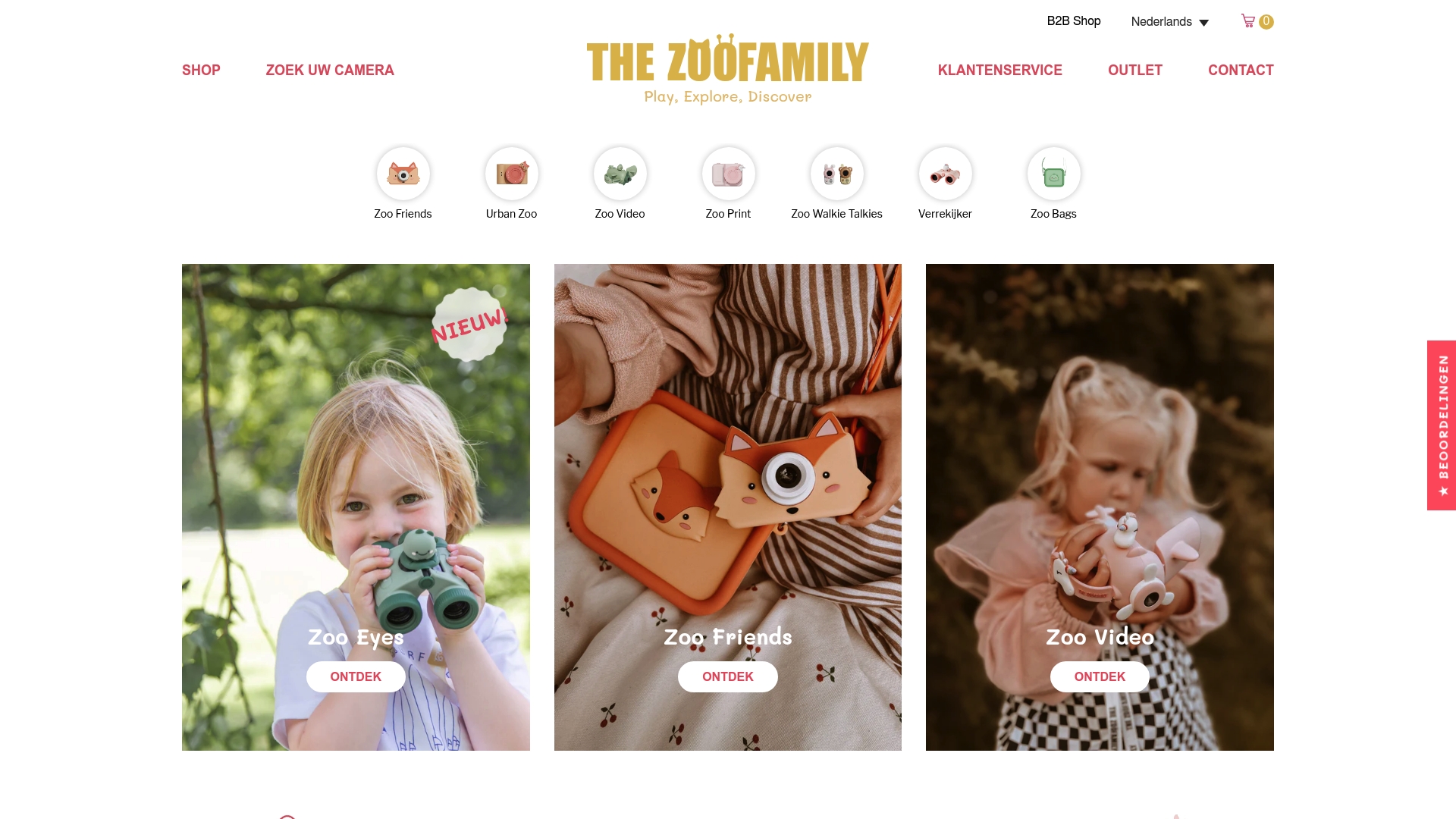
Animal-themed cameras, binoculars and walkie-talkies built for young children are designed to turn a scavenger hunt or a birdwatching session into something children want to repeat. A simple activity: hand out a camera before a minibeast hunt and ask each child to photograph what they find, then compare finds back at the reading nook. It works as a genuinely optional add-on to any of the ideas above, never a requirement for them. If your planting beds and bug hotels are already drawing curious children outdoors, browse the range of nature-focused kit at Thezoofamily and see which piece fits your next observation activity.