

Rainy days, sick days and long winter afternoons all call for the same toolkit: sensory play, arts and crafts, energetic movement, fine-motor tasks, science exploration, dramatic play and quiet time. These seven categories cover the physical, language and social needs of children aged 3 to 5. Every activity below includes a supervision note, since safety guidance from paediatric and public health sources should shape how you set up play at home.
TL;DR:
- Short, varied activity blocks of 15 to 20 minutes help meet the WHO’s 180-minute daily physical activity recommendation without overwhelming children or caregivers.
- Sensory play should prioritize safe materials like dry rice, nature items, and water, while avoiding water beads due to choking and internal injury risks.
- Arts and crafts projects should use non-toxic, water-based materials on contained surfaces to minimize mess and ensure safety for preschoolers.
- Indoor gross-motor activities like obstacle courses and dance should be supervised closely, with safety checks for slips and breakables beforehand.
- Incorporating observation tools like cameras or binoculars can extend play, promote curiosity, and provide keepsakes, but supervision remains essential.
Table of Contents
- Why variety and simple structure support development
- Sensory play: ready-to-run ideas and safety checks
- Arts and crafts: low-mess projects and safe materials
- Gross-motor play: obstacle courses and movement games
- Fine-motor activities for writing and self-care skills
- Science and STEAM play: simple experiments to try
- Dramatic play: props, prompts and loose parts
- Quiet activities and calm-down tools for transitions
- Safety checklist before any indoor activity
- How to plan an indoor day that meets WHO guidance
- Expert tips and a nature-focused perspective
- Realistic expectations for busy caregivers
- A gentle way to extend indoor play with observation tools
- Sources
- FAQ
Why variety and simple structure support development
Preschoolers grow in several directions at once. Gross-motor games build balance and strength. Fine-motor tasks prepare small hands for writing and buttoning. Quiet activities support attention and language. Rotating through categories touches all these areas instead of overloading one.
Structure helps too. The World Health Organization recommends children aged 3 to 4 get at least 180 minutes of physical activity a day, spread across several sessions rather than one long block. A simple rotation makes that target easier to hit without turning the day into a schedule battle.
A few practical ways to build structure into indoor play:
- Fill a few baskets with materials for one activity type each, so a child can pick a basket instead of asking you to invent something.
- Set a timer for short blocks, around 15 to 20 minutes, then switch activity type rather than category within the same type.
- Alternate an energetic block with a quiet one so the day naturally balances stimulation and rest.
Sensory play: ready-to-run ideas and safety checks
Sensory play gives preschoolers a hands-on way to explore texture, temperature and cause and effect, while building vocabulary as they describe what they feel.
- Dry sensory bin: fill a shallow container with dry rice, pasta shapes or dried beans, add scoops and cups, and let your child pour and sort. Supervise closely, since these pieces are a choking risk for children who still mouth objects.
- Nature bin: mix pinecones, smooth stones and leaves for a lower-mess, textured option. Wash items first and check for sharp edges.
- Water play: a wash-tub with a few centimetres of water, funnels and cups builds pouring skills and cause-and-effect thinking. Never leave a child unattended near water, even a shallow tub, because drowning risk exists at any depth.
- Taste-safe dough: for children who still put things in their mouths, a simple flour-and-water dough avoids the risks of small loose pieces.
- Scented rice: add a drop of vanilla or cinnamon to dry rice for an extra sensory layer that also introduces new descriptive words.
Avoid water beads altogether. These water-absorbing beads can expand inside the body if swallowed, and cases of serious injury have led to product recalls. A nature bin or scented rice gives a similar sensory experience without that risk.
Pro Tip: Name what your child is touching out loud (“that pasta feels smooth and cool”) to turn sensory play into a language lesson without extra effort.

Arts and crafts: low-mess projects and safe materials
Craft time builds fine-motor control and gives preschoolers a way to express ideas before their vocabulary catches up.
- Collage with pre-cut shapes: hand your child a pile of paper shapes and a glue stick so the activity is about arrangement, not cutting.
- Sponge stamping: dip cut sponge shapes in paint for a low-skill, high-satisfaction project that suits younger preschoolers.
- Potato printing: carve a simple shape into a halved potato for repeatable, chunky prints that are easy for small hands to grip.
- Salt-dough ornaments: mix flour, salt and water, shape, then bake, for a craft that doubles as a keepsake and pairs well with DIY nature ornament ideas.
Choose water-based, non-toxic paints and glues, and avoid anything labelled “danger” or “keep out of reach of children”. For low-mess households, set up on a large tray so spills stay contained and clean-up takes seconds rather than minutes. Recycled materials also work well here, as shown in these recycled art projects.
Gross-motor play: obstacle courses and movement games
Energetic play burns off restlessness and builds the balance and coordination preschoolers need before school-age sports.
- Cushion obstacle course: line up floor cushions to step over, a taped line on the floor to balance along, and a gap under two chairs to crawl through.
- Freeze dance: play music and call “freeze” at random intervals to build listening skills alongside movement.
- Balloon keep-up: bat a balloon between family members without letting it touch the floor, a slow-motion game that suits small spaces.
- Indoor bowling: line up empty bottles and roll a soft ball at them for a throwing and counting game.
Before starting, clear breakables from the play area, check the floor isn’t slippery, and do a short warm-up like marching on the spot. The NHS Healthier Families page has further templates for small-space obstacle courses using balance, climbing and throwing stations.
Pro Tip: Stay in the room during energetic games. A cushion course looks harmless, but falls happen fast at this age.
Fine-motor activities for writing and self-care skills
Fine-motor play strengthens the small hand muscles preschoolers need for holding a pencil and managing buttons or zips.
- Threading large beads: builds hand-eye coordination and a pincer grip, using beads too large to swallow.
- Pegboards: pushing pegs into holes strengthens finger strength used later for writing.
- Sticker collages: peeling and placing stickers is a simple grip exercise that most preschoolers enjoy repeating.
- Playdough squeezing: rolling, pinching and cutting dough builds the same hand strength used for cutting with scissors.
For children under 4, choose pieces large enough that they can’t be swallowed and stay within arm’s reach throughout the activity.
Science and STEAM play: simple experiments to try
Preschoolers are natural scientists. A few guided experiments turn curiosity into early prediction and observation skills.
- Oobleck: mix cornflour and water for a substance that acts solid and liquid by turns. Ask “what do you think will happen?” before your child presses into it.
- Walking water: stand cups of coloured water in a row with folded paper towels linking them, then watch colour travel between cups over an hour.
- Vinegar and baking soda balloon: stretch a balloon over a bottle neck containing vinegar and baking soda to watch it inflate.
- Sink or float hunt: gather household objects and predict which will sink or float in a bowl of water before testing.
Record what your child predicts and what actually happens, then repeat the experiment a few days later to see what they remember. Supervise closely, particularly around the vinegar experiment, since the balloon can detach unexpectedly.
Dramatic play: props, prompts and loose parts
Pretend play lets preschoolers rehearse language, emotions and social roles they see around them.
- Puppet theatre: a large box with a cut-out window becomes a stage for sock puppets or soft toys.
- Shop play: empty food packaging and a toy till turn a corner of the living room into a shop, building early counting and turn-taking.
- Den building: blankets over chairs create a den that invites storytelling and quiet retreat.
- Rescue missions: soft toys “stuck” around the room give a purpose to a hunt-and-rescue game.
Loose parts such as boxes, fabric scraps and smooth natural objects extend engagement further than single-purpose toys, according to NAEYC research on materials in early learning environments. Choose large, sturdy pieces and rotate them every few weeks to keep interest fresh.
Quiet activities and calm-down tools for transitions
Not every block of the day needs energy. Quiet activities settle a child before naps, meals or bedtime and give attention skills a chance to develop.
- Storytelling with props: a soft toy or puppet acting out a simple story holds attention longer than a book alone.
- Matching or memory card games: short rounds build focus and early logic skills.
- Drawing prompts: “draw your favourite animal” gives structure to open drawing time.
- Sensory bottles: a bottle filled with water, glitter and a little oil gives a child something to watch and shake slowly, useful for calming down before sleep.
Use these in the last 20 to 30 minutes before nap or bedtime, when energetic games would work against settling.
Safety checklist before any indoor activity
A few checks before play starts prevent most common accidents.
- Remove choking hazards such as balloons, marbles, coins and small toy parts from the play area, and cut round, firm foods into pieces no larger than half an inch, as recommended by HealthyChildren.org.
- Choose water-based, non-toxic art materials and avoid anything labelled “danger” or “keep out of reach of children”.
- Never use water beads. They can expand inside the body if swallowed, and serious injuries have been documented in young children.
- Never leave a child unattended near any amount of water, including a wash-tub or shallow bin.
- Check under sofas, chairs and shelves for small dropped items before free play starts, particularly button batteries and coins.
Choking is a leading cause of injury in young children, and the AAP’s guidance on high-risk items and food size is worth reviewing before setting up sensory bins or snack-based play.
How to plan an indoor day that meets WHO guidance
The 180-minute daily target from the World Health Organization is easier to reach in short bursts than one long session.
- Morning: 20 minutes of energetic play such as an obstacle course or freeze dance.
- Mid-morning: 20 to 30 minutes of sensory or fine-motor play at a slower pace.
- Afternoon: another energetic burst, followed by quiet time with stories or drawing.
- Evening: dramatic play or a calm sensory bottle before the bedtime routine.
Stacking two or three short active bursts across the day covers the 60 minutes of moderate-to-vigorous activity WHO recommends, without needing one continuous session.
Pro Tip: Let your child choose the order of blocks where possible. Child-led choice within adult-set structure keeps cooperation higher than a fixed timetable.
Expert tips and a nature-focused perspective
Boisterous, tumbling play often looks like a problem to manage, but NAEYC’s guidance on big-body play frames it as necessary for physical, social and cognitive growth. The task for caregivers is to build a safe space for it, not to shut it down.
Loose parts such as boxes, fabric and natural objects sustain interest longer than single-purpose toys and support early scientific thinking as children test what these materials can become. Simple observation tools such as a child-friendly camera or binoculars can add a new layer to indoor play, for instance documenting a windowsill nature bin or “spotting” birds from indoors. These are optional prompts for curiosity, not required equipment.

Realistic expectations for busy caregivers
You will not run a themed activity every day, and that’s fine. Rotation baskets and 15-minute timed bursts get more genuine engagement than an elaborate plan attempted once and abandoned. Mess is part of how young children learn, so a tray-based craft or a five-minute sensory bin that leaves rice on the floor still counts as a win. Small, repeated moments of attention matter more than perfect execution.
— ALAIN
A gentle way to extend indoor play with observation tools
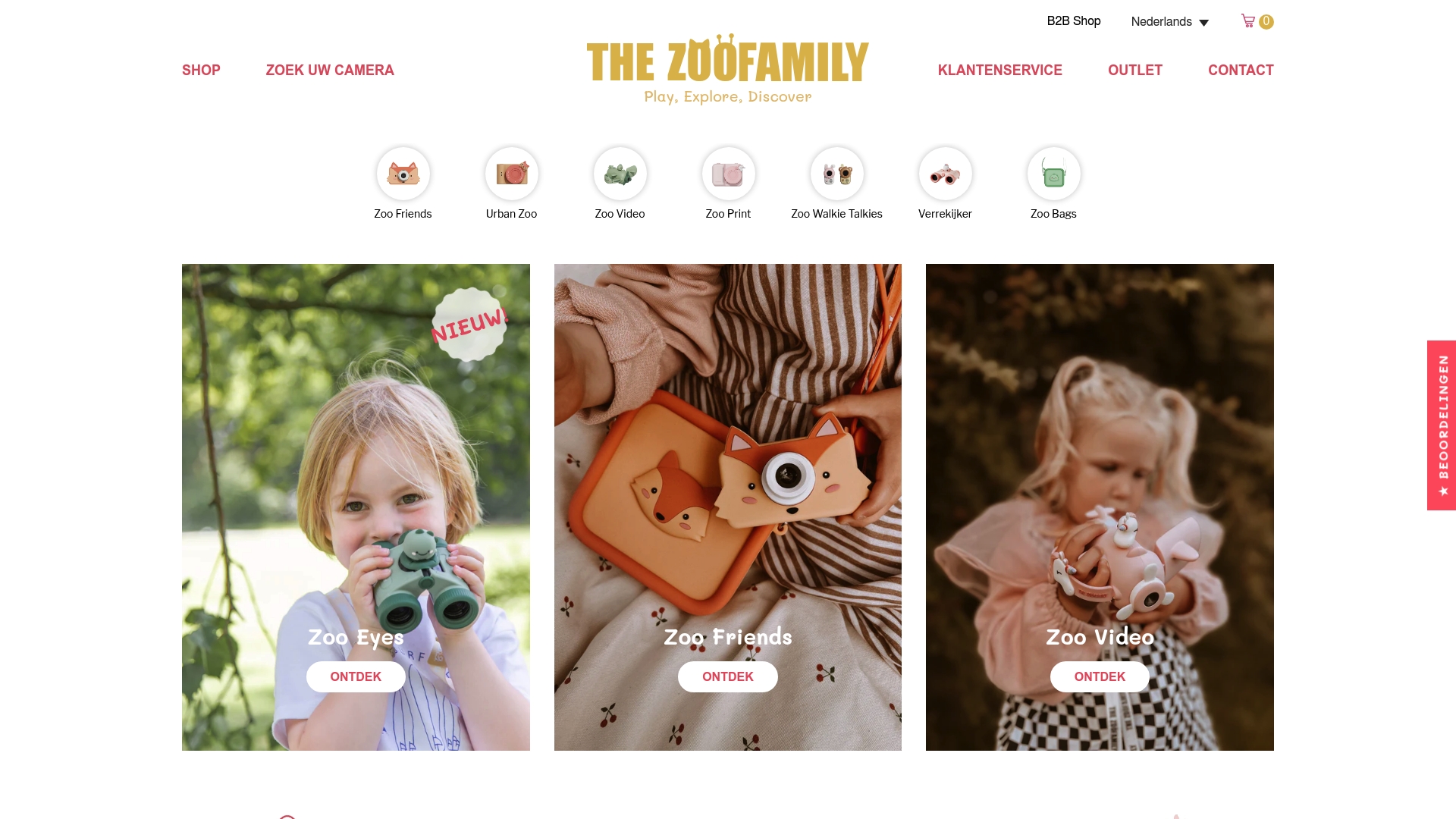
Some of the ideas above pair well with simple tools that turn ordinary indoor moments into small documentation projects. A child-friendly camera can turn a windowsill bird-watching session into a photo diary. Binoculars can make a “treasure hunt” around the flat feel like a real expedition. A walkie-talkie set can turn den-building into a two-room mission with a partner.
- These tools work as prompts and keepsakes, not as safety equipment: supervision rules above still apply in full.
- The range includes animal-themed cameras, binoculars and walkie-talkies designed for young children.
- For each camera sold, a tree is planted, connecting a gift purchase to a small environmental impact.
If you’re looking for a gift or an activity-kit idea alongside the play ideas above, you can browse the full Zoo Friends, Urban Zoo and Zoo video range on The Zoofamily’s shop.
Sources
FAQ
What are some fun indoor activities for preschoolers?
Sensory bins, obstacle courses, salt-dough crafts and simple science experiments like walking water are all reliable options for ages 3 to 5. Rotating between energetic and quiet activities keeps a preschooler engaged without exhausting a caregiver.
What are 5 indoor activities?
A cushion obstacle course, a dry sensory bin, sponge-stamp painting, threading large beads and a puppet theatre cover five different developmental areas at once. Each targets a different skill, from gross-motor balance to fine-motor grip and imaginative language.
How do I entertain a 4 year old indoors?
Set up a short, timed activity from a different category every 15 to 20 minutes, such as an obstacle course followed by a quiet drawing prompt. This matches the WHO’s guidance on spreading activity across the day rather than one long session.
How do I keep my 3 year old entertained indoors?
Stick to simple, supervised activities such as taste-safe dough, large-bead threading or sponge stamping, since younger preschoolers still explore objects with their mouths. Avoid small parts and water beads, and keep sessions short since attention spans at this age are limited.